
How to Safely Open a Jar With a Knife

Put down the sharp kitchen blade and grab a dull, rounded butter knife from the flatware drawer. A stubborn lid is held tight by strong suction, and slick metal makes pointed knives slip right toward your fingers. To get inside quickly, slide the tip of a dull butter knife under the bottom rim and gently lever outward until a soft pop breaks the seal. Once air rushes in, the lid spins off effortlessly by hand.
Safety here depends on using gentle leverage rather than brute force. Prying too hard can bend the metal threading or chip the glass container lip. The tool matters just as much, since thin kitchen blades can easily snap under side pressure. Always inspect the rim afterward to confirm no glass flakes fell into the food. Here is how to position the blade, release the airtight grip, and keep your hands safe.
Step-by-Step Guide to Popping the Vacuum Seal with a Butter Knife
Understanding what holds a stubborn jar shut makes opening it simple. Commercial jars of pasta sauce, pickles, and preserves are sealed while hot. As the contents cool down, the trapped air shrinks and creates a vacuum seal (an airtight suction holding the lid down firmly against the glass rim). This pressure difference clamps the metal lid tightly against the glass opening. You do not need massive grip strength to twist the cap off; you only need to let a small amount of air slip inside to balance the pressure.
Before picking up any utensil, prepare a stable surface. Place the jar flat on your kitchen counter. Never hold the container in your lap, between your knees, or suspended in mid-air. Place a damp cloth, kitchen towel, or silicone trivet directly beneath the glass base so the jar cannot twist or slide away from your grip while you work.
- Choose the correct knife: Pick up a standard, blunt butter knife from your flatware drawer. A blunt edge is completely dull, and the rounded tip will not puncture skin or scratch glass. Verify that the blade is sturdy stainless steel (a rust-resistant, easy-to-clean metal) that will not bend under mild pressure.
- Position the tip under the lid rim: Hold the knife handle firmly with your dominant hand. Place the flat face of the blade against the glass jar shoulder, directly below the lid rim (the bottom curled edge of the metal cap). Slide the flat tip gently upward into the narrow gap between the metal lip and the glass neck. You only need the very tip, about two millimeters, to slip beneath the metal edge.
- Pry outward with gentle leverage: Tilt the knife handle outward and slightly upward, using the thick curve of the glass shoulder as a steady resting point. Pry gently outward. Prying means gently tilting the blade to lift the edge just enough to break contact with the rubber seal. Do not yank, twist with heavy force, or try to peel the metal off.
- Listen for the vacuum release: Maintain light pressure until you hear a distinct pop or a soft hiss of entering air. That sound confirms that outside air has rushed into the container and broken the airtight suction. On lids with a raised safety bubble in the center, the metal button will visibly pop upward.
- Twist the lid off by hand: Pull the knife away and set it down on the counter immediately. Place your bare hand over the lid and turn it counterclockwise. With the vacuum seal gone, the lid will spin freely with minimal hand effort.
Why Sharp Cutlery Fails and Dull Butter Knives Succeed
Reaching into a knife block for a sharp paring knife or utility blade is a common reaction when a jar refuses to open. Sharp kitchen knives are precision instruments made for cutting soft foods, not mechanical prying. Their thin edges and pointed tips make them dangerous when pressed against slick metal and hard glass.
Blade geometry explains why fine cutlery fails at this task. High-end kitchen knives, such as those from Japanese Damascus steel chef knife sets, feature a steep 15-degree slicing edge per side. This narrow profile glides through vegetables, but hard glass and stiff steel place severe lateral stress on the blade. High-carbon or tool steel is a harder metal that stays sharp longer, but hard steel has almost no flex. When you wedge a thin, hardened edge under a metal lid, the sideways torque puts immense strain on a microscopic point. The delicate tip can snap off instantly, ruining the blade and sending metal fragments into the food.
Even heavier blades from German high-carbon steel premium knife block sets pose severe slip hazards when used as pry bars. The curled lip of a metal lid is coated with smooth paint, offering zero traction. A sharp point can easily skid off the curved rim under heavy hand pressure. Because your other hand is stabilizing the jar, a slipping blade moves straight toward your fingers or wrist. Paring knives cause serious kitchen puncture wounds precisely because users push sharp points against slippery surfaces.
A blunt butter knife avoids these hazards completely. Butter knives feature thick, unsharpened edges with broad, rounded tips. The wide tip distributes leverage across a broader section of the lid rim, preventing gouges in the glass. Because the metal is relatively soft stainless steel, it tolerates mild bending without snapping. If your hand slips while prying, the blunt edge will simply bump your skin without cutting deep tissue.
Slip Prevention, Safe Habits, and Knife-Free Kitchen Fixes
Prying open a jar with cutlery requires care to avoid damaging the container or injuring your hands. Glass is strong under direct compression, but it is brittle when subjected to uneven point pressure. Jamming metal blades aggressively into the rim can chip small flakes from the threaded glass neck. These chips fall silently into your food, creating a serious hazard that ruins the entire container.
Follow this safety checklist every time you use a tool to break a stubborn lid seal:
- Stabilize the jar base: Place the container on a damp kitchen towel or silicone mat so it cannot spin while you work.
- Keep hands clear: Grip the lower body of the glass jar, keeping your fingers well below the lid rim and away from the tool path.
- Direct leverage outward: Tilt the blade away from your body rather than pulling the tool toward your chest.
- Stop if metal deforms: If the lid rim bends noticeably without popping, reposition the tool rather than warping the metal into a sharp edge.
- Inspect the glass neck: Wipe the threaded glass rim with a clean paper towel after opening to confirm no glass cracked off.
If you prefer not to use cutlery, several everyday household items release stubborn lids without a blade. A standard metal spoon works on the exact same leverage principle as a butter knife. Slide the tip of the spoon bowl under the lid rim, rest the curved back against the glass neck, and pry outward. A spoon has no sharp corners and offers an even safer resting point for your fingers.
Heat is another effective option. Run warm tap water over the metal lid for about thirty seconds, rotating the jar so the heat spreads evenly. Metal expands faster than glass when heated. As the metal expands, the airtight suction loosens, and any dried sugar or sauce stuck in the threads softens. Dry the jar with a towel and twist the lid off by hand. You can also improve your grip by slipping on a rubber dishwashing glove or wrapping a thick silicone band around the lid, giving you the traction needed to twist the cap free without tools.
Choosing a Dedicated Jar Opener for Daily Kitchen Convenience
Prying jars open with flatware works well in an emergency, but using cutlery regularly increases the chance of damaged lids and accidental slips. If you frequently cook with jarred ingredients, or if you manage joint stiffness, arthritis, or low grip strength, a dedicated jar opener provides a safer, effortless alternative.
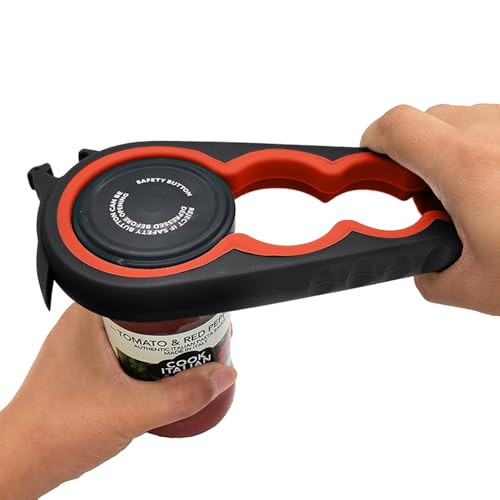
Handheld lid-popping tools mimic the action of a butter knife without using any blade. These compact tools slip under the metal edge and use a blunt, curved fulcrum to release the vacuum seal with a gentle lift. Because they are designed specifically for jar lids, they break the airtight suction without bending the metal out of shape, allowing you to reuse the original lid for storing leftovers in the refrigerator.
Adjustable clamp openers and leverage grips tackle jars from another angle. Instead of breaking the vacuum seal first, these tools clamp securely over the outside of the lid with rubberized jaws or non-slip teeth. Long handles extend outward from the lid, giving you substantial mechanical leverage. This extra leverage allows you to twist off stubborn vacuum-sealed lids using gentle arm movement rather than heavy hand squeezing.
Before selecting a jar opener, check a few key design details to ensure it fits your kitchen needs. Verify the size range of lids the opener can accept, ensuring it handles both small condiment bottles and wide canning jars. Look for soft, non-slip rubber handles if you have sensitive joints or limited hand strength. Also, confirm whether the tool is compact enough to store in a utensil drawer or if it mounts under an upper cabinet for stationary use.

- TAR Score9.8
TAR Score is a ranking system developed by TopAppliancesReviews.com. TAR score has no relationship or impact from any manufacturers or sales agent websites. Learn more
- BrandFoodieForever

- TAR Score9.2
TAR Score is a ranking system developed by TopAppliancesReviews.com. TAR score has no relationship or impact from any manufacturers or sales agent websites. Learn more
- BrandKitchenCraft

- TAR Score8.8
TAR Score is a ranking system developed by TopAppliancesReviews.com. TAR score has no relationship or impact from any manufacturers or sales agent websites. Learn more
- BrandMaxracy

- TAR Score8.6
TAR Score is a ranking system developed by TopAppliancesReviews.com. TAR score has no relationship or impact from any manufacturers or sales agent websites. Learn more
- BrandHUMANFUN
- TAR Score8.6
TAR Score is a ranking system developed by TopAppliancesReviews.com. TAR score has no relationship or impact from any manufacturers or sales agent websites. Learn more
- BrandOtstar

- TAR Score8.0
TAR Score is a ranking system developed by TopAppliancesReviews.com. TAR score has no relationship or impact from any manufacturers or sales agent websites. Learn more
- BrandUNINAI

- TAR Score7.8
TAR Score is a ranking system developed by TopAppliancesReviews.com. TAR score has no relationship or impact from any manufacturers or sales agent websites. Learn more
- BrandKichwit

- TAR Score7.6
TAR Score is a ranking system developed by TopAppliancesReviews.com. TAR score has no relationship or impact from any manufacturers or sales agent websites. Learn more
- Brandzengxiaoyun

- TAR Score6.8
TAR Score is a ranking system developed by TopAppliancesReviews.com. TAR score has no relationship or impact from any manufacturers or sales agent websites. Learn more
- BrandStitokg
Last update on 2026-10-03 / Affiliate links / Images, Product Titles, and Product Highlights from Amazon Product Advertising API
Frequently Asked Questions
Can I poke a hole through the top of the lid with a knife to break the seal?
Do not stab or puncture the metal lid with a knife. Sharp knife points slip easily on smooth, painted metal, which can result in deep cuts to your hands. Puncturing the lid also ruins the container for storing leftovers and can push tiny metal shavings directly into your food.
How can I tell if the glass rim chipped when I pried the lid?
Wipe the rim of the opened jar with a clean, damp paper towel, paying close attention to the outer threads where the knife touched. Inspect the glass under bright kitchen lighting to look for rough notches, missing flakes, or hairline cracks. If you notice any chips or feel rough edges on the glass lip, discard the food immediately because dangerous glass slivers may have fallen into the contents.
Will prying the lid with a butter knife ruin the jar for future food storage?
A gentle pry that lifts the rim just enough to let air enter will leave the lid in fine condition for everyday refrigerator storage. But if you pry too hard and bend the metal rim out of round, the lid will no longer seal tightly against moisture or air. Bent lids cannot be used for home canning or long-term food preservation, as canning requires an unbent, pristine lid to guarantee a safe seal.


Top Rated Best Quality Range Hoods: 2026 Expert Picks

The 12 Best Small Solar Generators 2026

10 Best Quality Semi Automatic Washing Machine of 2026 For Leak-Free Laundry

11 Best Small Washer Machine of 2026 For Everyday Laundry

12 Best Vibration Pads For Washing Machine of 2026 To Stop Walking and Shaking

11 Best Selling Front Load Washing Machine of 2026 For Quiet Odor-Free Laundry

11 Best Washing Machine For King Size Bedding of 2026 To Prevent Cycle Errors

10 Best Small Front Loader Washing Machine of 2026 For Tight Closets






