
How to Open a Coconut Without a Knife Using Household Tools

Cracking a tough coconut is far less dangerous than it looks, and there is no need to risk your fingers with a slippery kitchen blade. The easiest method is to pierce the softest eye with a clean screwdriver to drain the fresh water, then tap firmly around the center seam with a household hammer until the shell falls apart into clean halves.
The exact approach depends mostly on the kind of coconut sitting on your counter. Thick, hairy brown shells need blunt force against their center line, while soft young green coconuts only need a simple handheld punch tool to create an opening for a straw. What you want from the fruit matters too, since sipping the liquid takes just a minute, but freeing the white meat takes a little gentle coaxing. Here is how to get inside safely using items you already own.
How do you drain the water through the soft eye?
Before you strike a mature brown coconut, you must empty the liquid inside. Hitting a coconut full of water creates hydraulic pressure inside the shell. That pressure causes liquid to splash everywhere and makes the shell shatter into random, jagged shards instead of splitting along a clean seam.
Every mature coconut has three round indentations on its stem end. These spots are the soft eyes, which are the natural germination pores of the seed. Two eyes are covered by dense shell tissue, but one is always softer so a green sprout can emerge.
- Find the soft eye: Hold the coconut on your counter with the three eyes facing up. Press a clean barbecue skewer, Phillips screwdriver, or corkscrew into each eye. Two eyes will feel rock-hard, while the third will yield easily under your hand like chilled butter.
- Pierce the shell: Push your tool straight through that soft eye. Wiggle it in a circle to widen the hole to about a quarter inch. If possible, pierce a second eye as well. Two holes let air enter, keeping the liquid flowing smoothly without bubbling.
- Drain the liquid: Turn the coconut upside down over a clean glass or measuring cup. Shake it gently to empty the water. A fresh coconut yields between half a cup and a full cup of liquid.
- Check the water: Pour the water through a mesh strainer to catch loose fibers from the thick fibrous outer layer (the husk). Fresh coconut water smells sweet and clean. If it smells sour, looks cloudy, or tastes like vinegar, the coconut has spoiled and should be discarded.
How do you crack the shell cleanly with a hammer?
Many home cooks reach for a cleaver to hack through the shell. That is a dangerous mistake. Even if your kitchen has the best German high carbon steel premium knife block sets, chopping a round, rock-hard shell can easily chip a blade edge or slip toward your fingers. A blunt hammer cracks the woody structure safely without any sharp edge.
Every mature coconut has a center seam around the shell that runs halfway between the eyes and the bottom point. Striking along this equator line splits the coconut into two tidy halves.
- Hold the coconut in your palm: Cradle the drained coconut in your non-dominant hand. Never pin it to a stone or tile counter, which absorbs the blow and bounces the hammer back. Your palm acts as a natural shock absorber while letting the shell flex.
- Grip a blunt tool: Hold a standard claw hammer, rubber mallet, or heavy rolling pin in your dominant hand. Use controlled, moderate taps rather than forceful swings.
- Tap the center seam: Strike the coconut firmly along its equator line. Give it one solid tap, rotate it a quarter turn in your palm, and tap again. Continue turning the coconut while tapping the seam.
- Listen for the sound change: The hammer will initially make a deep, dull thud. After one or two full rotations, that thud turns into a higher, hollow click. That click means an internal hairline fracture has formed.
- Finish the crack: Continue tapping lightly along the visible hairline crack. Within another strike or two, the shell will pop open cleanly into two matching bowls.
What if you do not have a hammer at home?
If you do not own a toolbox, you can open a mature coconut cleanly using heat or outdoor stone surfaces. Both options split the shell along its natural weak points without blades.
- The oven heat method: Drain all coconut water first to avoid trapped steam pressure. Preheat your oven to 375 degrees Fahrenheit. Set the coconut directly on the middle oven rack for 10 to 15 minutes. As heat expands the trapped moisture inside the woody shell, the outer layer contracts and cracks along its seams. Once a visible split forms, use heavy oven mitts to take the coconut out, wrap it in a clean kitchen towel, and drop it from waist height onto a concrete patio. The shell will fall apart in large chunks.
- The stone step method: Take the drained coconut outside to a clean concrete step, patio edge, or sturdy landscaping rock. Hold the coconut securely with both hands, keeping your fingers tucked toward the ends. Strike the center seam firmly against the blunt corner of the stone. Rotate the coconut slightly and strike it again along the same line. After three or four solid impacts, the shell will split cleanly down the center.
How do you open young green or white coconuts safely?
Young green coconuts and shaved white Thai coconuts differ significantly from mature brown ones. They have not formed a rock-hard woody shell yet. Instead, they have a thick fibrous outer layer surrounding a pliable inner shell filled with sweet water and soft, jelly-like white coconut meat.
Street vendors often open these fruits with heavy cleavers, but copying that at home is risky. Using delicate slicing cutlery from Japanese chef knife sets will chip or dull their fine edges against the tough husks. You can open a young coconut safely using a simple handheld punch tool or a wine corkscrew.
- Locate the top peak: Set the coconut flat on a cutting board so it sits upright. The fiber at the center of the pointed top crown is softer than the side walls.
- Position the tool: Place the pointed tip of your punch tool or corkscrew straight onto the center peak. Grip the handle firmly with your dominant hand.
- Push and twist downward: Apply steady downward pressure while twisting the handle back and forth. The tip will cut through the soft husk and pop through the thin inner shell with a firm click.
- Remove the core plug: Pull the tool straight up. It will pull out a small plug of husk and shell, leaving a clean, round hole.
- Insert a straw: Place a drinking straw directly into the opening and enjoy the fresh water immediately without spilling a drop.
How do you separate the white coconut meat without cutting?
Once you split a mature coconut, the firm white coconut meat remains tightly attached to the shell. Prying it with a sharp paring knife is hazardous because the blade can slip against the curved wood. You can release the meat safely with temperature changes and a blunt spoon.
- Chill the halves: Place the cracked shell halves in your freezer for 15 to 20 minutes. Cold air causes the oily white meat to shrink slightly faster than the rigid shell, loosening the bond between them.
- Warm the halves: If you prefer heat, place the shell halves face down on a baking sheet in a 250-degree Fahrenheit oven for 5 minutes. The warmth softens the natural coconut oils along the inner shell wall.
- Pry with a blunt spoon: Slide the tip of a sturdy metal soup spoon or a dull butter knife between the white meat and the hard inner shell. Gently lever the rounded back of the spoon downward against the wood, rocking it side to side. The meat will pop free in large, clean pieces.
- Peel any brown skin: If a thin layer of brown skin clings to the meat, peel it off with a standard vegetable peeler. Rinse the white chunks in cool water and store them in an airtight container in your refrigerator.
What dedicated tools make opening coconuts safer and easier?
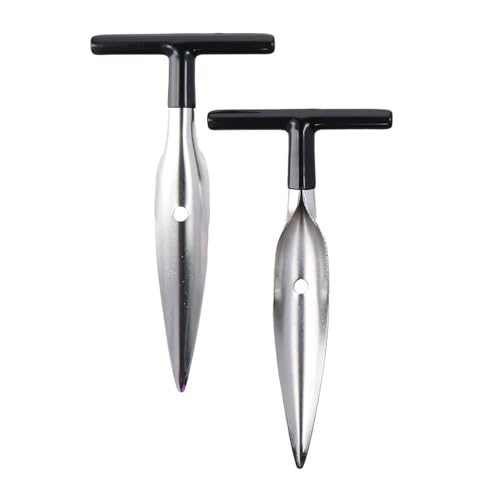
If you regularly enjoy fresh coconuts, an inexpensive bladeless opener eliminates the need to improvise with workshop tools. A dedicated tool allows you to access fresh water and meat in seconds without swinging a heavy hammer or risking kitchen cuts.
Look for an opener made from food-grade stainless steel. Stainless steel withstands heavy downward pressure without bending, resists rust from sweet fruit juices, and cleans easily. Avoid soft plastic tools that can crack under pressure.
Check the handle design before buying. A wide T-shaped handle or a textured, non-slip grip gives your hand strong leverage. This lets you drill through tough husks using smooth wrist rotation rather than painful finger strain. Coring tools with a tapered or serrated tube punch a clean hole and pull out the plug so your straw hole never clogs.
If you prefer mature brown coconuts, choose a set that includes a compact rubber mallet. A rubber mallet provides the blunt impact needed to split the center seam around the shell without sending sharp splinters across your counter or scratching kitchen surfaces.

- TAR Score9.0
TAR Score is a ranking system developed by TopAppliancesReviews.com. TAR score has no relationship or impact from any manufacturers or sales agent websites. Learn more
- BrandKCKHFA

- TAR Score8.8
TAR Score is a ranking system developed by TopAppliancesReviews.com. TAR score has no relationship or impact from any manufacturers or sales agent websites. Learn more
- BrandCJFocus

- TAR Score8.6
TAR Score is a ranking system developed by TopAppliancesReviews.com. TAR score has no relationship or impact from any manufacturers or sales agent websites. Learn more
- BrandYiePhiot

- TAR Score8.6
TAR Score is a ranking system developed by TopAppliancesReviews.com. TAR score has no relationship or impact from any manufacturers or sales agent websites. Learn more
- Brandzhuohai
- TAR Score8.6
TAR Score is a ranking system developed by TopAppliancesReviews.com. TAR score has no relationship or impact from any manufacturers or sales agent websites. Learn more
- Brandcouponhub

- TAR Score8.6
TAR Score is a ranking system developed by TopAppliancesReviews.com. TAR score has no relationship or impact from any manufacturers or sales agent websites. Learn more
- BrandSesyomr

- TAR Score8.4
TAR Score is a ranking system developed by TopAppliancesReviews.com. TAR score has no relationship or impact from any manufacturers or sales agent websites. Learn more
- BrandCocoDrill

- TAR Score7.6
TAR Score is a ranking system developed by TopAppliancesReviews.com. TAR score has no relationship or impact from any manufacturers or sales agent websites. Learn more
- BrandArt&Beauty

- TAR Score7.6
TAR Score is a ranking system developed by TopAppliancesReviews.com. TAR score has no relationship or impact from any manufacturers or sales agent websites. Learn more
- BrandDuoduole

- TAR Score6.0
TAR Score is a ranking system developed by TopAppliancesReviews.com. TAR score has no relationship or impact from any manufacturers or sales agent websites. Learn more
- BrandZerone
Last update on 2026-10-03 / Affiliate links / Images, Product Titles, and Product Highlights from Amazon Product Advertising API
FAQs
Can you drink the water if it smells sour?
No, you should never drink coconut water that smells sour or appears cloudy. Fresh coconut water is nearly clear, smells mildly sweet, and has a clean, nutty flavor. If the liquid smells acidic like vinegar or tastes tart, bacteria have entered through a damaged eye, and the coconut should be discarded.
Why did the coconut crack into uneven pieces?
A coconut shatters into uneven pieces when it is struck against a hard countertop or hit with excessive force in one spot. Hard surfaces cause random vibration fractures through the wood. Holding the coconut loosely in your palm and tapping gently around the center seam ensures a clean split.
Does baking a coconut ruin the flavor of the meat?
Baking a drained coconut for 10 to 15 minutes warms the shell enough to loosen the meat without cooking it. The white coconut meat stays firm, raw, and sweet, though it will feel warm to the touch. Letting the halves rest on the counter returns the texture and oils to normal.
Can you open a mature coconut on a countertop directly?
You should avoid hammering a coconut directly on kitchen countertops. The blunt force can chip laminate, crack stone surfaces like granite, or cause the coconut to bounce unexpectedly. If you do not want to hold the coconut in your hand, set it on a folded towel on the floor.


Top Rated Best Quality Range Hoods: 2026 Expert Picks

The 12 Best Small Solar Generators 2026

10 Best Quality Semi Automatic Washing Machine of 2026 For Leak-Free Laundry

11 Best Small Washer Machine of 2026 For Everyday Laundry

12 Best Vibration Pads For Washing Machine of 2026 To Stop Walking and Shaking

11 Best Selling Front Load Washing Machine of 2026 For Quiet Odor-Free Laundry

11 Best Washing Machine For King Size Bedding of 2026 To Prevent Cycle Errors

10 Best Small Front Loader Washing Machine of 2026 For Tight Closets






