How to Safely Open a Clam Without a Clam Knife

A quick freeze relaxes the shell muscle. Leaving live clams in the freezer for twenty minutes loosens their grip, letting a dull butter knife slide cleanly into the seam. If dinner calls for a hot broth or pasta, a few minutes of steam in a covered pot pops the shells open naturally with zero force. That keeps dangerous sharp kitchen knives in the drawer and protects fingers from painful slips.
The right approach depends on the dinner recipe and the shells on the counter. Serving raw seafood on the half shell requires the cold towel trick, while cooked dishes let stove heat do the heavy lifting. Thick littlenecks also put up much more resistance than tender soft-shell clams, so flat table cutlery and thick cloth towels provide needed leverage. Here is how to get them open safely without cracking shells or ruining dinner.
Your Recipe Determines Whether You Need Cold Or Steam
A fresh clam is a bivalve (two-shelled seafood) that keeps its shell clamped shut using a strong adductor muscle (the hinge muscle that clamps the shell shut). Forcing those shells apart with raw hand strength is frustrating and risky when you lack a specialized clam knife. How you plan to serve your clams determines whether you even need a blade at all.
If you want raw clams on the half shell (serving raw clams in their bottom shell), you must open the shells cold. Raw preparations require keeping the clam alive and preserving the clam liquor, which is the flavorful, naturally salty ocean water resting inside the shell. Cold temperatures relax the shell without cooking the delicate meat.
If you plan to cook the clams in chowder, pasta, soup, or a seafood boil, put your knives away entirely. Heat breaks down the proteins in the hinge muscle within minutes. As the muscle cooks, it releases its grip, and the shell springs open naturally. Using steam saves time, prevents shell grit, and eliminates the risk of hand injury.
Chill Raw Clams In The Freezer Before Using Butter Knives
Opening raw clams without a specialized tool requires relaxing the adductor muscle and choosing a dull, rigid utensil. Live hard-shell clams like littlenecks or cherrystones clamp shut tightly at room temperature. A short chill makes them relax their shell seam slightly, giving you the small gap you need.
Follow these steps to open raw clams safely:
- Scrub the shells clean. Run cold tap water over the clams and scrub away surface sand or mud with a stiff brush. Cleaning the exterior seam prevents grit from washing into the clam liquor once opened.
- Chill them in the freezer for 15 to 20 minutes. Lay the clean clams flat on a tray in a single layer. Set a timer for 20 minutes maximum. The cold temperature relaxes the hinge muscle so it goes limp. Do not leave them long enough to freeze solid, which ruins their tender texture.
- Wrap your holding hand in a thick towel. Never hold a clam bare-handed on the counter while prying. Fold a heavy kitchen towel into several layers and cradle the clam in your palm. Keep the shell hinge against your palm and the opening seam facing out.
- Grab a dull, sturdy butter knife. Pick a standard stainless steel butter knife with a rounded, blunt tip and no serrations. The blade must be stiff so it does not bend. Avoid thin spreaders that could buckle.
- Work the rounded tip into the front seam. Press the rounded tip of the butter knife into the seam opposite the hinge. Rock the blade gently with steady, controlled pressure. Once the tip slips inside, twist the knife like turning a key to break the seal.
- Sever the hinge muscle to free the shell. Slide the flat side of the knife blade along the inside roof of the top shell to cut the adductor muscle. Lift off the top shell without spilling the liquid. Slide the knife gently under the clam belly along the bottom shell to sever the lower muscle attachment.
Gentle Steam Opens Cooked Clams Without Any Knives At All
If you plan to make clam chowder, pasta, or steamed clams with melted butter, skip manual shucking (opening shellfish) entirely. Steaming is faster, safer, and far easier on your hands than wrestling with closed shells. Heat does the mechanical work for you.
Here is how to steam clams open cleanly:
- Sort and rinse your clams. Discard any shells that have severe cracks or stay open when tapped. Rinse the shells under cold water to wash away loose sand.
- Add cooking liquid to a wide pot. Pour about one-half to one inch of liquid into the pot. Plain water works fine, but dry white wine, chicken broth, or water simmered with minced garlic and parsley adds great flavor.
- Bring the liquid to a rolling boil over medium-high heat. Active steam heats the shells quickly and evenly.
- Add the clams and cover tightly with a lid. Spread the clams across the bottom of the pot. Trapping the steam is essential, so make sure the lid fits snugly.
- Steam for 5 to 8 minutes. Shake the pot gently once during cooking to redistribute the heat. Lift the lid at the 5-minute mark. As the adductor muscle heats up, it relaxes and lets the shell pop wide open.
- Transfer opened clams to a bowl with tongs. Remove individual clams as soon as they open so they stay tender rather than turning rubbery.
- Strain the remaining pot broth. The liquid left in your pot is concentrated clam broth. Pour it through a fine strainer lined with a paper towel to catch any sand, then use it as a savory sauce base.
Never Pry Live Shells With Sharp Knives Or Screwdrivers
Reaching for whatever sharp metal tool sits in your kitchen drawer is tempting when you lack a clam knife. This mistake causes common kitchen lacerations. Hard clam shells are made of dense calcium carbonate. They are wet, curved, and hard as stone.
Never reach for delicate kitchen cutlery. Grabbing a sharp chef blade from your German high-carbon steel premium knife block sets risks chipped edges and serious hand cuts. German steel blades excel at slicing produce and meat, but their fine edges chip or snap against hard shells.
Thin Japanese blades are even more fragile. The cutlery in high-carbon Japanese chef knife sets is ground to a steep 15-degree slicing edge per side for delicate kitchen prep. Forcing a brittle, thin Japanese utility or chef knife into a shell seam will chip the razor edge or snap the tip off under twisting pressure.
Avoid these everyday household items when opening shellfish:
- Paring knives and chef knives: Sharp pointed tips easily slip off curved shells, driving the razor edge directly into your holding hand.
- Serrated steak knives: Saw-tooth edges catch on shell ridges and skip across the surface rather than entering the seam, causing jagged cuts.
- Folding pocket knives: Many pocket knives lack a dependable liner lock (the spring bar inside the handle that snaps behind the open blade to stop it from closing on your fingers). Downward pressure can snap the blade shut on your fingers.
- Screwdrivers and workshop tools: Flathead screwdrivers carry motor oil, rust, or garage grime that contaminates food. Also, the thick wedge crushes shell edges, showering calcium grit into the meat.
- Kitchen scissors: Prying shells with a scissor blade puts uneven torque on the center pivot screw, twisting or snapping the tool.
Inspect Every Shell Before And After Opening For Spoilage Signs
Eating spoiled shellfish causes severe food poisoning, so checking freshness is just as important as opening the shell. Live clams must stay alive until chilled, shucked, or cooked. Once a clam dies in storage, bacteria multiply quickly inside.
Use this checklist before and after opening your clams:
- Perform the tap check on open shells. Inspect every clam in your batch before prep. If a shell is open even slightly, tap it firmly on the counter. A live clam will slowly clamp shut within a few seconds. If the clam stays open and does not react, it is dead. Throw it away immediately.
- Check for cracked or smashed shells. Discard any clam with cracked or crushed shells. A broken shell cannot hold moisture, allowing bacteria to spoil the meat.
- Trust your nose before cooking. Fresh live clams have a clean, mild ocean scent. If a clam smells fishy, sour, muddy, or like ammonia, do not cook or eat it. One bad clam ruins an entire dish.
- Inspect the meat and liquid inside. When opening a raw clam, look at the clam liquor. It should look clear or slightly cloudy. If the liquid looks dark, black, or muddy, discard the clam. The meat should look plump and moist, never dried out or slimy.
- Check opening behavior after cooking. If a clam remains clamped tightly shut after 10 to 12 minutes of active boiling steam, throw it out. It was dead before cooking and is unsafe to eat.
Dedicated Shucking Tools Protect Hands During Future Seafood Dinners
Opening shellfish with a butter knife works well in a pinch, but it is not a permanent solution. If you plan to serve raw shellfish regularly or host family clambakes, getting dedicated shucking gear makes the job faster and far safer.
A dedicated clam knife features a flat, beveled blade with a rounded, blunt tip rather than the pointed tip found on oyster knives. That blunt shape slides smoothly along the shell seam without puncturing the delicate clam belly.
Look for these features when choosing a dedicated seafood tool:
- Choose full tang construction: Full tang means one solid piece of blade steel extending all the way through the handle. This provides the strength needed to twist against stubborn shells without the handle snapping off.
- Pick stainless steel blades: Seafood prep involves water, salt, and ocean juices. Stainless steel (rust-resistant, easy-to-clean metal) resists corrosion and stays clean over years of use.
- Select a textured, non-slip handle: Salty juices make smooth plastic or polished wood slick. Look for textured rubber or grooved composite handles that give you a secure grip when wet.
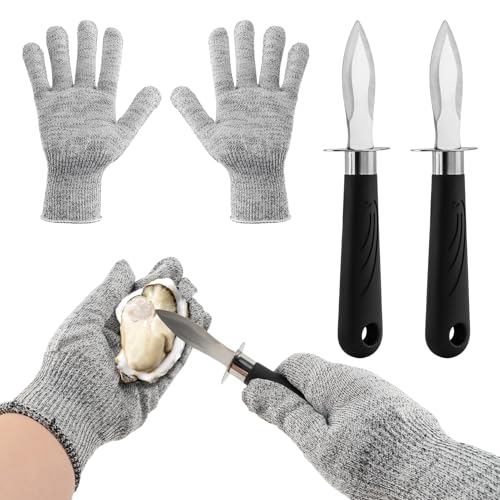
- Add a cut-resistant glove: A woven protective glove worn on your holding hand shields your skin from sharp shell edges and tool slips, giving you total peace of mind.
- TAR Score-
TAR Score is a ranking system developed by TopAppliancesReviews.com. TAR score has no relationship or impact from any manufacturers or sales agent websites. Learn more
- BrandYOSINXU

Oyster Shucking Knife,Multifunctional Oyster Opener,With Comfort Wood-Handle,For Oyster, Scallop, Clam,
View on Amazon- TAR Score-
TAR Score is a ranking system developed by TopAppliancesReviews.com. TAR score has no relationship or impact from any manufacturers or sales agent websites. Learn more
- BrandGyinere

- TAR Score-
TAR Score is a ranking system developed by TopAppliancesReviews.com. TAR score has no relationship or impact from any manufacturers or sales agent websites. Learn more
- BrandGHSGHS
Last update on 2026-10-03 / Affiliate links / Images, Product Titles, and Product Highlights from Amazon Product Advertising API


Top Rated Best Quality Range Hoods: 2026 Expert Picks
The 12 Best Small Solar Generators 2026

10 Best Quality Semi Automatic Washing Machine of 2026 For Leak-Free Laundry

11 Best Small Washer Machine of 2026 For Everyday Laundry

12 Best Vibration Pads For Washing Machine of 2026 To Stop Walking and Shaking

11 Best Selling Front Load Washing Machine of 2026 For Quiet Odor-Free Laundry

11 Best Washing Machine For King Size Bedding of 2026 To Prevent Cycle Errors

10 Best Small Front Loader Washing Machine of 2026 For Tight Closets