How to Make Waffle Fries With a Crinkle Knife

Cutting waffle fries at home requires a wavy crinkle cutter rather than a flat kitchen blade. The whole pattern comes down to making thin slices and turning the potato a quarter-turn between every cut. Trying to carve those little window panes with a standard smooth knife only tears the potato apart and wastes your afternoon.
Getting that crisp, open grid hinges on three specific details. First, the blade must have corrugated waves rather than a smooth edge. Second, each slice must be roughly an eighth of an inch thick so the front and back grooves punch through each other. Finally, each cut needs an exact ninety-degree rotation so the ridges cross instead of stacking. Here is the simple cutting rhythm that makes clean waffle fries every time.
Why a Standard Chef Knife Cannot Cut Waffle Fries
Many cooks stand at their counter hoping their favorite kitchen knife can cut out authentic waffle fries. But trying to slice waffle fries with a flat chef knife simply does not work.
A waffle fry relies on specific geometry. The signature pattern consists of open holes set inside a web of alternating wavy ridges. To form those holes, the front of the fry must have vertical waves, and the back must have horizontal waves. Where the low valleys of the front wave cross the low valleys of the back wave, the potato becomes thin enough that open windows appear.
A standard kitchen knife has a straight edge that only produces flat surfaces. Even the sharpest blades from high-carbon Japanese chef knife sets, which glide through hard vegetables with ease, only create flat potato planks. To create holes with a straight knife, you would have to cut a flat sheet and tediously carve dozens of tiny square windows with a paring knife.
Carving potatoes by hand with a knife tip is slow, shreds the potato walls, and creates a serious slip hazard for your fingers. Slicing genuine waffle fries requires a specialized wavy blade, known as a crinkle cutter. The wavy blade forms the peaks and valleys automatically in a single downward press.
Kitchen Tools and Prep Setup for Safe Slicing
Making waffle fries at home does not require expensive electrical gadgets, but your counter setup needs to be safe and steady. Raw potatoes are dense root vegetables. Pushing any blade through a potato requires firm downward pressure, so your work surface must stay completely stable.
Start with your cutting board. Place a damp kitchen towel or a non-slip silicone mat flat on your counter, then set a heavy cutting board on top. Check the board with your hand to confirm it will not slide when you press down.
Next, gather your tools and ingredients:
- A wavy crinkle-cutting knife with a rigid stainless steel blade and a comfortable grip.
- Russet potatoes (high-starch baking potatoes with low moisture).
- A straight utility knife or chef knife for squaring off the ends.
- A large mixing bowl filled with cold tap water.
- Two clean cloth kitchen towels for drying the slices.
Potato selection matters. Russets work best because their high starch content allows the exterior ridges to crisp while keeping the inside tender and fluffy. Waxy varieties like red potatoes hold excess water, causing the waffle pattern to turn limp and soggy during cooking.
Wash your potatoes under running water. You can leave the skin on for a rustic look or peel them clean with a vegetable peeler. Trim off any green skin or dark sprouts before cutting.
Step-by-Step Guide to Cutting Waffle Fries
- Slice a thin flat slab off one long side of the potato using a straight knife. Reason: Round potatoes roll easily, so creating a wide, flat base keeps the potato steady and stops it from slipping under your blade.
- Rest the potato flat on the cutting board and place your wavy knife at the far end. Reason: Setting the potato on its flat base gives you full control and lets you keep your holding fingers curled in a safe claw grip away from the blade.
- Push the wavy knife straight down through the potato to cut off the rounded end cap. Reason: Trimming away the uneven tip exposes a clean face of parallel wavy ridges across the full width of the potato.
- Rotate the potato ninety degrees on the cutting board so the ridges run crosswise. Reason: Turning the potato places the previous ridges perpendicular to the blade so the next cut crosses over them at a right angle.
- Position the wavy blade roughly one-eighth of an inch behind the cut face and slice firmly straight down. Reason: Slicing thinly allows the valleys of the new cut to meet the valleys of the previous cut, punching open the waffle windows.
- Pick up the cut slice and check the pattern against your kitchen light. Reason: Checking the first slice confirms whether your spacing is correct before cutting the rest of the potato.
- Rotate the potato ninety degrees in the other direction before cutting again. Reason: Alternating your turns by ninety degrees between every slice ensures that every piece has intersecting ridges on both sides.
- Continue the rhythm of slicing, turning ninety degrees, and slicing again down the whole potato. Reason: Maintaining an even rhythm and uniform thickness ensures all your fries cook at the same rate.
- Drop each finished waffle fry into your bowl of cold water right away. Reason: Submerging the cut potatoes rinses off loose surface starch so the thin cutouts do not stick together.
Getting the Slice Thickness Exactly Right
Achieving open waffle holes comes down entirely to slice thickness. If your cuts are off by even a small fraction of an inch, the fries will either turn into solid chips or fall apart.
When your slice is too thick, the valleys of the wavy blade never reach each other. Slicing at a quarter-inch thickness leaves a solid core in the middle. Hot cooking oil or oven heat cannot pass through a solid core quickly, leaving the interior undercooked while the exterior softens into grease.
When your slice is too thin, the opposite problem happens. Slicing thinner than one-sixteenth of an inch leaves almost no potato structure behind. The fragile bridges between the holes tear as the knife passes through, or the slice collapses into limp mush when heated.
The ideal thickness is roughly one-eighth of an inch to three-sixteenths of an inch, which matches the thickness of two standard quarters stacked together. At this thickness, the valleys on the front and back cuts overlap just enough to create open diamond holes while leaving strong potato struts to hold the fry together.
Blade design also affects spacing. A blade with deep ripples allows you to cut slightly thicker fries with open holes, while a blade with shallow ripples requires thinner cuts. If your first cut produces solid ridges with no holes, slice the next piece slightly thinner.
Soaking and Drying Steps for Crispy Results
How you handle the fries after slicing determines whether they turn out crisp and golden or dark and limp.
Soaking the cut fries in cold water is an essential step you should never skip. Cutting an open waffle pattern creates much more surface area than straight french fries. Every open window exposes raw potato starch. When high-starch baking potatoes hit hot oil with loose starch on their surface, that starch caramelizes almost instantly. The fries turn dark brown or burnt on the edges before the center has enough time to cook through.
Leave your waffle fries submerged in cold water for twenty to thirty minutes. Gently swirl the fries with your hands to rinse starch out of the small holes. If the water becomes milky, drain it and refill the bowl with fresh cold water. This bath also firms up the potato cells, helping the thin lattice hold its shape.
Drying the fries thoroughly before cooking is just as critical. Wet potato slices cause severe oil splatters and lower your cooking temperature. Trapped steam also keeps the exterior from crisping.
Spread a clean cloth towel across your counter and lay the soaked fries out in a single layer. Press a second clean towel firmly over the tops to blot water out of the waffle holes. Let the fries air-dry for a few minutes until they feel completely dry to the touch.
What to Look For in a Waffle Fry Knife
A handheld crinkle cutter is the most reliable, budget-friendly tool for making authentic waffle fries at home. Choosing the right style of wavy knife makes the cutting process smooth and safe.
Look for a knife with a wide, tall stainless steel blade. A blade measuring at least four to five inches across allows you to slice through a large baking potato in a single downward motion without sawing back and forth. Stainless steel resists rust, cleans easily under warm running water, and stays rigid under firm downward pressure.
Handle design is another key factor. Slicing raw potatoes requires steady leverage. Crinkle cutters with horizontal handles mounted directly over the top of the blade let you press down with your palm and body weight rather than straining your wrist. If you choose a traditional knife-style handle, confirm that the blade is secured with solid rivets so it does not loosen or wobble over time.
A handheld crinkle knife takes up minimal drawer space, cleans in seconds, and eliminates the finger-scrape risks common with exposed mandoline boards. Keeping a dedicated crinkle cutter alongside straight prep knives, such as the utility and chef blades in German high-carbon steel premium knife block sets, ensures you have the exact right edge for both flat trimming and textured waffle slicing.

- TAR Score10.0
TAR Score is a ranking system developed by TopAppliancesReviews.com. TAR score has no relationship or impact from any manufacturers or sales agent websites. Learn more
- BrandYOFAN

- TAR Score9.8
TAR Score is a ranking system developed by TopAppliancesReviews.com. TAR score has no relationship or impact from any manufacturers or sales agent websites. Learn more
- BrandFANTEXY

- TAR Score9.2
TAR Score is a ranking system developed by TopAppliancesReviews.com. TAR score has no relationship or impact from any manufacturers or sales agent websites. Learn more
- BrandHIC Kitchen

- TAR Score9.2
TAR Score is a ranking system developed by TopAppliancesReviews.com. TAR score has no relationship or impact from any manufacturers or sales agent websites. Learn more
- BrandFANTEXY

- TAR Score8.8
TAR Score is a ranking system developed by TopAppliancesReviews.com. TAR score has no relationship or impact from any manufacturers or sales agent websites. Learn more
- BrandYopolaz

- TAR Score8.8
TAR Score is a ranking system developed by TopAppliancesReviews.com. TAR score has no relationship or impact from any manufacturers or sales agent websites. Learn more
- BrandVITUER

- TAR Score8.4
TAR Score is a ranking system developed by TopAppliancesReviews.com. TAR score has no relationship or impact from any manufacturers or sales agent websites. Learn more
- BrandBörner
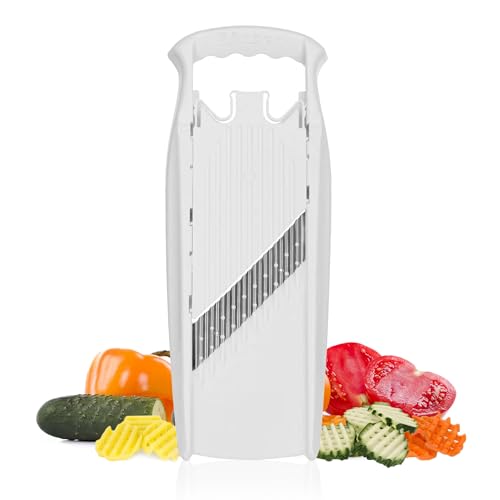
- TAR Score8.4
TAR Score is a ranking system developed by TopAppliancesReviews.com. TAR score has no relationship or impact from any manufacturers or sales agent websites. Learn more
- BrandSwissmar

- TAR Score8.0
TAR Score is a ranking system developed by TopAppliancesReviews.com. TAR score has no relationship or impact from any manufacturers or sales agent websites. Learn more
- BrandBOBOAR
Last update on 2026-10-02 / Affiliate links / Images, Product Titles, and Product Highlights from Amazon Product Advertising API
FAQs
Can you make waffle fries with an ordinary chef knife?
No, an ordinary straight chef knife cannot produce waffle fries. True waffle fries require alternating wavy ridges that intersect to punch open holes in the potato. A straight blade only produces flat slices, and trying to carve tiny square holes by hand with a knife tip ruins the potato and creates an unsafe slip hazard.
Why are my waffle fries solid in the middle instead of having holes?
Your potato slices are too thick. For waffle holes to open up, the valleys of your second wavy cut must cross deep enough to meet the valleys of your previous cut. Try slicing each piece thinner, aiming for roughly one-eighth of an inch, so the low points of the blade break through the center of the potato.
Should you peel potatoes before cutting waffle fries?
Peeling is a matter of personal choice and does not change how the waffle cuts form. Peeling gives you uniform golden fries with a classic fast-food appearance, while leaving the skin on adds an earthy flavor and rustic diner texture. If you choose to keep the skins on, scrub the potatoes clean under cold running water first.
Can you cut sweet potatoes into waffle fries with a crinkle knife?
Yes, you can cut sweet potatoes into waffle fries using the exact same slice-and-rotate technique. Sweet potatoes are denser and harder than russet potatoes, so you must push straight down with steady, firm pressure to avoid blade slippage. Slicing sweet potatoes slightly thinner also helps them cook through without burning, as their natural sugars caramelize quickly.


Top Rated Best Quality Range Hoods: 2026 Expert Picks

The 12 Best Small Solar Generators 2026

10 Best Quality Semi Automatic Washing Machine of 2026 For Leak-Free Laundry

11 Best Small Washer Machine of 2026 For Everyday Laundry

12 Best Vibration Pads For Washing Machine of 2026 To Stop Walking and Shaking

11 Best Selling Front Load Washing Machine of 2026 For Quiet Odor-Free Laundry

11 Best Washing Machine For King Size Bedding of 2026 To Prevent Cycle Errors

10 Best Small Front Loader Washing Machine of 2026 For Tight Closets