
How to Cut Up a Pineapple With a Knife Safely

Most people assume carving a whole fresh pineapple requires a specialty corer or advanced culinary training. That is completely false. Prepping the fruit cleanly takes only basic cutlery once someone slices off the ends to build a stable base, glides the blade down the rounded skin, and cuts away the tough inner core.
The specific cuts depend on whether the recipe calls for bite-sized chunks, spear-shaped wedges, or round rings. The knife itself makes a major difference, as a wide, sharp blade glides through the tough exterior without slipping, unlike a short utility knife. Cooks must also decide between shaving deep into the sides to remove the prickly brown spots quickly or carving shallow diagonal notches to preserve more juice. Setting up the cutting board the right way makes the entire process quick and completely safe.
A Sharp Chef Knife And Damp Towel Stop Slips
Cutting a fresh pineapple feels tricky because the fruit is heavy, round, and covered in prickly rind. A wobbly cutting board or a dull edge can cause the blade to slide off the tough exterior toward your fingers. Setting up your workspace takes two minutes and removes almost all physical risk before making your first slice.
Start by securing your work surface. Place a damp cloth or wet paper towel flat on your countertop, then set a large cutting board directly on top. Check the board by pushing against the corners with your palm. If it shifts, re-wet the towel and press down again. Pineapple flesh releases sticky juice that quickly turns a bare countertop into a slick hazard.
Next, pick the right blade. The safest tool is a standard chef knife (a wide 8-inch kitchen blade). Look for a knife with full tang (one solid piece of blade steel extending all the way through the handle). Full tang construction provides balance and stiffness, preventing the handle from flexing when cutting dense ends. A sturdy blade from German high-carbon steel premium knife block sets offers the heft needed to crack through thick rinds cleanly.
Assemble this setup on your counter before starting:
- Large cutting board: Use a wide plastic or wood board that leaves plenty of room to work without crowding your hands.
- Damp kitchen towel: Lay this flat under the board to anchor it against the counter.
- Sharp 8-inch chef knife: A wide, clean blade with a sharp edge that slices without crushing fruit.
- Small paring knife: A short 3-inch blade kept nearby for detailed eye trimming.
- Dry cloth: Keep a clean cotton towel within reach to wipe sweet juice off your hands and knife handle.
- Large bowl or rimmed plate: Set this nearby to hold trimmed chunks and catch stray juice.
Cut Both Ends Flat Before Peeling The Sides
The secret to peeling a pineapple without wrestling it across the counter is creating two flat, stable surfaces. A cylinder cannot roll if it rests on a flat plane. Once you remove the crown (the leafy green top) and the stem base, peeling the tough skin becomes a controlled, predictable motion.
Follow these numbered steps to trim the rind safely:
- Rinse and dry the fruit: Run cold tap water over the pineapple to wash away loose debris or dust. Dry the skin thoroughly with a clean towel so your grip stays secure.
- Lay the fruit on its side: Place the pineapple horizontally across your board. Grip the body firmly with your non-dominant hand, curling your fingers into a claw shape so your knuckles guide the blade instead of your fingertips.
- Cut off the crown: Place your chef knife a half-inch below the leafy green top. Slice straight down with a smooth forward motion to remove the crown.
- Cut off the base: Spin the pineapple around. Place your knife a half-inch above the bottom stem end and slice straight down. You now have two flat, parallel ends exposing the golden flesh.
- Stand the pineapple upright: Set the fruit upright on its wider cut base. Nudge it gently to confirm it stands upright without wobbling.
- Shave down the outer rind: Rest your knife at the top edge, just inside the tough skin. Slice downward toward the board, gently following the natural curve of the fruit. Shave just deep enough to remove the outer peel without wasting the yellow flesh beneath.
- Rotate and repeat: Turn the pineapple slightly after each cut. Continue slicing downward around the perimeter until all outer rind is gone.
Quarter The Fruit Lengthwise To Strip Out The Core
With the rind gone, you have a smooth yellow cylinder containing the core (the tough center rod). The core is non-toxic, highly fibrous, and full of vitamin C, but it is woody and tough to chew raw. You can save core trimmings in your freezer for smoothies or discard them.
Follow these steps to core the pineapple and cut clean chunks:
- Stand the fruit upright: Keep the peeled pineapple resting flat on your cutting board. Hold the top lightly, keeping your fingers clear of the cutting line.
- Cut the pineapple in half: Align your chef knife across the center of the top flat surface. Slice straight down to divide the fruit into two halves.
- Quarter the fruit: Lay each half flat side down on the board so it cannot rock. Slice down through the center of each half lengthwise to make four quarters.
- Remove the woody core: Stand one quarter upright on its flat base. Identify where the pale, fibrous core meets the softer, brighter yellow fruit. Slice downward along that seam at a slight angle to remove the core in one strip. Repeat for all four quarters.
- Slice into spears: Lay each cored quarter flat side down on the board. Cut lengthwise down the middle to produce two long spears per quarter.
- Cut into bite-sized chunks: Line up the spears and slice crosswise at three-quarter-inch intervals to create sweet, even fruit cubes.
- Store the cut fruit: Place cut cubes into a sealed, airtight container. Pour any juice collected on your board over the fruit. Store in the refrigerator, where it will stay fresh and sweet for up to five days.
For grilling rings instead of chunks, slice the peeled cylinder crosswise into half-inch rounds, then cut out the small round core from each slice using a paring knife.
Carve Shallow Diagonal Grooves To Remove The Brown Eyes
Shaving off the outer skin leaves behind small brown spots known as the eyes (brown prickly spots under the skin). These spots contain tough fibers and plant enzymes that can make your tongue feel prickly or sore if you chew them.
You can remove these eyes by shaving deeper with your chef knife during the initial peel, but that cuts away up to twenty percent of the sweetest fruit. The sugars concentrate heavily right near the outer peel where sunlight warms the fruit.
Carving shallow diagonal grooves saves that fruit. The eyes naturally line up in neat, parallel spiral rows winding upward around the pineapple at a forty-five-degree angle.
A sharp paring knife or a nimble blade from Japanese chef knife sets makes this spiral work effortless. The fine, steep edge cuts cleanly without crushing juicy fruit cells.
Locate a single diagonal row of brown eyes. Place the tip of your knife blade just above the row, angling the blade inward at forty-five degrees. Cut a shallow slit along the full row. Move your knife just below that same row, angle the blade upward at forty-five degrees, and cut another slit. The two cuts meet underneath the eyes in a V-shaped groove.
Lift the strip away, and the entire row of eyes comes out in one ribbon. Repeat this along each spiral path around the pineapple. The result is a decorative spiral pattern that leaves all the sweetest yellow fruit on your cutting board.
Avoid Dull Blades, Rocking Fruit, And Wasteful Deep Cuts
Prepping tropical fruit is simple once you establish a rhythm, but several common habits cause slipped blades or wasted fruit.
Keep this checklist in mind while cutting:
- Avoid dull blades: A dull knife skids off the waxy skin instead of biting into it. This forces you to push downward too hard, causing dangerous slips. Keep your kitchen knife sharp.
- Never cut a rolling cylinder: Always slice off the top and bottom ends before attempting to remove the rind. Flat bases keep the fruit planted on the board.
- Do not use a flexible bread knife: Thin serrated bread knives bend and drift inside dense fruit. This causes uneven cuts and raises your risk of losing control.
- Never cut toward your supporting hand: Always cut downward toward the board, keeping your stabilizing fingers curled into a claw.
- Do not trim the base too high: Sugars naturally sink to the base as the fruit ripens. Keep your bottom cut to roughly a half-inch so you do not throw away the sweetest portion.
- Do not leave cut fruit uncovered: Unsealed pineapple dries out and absorbs refrigerator odors. Always pack chunks into an airtight container promptly.
Dedicated Tools Help Anyone Struggling With Heavy Knives
A standard kitchen knife handles this job with ease, but some cooks find guiding a wide blade through dense fruit tough on their wrists. Hand fatigue, joint stiffness, or limited grip strength make controlling heavy cutlery uncomfortable. Dedicated pineapple tools provide a practical alternative that removes the physical effort while keeping fingers safe.
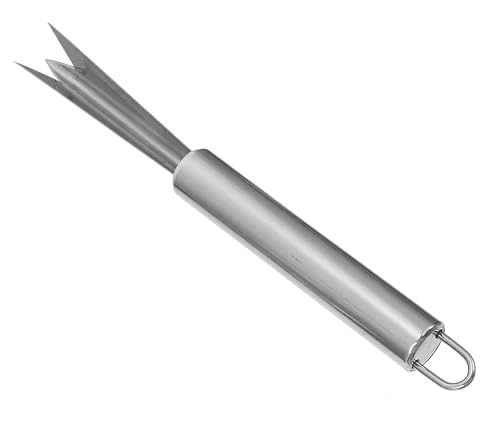
When choosing tools for pineapple prep, look for sturdy stainless steel (rust-resistant, easy-to-clean metal). Thin metal components bend under the downward force required to core tropical fruits. Eye-pulling tools should feature a rigid V-shaped tip and a broad handle that lets your thumb apply steady leverage without slipping.
For uniform rings, look for a ratcheting coring tool with a wide, textured handle that gives you positive traction when wet with sweet juice. Verify that the coring shaft detaches easily from the handle so you can slide fruit rings off without tearing them. Simple designs with few moving parts are easiest to rinse clean, preventing sugary juice from gumming up the mechanism.

- TAR Score9.4
TAR Score is a ranking system developed by TopAppliancesReviews.com. TAR score has no relationship or impact from any manufacturers or sales agent websites. Learn more
- BrandVILPKWMP

- TAR Score9.4
TAR Score is a ranking system developed by TopAppliancesReviews.com. TAR score has no relationship or impact from any manufacturers or sales agent websites. Learn more
- BrandTasty
- TAR Score8.8
TAR Score is a ranking system developed by TopAppliancesReviews.com. TAR score has no relationship or impact from any manufacturers or sales agent websites. Learn more
- BrandJJLFresheners

- TAR Score7.0
TAR Score is a ranking system developed by TopAppliancesReviews.com. TAR score has no relationship or impact from any manufacturers or sales agent websites. Learn more
- BrandHonbay
Last update on 2026-10-03 / Affiliate links / Images, Product Titles, and Product Highlights from Amazon Product Advertising API


Top Rated Best Quality Range Hoods: 2026 Expert Picks

The 12 Best Small Solar Generators 2026

10 Best Quality Semi Automatic Washing Machine of 2026 For Leak-Free Laundry

11 Best Small Washer Machine of 2026 For Everyday Laundry

12 Best Vibration Pads For Washing Machine of 2026 To Stop Walking and Shaking

11 Best Selling Front Load Washing Machine of 2026 For Quiet Odor-Free Laundry

11 Best Washing Machine For King Size Bedding of 2026 To Prevent Cycle Errors

10 Best Small Front Loader Washing Machine of 2026 For Tight Closets






