
How to Cut Drywall Cleanly With a Utility Knife

Cutting drywall takes three quick motions: score the face paper with a sharp blade, snap the chalky rock core along that line, and slice the backing paper from behind. That smooth break works across the whole panel, but corner cutouts and outlet holes require a slightly different approach. Forcing a blade all the way through the thick board only crushes the core, so letting the panel snap along a single score line keeps the seam flat and clean.
How cleanly that break turns out depends on a fresh blade, steady support, and the shape of your cut. A dull knife will drag and chew the paper, while letting the panel hang without support can crack the board in the wrong direction. Taking a minute to set up your straightedge ruler and support the sheet ensures a straight, trouble-free break. Here is how to make every cut cleanly on your first try.
You only need to cut the surface paper
Drywall panels are built like a plaster sandwich. Inside sits a gypsum core (a chalky rock center), and outside are two layers of heavy paper. The paper provides the structural tension that keeps the sheet rigid. The gypsum rock inside is brittle and crumbles under blunt force. Forcing a knife blade all the way through a half-inch sheet crushes that chalky core, tears the paper, and sends the blade wandering. That leaves you with ragged edges that are difficult to hang flat or cover with tape.
You never have to cut through the entire board with your knife; you only need to score the paper (slice through the outer paper with a clean line). Slicing the paper breaks the surface tension that holds the panel rigid. Once that paper is cut, the chalky gypsum core snaps cleanly along that line with light hand pressure.
Always score the front face of the board first. The front is the smooth, light-colored side that faces into the room. If you score the darker back paper first, snapping the board forces the front paper to stretch and tear unevenly. That torn paper leaves ragged bubbles and loose flaps that show through paint and ruin your seams.
Use moderate, steady pressure on your knife. You do not need to lean your body weight into the cut. Press just hard enough so the blade slices cleanly through the paper and barely nicks the chalky rock underneath. Pushing too hard dulls the razor tip quickly and increases the danger of your blade slipping off the guide.
Straight cuts snap cleanly using three basic steps
Cutting a full sheet from edge to edge takes less than a minute. Setting up the cut properly ensures the chalky core breaks in a clean, vertical line without crumbling.
- Score the front paper along a guide. Mark your measurements at the top and bottom of the panel with a pencil. Align a straightedge (a long metal guide ruler or drywall T-square) along both pencil marks. Hold the metal guide firmly against the board, keeping your fingers pulled back from the metal edge. Rest your knife blade against the guide, tilt the handle slightly forward, and pull the knife toward you in one smooth stroke from edge to edge.
- Snap the chalky core along the score line. Move the panel so the cut line sits directly over a firm edge, such as the side of a work table, a scrap two-by-four, or a level floor. Place one hand behind the sheet along the cut line to support it. Use your other hand to push the waste side firmly away from the scored face. The rock core will fracture with a crisp snap directly under your cut line.
- Slice the back paper along the folded crease. Fold the snapped waste piece backward at a right angle so it acts like a hinge. Place your utility knife blade in the sharp paper crease on the back side and slide the blade straight down the fold. The back paper separates instantly, leaving two panels with sharp, vertical edges.
Supporting the panel correctly during the snap prevents broken corners. If a heavy sheet hangs unsupported in the air while you snap it, the weight causes it to twist. That twisting cracks the chalky core diagonally across the panel instead of following your scored line. Always keep the sheet flat on a solid surface or firmly balanced on the floor before applying snapping pressure.
Cutout openings require penetrating cuts before snapping
Remodeling projects often require cutouts for door frames, electrical boxes, and plumbing pipes. Because the surrounding board locks the shape in place, you cannot snap both directions at once. You must cut through the board on at least one side before snapping the rest.
Cutting L-shaped corner panels
When fitting drywall around a door or window, you need an L-shaped cutout. Snapping both lines without a through-cut will tear diagonally through your good panel.
- Mark the cutout lines on the front face of the board with a pencil.
- Cut the shorter line completely through the board. Use a jab saw (a small pointed hand saw with coarse teeth) to cut from the edge of the panel to the inside corner. If you only have a utility knife, score the line repeatedly along your straightedge, pressing deeper with each pass until the blade penetrates through the back paper.
- Score the longer line along your straightedge with one clean pass of your utility knife, stopping at the inside corner.
- Snap the board backward along the scored line, then slice the back paper along the crease with your utility knife to free the piece.
Cutting electrical outlet and switch boxes
Electrical boxes require rectangular openings that match the box dimensions so wall plates cover the gap completely.
- Measure from the nearest wall stud and the floor to the box edges, then mark that rectangle on the front face of the drywall.
- Score the four perimeter lines of the rectangle firmly with your utility knife.
- Score an X-shaped cut diagonally from corner to corner inside the rectangle.
- Tap the center of the X gently with your knife handle or a rubber mallet to break the chalky rock core inside the box shape.
- Push the four small rock triangles outward toward the back of the panel, then slice the rear paper along the scored perimeter lines to clear the hole.
Always verify safety before cutting into existing walls. Shut off power at the main electrical breaker panel before cutting into a wall for repairs. Never push a knife or saw blade into a closed wall cavity without confirming where live wires or pipes run.
Rough gypsum edges shave smooth with your utility blade
Even with careful scoring, a damp spot or a slip can leave chunks of the chalky core sticking out past your line. If left untouched, these bumps push joints out of alignment and create wavy walls that take heavy coats of joint compound to disguise.
You can shave off gypsum high spots quickly using your utility blade like a miniature hand plane. Stand the sheet on its edge to reach the rough spot. Hold your utility knife so the blade sits at a ninety-degree angle to the cut edge of the board. Draw the blade backward along the edge in a firm scraping motion rather than a slicing cut. The hardened steel blade easily scrapes away the soft chalky rock, leveling high spots flat in two or three passes.
Torn paper requires immediate attention, but never pull loose paper tags with your fingers. Pulling on a torn flap peels a long strip off the finished face of the board, leaving a wide scar that bubbles under paint. Lay your utility knife flat against the board and slice the loose paper flap off cleanly right at its base, leaving the surrounding face paper undamaged.
Drywall cuts do not need to look like fine furniture joints. Once the panel is fastened to the studs, seams are covered with paper tape and joint compound. As long as your cut edge is flat and free of protruding rock chunks or peeling paper, the finished joint will tape up smoothly.
Sharp blades and stable hands keep cuts clean and safe
A sharp utility knife cuts drywall easily, but a dull blade turns an easy job into a safety hazard. Gypsum wears down razor edges quickly. After cutting through three or four panels, a standard blade begins tearing the paper instead of gliding through it.
Keep these knife control and safety practices in mind on every cut:
- Keep your guide hand behind the metal edge. When holding your straightedge guide down on the board, keep your hand flat with your fingers curled inward toward the center of the ruler. Never allow your thumb or fingertips to stick out over the edge where the blade travels.
- Pull the knife blade away from your body. Position yourself so you draw the blade along the guide toward open space, never toward your chest, legs, or free hand. If the blade skips off the metal ruler under pressure, it will travel safely into empty air.
- Change dull blades before they tear the board. A dull blade forces you to lean heavily on the knife, increasing the chance of slipping. While cooks care for delicate edges found in German high-carbon steel premium knife block sets through frequent honing, drywall work destroys fine edges within a few cuts, requiring frequent blade changes instead. Standard utility blades have two cutting ends, so open the knife handle and flip the blade around the moment the paper drags or tears.
- Retract the blade whenever you set the knife down. An open razor blade left lying on a drywall panel or a stepladder is a serious hazard. Make sliding the blade back into its protective casing an automatic habit every time you complete a cut.
- Dispose of used blades inside a taped container. Never toss bare razor blades loose into a trash bag, where they can slice through the plastic. Drop dull blades into a sealed blade disposal case or wrap them completely in heavy tape before throwing them away.
A rigid locking utility knife gives the cleanest cuts
Having the right style of utility knife makes a noticeable difference in how straight and effortless your drywall cuts feel. While basic utility knives look similar, their blade locking mechanisms and body designs vary significantly.
Choose a heavy-duty utility knife with a rigid metal body rather than a light plastic casing. When you score drywall along a straightedge, you apply lateral side pressure against the metal ruler to keep the cut straight. Thin plastic knives flex under that sideways force, allowing the blade to wander away from your line. A solid metal knife maintains a firm, straight path without bending.
Look for a model with a secure blade clamp or positive locking notch. Retractable knives with loose blade holders allow the razor tip to shift up and down under pressure, resulting in uneven scoring depths. A tight locking mechanism keeps the blade firmly secured so every pass cuts at an even depth.
Internal blade storage and quick-change buttons also save time. Because cutting through abrasive gypsum requires changing or flipping blades regularly, a push-button mechanism eliminates the need to hunt for a screwdriver. Built-in handle storage keeps fresh replacement blades within reach, keeping your project moving smoothly.
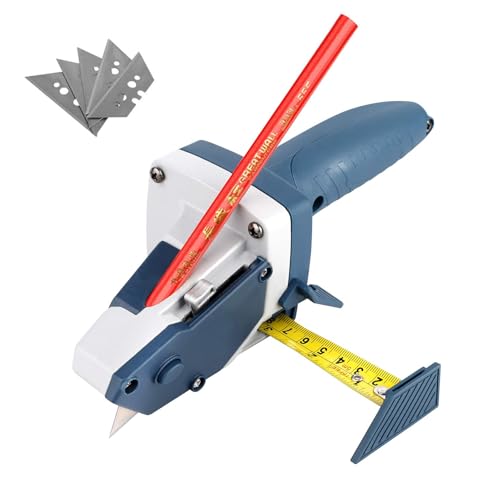
- TAR Score10.0
TAR Score is a ranking system developed by TopAppliancesReviews.com. TAR score has no relationship or impact from any manufacturers or sales agent websites. Learn more
- BrandTRUTOPWAY

- TAR Score9.6
TAR Score is a ranking system developed by TopAppliancesReviews.com. TAR score has no relationship or impact from any manufacturers or sales agent websites. Learn more
- BrandWORKPRO

- TAR Score9.6
TAR Score is a ranking system developed by TopAppliancesReviews.com. TAR score has no relationship or impact from any manufacturers or sales agent websites. Learn more
- BrandWORKPRO

- TAR Score9.4
TAR Score is a ranking system developed by TopAppliancesReviews.com. TAR score has no relationship or impact from any manufacturers or sales agent websites. Learn more
- BrandWORKPRO

- TAR Score9.4
TAR Score is a ranking system developed by TopAppliancesReviews.com. TAR score has no relationship or impact from any manufacturers or sales agent websites. Learn more
- Brandlizenoz

- TAR Score9.2
TAR Score is a ranking system developed by TopAppliancesReviews.com. TAR score has no relationship or impact from any manufacturers or sales agent websites. Learn more
- BrandDEWALT

- TAR Score9.2
TAR Score is a ranking system developed by TopAppliancesReviews.com. TAR score has no relationship or impact from any manufacturers or sales agent websites. Learn more
- BrandEdward Tools

- TAR Score9.2
TAR Score is a ranking system developed by TopAppliancesReviews.com. TAR score has no relationship or impact from any manufacturers or sales agent websites. Learn more
- BrandFiskars

- TAR Score9.0
TAR Score is a ranking system developed by TopAppliancesReviews.com. TAR score has no relationship or impact from any manufacturers or sales agent websites. Learn more
- BrandSpec Ops
Last update on 2026-10-04 / Affiliate links / Images, Product Titles, and Product Highlights from Amazon Product Advertising API


Top Rated Best Quality Range Hoods: 2026 Expert Picks

The 12 Best Small Solar Generators 2026

10 Best Quality Semi Automatic Washing Machine of 2026 For Leak-Free Laundry

11 Best Small Washer Machine of 2026 For Everyday Laundry

12 Best Vibration Pads For Washing Machine of 2026 To Stop Walking and Shaking

11 Best Selling Front Load Washing Machine of 2026 For Quiet Odor-Free Laundry

11 Best Washing Machine For King Size Bedding of 2026 To Prevent Cycle Errors

10 Best Small Front Loader Washing Machine of 2026 For Tight Closets






