
How to Cut a Watermelon With a Knife Safely

Cut off both ends first. Slicing a thin cap off each end gives the melon flat, stable bases so it cannot wobble across your counter. Standing the fruit upright on a flat cut lets you halve it straight down the center with complete control. That single step stops the slippery green skin from rolling away, which keeps your fingers safely out of the blade's path.
The exact technique shifts depending on your knife and serving plan. A long kitchen knife or a saw-toothed bread blade cuts through tough rinds much easier than a short blade. Huge oblong watermelons usually need dividing crosswise into thick rings first, while round personal melons are ready to slice immediately. Your goal also decides whether to leave the rind on for classic wedges, cut neat party sticks, or carve bite-sized cubes for a bowl. Here is how to cut every shape without slipping or making a mess.
Knife Choice and Board Setup
Cutting a large watermelon safely starts before the blade ever touches the fruit. A standard watermelon is heavy, round, and covered in a slick, waxy outer layer. If your cutting board shifts on the counter or your blade is too short, the knife can bind inside the melon or slip toward your fingers. Taking two minutes to set up your workspace keeps you in total control.
Your cutting board must be larger than the melon itself. A small board causes the curved edges of the fruit to hang over the sides, making the melon rock unpredictably. Place a damp cloth or a wet paper towel flat on the counter directly underneath your cutting board. This simple friction pad stops the board from sliding across the counter when you push down with the blade. If you have a cutting board with a deep juice groove carved around the outer perimeter, use it. A ripe melon can release over a cup of liquid as soon as you breach the surface.
Choosing the right blade makes an enormous difference in safety and effort:
- A large everyday kitchen knife (chef's knife): An 8-inch to 10-inch blade gives you the length needed to slice clean through the melon in one smooth motion. A sturdy German high-carbon steel chef knife has the spine thickness and weight needed to split dense rinds without twisting.
- A long saw-toothed blade (serrated bread knife): The teeth bite straight into the slick rind instead of sliding off the glossy skin. A serrated knife requires less downward pressure because the sawing action parts the tough outer skin naturally.
- Blades to avoid: Never use a short paring knife, a steak knife, or a dull utility knife. Short blades get buried inside the melon, forcing you to pry the knife loose or press down on the exposed tip with your free palm.
Core Steps to Cut Any Watermelon Safely
The secret to slicing any round melon without incident is removing its ability to roll. Once the fruit sits flat against the cutting board, downward blade pressure stabilizes the melon instead of pushing it away. Follow these essential steps to break down a whole watermelon safely:
- Wash the melon under cool running water and scrub the skin with your hands. Reason: Cutting pushes the knife blade from the outside surface straight into the center flesh, which carries any dirt or microbes on the skin into the fruit you plan to eat.
- Dry the rind thoroughly using a clean kitchen towel. Reason: Wet melon skin is exceptionally slick, making it difficult for your non-cutting hand to hold the fruit securely against the board.
- Slice off half an inch from the stem end and blossom end to expose the red flesh. Reason: Trimming the ends creates two wide, perfectly flat bases that prevent the melon from rolling across your counter.
- Stand the watermelon upright on one of its freshly cut flat ends. Reason: Standing the fruit vertically centers its mass and directs all downward cutting force straight into your cutting board.
- Cut straight down through the center of the melon from top to bottom. Reason: Splitting the fruit in half exposes the central grain, relieves internal rind pressure, and creates two flat, manageable pieces that will not rock.
- Rest both halves flat-side down on your cutting board before making any further cuts. Reason: Keeping the flat cut side pressed against the board ensures the fruit remains completely stationary while you slice it into smaller portions.
Cutting Classic Handheld Watermelon Wedges
Wedges are the traditional choice for backyard cookouts, pool parties, and park picnics. The tough green outer skin (rind) stays attached to each slice, giving everyone a clean, built-in handle that keeps sticky fruit sugars off their palms.
Start with your two watermelon halves resting cut-side down on your board. Slice each half right down the center to turn them into four equal quarters. You will now have four long, boat-shaped sections. If you are working with a very long oblong melon, you can slice each quarter in half crosswise first so the sections fit comfortably across your cutting surface.
Take one quarter section and rest it on one of its flat, fleshy sides. Hold the top of the melon firmly with your guide hand, curling your fingertips inward like a bear claw so your knuckles rest against the side of the blade. Slice across the quarter section at one-inch intervals, cutting straight through the crisp flesh and outer rind down to the board. Repeat this across all four quarters. You will end up with neat, triangular wedges that stack easily on a serving platter.
Cutting Kid-Friendly Watermelon Sticks
Watermelon sticks are far less messy than wide wedges, making them ideal for young children and casual gatherings. Traditional wedges force children to bury their faces into the slice, coating their cheeks and ears in sticky juice. Sticks provide a narrow, bite-sized column of fruit with a small square of rind at the base for easy holding.
Place one melon half flat-side down on your board. Do not quarter it. Keeping the half intact provides a broad, anchored base that will not slide around while you make multiple straight cuts. Position your knife at one edge of the melon half, about one inch from the rim.
Slice all the way through the melon from top to bottom in clean, parallel lines spaced about one to one and a half inches apart across the entire dome. Next, spin your cutting board 90 degrees. Slice across the dome in the opposite direction, using the exact same spacing. This creates a grid pattern across the rounded rind. Once finished, you can simply pull individual rectangular sticks straight up out of the grid. Each stick comes out cleanly with red fruit at the top and a neat square of rind at the bottom.
Cutting Watermelon Cubes for Salads and Bowls
If you want to toss melon into a summer salad or pack it into lunch containers, you need to strip away both the tough green outer skin (rind) and the firm white layer under the skin (pith). The pith is edible but tough, flavorless, and dense, so trimming it off leaves only sweet, tender red flesh.
Stand your trimmed melon upright on one of its flat cut ends. Place the blade of your knife at the top edge of the fruit, right where the red flesh meets the white pith. Angle the blade slightly outward to follow the natural curve of the melon. Slice downward in smooth, gentle strokes, shaving off vertical strips of the green skin and white pith from top to bottom.
Work your way all the way around the fruit until no green skin remains. Inspect the melon and shave away any leftover patches of white pith so you are left with a smooth, solid ball of red fruit. From here, lay the peeled melon on its side and cut it in half. Place each half flat-side down on your board.
Slice the half horizontally into planks that match your desired cube thickness, usually one inch thick. Next, cut downward through the planks in one-inch vertical strips. Finally, slice across those strips at one-inch intervals to produce clean, even cubes. Transfer the cubes directly into a storage bowl. If you use a high-performance high-carbon chef knife, the razor edge glides through the fruit without bruising the flesh cells, keeping the cubes firm instead of mushy.
Common Watermelon Cutting Mistakes to Avoid
Watermelon accidents usually happen when a cook rushes the job or tries to muscle through the fruit with the wrong technique. Being mindful of these common missteps will keep your prep work safe and clean:
Cutting into a rolling melon: Never try to slice a round melon in half while it rests on its curved belly. Watermelons roll unpredictably, and pushing a knife down into an unstable sphere causes the blade to twist sideways. Always slice off the stem and blossom ends first so the fruit stands firmly on a flat foundation.
Sawing back and forth with heavy pressure: Forcing a blade downward with raw arm strength invites slipping. If your knife gets wedged midway through the melon, do not pound on the spine of the knife with your palm. Instead, gently pull the blade backward to free it, or turn the melon slightly and let the blade follow the original cut line from the opposite side.
Using a dull blade: A dull edge cannot penetrate the glossy, tough outer skin easily. It skips across the surface, requiring excessive force that can send the knife skittering toward your non-dominant hand. Keep your kitchen blades sharpened so the edge bites cleanly on the first pass.
Ignoring juice buildup: Liquid pooling on your cutting surface turns the board into an ice rink. Keep a dry kitchen towel nearby. Wipe down your board between halving and slicing into final shapes to keep your cutting surface tacky and secure.
What to Look for in a Watermelon Knife
If you prepare large melons regularly, having the right cutting tool saves significant effort and prevents kitchen hand fatigue. You do not need a fragile, specialty carving knife, but your blade must have the correct dimensions and construction to handle dense, thick-skinned produce.
Look for a blade length of at least 8 to 10 inches. A blade shorter than 8 inches forces you to make multiple disjointed cuts across the diameter of the fruit, leaving jagged edges and tearing the delicate flesh. A longer blade spans the entire width of standard melons, letting you cut straight through in one clean draw.
Blade construction matters just as much as length. Choose a knife with full tang construction, which means one solid piece of blade steel extends all the way through the handle. Full tang knives offer the structural strength needed to withstand downward leverage without snapping or bending loose at the bolster. Choose rust-resistant stainless steel or treated high-carbon steel, as the high water and sugar content in melon juice can quickly spot or rust untreated blades if left wet.
Pay attention to the handle grip. Wet melon juice will inevitably reach your fingers during prep work. Look for textured composite handles, slip-resistant rubberized coatings, or shaped wood that stays secure in your palm even when your hands are wet.

- TAR Score8.8
TAR Score is a ranking system developed by TopAppliancesReviews.com. TAR score has no relationship or impact from any manufacturers or sales agent websites. Learn more
- BrandGeneric
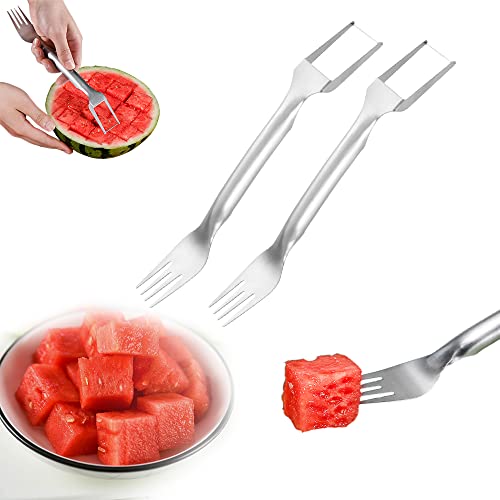
- TAR Score8.8
TAR Score is a ranking system developed by TopAppliancesReviews.com. TAR score has no relationship or impact from any manufacturers or sales agent websites. Learn more
- BrandTeamoda

- TAR Score8.2
TAR Score is a ranking system developed by TopAppliancesReviews.com. TAR score has no relationship or impact from any manufacturers or sales agent websites. Learn more
- BrandBUBBLE-FLY

- TAR Score8.0
TAR Score is a ranking system developed by TopAppliancesReviews.com. TAR score has no relationship or impact from any manufacturers or sales agent websites. Learn more
- BrandCrispTaste

- TAR Score7.6
TAR Score is a ranking system developed by TopAppliancesReviews.com. TAR score has no relationship or impact from any manufacturers or sales agent websites. Learn more
- BrandDKYEUD

- TAR Score7.2
TAR Score is a ranking system developed by TopAppliancesReviews.com. TAR score has no relationship or impact from any manufacturers or sales agent websites. Learn more
- Brandchoxila

- TAR Score6.0
TAR Score is a ranking system developed by TopAppliancesReviews.com. TAR score has no relationship or impact from any manufacturers or sales agent websites. Learn more
- BrandMaoMaoCha

- TAR Score4.2
TAR Score is a ranking system developed by TopAppliancesReviews.com. TAR score has no relationship or impact from any manufacturers or sales agent websites. Learn more
- BrandCabilock
Last update on 2026-10-04 / Affiliate links / Images, Product Titles, and Product Highlights from Amazon Product Advertising API
FAQs
What kind of knife is best for cutting a watermelon?
An 8-inch to 10-inch chef knife or a long serrated bread knife works best. The length allows you to slice across the entire melon in a single pass without getting the blade wedged inside the rind. Serrated teeth are particularly helpful for piercing tough, glossy skins without slipping.
How do you keep watermelon juice from flooding the counter?
Place your cutting board inside a large rimmed baking sheet before you start cutting. The raised edges of the baking sheet catch every drop of liquid that rolls off the board, keeping your countertops completely dry. You can also pick a cutting board with a deep built-in juice perimeter groove.
Can you eat the white part of the watermelon rind?
Yes, the firm white layer under the skin, known as the pith, is completely edible and safe to consume. It has a mild, crisp texture similar to a cucumber, though it contains very little natural sugar. Many people pickle it, shred it into fresh slaws, or blend it directly into smoothies.
How long does cut watermelon stay fresh in the refrigerator?
Freshly cut watermelon wedges and cubes stay fresh for three to five days when stored in an airtight container in the refrigerator. Placing a paper towel or a small plastic drain tray at the bottom of the container keeps the bottom pieces from sitting in pooled juice and turning mushy.


Top Rated Best Quality Range Hoods: 2026 Expert Picks

The 12 Best Small Solar Generators 2026

10 Best Quality Semi Automatic Washing Machine of 2026 For Leak-Free Laundry

11 Best Small Washer Machine of 2026 For Everyday Laundry

12 Best Vibration Pads For Washing Machine of 2026 To Stop Walking and Shaking

11 Best Selling Front Load Washing Machine of 2026 For Quiet Odor-Free Laundry

11 Best Washing Machine For King Size Bedding of 2026 To Prevent Cycle Errors

10 Best Small Front Loader Washing Machine of 2026 For Tight Closets






