
How to Cut a Pomegranate With a Knife Without the Mess

Grab a small paring knife and slice off just the raised blossom crown at the top of the fruit. Doing this exposes the natural white ribs inside so the fruit opens along its own seams. Instead of sawing through the center, score the outer skin along the ridges from top to bottom, then pry the segments apart gently with both hands. Cutting straight across the middle crushes dozens of delicate juice pockets at once, sending red liquid spraying across clothes and countertops.
The exact approach comes down to blade control and how the seeds get separated. A short, sharp blade keeps cuts shallow so the metal never punctures the edible interior. Once the fruit breaks into wedges, releasing the seeds works best by either pulling them apart submerged in a bowl of water or tapping the outer rind with a sturdy spoon. A few simple adjustments keep every drop of juice inside the bowl where it belongs.
Why a Short Paring Knife Beats a Heavy Blade
Most kitchen disasters with pomegranates happen because people reach for the wrong knife. When you grab a heavy eight-inch chef knife and try to chop straight down through the fruit, the wide blade acts like a wedge. It crushes dozens of arils (the edible red seeds filled with tart juice) before the blade even reaches the cutting board. That pressure squirts deep red juice across your countertop, your walls, and your shirt.
A pomegranate has a tough, leathery outer rind that protects tightly packed clusters of juice sacs. Pushing a large knife through that thick skin requires downward force. If the blade slips on the waxy rind, you risk cutting your hand. Even if the blade stays steady, slicing straight through the center hacks every seed in its path in half. You lose delicious fruit and create an unnecessary puddle of sticky red liquid.
The secret to clean prep is using a paring knife (a small kitchen knife with a short blade, usually two to four inches long). A short blade gives you complete control over how deep the steel goes. You can hold the knife close to the tip with your thumb and index finger resting near the spine. That grip lets you guide the point with gentle, precise movements instead of brute strength.
You do not need a specialized blade to get this job done, but sharpness is critical. A sharp paring knife glides right through the tough outer peel without pressing into the delicate pockets underneath. If you keep a set of reliable kitchen blades, such as the knives found in high-carbon steel kitchen knife block sets, pull out the smallest utility or paring blade for this task. You will slice only what needs slicing and leave every single seed intact.
The Clean Cut Technique: Step-by-Step
Opening a pomegranate cleanly comes down to working with the fruit's natural structure instead of fighting it. Pomegranates are divided internally into separate chambers by spongy membranes. If you cut along those internal boundary lines, the fruit will fall apart into neat wedges with almost zero effort.
Before you make your first cut, spend thirty seconds setting up your station. A little preparation prevents slips, saves time, and keeps your kitchen spotless.
- Stable cutting board: Place a damp paper towel or thin damp washcloth flat beneath your cutting board so it cannot slide while you cut.
- Sharp paring knife: Make sure your blade is clean, dry, and sharp enough to slice the skin without crushing it.
- Dark clothes or an apron: Even with careful cutting, one runaway seed can roll off the counter. Protect light fabrics just in case.
- Large mixing bowl: Keep a wide bowl nearby so you have a clean place to set the fruit pieces as you open them.
Once your workspace is ready, follow these four simple steps to open the fruit safely.
- Shave off the crown: Set the pomegranate upright on your cutting board with the woody blossom (the crown) pointing up. Hold the fruit firmly around its middle with your non-cutting hand, curling your fingertips inward like a claw. Using your paring knife, slice a thin cap off the top around the crown, cutting only about a quarter of an inch deep. Lift the top cap away. You will now see the top of the fruit exposing several clusters of red arils separated by white lines.
- Spot the natural ridges: Look down at the exposed top and along the sides of the fruit. A pomegranate is not a smooth, round sphere. It actually has subtle flat sides and raised ridges running from the top down to the bottom stem. These ridges show you exactly where the internal pith (the bitter white inner skin) divides the fruit into chambers. There are usually five or six ridges around the outside.
- Score along each ridge: Place the tip of your paring knife at the top edge of one ridge. Scoring means cutting shallowly through the outer peel only. Draw the tip of the blade down along the ridge toward the base of the fruit. Cut only about one-sixteenth to one-eighth of an inch deep. You want to pierce the red rind without slicing into the seeds below. Repeat this shallow score along every visible ridge from top to bottom.
- Pry the sections open: Set the knife down completely. Place both thumbs into the center core at the top of the fruit, where you removed the crown. Rest your fingers along the outer scored wedges. Gently pull outward with your thumbs. The fruit will naturally split along the scored lines with a soft cracking sound. It opens up into clean, wedge-shaped segments like flower petals, without bursting a single seed.
Getting the Seeds Out: Water Bowl Method vs. Spoon Tapping
Once your pomegranate is broken into open wedges, you need to separate the edible seeds from the bitter white pith. Home cooks rely on two main ways to do this: working underwater in a bowl, or tapping the back of the rind with a heavy wooden spoon. Both methods work well, but they fit different kitchen situations.
The water bowl method is the cleanest, most reliable choice for anyone worried about stains. To use this method, fill a large mixing bowl about halfway with cool tap water. Take one of your separated pomegranate wedges and hold it entirely submerged beneath the surface. Using your fingers, gently roll your thumbs over the clusters to pry the seeds away from the rind and the white membrane.
Physics does the hard work for you here. The red arils are dense and full of juice, so they immediately sink to the bottom of the bowl. The spongy white pith contains tiny pockets of trapped air, which makes it float right to the top. Any stray drops of juice that release stay trapped in the water instead of splattering your counter. Once you finish all the wedges, simply skim the floating white pith off the surface with your fingers or a slotted spoon. Pour the remaining water and seeds through a colander, and you have a bowl of clean, ready-to-eat arils.
The wooden spoon tap is the traditional method, and it is much faster once you get comfortable with it. Take a scored half or a large wedge and hold it face down in the palm of your hand, spreading your fingers slightly. Hold your hand over a deep mixing bowl. Take a sturdy wooden spoon or heavy kitchen spoon in your other hand and rap the back of the red rind with firm, steady taps.
The sharp vibrations travel through the leathery skin and knock the seeds loose from the connective membranes. The arils drop cleanly through your fingers straight into the bowl below. This method takes less than a minute for an entire pomegranate. But it does have two trade-offs. First, stray droplets can fly outward if your bowl is too shallow. Second, small pieces of broken white pith fall into the bowl along with the seeds, so you will need to spend a minute picking those bitter white bits out by hand.
If you want zero cleanup and spotless counters, choose the water bowl method every time. If you are in a rush, wearing an apron, and using a tall, deep bowl, the spoon tap gets the job done in record time.
Common Pomegranate Cutting Mistakes to Avoid
Cutting a pomegranate is simple once you know the structure of the fruit, but a few small missteps can still turn your kitchen into a crime scene. Keep these practical habits in mind whenever you prep this fruit.
- Cutting straight through the middle: Never treat a pomegranate like an orange or an apple. Slicing straight across the fruit cuts directly through hundreds of juice chambers at once. That creates an instant mess and wastes a large portion of the edible fruit. Always cut off only the top crown and pry the natural wedges apart by hand.
- Using a dull blade: The outer skin of a pomegranate is tough, waxy, and slick. A dull blade can skate off the surface and head toward your holding hand. Sharp kitchen blades, such as finely honed blades from high-carbon Japanese chef knife sets, cut through the rind with light surface contact, giving you steady control and preventing dangerous slips.
- Scoring too deep into the fruit: Remember that scoring only requires cutting through the thin outer peel. If you push your knife half an inch deep into the fruit, you will slice through the arils inside and cause the very juice leaks you are trying to avoid. Keep your cut shallow.
- Letting your cutting board slide around: Always secure your cutting board with a damp towel underneath. When a board shifts while you score a curved, rolling fruit, your knife can jump off track and ruin your cut or nick your finger.
- Leaving bits of white pith in the seeds: The bitter white inner skin contains high levels of tannins, which leave an astringent, dry taste in your mouth. Always take a moment to discard every trace of white membrane so you enjoy only sweet, crisp fruit.
What to Look For in Pomegranate Prep Tools
You do not need a drawer full of single-use kitchen tools to open a pomegranate, but the right basic equipment makes the job much smoother. When selecting a knife for this task, focus on blade size, blade shape, and handle comfort.
Look for a paring knife with a blade length between three and four inches. A blade longer than four inches feels awkward when you try to score shallow lines around a round fruit. A spear-point or drop-point blade shape gives you a narrow, sharp tip that pierces tough skin cleanly without tearing. Choose a knife made from rust-resistant stainless steel. Pomegranate juice is naturally acidic, and stainless steel wipes clean easily without reacting to fruit acids or developing rust spots during standard washing.
Handle grip matters just as much as blade sharpness. Look for a handle that feels secure in your hand even if your fingers get wet from rinsing fruit. Ergonomic handles with textured surfaces prevent twisting when you press down on the rind.
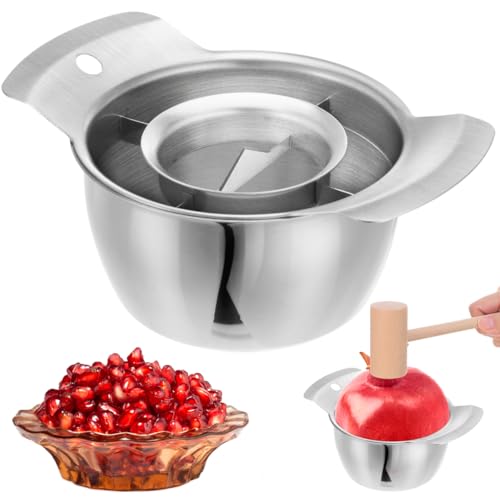
If you prepare fresh pomegranates several times a week during the fall and winter harvest, you might also consider an optional deseeder bowl. These tools feature a collection bowl, a raised draining grid, and a flexible silicone dome lid. You place the scored fruit half face down on the grid, cover it with the dome to stop any splashes, and strike the top with a small wooden mallet. When shopping for a deseeder bowl, verify that it uses food-grade silicone, durable BPA-free plastic or stainless steel, and includes a non-slip base so the bowl remains steady while you tap.

- TAR Score-
TAR Score is a ranking system developed by TopAppliancesReviews.com. TAR score has no relationship or impact from any manufacturers or sales agent websites. Learn more
- BrandDarfooper
- TAR Score-
TAR Score is a ranking system developed by TopAppliancesReviews.com. TAR score has no relationship or impact from any manufacturers or sales agent websites. Learn more
- BrandMAGICLULU

- TAR Score-
TAR Score is a ranking system developed by TopAppliancesReviews.com. TAR score has no relationship or impact from any manufacturers or sales agent websites. Learn more
- BrandDarfooper

LUCKYLIGHT Upgrade Stainless Steel Pomegranate Peeler, Pomegranate Seed Remover, Silver
View on Amazon- TAR Score-
TAR Score is a ranking system developed by TopAppliancesReviews.com. TAR score has no relationship or impact from any manufacturers or sales agent websites. Learn more
- BrandLUCKYLIGHT

- TAR Score-
TAR Score is a ranking system developed by TopAppliancesReviews.com. TAR score has no relationship or impact from any manufacturers or sales agent websites. Learn more
- BrandHIC Kitchen

- TAR Score-
TAR Score is a ranking system developed by TopAppliancesReviews.com. TAR score has no relationship or impact from any manufacturers or sales agent websites. Learn more
- BrandOverDMoon Stores

MAGICLULU Stainless Steel Pomegranate Peeler Set, Convenient Pomegranate Peeling Artifact,
View on Amazon- TAR Score-
TAR Score is a ranking system developed by TopAppliancesReviews.com. TAR score has no relationship or impact from any manufacturers or sales agent websites. Learn more
- BrandMAGICLULU

- TAR Score-
TAR Score is a ranking system developed by TopAppliancesReviews.com. TAR score has no relationship or impact from any manufacturers or sales agent websites. Learn more
- BrandTescoma

- TAR Score-
TAR Score is a ranking system developed by TopAppliancesReviews.com. TAR score has no relationship or impact from any manufacturers or sales agent websites. Learn more
- BrandTincasen

- TAR Score-
TAR Score is a ranking system developed by TopAppliancesReviews.com. TAR score has no relationship or impact from any manufacturers or sales agent websites. Learn more
- BrandAscendGLOBAL
Last update on 2026-10-04 / Affiliate links / Images, Product Titles, and Product Highlights from Amazon Product Advertising API
FAQs
Why is the white skin inside a pomegranate so bitter?
The white spongy skin, called pith, contains high amounts of natural compounds called tannins. Plants produce tannins to protect unripe fruit from animals and insects. While the red seeds are sweet and juicy, the pith has an astringent, chalky flavor that can overpower the fruit, which is why you should always peel it away completely.
How do you get pomegranate juice stains out of a cutting board or clothing?
For cutting boards, rub the stained area with half a lemon and coarse salt, let it sit for ten minutes, then rinse with warm soapy water. For clothing, rinse the fabric immediately with cold water from the back of the stain to push the juice out of the fibers. Never use hot water, which sets fruit stains permanently into cloth.
How long do fresh pomegranate seeds stay good in the refrigerator?
Freshly removed seeds will stay crisp and sweet for five to seven days when stored in an airtight glass container in your refrigerator. Make sure you drain off all excess water and pat the seeds gently with a clean paper towel before sealing them in the container to prevent moisture from softening the outer skins.


Top Rated Best Quality Range Hoods: 2026 Expert Picks

The 12 Best Small Solar Generators 2026

10 Best Quality Semi Automatic Washing Machine of 2026 For Leak-Free Laundry

11 Best Small Washer Machine of 2026 For Everyday Laundry

12 Best Vibration Pads For Washing Machine of 2026 To Stop Walking and Shaking

11 Best Selling Front Load Washing Machine of 2026 For Quiet Odor-Free Laundry

11 Best Washing Machine For King Size Bedding of 2026 To Prevent Cycle Errors

10 Best Small Front Loader Washing Machine of 2026 For Tight Closets






