How to Cut a Pineapple Without a Knife

A sweet, tropical smell fills the picnic area, but digging through the cooler reveals plenty of snacks and zero kitchen tools. Anyone can open the fruit right on the spot by twisting off the leafy top, rolling the body with firm pressure to break the inside ribs, and pulling out the individual segments by hand. The diamond-shaped scales naturally separate once the core loosens, leaving bite-sized pieces with no slicing needed.
Success comes down to ripeness. A golden, fragrant pineapple yields quickly to palm pressure, while a hard green shell will only bruise your fingers. A sturdy table or bench helps crush the inner fibers evenly, though a standard metal spoon can always step in to loosen stubborn chunks from the center stem. Here is exactly how to break down the fruit cleanly without leaving behind a sticky mess.
How to Tell If Your Pineapple Is Ripe Enough to Pull Apart
The viral trick of pulling a pineapple apart with your bare hands looks like magic, but it only works if the fruit is truly ripe. Pineapples do not ripen after harvest. Once picked from the field, their starch stops converting to sugar. An underripe fruit stays woody, fibrous, and locked together. If you attempt this method on a firm, green pineapple, you will end up with sore fingers, bruised rind, and fruit that refuses to budge from the center stem.
A pineapple is actually a cluster of individual berries fused together around a central core. The rough diamond scales on the skin, known as eyes, mark where each individual berry sits. When the fruit reaches peak ripeness, the connective fibers between these berries soften naturally. This softening allows the individual segments to slide free from the tough wooden center stem when rolled with enough pressure. Before you start pounding or rolling, inspect your fruit using this quick checklist to ensure it is ready to yield.
- Color at the base: Look for warm golden-yellow tones creeping at least one-third to halfway up the rind from the bottom, rather than solid dark green scales.
- Aroma: Sniff the bottom stem end. It should smell distinctly sweet and fruity, not fermented, sour, or odorless.
- Firmness: Press your thumb into the side scales. The fruit should give slightly under firm pressure, feeling similar to a ripe avocado rather than a hard baseball.
- Crown leaves: Gently tug one of the small leaves from the very center of the leafy green top. A leaf from a ripe pineapple will slip out with minimal resistance.
If your pineapple feels like solid wood and has no fragrance, set it aside. Pulling individual segments by hand requires soft internal ribs. Forcing an underripe fruit will only crush the outer shell and create a sticky mess while leaving the edible pieces firmly stuck to the core.
The Step-by-Step Hand Rolling and Pull-Apart Method
Once you confirm your fruit is soft and fragrant, you can break down the whole pineapple using your body weight and hands. The entire goal is to break the internal bonds connecting the fruit segments without rupturing the outer rind prematurely. Follow these steps in order on a sturdy surface such as a clean kitchen counter, a solid picnic table, or a cutting board placed on the floor.
- Twist off the leafy green top: Grip the base of the pineapple firmly with one hand. Grasp the leafy green top, also called the crown, as close to the fruit body as possible with your other hand. Twist firmly in opposite directions while applying a slight rocking motion. The crown will snap cleanly off the core with a dull pop, leaving an exposed circular opening at the top of the fruit.
- Loosen the internal base: Stand the pineapple upright on a firm, durable surface. Lift the fruit a few inches and tap the flat base firmly against the counter or tabletop three or four times. This impact compresses the vertical fibers running along the wooden center core and encourages the lower segments to loosen their grip.
- Roll and crush the internal ribs: Lay the pineapple on its side. Place the palms of both hands flat against the middle of the fruit. Lean your upper body weight over your hands and roll the pineapple back and forth across the hard surface. Apply steady, firm downward pressure as you roll. You should feel the fruit give under your hands and hear small internal crunching sounds as the connective ribs snap. Continue rolling for thirty to forty seconds, rotating the entire circumference until the fruit feels noticeably softer and pliant from top to bottom.
- Grip an exposed segment near the rim: Stand the fruit upright again. Look at the exposed top edge where you removed the leaves. Find a single diamond-shaped eye right along the upper rim. Dig your thumb and forefinger slightly behind the edges of that diamond scale to get a secure grip.
- Pull the first segment free: Wiggle the diamond back and forth slightly to loosen it, then pull outward and slightly downward away from the center. The fruit segment will slide out as a pointed, juicy wedge. It will taper naturally to a point where it separated from the tough wooden core.
- Harvest in a continuous spiral: Pulling the first piece is always the hardest step because the segments are tightly packed. Once that initial piece is removed, you will see a clear opening. Move to the diamond eye directly next to or below the empty space. Grip the scale and pull outward. The remaining segments will slide out quickly and cleanly one by one, giving you ready-to-eat wedges without any slicing.
Everyday Utensil Backups and Mess-Free Prep
Sometimes a pineapple is ripe enough to eat, but the outer scales are tough to pry loose with bare fingers. Forcing your fingernails under dry, sharp rind can lead to scratched cuticles and sore fingertips. Pineapple skin also contains bromelain, a natural enzyme that breaks down proteins and can cause a stinging or burning sensation on sensitive skin if you handle raw rinds for several minutes.
If you encounter resistance, look for simple everyday dining tools to help break the initial seal. A sturdy metal soup spoon or a blunt butter spreader makes an excellent wedge. Slide the rounded tip of the spoon or butter spreader between two diamond scales near the open top. Gently pry outward using the tool as a small lever. The blunt edge lifts the fibrous scale without shredding the edible flesh inside. Once the first stubborn row is pried open, you can switch back to your hands for the rest of the fruit.
Juice management is another factor to plan for before you begin rolling. Rolling crushes internal cell walls, releasing a large volume of sweet juice inside the fruit. If you do this directly on an untreated wooden camp table or near clothing, juice can squirt out through small cracks in the rind and create sticky stains. To keep the process tidy, set your fruit inside a rimmed baking sheet, a large serving tray, or a clean plastic tote before you start rolling and pulling. You can also wrap the pineapple in a clean kitchen towel while rolling it. The cloth cushions your hands against the prickly rind, provides extra grip, and catches any juice that leaks past the stem.
While cooks at home often reach for German high-carbon steel premium knife block sets to square off rinds, a simple kitchen spoon works fine when you are caught empty-handed. Knowing how to leverage blunt tools allows you to feed a crowd at a campsite or park bench without needing a sharp kitchen station.
Choosing Dedicated Tools for Cutting Pineapple Without a Knife
If you regularly enjoy fresh pineapple but dislike handling large kitchen cutlery, specialized fruit tools offer a clean alternative. Standard kitchen blades require substantial downward force and a steady cutting board to carve off the thick rind. For people dealing with limited hand strength, crowded dorm kitchens, or travel settings, dedicated prep tools can core and segment a whole pineapple with far less effort.
The most common knife-free option is a spiral twist corer. These tools feature a central stainless steel tube surrounded by a circular horizontal cutting disc at the base. You press the tube into the open top of the fruit, centered over the wooden core, and twist the handle clockwise. The circular blade cuts downward through the edible flesh in a continuous spiral while leaving the tough outer shell and the fibrous core intact. When you lift the handle, you pull out a tall stack of uniform fruit rings, leaving the juice and the prickly exterior behind like an empty cup.
When you are back in a fully stocked kitchen, prepping tough fruits is much faster with high-carbon Japanese chef knife sets designed for precision slicing. But for quick, single-purpose convenience, a mechanical corer is hard to beat. When shopping for a spiral corer or eye-plucking tool, keep a few build details in mind:
- Stainless steel construction: Choose food-grade stainless steel for the shaft and cutting base. Rust-resistant metal stays rigid under torque, whereas thin aluminum or cheap plastic shafts can twist and snap when turning through dense fruit.
- Handle attachment and grip: Check how the handle connects to the metal shaft. A detachable push-button handle allows you to slide the sliced pineapple rings off the shaft smoothly without tearing them. Look for a textured, slip-resistant grip so your wet hands do not slide while turning.
- Reinforced cutting edges: Look for serrated bottom discs with reinforced welds where the circular cutter meets the central tube. A serrated edge bites into the fruit fibers easily, reducing the downward force needed to start the cut.
- Eye-remover clips: Small stainless steel pinchers or V-shaped notch cutters are great companion tools. If you pull apart fruit by hand or use a corer that leaves a few brown spots, these small metal tweezers pluck the prickles out cleanly without carving away edible fruit.

- TAR Score10.0
TAR Score is a ranking system developed by TopAppliancesReviews.com. TAR score has no relationship or impact from any manufacturers or sales agent websites. Learn more
- BrandKGCGJVB

- TAR Score9.4
TAR Score is a ranking system developed by TopAppliancesReviews.com. TAR score has no relationship or impact from any manufacturers or sales agent websites. Learn more
- BrandVILPKWMP

- TAR Score9.4
TAR Score is a ranking system developed by TopAppliancesReviews.com. TAR score has no relationship or impact from any manufacturers or sales agent websites. Learn more
- BrandBURIUS

- TAR Score9.2
TAR Score is a ranking system developed by TopAppliancesReviews.com. TAR score has no relationship or impact from any manufacturers or sales agent websites. Learn more
- BrandSameTech

Pineapple Corer, [Upgraded, Reinforced, Thicker Blade] Newness Premium Pineapple Corer
View on Amazon- TAR Score9.2
TAR Score is a ranking system developed by TopAppliancesReviews.com. TAR score has no relationship or impact from any manufacturers or sales agent websites. Learn more
- BrandNewness Focus on Stainless Steel

- TAR Score9.2
TAR Score is a ranking system developed by TopAppliancesReviews.com. TAR score has no relationship or impact from any manufacturers or sales agent websites. Learn more
- BrandZulay Kitchen

- TAR Score9.0
TAR Score is a ranking system developed by TopAppliancesReviews.com. TAR score has no relationship or impact from any manufacturers or sales agent websites. Learn more
- BrandYYP

- TAR Score8.8
TAR Score is a ranking system developed by TopAppliancesReviews.com. TAR score has no relationship or impact from any manufacturers or sales agent websites. Learn more
- BrandCUNSENR
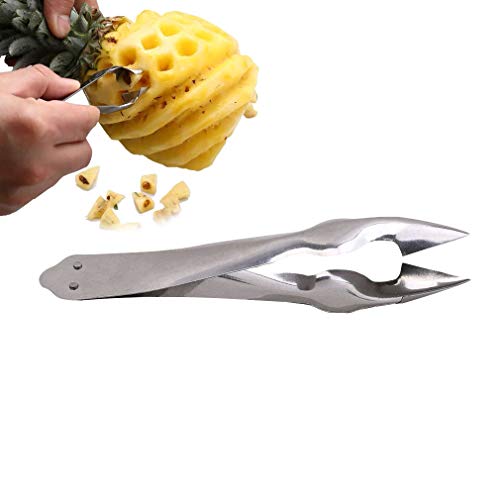
- TAR Score8.4
TAR Score is a ranking system developed by TopAppliancesReviews.com. TAR score has no relationship or impact from any manufacturers or sales agent websites. Learn more
- BrandWINBOB
Last update on 2026-10-03 / Affiliate links / Images, Product Titles, and Product Highlights from Amazon Product Advertising API
FAQs
Does the viral pull-apart pineapple trick actually work?
Yes, the method works, but only on pineapples that are fully ripe and soft. Because a pineapple is formed from dozens of individual berries fused around a central stem, rolling the fruit loosens the natural boundaries between those berries. If the fruit is underripe or stiff, the segments will tear rather than pull free.
Why does my skin burn or sting after peeling a pineapple by hand?
Pineapples contain an enzyme called bromelain, which naturally breaks down proteins. When raw pineapple juice sits on your hands or under your fingernails, bromelain temporarily irritates the top layer of skin and causes a mild tingling or burning sensation. Wrapping your hands in a clean towel or rinsing your skin with cool water immediately after handling the fruit prevents this irritation.
Can I pull apart a pineapple that is still completely green?
No, a solid green pineapple will not pull apart cleanly by hand. Pineapples stop ripening once harvested, so a hard green exterior means the internal plant fibers remain dense and rigidly bonded to the wooden core. Trying to roll and pull a green pineapple will squash the exterior rind while leaving the fruit firmly stuck inside.


Top Rated Best Quality Range Hoods: 2026 Expert Picks

The 12 Best Small Solar Generators 2026

10 Best Quality Semi Automatic Washing Machine of 2026 For Leak-Free Laundry

11 Best Small Washer Machine of 2026 For Everyday Laundry

12 Best Vibration Pads For Washing Machine of 2026 To Stop Walking and Shaking

11 Best Selling Front Load Washing Machine of 2026 For Quiet Odor-Free Laundry

11 Best Washing Machine For King Size Bedding of 2026 To Prevent Cycle Errors

10 Best Small Front Loader Washing Machine of 2026 For Tight Closets