How to Safely Unlock and Close a DeWalt Knife

Check the side of the handle near the hinge before applying any pressure to the blade. Forcing an open blade will not close it and often leads to a nasty cut. To fold the knife, press the round lock button near the hinge, or push the flexible metal bar inside the handle slot to the side. Once that lock clears the way, the blade swings smoothly back into the handle frame.
The exact movement depends on which design is in your hand. Folding models use either an outer push button or an internal metal tab, while standard box cutters slide straight back into the casing using a top button. Avoid pressing the tiny quick-change tab near the razor tip, which only releases the loose blade. Sticky tape residue or packed drywall dust can also jam the hinge shut. Here is how to find your specific lock and close the knife safely.
Which DeWalt knife model are you trying to close?
Holding an open knife when you cannot find the release mechanism is frustrating and risky. DeWalt makes several distinct utility and pocket knife styles, and each uses a different locking system. Forcing an open blade shut against an engaged lock will either bend the frame or cause your hand to slip across the sharp edge. Before applying pressure, look at the handle and hinge to identify your knife style.
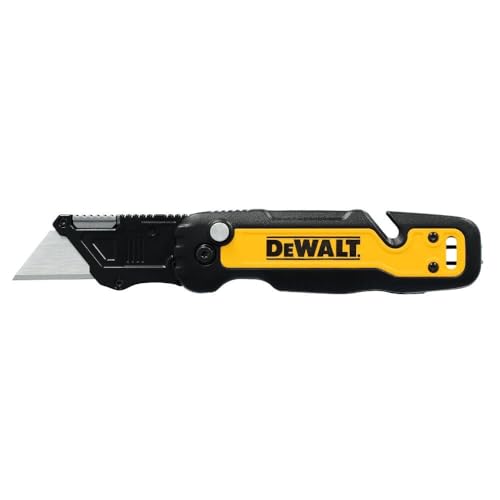
The first style is the push-and-flip folding utility knife. This model swings open on a pivot (the hinge where the blade swings open) and locks firmly in place. You can recognize it by its folding arm and a round metal button on the handle body right near the hinge.
The second style is the liner lock pocket knife. These tools also swing open on a hinge, but you will not find a button on the outside handle. Instead, the mechanism uses an internal liner lock (a flexible metal bar inside the handle slot that snaps behind the blade when open).
The third style is the sliding retractable utility knife (a knife where the blade slides straight into the handle). These do not fold. The blade rides on an internal track operated by a ridged thumb slider on top of the handle spine.
DeWalt also makes fixed blade knives with full tang construction (one solid piece of blade steel extending all the way through the handle) and an ergonomic rubber grip handle. These knives never fold or retract; they slide directly into a protective sheath.
How do you close a push-and-flip folding knife?
The push-and-flip design allows fast one-handed opening, but closing it requires clearing the internal lock pin. Follow these steps to fold the blade back safely:
- Grip the handle body securely: Hold the base of the handle firmly in your palm. Wrap your fingers around the bottom contour, keeping your fingertips out of the inner slot where the blade rests when closed.
- Locate the pivot release button: Find the raised circular button on the side of the handle casing, right beside the front hinge pin. Do not touch the small tab on the blade holder, which releases the razor blade rather than folding the handle.
- Press and hold the button: Push the round button straight down into the handle with your thumb until the internal locking pin clears the hinge plate. Maintain steady thumb pressure.
- Guide the blade into the handle: With the button held down, use your other hand to press against the blunt back spine of the metal blade holder. Swing the arm down until it nests inside the handle channel.
- Release the button to latch the tool: Let go of the button once the blade seats inside the frame. You will feel a slight click as the lock re-engages to keep the blade securely closed.
How do you unlock a DeWalt liner lock pocket knife?
If your folding knife has a smooth outer handle with no side buttons, it uses an internal liner lock. When you open the blade, a spring bar snaps behind the blade tang to keep it rigid. Unlocking it requires moving that spring out of the blade path.
- Look inside the handle channel: Turn the open knife over so you are looking directly into the open belly along the underside of the handle.
- Locate the serrated spring bar: Look inside the slot where the blade meets the handle frame. You will see a flat strip of spring steel resting against the rear heel of the blade, textured with small ridges for thumb grip.
- Position your thumb against the ridges: Place the pad of your thumb against the ridged edge of the spring bar. Keep your other fingers wrapped around the outside handle scales, well clear of the folding path.
- Push the spring bar toward the handle wall: Firmly press the spring bar sideways toward the inside wall of the handle casing to clear the base of the blade.
- Fold the blade closed: With the spring bar pushed aside, use your other hand to push the dull spine of the blade toward the handle. Move your thumb out of the inner slot as the blade begins to move, then guide the blade completely shut.
How do you retract a sliding utility or snap knife?
Retractable utility knives and snap-off cutters protect your fingers by pulling the blade directly into the metal body. When these blades refuse to pull back, the slider has usually failed to clear its locking notch.
- Find the thumb slider: Look at the top spine of the knife body to locate the ribbed slider button. On snap-off models, this may be a slider tab or an adjustment wheel.
- Press down to disengage the lock: Press your thumb firmly into the raised ribs of the slider. This downward pressure lifts the locking teeth out of the notches in the handle frame.
- Pull the slider straight back: Maintain downward pressure while drawing your thumb toward the rear of the handle. The blade carrier will glide along its internal track.
- Verify the blade is shielded: Pull the slider back until it stops at the rearmost position, then release your thumb so the locking pin drops into the home notch. Check the front nose of the knife to verify that no razor edge remains exposed.
How do you close the knife without releasing the blade?
A frequent mistake with folding utility knives is pressing the quick-change lever (a small tab that releases the razor blade) instead of the handle pivot lock. Pressing the wrong tab leaves the razor blade loose, which can cause it to drop out or shift while you apply folding pressure.
Follow this quick safety checklist before closing your knife:
- Check button placement: The folding lock button sits on the main handle near the hinge. The quick-change blade release tab sits further forward, directly on the thin metal carrier holding the razor.
- Keep fingers off the blade carrier: Hold only the thick handle scales. Never pinch or squeeze the front silver blade housing where the blade release tab sits.
- Push only the dull spine: When folding the arm closed, place pressure exclusively on the blunt metal back of the blade holder, never against the sharp cutting edge.
- Confirm blade seating: If you accidentally touched the quick-change tab, stop immediately. Push the razor blade into its holder until it clicks over the internal pins before attempting to fold the handle. Just as you would store kitchen cutlery in a magnetic knife block and knife set combo to prevent exposed edges from causing cuts, you must keep utility blades securely seated inside their housings.
Why is your DeWalt knife stuck open and jamming?
Knives exposed to jobsite conditions often jam due to debris trapped inside the locking joint. Forcing a stuck blade can bend the lock tab or snap the internal spring. Here is what causes jams and how to fix them safely:
Drywall dust, sawdust, and masonry grit frequently pack into the hinge pocket. When fine powder packs between the hinge plate and handle frame, the locking pin cannot move deep enough to clear the stop hole. Do not hammer or force the blade. Use a can of compressed air or a soft workshop brush to blow out the hinge cavity from both sides. Depress the button repeatedly while blowing air into the gap until the spring mechanism snaps freely.
Sticky adhesive from duct tape, carpet glue, or packaging tape can gum up the lock spring and blade track. Wet a clean rag with a small amount of isopropyl alcohol or citrus adhesive remover and wipe down the exposed hinge and lock bars. Avoid soaking the handle in liquid, as water trapped inside can cause rust.
A misaligned liner lock can also wedge the blade open if the knife was used for prying. To release a jammed liner lock safely, lay the knife flat on a workbench. Hold the handle down firmly with one hand, keeping fingers clear of the cutting edge. Use the flat tip of a wooden dowel or a dull screwdriver to press the spring bar sideways while easing the blade closed.
Once the mechanism is clear, place a single drop of light mineral oil or dry silicone lubricant on the pivot pin. Wipe away all excess oil so it does not attract new dust.
What should you look for in a replacement work knife?
If a knife lock is bent, stripped, or failing to engage, replace the tool immediately. A faulty lock can close unexpectedly during a cut, creating a serious hazard. Choosing a replacement comes down to matching the mechanism to your work environment.
For dusty jobs like drywalling or framing, sliding utility knives offer fewer open hinge pockets where fine powder can pack and jam the release. If you prefer the compact feel of a folding utility tool, look for a knife with an oversized, sealed push-button release and a wide handle cavity that allows debris to fall clear rather than settling inside the lock.
Pay close attention to grip materials and blade retention. A durable metal frame with a non-slip rubber overmold provides steady control when working with wet hands or gloves. Look for secure blade locks that prevent unintentional blade release, along with onboard blade storage in the handle to keep spare blades accessible.

- TAR Score10.0
TAR Score is a ranking system developed by TopAppliancesReviews.com. TAR score has no relationship or impact from any manufacturers or sales agent websites. Learn more
- BrandDEWALT
- TAR Score9.6
TAR Score is a ranking system developed by TopAppliancesReviews.com. TAR score has no relationship or impact from any manufacturers or sales agent websites. Learn more
- BrandDEWALT

- TAR Score9.6
TAR Score is a ranking system developed by TopAppliancesReviews.com. TAR score has no relationship or impact from any manufacturers or sales agent websites. Learn more
- BrandDEWALT

- TAR Score9.4
TAR Score is a ranking system developed by TopAppliancesReviews.com. TAR score has no relationship or impact from any manufacturers or sales agent websites. Learn more
- BrandDEWALT

- TAR Score9.4
TAR Score is a ranking system developed by TopAppliancesReviews.com. TAR score has no relationship or impact from any manufacturers or sales agent websites. Learn more
- BrandDEWALT

- TAR Score9.2
TAR Score is a ranking system developed by TopAppliancesReviews.com. TAR score has no relationship or impact from any manufacturers or sales agent websites. Learn more
- BrandDEWALT

- TAR Score9.0
TAR Score is a ranking system developed by TopAppliancesReviews.com. TAR score has no relationship or impact from any manufacturers or sales agent websites. Learn more
- BrandDEWALT

- TAR Score8.8
TAR Score is a ranking system developed by TopAppliancesReviews.com. TAR score has no relationship or impact from any manufacturers or sales agent websites. Learn more
- BrandDEWALT
- TAR Score8.6
TAR Score is a ranking system developed by TopAppliancesReviews.com. TAR score has no relationship or impact from any manufacturers or sales agent websites. Learn more
- BrandDEWALT
Last update on 2026-10-03 / Affiliate links / Images, Product Titles, and Product Highlights from Amazon Product Advertising API
FAQs
Where is the lock release button on a DeWalt knife?
On push-and-flip folding utility knives, the lock release button is a raised circular metal button on the handle casing near the front pivot hinge. On retractable box cutters, the lock is the grooved thumb slider on top of the handle spine. Liner lock pocket knives do not have an exterior button; their release is a spring bar inside the lower handle slot.
Can you close a DeWalt folding utility knife one-handed?
You can close a push-and-flip model one-handed once you understand the balance of the tool. Hold the handle firmly, press the round pivot button with your thumb, and nudge the dull back spine of the blade against a workbench to start the swing. Keep your fingers wrapped tightly around the outside handle casing and completely out of the blade slot.
Why does the blade slide out when folding the knife?
The blade slides out when you accidentally press the quick-change blade release tab instead of the handle pivot lock. The quick-change tab is located forward on the silver blade carrier, while the folding lock sits back on the main handle. If the blade comes loose, push it firmly back into the carrier until it clicks before pressing the correct handle button.
How do you loosen a stiff pivot on a new knife?
A new knife often feels stiff because the internal lock springs and pivot pins have tight factory tolerances. Place one drop of light mineral oil or dry silicone lubricant directly into the pivot hinge gap, then open and close the blade several times to distribute the oil. Wipe off any excess lubricant with a dry cloth to prevent dust buildup.

Top Rated Best Quality Range Hoods: 2026 Expert Picks

The 12 Best Small Solar Generators 2026

10 Best Quality Semi Automatic Washing Machine of 2026 For Leak-Free Laundry

11 Best Small Washer Machine of 2026 For Everyday Laundry

12 Best Vibration Pads For Washing Machine of 2026 To Stop Walking and Shaking

11 Best Selling Front Load Washing Machine of 2026 For Quiet Odor-Free Laundry

11 Best Washing Machine For King Size Bedding of 2026 To Prevent Cycle Errors

10 Best Small Front Loader Washing Machine of 2026 For Tight Closets