
How Do You Use a Kuppet Portable Washing Machine?

A pile of dirty clothes sits on the bathroom floor next to a lightweight two-basin appliance with manual dials. Operating this style of washer means you wash fabrics in the larger tub first, then move items by hand into the spin basket to squeeze out water. It is a semi-automatic process, so you guide each load through washing, draining, and spinning instead of letting a machine run on autopilot.
Your exact routine changes depending on how water enters and exits the unit. Some models empty water with an electric pump, while gravity-drain designs require keeping the hose flat across a shower pan. Filling can happen through a sink hose or directly with a bucket, and the spin tub holds only about half the weight of the wash basin. Setting up each step properly keeps your floor dry and stops the spinning basket from shaking across the room.
How do you set up the hoses and power?
Setting up a twin-tub machine takes only a few minutes, but doing it in the wrong order can flood your floor. Before you add water or plug anything in, find a flat, water-safe location. Most people place the unit in a bathroom next to the tub, inside a walk-in shower stall, or on a kitchen tile floor near the sink. Make sure the ground is completely level so the machine does not wobble during operation.
- Check the machine placement: Set the washer on a firm, waterproof surface. Leave at least four to six inches of rear clearance behind the machine so the water lines and power cord do not bend sharply against the wall.
- Inspect the drain hose: If your Kuppet machine has a built-in drain pump, you can hang the hooked drain hose over the edge of a bathtub, laundry sink, or toilet bowl. If you have a gravity drain unit with no pump, the hose must lie completely flat on the floor leading into a shower drain. Fasten the drain hose securely with a small clamp, zip tie, or hook so water pressure does not knock it loose onto your floor.
- Attach the water supply: Slip the included inlet hose onto the water inlet port on top of the machine, then push the other end onto your sink faucet. If your kitchen or bathroom faucet does not fit the adapter, take the simple route: remove the hose entirely and fill the wash tub directly using a handheld shower head or a clean bucket.
- Connect to electrical power: Plug the unit directly into a standard 120-volt 3-prong grounded wall outlet. Never run this machine through a thin, two-prong extension cord or an ungrounded adapter. Because you are working with open water basins, electrical safety comes first. Keep the cord and wall outlet completely dry.
How do you wash your first load of clothes?
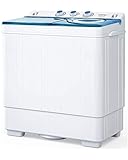
Because a twin-tub washer is semi-automatic, you move the laundry by hand rather than pressing a single button and walking away. The large basin on the left is the wash tub where clothes soak and agitate. A flat bottom wash plate spins back and forth to push water and suds through the fabric.
- Sort and load your dry clothes: Drop your clothing into the wash tub loosely. A 26-pound rated twin-tub machine holds up to 18 pounds of dry laundry in the wash basin, but packing it to the brim prevents garments from moving freely. Fill the tub loosely so clothes have several inches of space to tumble and circulate.
- Add water to the wash tub: Turn on your faucet or pour water into the wash basin until the waterline covers your clothes by two to three inches. Use cold or warm tap water. Never pour boiling water into the plastic tub, as excessive heat can warp the plastic housing and damage internal seals.
- Add low-suds detergent: Measure one to two tablespoons of low-suds HE (High Efficiency) detergent directly into the water. Standard laundry detergents create massive foam blankets that portable washers struggle to rinse out. Start with less soap than you think you need; small portable basins require very little detergent to get fabrics clean.
- Set your wash settings: Turn the wash selector knob to "Normal" for everyday cottons, socks, and t-shirts, or switch it to "Gentle" for delicates and thin fabrics. Turn the wash timer knob clockwise to your desired time. Ten to fifteen minutes is plenty for normal dirt, while light loads take only five to eight minutes.
- Let the cycle run: The wash plate will turn in alternating directions, twisting clothes through the soapy water. Keep the wash lid closed to prevent splashes. If you notice the clothes twisting into one giant knot around the bottom, pause the timer, untangle the bundle by hand, and restart the cycle.
How do you spin clothes without violent shaking?
The smaller basin on the right is the spin basket that spins damp-dry. It turns at high speeds to pull water out of the fabric through centrifugal force. Violent shaking, banging, and "walking" across the floor happen when the spin tub is packed incorrectly.
- Divide the wash load: The spin basket holds significantly less weight than the wash basin. On an 18-pound wash capacity unit, the spin basket is typically rated for only 8 pounds. Never try to move an entire wash load into the spin tub in one trip. Plan on running two or three separate spin cycles for every single wash tub you finish.
- Load the spin basket evenly: Pick up dripping wet items from the wash basin and place them into the spin tub one at a time. Distribute the weight in a balanced circle around the drum walls rather than dumping everything in a heavy clump on one side. Push the garments down firmly with your hands until the load forms a level, compact donut shape at the bottom.
- Insert the plastic spin disc: Your machine comes with a flat, circular plastic disc with holes in it. Press this disc firmly on top of the packed clothes inside the spin basket. This safety disc keeps items from lifting up and catching against the spinning rim during operation. If you skip this disc, clothes can work their way out of the basket and jam the motor.
- Close both lids: Close the inner spin lid first, then shut the outer top cover. The spin tub will not run with the lids open.
- Set the spin timer: Turn the spin timer knob to two or three minutes. The tub will wind up to speed. If you hear a loud, rapid banging sound or the machine begins jumping across the floor, turn the timer dial back to zero immediately. Open the lid, remove the safety disc, rearrange the clothes to rebalance the weight, press the disc back down, and restart. Unlike full-size automated machines, these compact twin-tub units lack an off-balance safety sensor that pauses spinning when bulky towels bunch up on one side. If you want a machine that balances loads automatically, you can check out the best LG washing machine with load sensing to see how electronic balance sensors work in larger laundry rooms.
How do you rinse the soap out of laundry?
Rinsing in a twin-tub washer requires removing soapy water and introducing fresh water. You have two reliable ways to do this: the basin rinse method or the spin shower rinse method.
- Method 1: Deep soak rinse in the wash tub: This method removes soap most thoroughly. First, turn the drain dial to empty the dirty wash water. Once the basin is empty, switch the dial back to "Wash/Rinse." Move your spun-out clothes back into the wash tub. Fill the tub with clean cold water, and run the wash timer for three to five minutes. Move the clothes back to the spin basket and spin them dry for three minutes. If you see leftover suds, repeat this process once more with fresh water.
- Method 2: Spin shower rinse: If you are short on time or water, you can rinse garments directly inside the spin basket. Transfer clothes into the spin tub, pack them down, and insert the plastic disc. Switch the water inlet valve on the console from "Wash" to "Spin." Turn on your faucet so clean water sprays into the spin basket while the spinner runs for one to two minutes. Shut off the water, then let the spin cycle continue for another two minutes to wring out the rinse water.
- Inspect the drained water: Watch the water coming out of the drain hose during the final spin. If the water looks clear and free of slippery foam, your laundry is clean and ready for the drying rack.
How do you drain water without making a mess?
Managing the drainage system properly keeps your floors dry and prevents sour water smells. Kuppet twin-tub units use a control knob in the middle of the console that switches between "Wash/Rinse" and "Drain." When set to "Wash/Rinse," an internal rubber stopper seals the drain outlet so water stays in the basin. Turning the dial to "Drain" pulls the stopper open.
If your unit has a built-in drain pump, turning the knob to "Drain" automatically engages the small electric pump. This pump pushes water upward through the discharge hose and into a sink or bathtub rim up to four feet high. Never run the pump dry for extended periods. Once you hear a sucking, gurgling sound and water stops flowing out of the hose, switch the knob back to "Wash/Rinse" or "Standard" so the pump motor does not overheat.
If your machine is a gravity drain model without an internal pump, water can only flow downward. The discharge hose must lie completely flat across the floor leading to a floor drain or low shower pan. If you lift the hose into a sink, gravity will force water back down into the machine, backing up the tub and spilling over the sides.
After you finish your final load, tilt the machine gently forward and to the side toward the drain outlet to help lingering pools of water exit the pump and hoses. Clean out the removable plastic lint screen located on the inside wall of the wash basin. Rinse accumulated lint under warm tap water and snap it back into place. Finally, leave both the wash and spin lids wide open for several hours. Leaving the machine open allows the interior plastic to dry completely, stopping stagnant mildew and sour odors before they start.
Why is your machine shaking or draining slowly?
Most operating problems come down to simple balance, hose placement, or soap choices. Work through this checklist to solve common issues before assuming a motor or valve has failed.
- The spin basket bangs loudly and shakes violently: Turn the spin timer off immediately. Open the lid and check the clothes. The load is either too heavy or bunched up on one side of the drum. Pull the clothes out, fluff them, and repack them evenly around the circumference of the basket. Ensure the round plastic safety disc is pressed down flat on top of the laundry before restarting.
- Water drains very slowly or not at all: First, check the drain hose for sharp kinks, flat pinches, or heavy objects sitting on top of the tubing. If the hose is clear, remove the lint filter inside the wash basin and check the drain hole at the bottom for trapped coins, hairballs, or baby socks. On gravity drain models, verify that the hose is resting completely flat on the floor; any upward loop stops gravity drainage immediately.
- The wash tub hums but the wash plate does not rotate: This is a sign of an overloaded tub. Clothes are wedged so tightly that the motor cannot turn the bottom wash plate. Turn the timer to zero, scoop out several garments, and redistribute the remaining items in plenty of water. If you are washing large sheets or heavy work pants, wash them individually so the motor does not trip its internal thermal fuse.
- Water leaks onto the floor beneath the machine: Check the water inlet connection on the back or top console. The friction-fit hoses can slide loose if water pressure from your sink faucet is turned on too high. Next, confirm that the drain hose is fully seated on its plastic barb fitting at the base of the cabinet. Always maintain a moderate faucet flow rate rather than blasting full water pressure into the tub.
- When to step back and call a professional: If you smell burning plastic or rubber, see sparks, or notice water leaking directly through the bottom motor housing, unplug the unit from the wall immediately. Never operate a portable washer with a damaged power cord or a cracked tub housing.
What features matter most on a portable washer?
When you need to clean clothes in a small space, understanding the trade-offs between different washer styles helps you pick the right tool for your living situation. Semi-automatic twin-tub machines give you full manual control over water usage and cycle times, making them great for apartments without dedicated laundry hookups, RV road trips, and off-grid cabins. Because you can reuse wash water for several consecutive loads of similarly soiled clothes, they use far less water and electricity than traditional laundry appliances.
If you are deciding between a compact top-loading unit and standard appliances, learning whether a front load or top load washing machine is better helps clarify how wash action, space requirements, and water connections differ across styles. When shopping for a portable machine, always verify whether the unit includes an electric drain pump or relies on gravity draining. Check the dry laundry capacity in pounds for both the wash basin and the spin basket, and confirm that the unit fits comfortably within your living space with enough clearance for plumbing lines.
- TAR Score8.8
TAR Score is a ranking system developed by TopAppliancesReviews.com. TAR score has no relationship or impact from any manufacturers or sales agent websites. Learn more
- BrandKUPPET

- TAR Score7.8
TAR Score is a ranking system developed by TopAppliancesReviews.com. TAR score has no relationship or impact from any manufacturers or sales agent websites. Learn more
- BrandKUPPET
Last update on 2026-10-29 / Affiliate links / Images, Product Titles, and Product Highlights from Amazon Product Advertising API
FAQs
Can you wash and spin clothes at the same time?
Yes, you can run both sides simultaneously because the wash basin and spin basket operate on completely separate motors and timers. While your first batch of clothes spins damp-dry in the spin tub, you can wash a second batch of dirty laundry in the wash tub. This dual-action workflow cuts your total laundry time roughly in half once you establish a steady rhythm.
Can you connect a Kuppet washer to a pull-out kitchen faucet?
Most pull-out or pull-down sprayer faucets do not have the standard threaded spout required to fit portable washer inlet adapters. If you have a sprayer faucet, you can either unscrew the spray head to check for hidden internal threads or bypass the inlet hose altogether. The easiest workaround is filling the wash basin directly with a bucket or a handheld shower hose.
Why does the washer leave white soap residue on dark clothes?
White residue usually indicates that you used too much detergent, used standard high-foaming powder, or did not run a thorough rinse cycle. Compact washers require only one to two tablespoons of low-suds liquid HE detergent per load. If residue appears, rinse the garments in a full tub of fresh water and cut your detergent amount in half for the next batch.
Do clothes come out completely dry from the spin tub?
The spin basket does not use heat, so clothes will not come out bone dry like they would from a heated tumble dryer. However, the high-speed spin removes the vast majority of moisture, leaving fabrics feeling slightly damp rather than soaking wet. Lightweight shirts and shorts hung on a folding rack or clothesline will typically dry completely within two to four hours indoors.


10 Best Washing Machine For King Size Comforter of 2026 For Bulky Bedding

11 Best Semi Automatic Washing Machine Under 10000 of 2026 For Apartments and RVs

9 Best Compact Refrigerator For Beer Bottles of 2026 For Upright Bottle Fit

10 Best Quality Semi Automatic Washing Machine of 2026 For Leak-Free Laundry

11 Best Small Washer Machine of 2026 For Everyday Laundry

12 Best Vibration Pads For Washing Machine of 2026 To Stop Walking and Shaking

11 Best Selling Front Load Washing Machine of 2026 For Quiet Odor-Free Laundry

11 Best Washing Machine For King Size Bedding of 2026 To Prevent Cycle Errors





