
Do Washing Machine Vibration Mats Actually Work?

A washer that rattles the floorboards is frustrating, but it rarely means the machine is ruined. Dense rubber pads absorb high-speed spin hum and protect flooring, but they cannot stop violent thrashing caused by an unstable setup. Slipping a pad under an off-balance cabinet just creates a vibrating mat.
How well these mats perform depends on your flooring and the balance of the machine itself. Stiff concrete absorbs movement naturally, while flexible wooden floors flex and amplify every wobble. The four adjustable screw feet at the bottom corners must also sit completely flat and locked in place before any pad can help. Here is what rubber pads actually mute, and the simple checks to make before buying one.
Understand What a Rubber Mat Can and Cannot Muffle
A thick rubber pad solves a very specific kind of laundry noise. When your washer enters the final spin cycle, the inner wash basket spins at hundreds of revolutions per minute to pull moisture from fabrics. That rapid spinning creates high-frequency vibration, which feels like a constant, buzzing hum that travels straight through the floor and rattles dishware in nearby rooms. Dense rubber absorbs that humming energy by acting as an acoustic cushion between the metal machine frame and your home subfloor.
Rubber also creates high grip against slick surfaces. If your machine sits on smooth glazed tile, polished hardwood, or slick vinyl, the tiny natural movements of the spin cycle can cause walking, which is the machine slowly sliding or creeping across the room during spin cycles. A heavy mat stops this wandering by anchoring the machine feet in place. It also acts as a physical shield, preventing the steel edges of the cabinet feet from scratching, gouging, or wearing grooves into your floor finish.
Rubber padding cannot fix mechanical faults or gross balance errors. If your washer thumps violently, bangs against the side of the metal cabinet, or rocks back and forth like a boat in rough water, a mat will do almost nothing. Those violent movements produce far more physical energy than a half-inch of rubber or silicone can absorb. When a machine is violently shaking, placing a mat beneath it simply creates a soft, bouncy base that can actually cause the top of the cabinet to sway even harder.
Think of a vibration mat like a pair of cushioned running shoes. The shoes cushion the natural impact of your feet against hard pavement, protecting your joints from repetitive shock. But if you try to run with an untied shoe or a twisted ankle, thick soles will not keep you upright. You must address the underlying mechanical balance of the appliance first before expecting any floor pad to deliver quiet laundry cycles.
Check Your Machine for Balance Issues Before Buying Floor Padding
Before you spend money on floor padding, inspect your laundry setup to identify why the appliance moves. Normal spin vibration produces a steady hum, while balance problems create rhythmic banging, loud squeaks, or sudden jumping. Run through this checklist to find the true source of your machine noise:
- The diagonal rock check: Place your hands on opposite diagonal corners of the washer top panel and push down firmly. The appliance should feel solid as a boulder. If it rocks or clicks back and forth even a fraction of an inch, the leveling legs (adjustable screw feet at each bottom corner) are uneven, which is the single most common cause of violent spinning noise.
- Rear shipping hardware: If your machine is new or was recently moved, look closely at the back panel. Installers sometimes forget to remove the transit bolts (rear shipping bolts that lock the drum in transit). These heavy steel bolts lock the internal wash basket directly to the outer cabinet frame for moving day. If left in place, the drum cannot move freely, transferring severe, house-shaking impacts directly into your floors.
- Tub bounce response: Open the washer door and push down firmly on the empty stainless steel clothes tub, then let go quickly. The tub should push down smoothly and rebound right back to center without extra bouncing. If it bobs up and down multiple times like a car with bad shocks, your suspension rods (inner shock springs holding the wash tub) are worn out and must be replaced by a qualified repair technician.
- Uneven laundry bundles: Heavy items like bath sheets, thick denim work pants, or king-size fleece blankets easily bunch together on one side of the tub. Top-load washers with a center agitator post that twists clothes through the water can get tangled, while front-loaders can roll bedding into a dense ball. You can check a washer with features designed for balanced spin cycles to see how modern sensors redistribute damp items before the fast spin begins.
Choose Between a Full Floor Mat and Individual Corner Cups
Once your machine is mechanically sound, you need to decide whether a full-size floor mat or individual corner pads fit your laundry room better. Both options use vibration-damping rubber, but they work best in different situations.
A full-coverage mat covers the entire footprint beneath the appliance. You can find single-unit mats measuring roughly 27 by 27 inches, as well as oversized mats measuring around 62.9 by 29.5 inches or 68 by 29.5 inches with a thickness of 0.24 inches to cover a side-by-side washer and dryer pair. These large mats are ideal if your primary goal is protecting fragile floors from scratches, rust stains, or minor water drips. Because the entire base is covered, you do not have to worry about a foot slipping off the edge. However, sliding a heavy washer onto a large rubber mat inside a tight closet can be awkward because the rubber grips the machine feet instantly.
Individual corner cups come in sets of four and fit directly under each leg. Many use specialized hexagonal grip patterns or deep cup lips to hold the leveling feet firmly in place. These pads are easier to install in tight spaces because you can tilt the washer backward to place the front pads, then tilt it forward to position the rear pads. They also raise the washer an inch or two higher, which improves airflow underneath and makes it easier to spot water leaks. The downside is alignment: if a foot is slightly off-center, the heavy downward force of the spin cycle can push the pad sideways or cause the leg to slide off entirely.
Level the Washer Legs Firmly on the Ground Before Adding Padding
A vibration mat will only work if all four corner feet press with equal pressure against the floor. Follow these steps to adjust your appliance correctly before setting it onto any rubber surface:
- Disconnect the power cord: Unplug the machine from the standard 120-volt 3-prong grounded wall outlet and turn off the hot and cold water shutoff valves behind the unit to keep yourself safe while working around the cabinet base.
- Check the cabinet with a carpenter level: Set a reliable bubble level flat across the top front edge of the washer cabinet, then turn it to check the left and right side panels. Never check the machine door or lid, as those surfaces are often curved or slanted by design.
- Loosen the retaining hardware: Look closely at the leveling legs (adjustable screw feet at each bottom corner). Most feet have a locking nut threaded against the bottom of the machine cabinet. Use an open-end wrench to spin that locking nut downward, freeing the threaded shaft so it can turn easily.
- Adjust the height of each corner: Turn the threaded foot clockwise to lower that corner or counterclockwise to extend it. Adjust the legs until the bubble on your level rests dead center in both front-to-back and side-to-side directions. Keep the legs extended as short as possible, since longer legs flex more during the spin cycle.
- Tighten the locknuts completely: Once the machine is level, spin the locking nut back up the shaft until it presses tightly against the bottom of the steel frame. Use your wrench to snug it down firmly. If you leave this nut loose, normal machine vibration will cause the leg to rotate and work itself out of level within a few weeks.
- Position your vibration mat: Slide your full mat or slide individual grip pads under each foot. Run a quick rinse-and-spin cycle with an empty tub to verify that the machine stays completely stable and does not rock or wander on the new surface.
Avoid Common Floor Setup and Material Traps
Small mistakes during installation can ruin the noise-damping benefits of rubber padding. Keep these practical warnings in mind when setting up your laundry area:
- Avoid soft packing foam or gym tiles: Never use soft yoga mats, foam puzzle squares, or kitchen shelf liners under a washer. These lightweight materials compress flat under the weight of water and wet clothes, leaving you with zero shock absorption and creating an uneven, wobbly base. Use dense solid rubber or heavy silicone.
- Do not stack pads to gain height: Stacking multiple rubber pads beneath a single leg creates a tall, unstable pillar. The intense side-to-side forces of a fast spin cycle will cause stacked pads to tilt, throwing the machine completely off balance and risking floor damage.
- Watch out for trapped moisture: Solid rubber and silicone mats trap water beneath them if a hose fitting drips or a drain overflows. That hidden moisture cannot evaporate, which can rot wood subflooring, loosen vinyl adhesive, or breed dark mildew. Check under your mat every few months to confirm the subfloor remains dry.
- Account for flexible wooden joists: If your laundry room sits on an upper floor supported by long, springy wooden floor joists, the floor itself may bounce under heavy loads. A vibration mat absorbs surface buzz, but it cannot stiffen a flexing floor. In second-floor laundry rooms, placing a three-quarter-inch sheet of exterior-grade plywood beneath the mat can spread the machine weight across multiple floor joists.
Look for Built-In Balance Controls When Choosing a New Washer
If your current washing machine shakes violently despite proper leveling and fresh rubber pads, the internal parts may simply be worn out, or the design may lack modern stabilization hardware. When shopping for a replacement appliance that will stay quiet on upper floors or slick tile, pay close attention to the structural features inside the cabinet.
Look for machines engineered with heavy steel base plates, liquid-filled balance rings around the clothes tub, and smart load-balancing sensors. Advanced sensors monitor drum rotation in real time during the start of the spin cycle. If the motor detects that heavy towels are clustered on one side, it automatically stops spinning, tumbles the tub in reverse to untangle the load, and gradually ramps back up up to high speed only when weight is evenly distributed. Choosing an appliance with solid internal suspension and smart balance monitoring prevents shaking right at the source, making your vibration mat far more effective at keeping your home quiet.
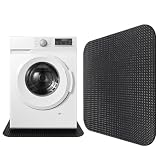
- TAR Score9.5
TAR Score is a ranking system developed by TopAppliancesReviews.com. TAR score has no relationship or impact from any manufacturers or sales agent websites. Learn more
- BrandNECGNIQ
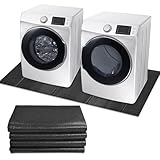
- TAR Score9.5
TAR Score is a ranking system developed by TopAppliancesReviews.com. TAR score has no relationship or impact from any manufacturers or sales agent websites. Learn more
- BrandWibeelee
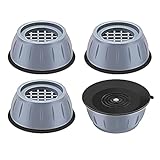
- TAR Score9.3
TAR Score is a ranking system developed by TopAppliancesReviews.com. TAR score has no relationship or impact from any manufacturers or sales agent websites. Learn more
- Branddadop

- TAR Score8.0
TAR Score is a ranking system developed by TopAppliancesReviews.com. TAR score has no relationship or impact from any manufacturers or sales agent websites. Learn more
- BrandBuilimeer

- TAR Score7.4
TAR Score is a ranking system developed by TopAppliancesReviews.com. TAR score has no relationship or impact from any manufacturers or sales agent websites. Learn more
- BrandLinda's Essentials
Last update on 2026-10-29 / Affiliate links / Images, Product Titles, and Product Highlights from Amazon Product Advertising API
FAQs
Will a rubber mat keep my washer from walking across the room?
Yes, dense rubber mats and textured grip pads provide high friction that prevents washer feet from sliding across slick tile, polished stone, or vinyl flooring. However, they only stop walking if the machine is already leveled properly. If the leveling legs are uneven or the laundry load is severely clumped, the force of the shaking can still cause the machine and the mat to shift together.
Can a mat stop vibrations from traveling through a wooden floor?
A rubber mat will muffle the high-frequency motor buzz and rapid drum hum, but it cannot stop a springy wood floor from flexing. Upper-story floors built on long wooden joists often act like a drumhead that flexes under the weight of a spinning washer. To quiet heavy movement on wooden subfloors, place a rigid piece of three-quarter-inch plywood beneath the rubber mat to spread the appliance weight across several structural joists.
Why is my washer still banging loudly after putting down rubber pads?
Loud banging means the inner clothes tub is physically striking the outer cabinet walls, which rubber floor pads cannot fix. This banging is usually caused by worn internal suspension rods, an overloaded or clumped laundry load, or transit bolts that were accidentally left in the back panel after delivery. You must adjust your laundry load, remove the shipping bolts, or replace worn shock springs to stop the noise.
Should I choose thick rubber pads or a full silicone mat?
Choose individual rubber pads if you want maximum shock absorption in a tight closet, since they lift the machine slightly, allow air circulation, and are easy to slide under one corner at a time. Choose a full-coverage mat if your main concern is shielding the floor from scratches, rust stains, or small water spills across the entire base area. Both materials quiet surface vibration well, provided they are made of dense, solid material rather than soft foam.


10 Best Washing Machine For King Size Comforter of 2026 For Bulky Bedding

11 Best Semi Automatic Washing Machine Under 10000 of 2026 For Apartments and RVs

9 Best Compact Refrigerator For Beer Bottles of 2026 For Upright Bottle Fit

10 Best Quality Semi Automatic Washing Machine of 2026 For Leak-Free Laundry

11 Best Small Washer Machine of 2026 For Everyday Laundry

12 Best Vibration Pads For Washing Machine of 2026 To Stop Walking and Shaking

11 Best Selling Front Load Washing Machine of 2026 For Quiet Odor-Free Laundry

11 Best Washing Machine For King Size Bedding of 2026 To Prevent Cycle Errors





