
Best Steamer for Baby Food 2026: Smarter Picks

A best steamer for baby food should make small portions easier, not turn the kitchen into a sink full of lids, baskets, and sticky puree cups. The most practical models create steady steam, hold enough food for several servings, and stay simple enough to use while another task needs attention. That sounds basic, but awkward controls, tiny openings, and hard-to-reach corners can make a supposedly convenient appliance feel like more trouble than it’s worth. A thoughtful design cuts down the fuss without pretending every vegetable, fruit, or protein needs the same cooking time.
Consistent steaming matters because carrots, sweet potatoes, peas, apples, and chicken all soften at different rates. A roomy basket lets ingredients spread out instead of piling into a dense mound, which helps steam circulate more evenly. Still, a very large machine may feel clumsy for two spoonfuls of pear or a single serving of zucchini. Compact units save counter space, but they can require back-to-back batches once meal prep shifts from occasional tastes to a week’s worth of portions.
Built-in blending sounds handy, and often it is, especially when transferring hot ingredients feels like an accident waiting to happen. A steamer and blender combination can move food from raw pieces to a smooth puree in one container, trimming both cleanup and handling. But all-in-one machines usually have more seals, blades, and narrow areas where moisture or food residue can hide. Removable parts and a wide bowl opening matter far more than a flashy control panel once mashed banana dries around the rim.
Texture control also deserves attention because silky puree isn’t the finish line forever. Early meals may need a smooth consistency, while later servings benefit from soft lumps and fork-mashed textures. Pulse controls or short blending cycles offer more control than a single automatic setting that liquefies everything in sight. Well, nobody wants carefully steamed broccoli turned into green soup because the motor runs longer than expected.
Water reservoirs should be easy to fill, easy to see, and easy to empty after cooking. Hidden tanks can collect mineral buildup, particularly where tap water leaves chalky deposits behind. A removable reservoir or accessible opening makes routine descaling less of a chore. Stainless steel steaming surfaces may resist staining and odors better, while plastic baskets keep weight and price down, so the tradeoff depends on maintenance habits and budget.
Safety features can quietly improve daily use. Stable feet reduce sliding, cool-touch handles make hot baskets less nerve-racking, and an automatic shutoff prevents dry heating when the water runs low. Even so, no countertop steamer removes the need to watch for hot vapor while lifting a lid. Steam escapes fast, and opening the cover away from the face is still the sensible move.
The right pick balances batch size, cleanup, storage, and control rather than chasing the longest feature list. A simple basket steamer may suit kitchens that already have a reliable blender, while an all-in-one unit can earn its space where speed and fewer transfers matter most. Dishwasher-safe parts help, though hand washing may still be necessary around blades, gaskets, and narrow channels. Good equipment won’t remove every mealtime mess, but it can stop preparation from becoming the hardest part of serving fresh food.

- TAR Score9.2
TAR Score is a ranking system developed by TopAppliancesReviews.com. TAR score has no relationship or impact from any manufacturers or sales agent websites. Learn more
- BrandNutriBullet
- TAR Score9.2
TAR Score is a ranking system developed by TopAppliancesReviews.com. TAR score has no relationship or impact from any manufacturers or sales agent websites. Learn more
- BrandSAYFINE

- TAR Score9.2
TAR Score is a ranking system developed by TopAppliancesReviews.com. TAR score has no relationship or impact from any manufacturers or sales agent websites. Learn more
- BrandGROWNSY
- TAR Score9.0
TAR Score is a ranking system developed by TopAppliancesReviews.com. TAR score has no relationship or impact from any manufacturers or sales agent websites. Learn more
- BrandConsevisen

- TAR Score9.0
TAR Score is a ranking system developed by TopAppliancesReviews.com. TAR score has no relationship or impact from any manufacturers or sales agent websites. Learn more
- BrandAMZBABYCHEF
- TAR Score8.8
TAR Score is a ranking system developed by TopAppliancesReviews.com. TAR score has no relationship or impact from any manufacturers or sales agent websites. Learn more
- BrandYLYL

- TAR Score8.8
TAR Score is a ranking system developed by TopAppliancesReviews.com. TAR score has no relationship or impact from any manufacturers or sales agent websites. Learn more
- BrandOVENTE
Last update on 2026-08-13 / Affiliate links / Images, Product Titles, and Product Highlights from Amazon Product Advertising API
Best Steamer for Baby Food With Everyday Flexibility
Making a small serving of fresh baby food can create a surprising amount of kitchen clutter, especially once a saucepan, blender, storage container, and bottle sterilizer all enter the picture. The nutribullet Baby Turbo Steamer tackles that problem by handling several routine jobs in one compact appliance. It can steam fresh ingredients, defrost prepared portions, and sterilize feeding accessories without requiring separate equipment for every task. That combination gives the best steamer for baby food conversation a more practical angle, since convenience here isn't about flashy extras; it's about reducing the number of steps between a raw carrot and a ready-to-serve purée.
nutribullet Baby Turbo Steamer
The product's strongest appeal is its three-in-one functionality. Fresh fruits and vegetables can be steam-cooked for warm purées, frozen portions can be defrosted, and commonly handled baby items can be sterilized in the same machine. That versatility matters during a busy day because meal preparation rarely happens in a neat, uninterrupted block of time. One minute you're softening sweet potato, and the next you're realizing the pacifier needs attention before the next feeding.
Five steam settings provide more flexibility than a basic one-button steamer. Different foods don't soften at the same pace, so having several settings helps avoid treating delicate fruit and dense vegetables as though they're identical. The built-in timer also reduces the need to hover over a pot or keep checking the clock. Set the appropriate cycle, handle another small task, and let the unit manage the steam period without turning meal prep into a babysitting job of its own.
The design also suits small-batch baby food preparation, where a giant steaming basket can feel like overkill. A few pieces of squash, apple, carrot, or another fresh ingredient can be cooked without filling a large saucepan. That makes experimentation less intimidating, especially during the stage when preferences seem to change by the spoonful. A compact batch also limits waste when a newly introduced flavor gets an immediate and very firm rejection.
Still, this appliance isn't presented as a blender, so steamed ingredients will need to be mashed or transferred to separate blending equipment for a smooth purée. That extra step may not bother anyone who already owns a baby food processor or compact blender, but it does separate this model from all-in-one steam-and-blend machines. The tradeoff is fairly straightforward: simpler steaming and sterilizing on one side, fewer transfers with an integrated blender on the other. Kitchen space and existing equipment will shape which approach feels less cumbersome.
Steam Settings And Daily Meal Prep
The set-and-steam operation keeps the workflow approachable. Five settings and a built-in timer offer enough control for common fruits, vegetables, and other fresh ingredients without burying the process under a complicated display. That's useful at six in the morning, when nobody wants to decode a control panel before coffee. Straightforward controls also make it easier for another caregiver to use the machine without needing a lengthy explanation taped to the cabinet.
Steam cooking can help ingredients retain their own moisture instead of soaking in a pot of water. The result is easier to control during mashing or blending because the food hasn't automatically absorbed extra liquid. More water can always be added later to loosen a purée, but removing excess moisture isn't nearly as simple. This texture control becomes particularly useful as meals shift from very smooth purées toward thicker mash and softer, slightly lumpier consistencies.
Ingredient size still matters, of course. Thick carrot chunks won't soften at the same rate as thin apple slices, no matter how convenient the timer may be. Cutting pieces into reasonably similar sizes gives the five steam settings a fair chance to produce even results. The steamer simplifies the heating process, but it can't override basic food preparation, and that's a realistic limitation rather than a flaw.
The 39.3-inch cord offers a useful amount of placement flexibility on a crowded counter. Outlets aren't always located exactly where a small appliance fits best, particularly in kitchens already occupied by a bottle warmer, drying rack, coffee maker, and half the contents of a diaper bag. A longer cord can reduce awkward stretching across the work area. Even so, the cord should stay clear of sink edges and hot surfaces, especially while the unit is producing hot steam.
Defrosting Without Extra Containers
Defrosting batch-cooked baby food broadens the appliance's role beyond fresh meal preparation. Preparing several portions at once can save time, but frozen cubes or containers still need a gentle route back to serving temperature. The Turbo Steamer is designed to handle that step without creating another pan to wash. That makes freezer-based planning more realistic on days when chopping and cooking from scratch simply isn't happening.
The defrost function also supports more consistent routines. A prepared portion can move from frozen storage toward mealtime without relying on guesswork in a saucepan. This doesn't remove the need to stir the food and check its temperature carefully before serving, naturally. It does, however, offer a contained process that may feel tidier than juggling hot water, small containers, and several utensils across the counter.
Portion size will affect how smoothly defrosting fits into the routine. Small, evenly divided servings are generally easier to manage than one large frozen block, so the appliance pairs naturally with sensible batch storage habits. That means the real benefit isn't just the defrost setting; it's the way the machine supports a cook, portion, freeze, and reheat rhythm. Once that rhythm clicks, homemade food can feel less like a daily production and more like a manageable habit.
A related look at compact countertop steaming appears in small electric food steamer options, where size and everyday practicality shape the discussion. The reference fits naturally here because counter space can become the deciding factor long before extra settings do. A multi-function machine earns its footprint only when its steaming, defrosting, and sterilizing jobs are used regularly. Otherwise, even a compact appliance can become one more item shuffled from cabinet to counter and back again.
Sterilizing Bottles And Small Accessories
The sterilizing function is where this steamer separates itself from a standard food-only model. It can accommodate baby bottles, pacifiers, nipples, utensils, teethers, toys, and other compatible items listed in the product description. That range helps consolidate repetitive care tasks, particularly when several small accessories need attention at the same time. Instead of keeping a separate sterilizer beside the food steamer, one appliance can cover both roles.
Small items have a knack for disappearing into the sink or rolling beneath a drying rack, so a defined sterilizing setup can make the process feel more organized. Pacifiers, nipples, and utensils can be grouped together rather than handled through several improvised methods. The practical win is less equipment and fewer separate cycles, not some dramatic reinvention of kitchen life. It simply trims friction from tasks that repeat day after day.
Capacity still deserves realistic thought. A compact machine may suit routine loads of small feeding accessories, but it won't necessarily replace a larger sterilizing system where several full-size bottles need processing together. Item shapes can also affect how efficiently the interior space is used. The product's versatility is strongest when the usual load matches its dimensions, so measuring frequently used bottles and accessories before relying on it as the sole sterilizing setup would be sensible.
Hot steam requires careful handling after every sterilizing cycle. Lids and internal components may retain heat, and trapped vapor can escape quickly once the unit is opened. Opening the cover away from the face and allowing items to cool remains basic good practice. The appliance automates the cycle, but safe steam handling still depends on a calm, deliberate routine rather than rushing to grab a pacifier the second the timer stops.
Cleanup, Tradeoffs, And Practical Fit
Dishwasher-safe components reduce one of the least appealing parts of homemade baby food preparation. Purée residue can dry quickly around rims, trays, and small crevices, so removable parts that can go into the dishwasher help prevent cleanup from becoming the longest stage of the process. A quick rinse before food dries will still make life easier. Dishwasher compatibility isn't magic, but it lowers the odds of finding yesterday's sweet potato welded to a corner.
The appliance also reduces the need for multiple cooking vessels during a typical session. One unit can steam ingredients, defrost stored portions, and sterilize accessories, which means fewer specialized appliances competing for room. That multi-purpose design is particularly useful where cabinet and counter space are limited. The downside is that one function can't be used while another cycle is underway, so steaming lunch and sterilizing bottles will still need to happen one after the other.
A separate blender or mashing tool remains necessary for turning cooked ingredients into the desired texture. That limitation may actually suit kitchens where blending equipment is already familiar and reliable. It also allows more control over whether food becomes silky, chunky, or somewhere in between. On the other hand, anyone hoping for raw ingredients to enter one bowl and finished purée to emerge from the same bowl may prefer an integrated steam-and-blend system.
The nutribullet Baby Turbo Steamer makes the most sense as a practical routine helper rather than an oversized food-prep station. Its five steam settings, timer, defrost mode, sterilizing capability, dishwasher-safe components, and 39.3-inch cord address several small frustrations that tend to pile up around feeding time. The machine won't chop ingredients, blend purées, or remove the need to check food temperature before serving. What it does offer is a cleaner, more contained way to manage several recurring jobs without asking the kitchen to make room for three different appliances.
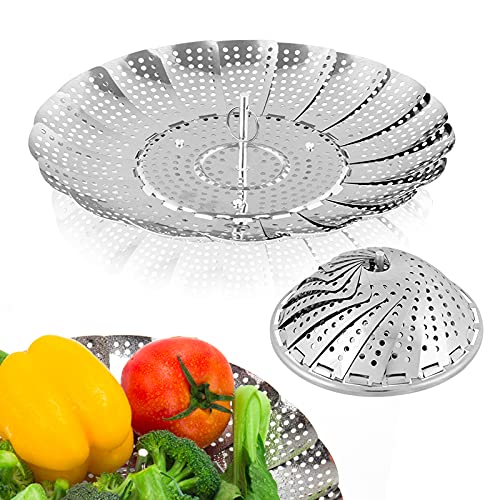
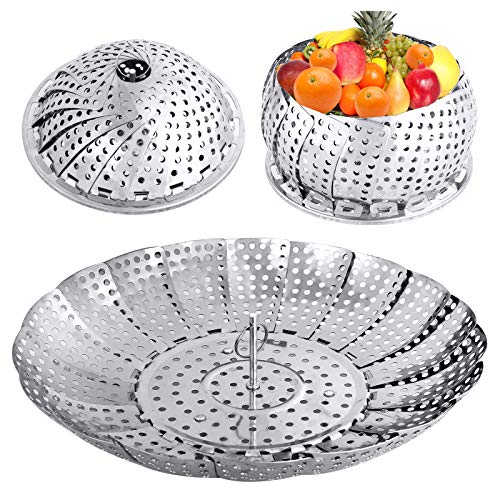
SAYFINE Steamer Basket for Baby Food Prep
Counter space disappears fast once bottles, drying racks, storage cups, and small appliances start piling up. A simple stovetop tool can feel refreshingly sane in that setting, especially when it folds down instead of demanding a permanent parking spot. The best steamer for baby food doesn’t always need a motor, timer, or digital screen; sometimes it just needs to fit the pot already in the cabinet and lift soft vegetables safely once they’re ready. The SAYFINE basket leans into that stripped-down idea with an expandable stainless steel design made for several pot sizes.
SAYFINE Expandable Steamer Basket
The biggest strength is right there in the shape. Its folding petal design expands from about 5.4 inches to 9.2 inches, allowing the basket to sit inside a range of pots, pans, and compatible pressure cookers. That flexibility helps avoid the annoying mismatch between a fixed steamer insert and the one pot that happens to be clean. Open it wider for a broad saucepan, fold it tighter for something smaller, and the basket adapts without much fuss.
Food-grade stainless steel gives the basket a practical edge for repeated use with fruits and vegetables. Stainless steel doesn’t absorb food odors the way some porous materials can, and it handles hot steam without relying on coated surfaces. For baby food prep, that means sweet potato, carrot, peas, apple, or squash can sit above the boiling water while steam softens them. The basic setup is old-school, sure, but old-school can be wonderfully dependable.
The product description notes that steaming can help retain more nutrients than boiling, particularly because food isn’t submerged in water that may carry soluble nutrients away. That point makes sense as a general cooking principle, though exact retention depends on the ingredient, cut size, cook time, and temperature. The real everyday benefit is simpler: steamed produce stays less waterlogged, which gives better control over purée thickness. Extra liquid can be added during blending, but removing too much absorbed water is a different story.
This basket also keeps the tool count low. There’s no separate electrical base to wipe down, no reservoir to descale, and no dedicated machine taking up space between uses. A pot, a little water, and a lid handle the job. The tradeoff is equally clear, though: stovetop attention is still required, and there’s no built-in timer to stop the cooking automatically.
Expandable Fit Across Common Pots
The 5.4-inch to 9.2-inch expansion range makes this basket more adaptable than a rigid insert. Its petals open like a water lily, spreading outward until they rest against the sides of the pot. That helps create a raised platform above the water while using cookware already on hand. In a small kitchen, multi-pot compatibility can matter more than a long list of accessories.
Pot shape still affects the fit, so the basket won’t behave identically in every piece of cookware. A steep-sided saucepan may support the petals differently than a wide, shallow pan, and a very narrow pot could limit how fully the basket opens. The product is adjustable, not magical. A quick dry fit before adding water helps confirm that the steamer basket sits level and leaves enough space beneath it for steam.
Water level deserves a little care, too. The goal is to create steam without letting boiling water rise through the basket and soak the food. Too little water may evaporate before dense vegetables soften, while too much can turn steaming into partial boiling. Keeping an eye on the pot is part of the deal, especially during longer sessions with firm ingredients such as carrots or sweet potatoes.
The basket’s broad opening can hold several small pieces at once, but crowding it too tightly slows circulation. Steam needs pathways between chunks, so a loosely arranged layer usually cooks more evenly than a packed mound. Batch size should match the pot rather than the basket’s maximum spread alone. That small adjustment helps avoid the familiar situation where the pieces around the edge are soft while the middle remains stubbornly firm.
Center Post And Safer Removal
The 2.4-inch removable center post gives the basket an obvious lifting point. Once the food is ready, a fork can catch the post so the basket can be raised without reaching fingers close to boiling water. That feature sounds minor until the pot is hissing, the lid is dripping, and dinner needs attention at the same time. A clear handle point makes the final step calmer and less awkward.
The post can also be removed when its height gets in the way. Large pieces, shallow lids, or certain pot shapes may benefit from a flatter center area. That flexibility is useful because one fixed layout rarely suits every cooking job. Still, the removable part is small, so it’s worth keeping track of it rather than letting it vanish into the back of a utensil drawer.
Steam burns remain a real concern even with a center post. Lifting the lid away from the face, pausing before reaching in, and allowing condensed water to drip back into the pot all reduce the chance of a nasty surprise. The fork method helps with distance, but it doesn’t eliminate heat. Safe removal still depends on a steady hand and enough counter space to set the hot basket down immediately.
A heat-safe plate or trivet should be ready before the basket comes out. Those folding metal petals hold heat, and setting them directly on a delicate surface could leave marks or transfer moisture. Planning that landing spot sounds fussy, but it takes only a second. In practice, that tiny habit makes the whole process feel much less like juggling hot hardware.
Cleaning And Compact Storage
Easy cleanup is one of the strongest arguments for this style of steamer. There’s no electrical housing, blade assembly, gasket maze, or hidden water chamber. Food residue mainly collects on the stainless steel petals, feet, and center post, all of which are visible. A prompt rinse prevents soft vegetable starch from drying into the seams.
The folding construction does create narrow joints where bits of food can settle. Mashed peas, potato residue, or small fibers may cling around the overlapping petals, so a quick pass with a soft brush can be more effective than wiping alone. That isn’t a serious flaw, but it’s the sort of maintenance detail that matters after repeated use. Simple construction doesn’t mean zero attention.
Once clean and dry, the basket folds back toward its original compact shape. That reduced footprint is handy in crowded cabinets where stacking bowls, lids, and feeding supplies already feels like a puzzle. Unlike a dedicated countertop steamer, it can slide into a drawer or sit beside other pot accessories. Storage is where this design quietly earns its keep.
The stainless steel build also avoids the bulky plastic shells found on many electric steamers. On the flip side, metal petals can make light clinking sounds against the pot, and careless stacking may bend them over time. Folding should be smooth rather than forced. Treating the mechanism gently helps preserve the expandable shape and keeps the petals opening evenly.
Baby Food Prep Without Extra Machinery
The basket works especially well for straightforward ingredient prep. Cut produce into similar pieces, add water below the basket, cover the pot, and steam until the food yields easily to a fork. From there, the vegetables or fruit can move to a blender, food mill, or bowl for mashing. The process is simple, but it still gives solid control over texture.
Early purées may need a very soft cook and a little added liquid, while later textures can stay thicker or slightly lumpy. Because the food isn’t automatically blended, there’s room to stop at the texture that suits the meal. That separation can be useful, though it also means another tool must handle the final mash or purée. Anyone hoping for one-button steaming and blending won’t get that experience here.
The basket can double as a colander for rinsing fruits and vegetables or draining extra water. That secondary use makes sense because the perforated petal layout already allows water to pass through. It won’t replace every strainer in the kitchen, but multi-purpose utility helps justify the small amount of drawer space it occupies. Less specialized clutter, more jobs covered.
A separate cookware discussion appears naturally in cookware sets under $500, since pot dimensions and lid fit directly affect how an expandable insert performs. The link topic isn’t limited to baby food, yet the connection is practical rather than forced. A stable pot with enough depth, a well-fitting lid, and room beneath the basket will shape the steaming experience just as much as the insert itself.
Limitations And Everyday Tradeoffs
The SAYFINE basket doesn’t provide automatic shutoff, preset timing, or temperature indicators. That means the cook has to watch the water level and judge doneness manually. For some kitchens, that’s perfectly fine; for others, it’s one more task during an already busy routine. The lack of automation is both its weakness and the reason it stays compact.
Batch capacity depends heavily on the pot used. A wider pot gives the petals more room and creates a broader cooking surface, while a smaller saucepan limits both spread and ingredient quantity. The basket itself adjusts, but the cookware sets the real ceiling. Large weekly meal-prep sessions may require multiple rounds rather than one loaded cycle.
The product description mentions use with pressure cookers, though compatibility should be judged by the specific cooker’s interior dimensions and operating instructions. The basket must sit securely without interfering with the lid, seal, or pressure mechanism. A stovetop saucepan remains the most straightforward setup because the water level and basket position are easy to inspect. Pressure-cooker use calls for more careful matching rather than assumption.
As a candidate for the best steamer for baby food, this SAYFINE model suits a no-nonsense kitchen better than a push-button one. It’s compact, adjustable, easy to rinse, and useful beyond a single feeding stage. The missing timer and blending function are real tradeoffs, not footnotes. For anyone who already owns a dependable pot and blender, though, the basket offers a practical way to steam small ingredients without adding another appliance to the counter.
GROWNSY Baby Food Maker With Steam And Blend
Fresh baby meals sound simple until the saucepan, steamer insert, blender, spatula, and storage cups take over the counter. The GROWNSY Baby Food Maker pulls several of those steps into one machine, combining steaming, blending, grinding, and sterilizing for babies beginning solid foods at around six months. That all-in-one approach gives it a credible place among the best steamer for baby food options, especially where fewer transfers and less scattered equipment matter. It won’t remove every bit of prep, but it can make the jump from chopped ingredients to spoon-ready texture feel less like a small catering operation.
GROWNSY Steam And Blend Baby Food Maker
The core benefit is steaming and blending in one device. Ingredients can cook in the elevated basket before moving into the blending stage without requiring a separate countertop appliance. Fewer transfers mean fewer bowls to scrape and fewer opportunities for soft vegetables to land somewhere they shouldn’t. During a rushed meal window, that streamlined setup carries more weight than a long list of decorative extras.
The blender container measures 4.13 inches high with a 4.17-inch outer diameter, giving a clearer picture of the machine’s compact preparation area. Those dimensions make sense for small baby-food portions rather than oversized family batches. A compact bowl can handle early servings without ingredients spreading too thin around a large blender jar. On the flip side, several days of batch cooking may require more than one cycle.
A built-in sterilizer mode adds another practical job to the machine’s routine. Instead of keeping a separate sterilizing appliance nearby, compatible feeding items can be handled through the same base. That feature can save counter space and reduce the number of machines competing for an outlet. Still, steaming food and sterilizing accessories can’t happen in the same chamber at the same moment, so those tasks need to be scheduled one after another.
The included recipe book gives the machine a bit more structure during the early weaning stage. New textures can be tricky to judge, and a reference can help turn a random mix of vegetables into a more deliberate meal. The book won’t replace nutritional guidance or individual feeding advice, but it may reduce the familiar blank stare at a bowl of carrots and peas. As a starting aid, guided meal ideas make the appliance easier to put into regular use.
Elevated Steam Basket And Ingredient Texture
The elevated steaming basket keeps food above the water rather than boiling it directly. That setup matters because ingredients remain exposed to steam while avoiding unnecessary soaking. The product description specifically highlights protection for water-soluble vitamins B and C through this method. Actual nutrient retention varies by ingredient and cooking time, but separating food from boiling water is a sensible design choice.
Texture often causes more frustration than cooking time. Too much liquid can turn sweet potato into soup, while undercooked carrot may leave stubborn pieces that refuse to blend smoothly. Steam cooking gives better control over the moisture added later, since the food isn’t sitting in water during the cycle. That moisture control helps produce anything from a thinner early purée to a thicker spoonable mash.
Ingredient preparation still counts, though. Similar-sized pieces tend to soften more evenly, while a mix of thick squash chunks and thin apple slices may finish at different times. The machine simplifies the process, but it can’t make mismatched cuts cook at the same rate. A few extra moments with the knife can prevent the blender from chasing one firm piece around an otherwise smooth batch.
The steam basket also separates the cooking liquid from the food, which can be useful when adjusting consistency. A small amount of liquid may be added during blending if the mixture feels too thick. That approach offers more control than starting with waterlogged produce and trying to rescue the texture afterward. For homemade baby food consistency, adding moisture gradually is usually the less frustrating route.
Automatic And Manual Mixing Modes
The machine includes automatic and manual mixing modes, giving two different ways to manage consistency. Automatic operation handles the process with less intervention, which suits days when attention is being pulled in several directions. Manual mixing offers more direct control over how long the blades run. That distinction becomes useful as meals move beyond silky purées toward thicker and slightly textured food.
Automatic blending favors convenience, but it may not produce the exact finish desired for every ingredient. Soft pear behaves differently from fibrous greens, and cooked chicken asks more of the blades than steamed zucchini. Manual control lets the texture be checked between short blending bursts instead of committing to one continuous cycle. The manual mode is the stronger feature for avoiding an overly thin result.
Digital controls make the functions easier to separate without relying on a collection of knobs. Clear operation matters during repetitive meal prep because nobody wants to reread a manual while holding a spoon and a warm bowl. Even so, more controls mean a slightly greater learning curve than a basic steamer basket placed inside a saucepan. The payoff is one-machine convenience, while the tradeoff is dependence on an electronic base.
The product description also notes uses beyond baby meals, including juice and steamed vegetables. That broader role may help the machine stay relevant after the smooth-purée stage passes. Capacity remains the practical limiter, since the container dimensions suit smaller quantities better than large family servings. It can cover side portions and compact recipes, but it isn’t positioned as a full-size food processor.
Materials, Cleaning, And Daily Handling
The bowl is made from heat-resistant Tritan and is described as free from BPA, lead, phthalates, odors, and latex. Material details carry extra weight in a machine that repeatedly handles warm food. Tritan also keeps the container lighter than glass, which can make lifting and pouring easier. The tradeoff is that plastic bowls may show cosmetic wear over time depending on utensils, cleaning habits, and ingredient staining.
One-piece convenience doesn’t automatically mean effortless cleanup. Steam residue, vegetable fibers, and purée can collect around the blade area and under removable parts. Rinsing soon after use helps prevent dried food from becoming a stubborn little project later. The compact container may be easier to handle in the sink, though narrow areas still deserve careful attention.
The sterilizing function adds value, but the food-contact components still need normal washing after meal preparation. Sterilizing isn’t a substitute for removing food residue, oils, and fibers from the bowl and blades. That difference sounds obvious, yet an all-in-one label can make the maintenance routine seem more automatic than it really is. Clean first, then use the appropriate sterilizing process for compatible items.
The compact footprint should suit kitchens where a large blender and separate steamer feel excessive. Still, the machine needs accessible counter space while operating, along with room for the lid and components during cleaning. Cabinet storage may also be awkward if the unit has to be reassembled after every use. Its space-saving advantage is strongest when it replaces two or three appliances rather than joining them.
Pros That Stand Out In Routine Use
The clearest strength is reduced equipment switching. Steaming and blending within one system cuts down on transfers between a hot basket and a separate blender jar. That can make a small batch feel quicker and more contained, especially during the first months of solid-food preparation. Less equipment on the counter also means fewer pieces waiting in the sink afterward.
Two mixing modes give the machine room to adapt as texture needs change. Automatic blending keeps early purées straightforward, while manual operation allows shorter bursts for thicker meals. That flexibility is more useful than a single fixed blending cycle that treats every ingredient the same. It also reduces the chance that every meal ends up with an identical, overly smooth finish.
The steam basket and sterilizer mode broaden the machine’s daily role. It can cook ingredients without submerging them, then serve a separate purpose for compatible feeding accessories. A recipe book, one-year warranty, 24-hour customer service, and lifetime technical support are also listed with the product. Those support details don’t change cooking performance, but they add reassurance around setup and long-term operation.
The Tritan bowl is another meaningful positive. Its stated exclusions of BPA, lead, phthalates, odors, and latex address common material concerns around heated food containers. A lightweight bowl can also feel less awkward during pouring than a thick glass vessel. For frequent small servings, lighter daily handling may matter more than it first appears.
Cons And Realistic Tradeoffs
The most obvious limitation is batch capacity. A container measuring a little over four inches in height and diameter is geared toward compact portions. That suits early feeding stages, but larger make-ahead sessions may require repeated rounds. Anyone hoping to prepare a freezer full of portions in one pass may run into the bowl’s physical limits.
An all-in-one machine also concentrates several jobs into one base. If the blender is being cleaned, the steaming setup may be unavailable, and a sterilizing cycle has to wait until food preparation is finished. Separate tools can sometimes work in parallel, while this design favors a tidy sequence. The single-device workflow saves space but may slow down overlapping tasks.
Electronic controls introduce another tradeoff. They provide automation and mixing choices, yet they also make the appliance more complicated than a metal steaming basket and ordinary pot. The machine requires power, occupies an outlet, and depends on its controls for operation. A manual stovetop steamer remains easier to troubleshoot, though it lacks the integrated blending and sterilizing functions offered here.
The unrelated topic of laundry appliance maintenance appears as a neutral reference in washing machine cleaners for pet hair, rather than being forced into the food-preparation discussion. It has no bearing on the steamer’s performance, materials, or blending results. Keeping that distinction clear prevents a household-care link from sounding like evidence for a baby food appliance. The GROWNSY should be judged on its steam system, texture control, capacity, and cleanup demands, not on loosely connected home-care topics.
The product description positions this model for babies six months and older, but readiness for solids varies. The machine prepares food; it doesn’t determine which ingredients, textures, or portion sizes are appropriate at a particular stage. Its manual blending control can support changing textures, yet the final consistency still needs careful checking before serving. That responsibility stays with the person preparing the meal, regardless of how automated the appliance feels.
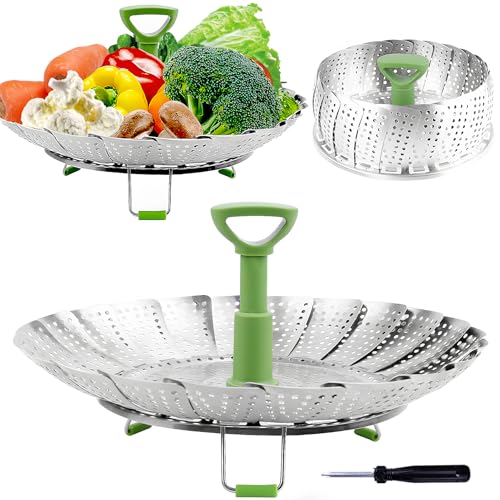
Consevisen Expandable Steamer Basket
Small batches of carrots, apples, peas, or sweet potatoes shouldn’t require a bulky countertop machine and a sink full of parts. The Consevisen Vegetable Steamer Basket takes a simpler path by turning an ordinary pot into a compact steaming setup that folds away after use. Its expandable petals, raised silicone feet, and telescoping handle give it a practical role among best steamer for baby food options for kitchens where storage space and hands-on control matter. It won’t blend ingredients or shut itself off, yet its straightforward design keeps steaming flexible without adding another powered appliance to the counter.
Consevisen Folding Vegetable Steamer
The basket collapses to 5.1 inches and opens to approximately 9 inches, so it can adapt to several compatible pots, pans, and pressure cookers. Its stainless steel petals spread outward like a water lily, creating a broader platform as the cookware allows. That adjustability is useful when a small serving fits neatly in a saucepan one day and a larger batch needs a wider pot the next. A fixed insert can’t offer the same flexibility, though the actual fit still depends on the shape and depth of the cookware.
Stainless steel construction gives the cooking surface a practical feel around repeated heat and moisture. The supplied description identifies the petals as rust-resistant, scratch-resistant, and corrosion-resistant, while the center handle uses food-grade plastic. Stainless steel also avoids holding onto strong food odors as readily as some softer materials might. Even so, residue can collect around the overlapping petals, so a quick rinse after cooking is much easier than scrubbing dried sweet potato later.
The perforated petals allow steam to move upward while condensation drains away from the ingredients. Food sits above the boiling water instead of being submerged, which helps prevent vegetables and fruit from becoming unnecessarily waterlogged. The manufacturer states that steaming can preserve more nutrients than boiling or microwaving, although exact retention varies with the ingredient, cooking time, temperature, and preparation method. The more immediate benefit is better moisture control, since liquid can be added gradually during blending rather than being absorbed during cooking.
This insert can handle more than baby-food ingredients. The product description lists vegetables, seafood, eggs, meats, desserts, and other steamed foods among its uses. That broader range gives the basket some staying power after smooth purées are no longer part of the daily routine. A tool that keeps working for eggs, dumplings, corn, or vegetables is less likely to become forgotten clutter.
Expandable Petals And Pot Compatibility
The folding wings allow the basket to adjust within the limits of the selected pot. A smaller saucepan keeps the petals tucked inward, while a wider vessel lets them spread closer to the full nine-inch diameter. This setup can reduce the need for a dedicated steaming pot, which is helpful where cabinet space is already tight. Still, the basket won’t sit identically in every pan, particularly if the bottom is sharply curved or unusually narrow.
A dry fit before adding water can prevent an awkward balancing act later. The basket should rest evenly, leave enough clearance beneath the food, and allow the lid to close without pressing against the handle. A tilted insert may send small pieces sliding toward one side and create uneven cooking. Stable placement supports steady steam circulation and makes removal less fiddly once the food softens.
Opening the basket fully doesn’t mean every inch should be packed. Steam needs space between pieces, especially around firm ingredients such as carrots, beets, or sweet potatoes. Chunks cut to similar sizes will also soften more evenly than a random mix of thick and thin pieces. Crowding and uneven cutting can leave the edges tender while the center of the pile stays stubbornly firm.
The description also mentions compatibility with pressure cookers, but the insert must match the cooker’s internal dimensions and operating guidance. It shouldn’t interfere with the sealing system, lid, or pressure mechanism. For small portions of baby food, a regular saucepan remains the simplest arrangement because the water level and texture can be checked directly. Pressure-cooker compatibility is useful, but it shouldn’t be assumed without checking the specific appliance.
Raised Silicone Feet And Water Control
Three folding legs lift the basket about 1.2 inches above the bottom of the pot. That height creates room for boiling water beneath the ingredients and helps keep food out of direct contact with the liquid. The extra clearance may also allow a little more water than very short-legged inserts can accommodate. Longer steaming sessions become less stressful when the pot isn’t running on a paper-thin water reserve.
Silicone-covered feet help reduce scratching and give the basket a steadier grip against cookware. They can also limit slipping when the hot insert is placed on a suitable counter surface or plate after cooking. Bare metal legs sometimes scrape or shift, so the silicone adds a useful buffer. The coating doesn’t remove the need for careful handling, but it softens contact with both the pot and the countertop.
Water level still needs attention because the basket has no automatic warning or shutoff. Too little water may evaporate before dense vegetables become tender, while too much can bubble through the perforations and partly boil the food. The raised legs provide more room, but they don’t replace basic monitoring. Keeping the water beneath the basket preserves the steam-cooking benefit and gives more predictable texture.
The legs fold flat when the basket is stored, helping the insert return to a compact shape. That matters in a drawer already crowded with measuring spoons, bottle brushes, and loose lids. Folding parts should move smoothly rather than being forced, since bent legs could make the basket wobble during later use. A little care protects the collapsible design and keeps the insert sitting level.
Telescoping Handle And Safer Lifting
The center post can extend for use in deeper pots and retract so it doesn’t interfere with a closed lid. A tall fixed handle often prevents a lid from sealing properly around the rim, which lets heat escape and slows cooking. The telescoping handle solves that problem without giving up an obvious lifting point. Its adjustable height makes the basket easier to match with both shallow and deep cookware.
A hole at the top of the post allows a fork to hook into the handle during removal. That keeps fingers farther from boiling water and escaping vapor, which is particularly useful when the basket is loaded and dripping. The design reduces awkward reaching, but it doesn’t make hot steam harmless. Opening the lid away from the face and lifting slowly remain essential parts of safe handling.
The handle can be removed when larger foods need more room across the center. Corn on the cob is one example supplied in the description, though other bulky ingredients may benefit from the uninterrupted space. Removing the post makes the basket more open, but it also removes the easiest lifting point. A different removal plan is needed before the water starts boiling, rather than improvising over a hot pot.
A heat-safe plate or trivet should be waiting beside the stove before the basket comes out. The stainless steel petals retain heat, and condensation can drip through the holes onto the surface below. Setting the insert directly on a delicate countertop could leave moisture or heat marks. That small bit of preparation makes hot-basket removal feel controlled instead of rushed.
Baby Food Texture And Manual Control
Steam-softened ingredients provide useful control over the final consistency. Sweet potato, squash, apple, or carrot can be blended with a measured amount of appropriate liquid instead of starting out soaked from boiling. That makes it easier to stop at a smooth purée, a thicker mash, or a soft finger-food texture. The basket’s biggest contribution is moisture control, not automation.
The insert doesn’t blend, grind, time, or shut off on its own. A separate blender, food mill, fork, or masher is still required after cooking. That extra step is the main difference between this basket and an all-in-one baby food processor. On the other hand, manual finishing provides more freedom over texture and avoids relying on a preset blending cycle that may run longer than needed.
Small batches suit this design particularly well. A few pear slices or zucchini pieces can steam in a compact pot without filling a large electrical appliance. As serving sizes grow, the basket can open farther inside wider cookware. This scalable setup follows changing meal portions without demanding a permanent space on the countertop.
Cooking time depends on the ingredient, cut size, and amount loaded into the basket. A fork test remains the clearest way to judge whether the food is soft enough for blending, mashing, or serving. The lack of a timer requires attention, but it also keeps the process easy to adjust midway. Dense vegetables can continue steaming while delicate pieces are removed earlier if necessary.
Cleaning, Storage, And Extra Uses
The basket can also work as a strainer or fruit container, according to the supplied details. Its holes allow rinse water to drain from vegetables, fruit, or salad ingredients. That second job gives the insert a reason to stay within reach even when nothing needs steaming. Multi-use kitchen tools usually earn their storage space more easily than single-purpose accessories.
Cleanup is fairly direct because there’s no electrical housing, sealed reservoir, or blade assembly. Most residue remains visible on the petals, feet, and handle. The overlapping joints are the exception, since small vegetable fibers or mashed food can lodge between moving parts. A soft brush and prompt rinsing help keep the folding mechanism free of buildup.
Once dry, the basket folds back to its 5.1-inch collapsed diameter. It can sit inside a pot, slide into a drawer, or share a cabinet with other cooking inserts. That compact profile is a clear advantage over a dedicated countertop steamer. Drying the joints thoroughly before storage also helps prevent lingering moisture around the folding areas.
From a practical angle, an unrelated household reference appears in compact front-load washing machines without implying any connection to food preparation. That topic has no bearing on steaming speed, pot fit, or ingredient texture. The Consevisen basket should be judged on expandability, water clearance, handle design, and manual operation. Keeping the distinction clear prevents a general home-appliance link from being mistaken for product evidence.
Strengths And Everyday Tradeoffs
The basket’s clearest strength is simple adaptability. It works with several compatible pot sizes, folds down for storage, and requires no outlet or dedicated base. The raised feet and retractable handle add practical improvements to a familiar steaming method. Those details make it more convenient than balancing food on an improvised rack inside a saucepan.
Storage efficiency is another strong point. Electric steamers often occupy a fixed block of cabinet or counter space, while this insert collapses and nests with existing cookware. Its multi-use role as a strainer also helps justify keeping it close at hand. For kitchens with limited room, compactness may matter just as much as cooking performance.
The main weakness is hands-on monitoring. Water level, cooking time, and food softness all require attention, and there’s no automatic shutoff if the pot runs dry. A separate appliance is also needed for blending or grinding. Those tradeoffs make it less convenient than a one-step processor, even though the basket itself is easier to store and maintain.
Capacity depends on the chosen pot rather than a fixed bowl, which can be either a strength or a drawback. A wide pan offers more cooking area, while a narrow saucepan limits both spread and batch size. Overlapping petals may also need extra brushing after sticky foods. The Consevisen insert keeps the process flexible, but flexibility still relies on suitable cookware and active supervision.
Best Steamer for Baby Food With Four Cooking Functions
Meal prep gets messy fast once a saucepan, steaming insert, blender jar, and reheating container all land beside the sink. The AMZBABYCHEF 4-in-1 Baby Food Maker brings those separate steps into one countertop system that can steam, blend, defrost, and reheat. That combination makes it a relevant best steamer for baby food candidate for routines built around fresh ingredients and stored portions. It doesn’t eliminate chopping, temperature checks, or cleanup, but it can cut down the back-and-forth that makes a small serving feel like a full kitchen project.
AMZBABYCHEF 4-in-1 Baby Food Maker
The main attraction is its four-in-one functionality. Vegetables, fruit, fish, and meat can be steam-cooked, blended, defrosted, or reheated using the same machine. Fewer appliance changes mean less lifting of hot food between containers and fewer dishes scattered across the counter. That streamlined routine carries real value during feeding windows that rarely run according to plan.
The unit pairs a steamer with a built-in purée blender, so cooked ingredients don’t have to travel to a separate food processor. Soft carrots, apples, squash, or fish can move from cooking to blending inside the system. This arrangement helps contain condensation and food drips that often appear during manual transfers. It also reduces the number of hot components that need to be handled at once.
A separate defrost function supports food that has already been prepared and frozen in small portions. That matters because batch cooking only saves time when those portions can return to serving condition without creating another pile of cookware. The reheat mode adds similar convenience for refrigerated meals. Stirring thoroughly and checking the temperature before serving still remain essential, since automatic heating doesn’t guarantee uniform warmth throughout every portion.
The product description also mentions a large-capacity mixing bowl, although no exact volume is provided. That suggests the machine is designed for more than a spoonful or two, but specific batch sizes shouldn’t be guessed. Filling the bowl beyond its intended level could reduce steam circulation or blending consistency. A sensible load will usually deliver better results than packing in extra ingredients and hoping for the best.
Steam Circulation And Ingredient Quality
The steam circulation system is designed to cook food while retaining natural flavor, vitamins, and nutrients. Because the ingredients aren’t described as sitting directly in boiling water, they’re less likely to absorb unnecessary moisture during cooking. That distinction can make a noticeable difference during blending. A thick purée can be loosened gradually, while an overly watery mixture is much harder to repair.
Steam needs room to move, so ingredient placement still matters. Tightly packed chunks can block circulation, especially when dense vegetables are mixed with softer foods. Similar-sized pieces give the heat a fair chance to reach everything at roughly the same pace. The machine handles the cooking cycle, but even cutting and sensible loading remain part of the job.
Different ingredients also demand different cooking times. Apple slices soften more quickly than thick carrot rounds, while meat requires more careful preparation than ripe fruit. Mixing foods with widely different densities may leave one ingredient mushy and another underdone. The adjustable cooking timer helps manage the cycle, yet it can’t compensate for a bowl filled with mismatched pieces.
Natural flavor is easier to preserve when food isn’t diluted in excess water. Sweet potato stays rich, peas retain their distinct character, and fruit can keep more of its own moisture. That doesn’t mean every ingredient will taste identical after steaming, of course. It means the controlled steam process provides a cleaner starting point for homemade meals than soaking everything in a pot.
Texture Control From Fine To Chunky
The blending feature allows consistency to range from fine purée to chunkier texture. Early meals may need a smoother finish, while later stages often call for thicker food with soft lumps. Controlling the blending duration makes that transition less abrupt. A brief cycle can preserve texture, while additional blending can smooth fibrous ingredients more thoroughly.
Texture can change in seconds, especially with soft produce. One extra burst may turn a spoonable mash into a thin mixture, so stopping to inspect the bowl is worthwhile. The custom blend control gives more flexibility than a fixed program that treats every recipe the same. Pear, broccoli, fish, and potato simply don’t respond to blades in identical ways.
Moisture should be added gradually after steaming. A small amount of an appropriate liquid can loosen dense food without washing out its body. Pouring too much at once is an easy beginner mistake, and the blender can’t reverse it afterward. The machine’s steam-and-blend workflow helps by keeping cooking water separate until the final consistency is being adjusted.
The blades are described as suitable for mixing baby food, but their results will still depend on batch size and ingredient placement. Very small amounts may sit below or away from the most active blending area, while an overloaded bowl may circulate poorly. Pausing and redistributing food may be necessary with certain recipes. That’s not unusual for compact processors, but it’s a realistic limitation worth keeping in mind.
Timer And Automatic Shutoff
The automatic shutoff cooking timer reduces the need to stand beside the appliance and watch every minute pass. A cooking time can be selected according to the food being prepared, then the machine stops automatically at the end of the cycle. That frees up attention for washing bottles, portioning previously cooked food, or handling one of the dozen other tasks that tend to appear at once. Hands-off cooking is useful, though it shouldn’t become completely unattended cooking.
Repeated recipes may become easier once a reliable time has been established for a familiar ingredient and cut size. Similar carrot pieces, for example, should behave more predictably across batches than randomly sized chunks. The timer helps create that consistency. Changes in quantity, starting temperature, and thickness can still affect the finished softness, so a fork check remains the sensible final test.
Automatic shutoff also reduces the risk of food continuing to cook long after the selected period. That can help avoid purées with flattened flavor or vegetables so soft they lose all structure. Still, the machine can only follow the time entered. It can’t recognize that an unusually dense piece needs another few minutes, which keeps manual judgment in the process.
The timer is one of the clearest differences between this appliance and a simple stovetop basket. A manual insert costs less space and has fewer parts, but it needs closer supervision. The AMZBABYCHEF trades that simplicity for automated timing and shutoff. Kitchens that value fewer interruptions may appreciate that exchange, while occasional cooks may prefer a tool that can disappear into a drawer.
Tritan Materials And Safety Interlock
The bowl is made from Tritan material described as free from BPA, lead, and phthalates. Those details matter because the container handles heated ingredients and repeated blending cycles. Tritan also keeps the bowl lighter than glass, which can make pouring and washing less awkward. Plastic may still show scratches or staining over time, particularly if abrasive tools or deeply colored foods are used frequently.
A built-in interlock prevents the appliance from powering on unless the stirring cup and lid are installed correctly. That safeguard helps keep the heating and blending functions from operating with the assembly incomplete. The alignment may feel a little particular during the first few uses. Once the parts become familiar, the extra step should fit naturally into setup.
Steam safety still relies on careful handling after the cycle ends. Hot condensation can collect beneath the lid, and vapor may escape quickly when the container is opened. Turning the lid away from the face and giving the steam a moment to settle can prevent an unpleasant surprise. The safety interlock protects the machine during operation, but it doesn’t replace common sense around hot food and vapor.
The bowl and lid also need to be inspected before each cycle. A component that isn’t seated properly may stop the machine from starting, while residue around the contact points could make alignment harder. Cleaning those areas promptly keeps the safety system from becoming frustrating. A machine with several functions stays convenient only when its parts are reassembled without a wrestling match.
Batch Preparation And Stored Meals
The stated large-capacity bowl is intended to reduce repeated cooking sessions. Preparing several portions at once can make weekday meals easier, particularly when finished food is divided into small containers and labeled before freezing. The defrost and reheat functions then support those stored servings later. That cycle can reduce daily chopping without turning one weekend session into an all-day production.
Frozen food behaves better when portions are relatively small and evenly shaped. A thick frozen block may warm slowly at the center, while smaller servings defrost more consistently. The machine helps with reheating, but storage habits determine how smoothly that process goes. Portion size, labeling, and careful temperature checks still matter outside the appliance.
Batch cooking also highlights the machine’s biggest workflow advantage. Ingredients can be steamed and blended in the same system, then the bowl can be prepared for the next load. Fewer containers simplify the process, though multiple cycles still mean repeated washing or rinsing. The practical benefit is consolidation, not an unlimited one-pass capacity.
No exact bowl measurement is supplied, so claims about the number of servings would be guesswork. Ingredient density also changes how much comfortably fits inside. Leafy vegetables settle differently from diced squash, and meat mixtures behave differently from fruit. The useful approach is to follow the fill guidance provided with the machine rather than treating the bowl like a container that should be packed to the rim.
Cleaning And Countertop Demands
The product is described as dishwasher safe, which can shorten cleanup after sticky fruit, starchy vegetables, or blended meat. Removable components are easier to manage when they can be rinsed and placed into a dishwasher cycle. The blade area and narrow seams should still be checked by hand. Small fibers have a habit of clinging where a water jet may not reach.
Prompt cleaning makes a big difference. Dried sweet potato can cling to bowl edges, and purée left around the blade assembly may become far harder to remove later. A quick rinse immediately after serving keeps the mess from setting. The integrated design reduces the number of separate appliances to wash, but every food-contact surface still needs attention.
Counter space is part of the bargain. This unit can replace a separate steamer, blender, saucepan-based reheating setup, and manual defrosting arrangement for baby meals. That may justify keeping it out during frequent use. On the other hand, it takes up more room than a folding steamer basket and requires an available electrical outlet.
Cabinet storage should account for the assembled height and loose accessories. A machine that has to be completely dismantled and repacked after every use may feel less convenient than expected. The four-function design earns its footprint most convincingly when several modes are used each week. If only steaming happens occasionally, much of the appliance may sit idle.
Support Coverage And Unrelated Reference
The provided information lists a one-year after-sale warranty, 24-hour customer service, and lifetime technical support. Those terms create a stated route for help with setup, operation, or technical questions. They don’t predict durability or guarantee a particular repair outcome. Keeping the purchase record and instruction materials nearby would make future support conversations easier.
The machine is also presented as a gift for baby showers and holidays. Its usefulness as a gift depends less on the occasion and more on available counter space, cooking habits, and interest in homemade food preparation. A feature-rich appliance can be helpful in the right kitchen and cumbersome in another. The steam, blend, defrost, and reheat combination should match the actual routine rather than the wording on a registry list.
From a neutral household angle, an unrelated reference appears in detergent for portable washing machines without implying any connection to meal preparation. Laundry products don’t affect steam circulation, blade performance, bowl safety, or purée texture. Keeping that topic separate prevents a household link from sounding like support for the appliance. The AMZBABYCHEF stands or falls on its integrated workflow, timer, capacity, material choices, and cleanup needs.
The supplied support details are useful, but daily ownership will be shaped more by assembly and maintenance. A lid that needs careful alignment, a bowl that must be cleaned promptly, and a blade area that catches food can influence satisfaction more than a long technical-support promise. Those aren’t reasons to dismiss the machine. They’re practical points that determine whether the appliance remains in regular rotation or slowly migrates toward the back of a cabinet.
Strengths And Realistic Tradeoffs
The strongest feature is workflow consolidation. Steaming, blending, defrosting, and reheating can happen through one system rather than several pieces of cookware. The timer and automatic shutoff reduce active monitoring, while the safety interlock keeps the machine from running with the cup or lid incorrectly positioned. Those functions address routine friction instead of adding decorative complexity.
Texture control is another meaningful advantage. The blender can move from fine purée toward chunkier food as consistency needs change. Steam cooking also gives more control over added liquid, which helps prevent vegetables and fruit from becoming waterlogged before blending. That combination supports more than one feeding texture without changing appliances.
The main weakness is greater complexity than a manual steamer. The machine needs power, counter space, correct assembly, and cleaning around multiple food-contact parts. It also handles only one active process at a time, so a second batch or reheating cycle has to wait. Simplicity is traded for automation, and that exchange won’t suit every kitchen.
Exact capacity, cooking times, and blending results aren’t supplied in enough detail to promise a particular number of portions or minutes. Ingredient size, quantity, moisture, and density will shape every batch. The machine can reduce juggling, but it can’t remove the need to inspect softness, stir reheated food, and check temperature before serving. Its best fit lies in frequent, small-scale meal preparation where integrated functions matter more than minimal equipment.

Top Rated Best Quality Range Hoods: 2026 Expert Picks
The 12 Best Small Solar Generators 2026

10 Best Quality Semi Automatic Washing Machine of 2026 For Leak-Free Laundry

11 Best Small Washer Machine of 2026 For Everyday Laundry

12 Best Vibration Pads For Washing Machine of 2026 To Stop Walking and Shaking

11 Best Selling Front Load Washing Machine of 2026 For Quiet Odor-Free Laundry

11 Best Washing Machine For King Size Bedding of 2026 To Prevent Cycle Errors

10 Best Small Front Loader Washing Machine of 2026 For Tight Closets






