
Best Pan for Cooking Fish 2026: Crisp, Clean Results

The best pan for cooking fish needs to solve one maddening problem: delicate fillets that cling to the surface and fall apart during the flip. A broad cooking area gives each piece enough breathing room, while a flat base keeps oil from pooling around one edge. Reliable heat control matters just as much because fish can jump from pale to scorched before the center finishes cooking. Frankly, a pan that runs hot in random spots turns a simple dinner into a guessing game.
Stainless steel skillets can produce deeply browned fish with crisp edges, but they demand proper preheating and enough cooking fat. The fillet usually releases once a crust forms, yet lifting it too early can leave half the skin welded to the pan. Stainless steel also reacts quickly to burner adjustments, which helps with thin fish such as sole, trout, or tilapia. Still, the learning curve can feel steep after a long day when dinner needs to reach the table without a small kitchen drama.
A well-seasoned cast iron pan holds steady heat and develops an impressive crust on salmon, snapper, and other sturdy cuts. That heat retention becomes a drawback with very thin fillets because the pan stays hot even after the burner is lowered. Cast iron also weighs more, takes longer to warm up, and requires drying after washing to prevent rust. Even so, its durability and oven-safe build make it practical for recipes that begin on the stovetop and finish under gentle oven heat.
A nonstick skillet offers the easiest route for fragile fish, especially skinless fillets that tend to tear. Less oil is needed, cleanup stays manageable, and a flexible spatula can slide underneath without much resistance. But here’s the rub: many nonstick pans shouldn’t be blasted over high heat, so the skin may not become as crackly as it would in stainless steel or cast iron. Metal utensils can also damage the coating, and the pan will eventually need replacing as the surface wears down.
Carbon steel cookware sits between cast iron and stainless steel, combining strong browning with a lighter body and faster heat response. Seasoning improves its release over time, although acidic sauces can weaken that protective layer and leave a metallic taste. A pan measuring roughly 10 to 12 inches works well for most home portions without crowding the fish or overwhelming a standard burner. Smaller pans trap steam between fillets, and steamed skin rarely delivers the crisp bite people expect.
The right shape also changes the experience more than flashy extras do. Low, gently flared sides make turning fish easier and allow moisture to escape, while a comfortable handle keeps the pan steady during basting. A thick, level base reduces sudden temperature swings that can burn butter before the fish cooks through. For everyday flexibility, a sturdy nonstick or seasoned carbon steel skillet often strikes the most forgiving balance, while stainless steel rewards confident heat management with stronger browning.

- TAR Score9.6
TAR Score is a ranking system developed by TopAppliancesReviews.com. TAR score has no relationship or impact from any manufacturers or sales agent websites. Learn more
- BrandT-Fal
- TAR Score9.6
TAR Score is a ranking system developed by TopAppliancesReviews.com. TAR score has no relationship or impact from any manufacturers or sales agent websites. Learn more
- BrandBlue Diamond

- TAR Score9.2
TAR Score is a ranking system developed by TopAppliancesReviews.com. TAR score has no relationship or impact from any manufacturers or sales agent websites. Learn more
- BrandSENSARTE

- TAR Score9.4
TAR Score is a ranking system developed by TopAppliancesReviews.com. TAR score has no relationship or impact from any manufacturers or sales agent websites. Learn more
- BrandLodge

- TAR Score9.2
TAR Score is a ranking system developed by TopAppliancesReviews.com. TAR score has no relationship or impact from any manufacturers or sales agent websites. Learn more
- BrandCAROTE

- TAR Score9.2
TAR Score is a ranking system developed by TopAppliancesReviews.com. TAR score has no relationship or impact from any manufacturers or sales agent websites. Learn more
- BrandCAROTE

- TAR Score9.0
TAR Score is a ranking system developed by TopAppliancesReviews.com. TAR score has no relationship or impact from any manufacturers or sales agent websites. Learn more
- BrandUtopia Kitchen

- TAR Score7.6
TAR Score is a ranking system developed by TopAppliancesReviews.com. TAR score has no relationship or impact from any manufacturers or sales agent websites. Learn more
- BrandLeefasy
Last update on 2026-08-13 / Affiliate links / Images, Product Titles, and Product Highlights from Amazon Product Advertising API
T-Fal Ultimate Hard Anodized Pan For Cooking Fish
A fragile fillet doesn’t leave much room for error. Start with a cool surface and the fish may cling; push the heat too far and the exterior can darken before the center is ready. The T-Fal Ultimate Hard Anodized Nonstick Fry Pan tackles that awkward balance with a titanium nonstick coating, a preheating indicator, and a practical 10-inch cooking surface. For anyone searching for the best pan for cooking fish, its appeal lies in making everyday seafood less fussy without piling on complicated controls.
T-Fal Ultimate 10-Inch Fry Pan
The 10-inch diameter fits the way many fish dinners are actually prepared. It has room for a salmon portion, a trout fillet, or two smaller pieces without taking over the stovetop. The deep vessel shape helps catch oil splatter while leaving enough space to slide a thin spatula beneath the fish. Crowding still needs to be avoided, though, because packed fillets release moisture and steam instead of developing a lightly browned surface.
A hard-anodized exterior gives this pan a sturdier structure than thin, entry-level aluminum cookware. The forged construction is designed to withstand repeated cooking while supporting more even heat distribution across the base. That steadiness can be useful with fish, where one overheated patch may dry an edge before the thicker center cooks. The pan carries some substance in the hand, but it remains more manageable than many heavy cast iron skillets.
The included lid adds another layer of flexibility. Its vented tempered glass traps part of the heat and moisture while keeping the food visible, so there’s less need to lift the lid repeatedly. That setup suits thicker portions that need a gentle covered finish after the first side has cooked. Still, crisp skin and trapped steam don’t exactly see eye to eye, so uncovered cooking remains the better route when crunch is the main goal.
Nonstick Release For Fragile Fillets
The titanium nonstick coating is the feature that gives this pan its clearest advantage with delicate fish. Cod, sole, flounder, and tilapia can split apart if their surface bonds firmly to bare metal. A slick interior reduces that tug-of-war, letting a flexible turner slip beneath the fillet with less resistance. Fish can still benefit from a thin layer of oil, but there’s no need to drown the pan just to prevent sticking.
Nonstick cooking does come with a tradeoff. Moderate burner settings protect the coating and provide better control, while aggressive high heat can shorten the surface’s useful life. That means the pan may not build the same intense crust as an uncoated stainless steel skillet heated hard. On the other hand, the forgiving cooking surface makes clean flipping and intact portions much easier to achieve on an ordinary weeknight.
Good release also depends on preparation rather than coating alone. Patting fish dry removes surface moisture that would otherwise turn into steam, and leaving the fillet alone for the first part of cooking helps its exterior set. The easy-release interior supports those steps, but it can’t make a wet fillet crisp in a crowded pan. Well, no skillet can bend the rules of moisture and heat completely.
Thermo-Spot Preheating Control
The center Thermo-Spot indicator turns solid red when the pan reaches its intended preheating point. That cue removes some of the guesswork that often leads to fish being placed into a lukewarm skillet. A properly warmed surface begins cooking the exterior promptly, helping it firm up before the first turn. The indicator doesn’t display an exact temperature, but it offers a repeatable visual reference that’s easier to follow than vague timing.
Thin fish can cook through quickly, sometimes before a pale surface has time to brown. Starting at a consistent heat level helps reduce that mismatch and makes the cooking routine less erratic. The preheat indicator also discourages endlessly heating an empty pan while other ingredients are being prepared. Burner strength still matters, of course, so the red spot should be treated as guidance rather than an excuse to stop paying attention.
Cold fish naturally lowers the cooking temperature after it enters the skillet. Adding too many pieces at once makes that drop more noticeable and can leave moisture pooling between them. The pan’s heat distribution helps maintain a steadier cooking environment, yet spacing remains essential for proper browning. Two uncrowded batches may take a little longer, but they usually cause less frustration than one overloaded round.
Handle Comfort And Lid Visibility
The riveted handle uses a silicone grip that feels more secure during lifting, turning, and transferring. That detail becomes valuable when a pan contains hot oil and a delicate piece of fish that shouldn’t be jolted around. Rivets provide a firm connection between the handle and the body, though residue can gather around their edges. A soft sponge or small brush reaches those areas more effectively than a hurried rinse.
The glass lid lets the cooking process stay visible while retaining heat around the food. Thick salmon, halibut, or other substantial portions can benefit from a brief covered stage when the surface is cooked but the middle needs more time. The vented lid releases some steam, helping prevent pressure and moisture from building without control. Even so, covering fish too early may soften its browned exterior, so timing matters.
The pan is described as dishwasher safe, which may simplify cleanup after oily or strongly seasoned dishes. Hand washing remains the gentler habit for protecting a nonstick interior, especially when residue already releases with little scrubbing. Abrasive pads and sharp metal tools can damage a coated surface long before the exterior shows much wear. Silicone, nylon, or wooden utensils make more sense for preserving the pan’s smooth finish.
Oven Use And Cooktop Limits
The skillet can withstand oven temperatures up to 400°F, opening the door to recipes that begin on the burner and finish with surrounding oven heat. A thick fish portion can be browned briefly, then transferred to the oven without moving it into another dish. The lid has a lower limit of 350°F, so covered oven recipes need to stay within that separate rating. Mixing up those two limits would be an easy mistake during a rushed dinner.
This pan works with common stovetop types but is not suitable for induction. That cooktop limitation won’t matter in a gas or traditional electric kitchen, but it’s a firm drawback for an induction setup. It may also affect long-term value if an induction range is already part of a planned kitchen update. A pan can be convenient today and still become impractical after a cooktop change, so this detail deserves more than a passing glance.
The 10-inch body is compact enough to store without wrestling with an oversized skillet. It also handles eggs, vegetables, pan sauces, and smaller meat portions, giving the pan a role beyond seafood. A different cooking method may suit meals that rely on stacked baskets and moist heat, and best 3-tier food steamers offers a relevant reference for that separate style of preparation. The connection is indirect, but both approaches can help manage delicate foods without rough handling.
Practical Strengths And Drawbacks
The strongest combination is easy food release, visible preheating guidance, and straightforward cleanup. Those features address the problems that make fish annoying to cook: torn flesh, pale surfaces, and stubborn residue. The lid and oven-safe body also create more options for handling thicker portions without switching cookware halfway through a recipe. Nothing feels overly technical, which is part of the charm.
The main weakness is the care demanded by any nonstick interior. High heat, metal utensils, and rough cleaning can wear the coating faster, making this a poor match for cooks who prefer hard scraping and aggressive searing. The nonstick surface also won’t create as much browned fond as bare stainless steel, limiting the depth of some pan sauces. That’s the bargain: easier release in exchange for a little less crust-building freedom.
The exterior may be durable, but the coating should still be treated as a wear-sensitive component. Dishwasher compatibility doesn’t automatically mean repeated machine washing is the kindest routine, and the limited lifetime warranty shouldn’t be viewed as protection against misuse. With controlled heat and softer utensils, the hard-anodized construction and smooth interior form a sensible pairing for regular fish dinners. The result is less wrestling at the stove, fewer broken fillets, and cleanup that doesn’t linger long after the plates are empty.
Blue Diamond Hybrid Wok For Cooking Fish
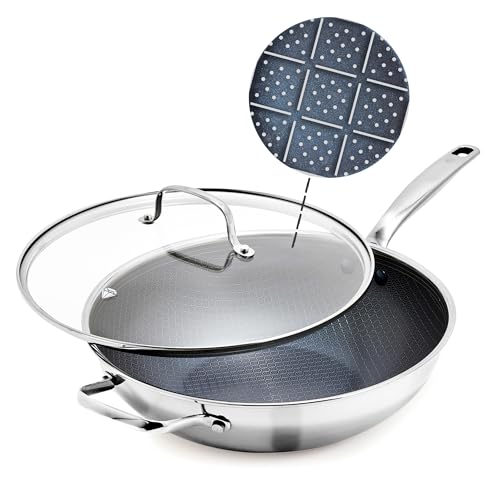
A wide piece of fish can turn awkward fast once steam collects, oil splatters, and the center of the pan loses heat. The Blue Diamond Hybrid Nonstick Stainless Steel 12-Inch Wok approaches those headaches with a deep 5-quart body, a diamond-textured hybrid surface, and three-ply stainless steel construction. Its wok shape won’t replace a broad, flat skillet for every fillet, but it offers useful control for seafood stir-fries, braised fish, steaming, shallow frying, and sauce-heavy recipes. Among products associated with the best pan for cooking fish, this one stands out more for range and responsive heating than for maximizing flat searing space.
Blue Diamond Hybrid 12-Inch Wok
The 12-inch, 5-quart design provides enough room for fish pieces, aromatics, vegetables, and sauce without turning the pan into an overcrowded mess. Its sloped walls help contain splatter and guide ingredients toward the hotter center, which comes in handy while tossing shrimp, salmon cubes, or firm white fish. A broad top opening also gives steam more room to escape than a narrow saucepan. Still, the actual flat area at the bottom is smaller than the full 12-inch measurement suggests.
The body combines three stainless steel layers with a laser-etched diamond pattern and a PFAS-free ceramic nonstick coating. That construction is designed to deliver quicker temperature changes while reducing the sticking commonly associated with bare stainless steel. Delicate seafood should be easier to lift once the surface is heated and lightly coated with oil. Yet no coating can fix a dripping-wet fillet, so drying the fish remains part of the deal.
A long main handle and a helper handle give the wok a practical two-handed grip. That second handle matters once the pan holds hot oil, broth, or several pounds of ingredients, since lifting a loaded stainless steel wok with one wrist can feel like a bad bargain. The tempered glass lid expands its role further by holding in moisture while keeping the food visible. For thick portions that need gentle finishing, seeing through the lid prevents constant peeking and unnecessary heat loss.
Hybrid Surface And Fish Release
The diamond-reinforced nonstick coating is the central attraction for fish that tends to tear during turning. Skinless cod, tilapia, sole, and other fragile portions can cling stubbornly to plain steel if the heat or timing is slightly off. This coated surface reduces that resistance and gives a thin spatula a better chance of sliding underneath cleanly. A modest layer of oil is still worthwhile because it improves contact, flavor, and browning.
The laser-etched pattern creates a different feel from a completely smooth ceramic skillet. Raised stainless steel areas are meant to protect the coating and add durability, while the recessed portions support food release. That textured cooking surface may require a touch more oil than an ultra-slick traditional nonstick pan. In return, it’s designed to tolerate tougher everyday handling and more frequent utensil contact.
Blue Diamond describes this model as providing four times longer-lasting nonstick performance and greater metal-utensil resistance. Those figures come from the supplied product description, and no testing method or comparison baseline is provided. The claims therefore shouldn’t be treated as independent proof of lifespan. Smooth-edged silicone, wood, or nylon tools remain the safer bet for preserving the coating, even though the pan is promoted as metal utensil safe.
Fish skin can still brown on the hybrid surface, but technique carries plenty of weight. Pat the fish dry, preheat the pan, add enough fat to cover the contact area, and resist moving the portion too soon. The nonstick advantage makes the release stage more forgiving, though the wok’s tall sides can hold moisture if several pieces are crowded together. Smaller batches will usually produce a drier, crisper finish.
Heat Response And Cooking Control
The three-ply body is described as offering six times faster heat response. Since the provided information doesn’t identify what cookware served as the benchmark, the multiplier lacks enough context for a precise comparison. The underlying benefit is easier to understand: responsive stainless steel should react promptly when the burner is raised or lowered. Fish benefits from that control because thin flesh can overcook while a sluggish pan slowly sheds excess heat.
Uniform heating also matters with a curved pan. The center naturally receives the most direct energy, while ingredients pushed higher along the sides cook more gently. That temperature gradient can be useful during a seafood stir-fry, allowing browned fish to rest away from the hottest spot while vegetables or sauce finish below. A single broad fillet, however, may not receive identical contact across its entire surface because of the wok profile.
Compatibility with induction, gas, electric, and ceramic stovetops gives this wok an edge over nonstick cookware that excludes induction. The flat exterior base should be matched with an appropriately sized burner or induction zone for steadier heating. A burner that’s much smaller than the base may concentrate heat in the center and leave the upper cooking area cooler. That won’t ruin every dish, but it can make batch cooking less predictable.
The pan is rated for oven and broiler temperatures up to 850°F, while the tempered glass lid is rated up to 425°F. Most fish dishes need nowhere near the pan’s maximum, but the high rating allows stovetop searing followed by oven or broiler finishing. Sweet glazes and delicate coatings can scorch rapidly under a broiler, so a high temperature allowance doesn’t remove the need for close attention. The lower lid limit must also be respected separately.
Cooking Methods Beyond Pan-Frying
The deep walls make this wok especially useful for braising and simmering fish. Broth, coconut milk, tomato sauce, or a light butter mixture can surround the fish without sloshing over a shallow rim. The glass lid then holds in heat while the fillets finish gently. This method won’t create crackling skin, but it can protect lean fish from drying out.
Steaming is another natural fit, provided a compatible rack or basket is used. The 5-quart body offers room for water below and food above, while the lid traps the vapor needed for even cooking. The tempered glass lid makes it easier to watch the water level and food without opening the pan repeatedly. Condensation may drip from the lid, so crispness isn’t part of the equation here.
Shallow frying benefits from the wok’s high sides because they help contain oil splatter. Small fish fillets, fish cakes, or breaded seafood pieces can cook near the broad lower section without oil jumping as freely onto the stovetop. The deep vessel shape also provides more safety margin than a low-sided skillet. Even so, the pan’s capacity shouldn’t encourage overfilling, since crowded food lowers oil temperature and produces greasy results.
A full cookware collection may still make sense where flat skillets, saucepans, and stockpots each have a regular job. From a practical angle, cookware sets under $1,000 provide a relevant reference for broader kitchen coverage beyond a single wok. This Blue Diamond pan handles several methods, but its curved interior can’t duplicate the uninterrupted searing space of a conventional fry pan. Its strength is flexibility, not complete replacement of every cookware shape.
Pros Of The Blue Diamond Hybrid Wok
Versatile cooking capacity is the most obvious advantage. The wok can stir-fry, boil, braise, steam, shallow-fry, and move from the stovetop into a hot oven. That range helps reduce the need to transfer fish between several vessels during one recipe. The glass lid and helper handle also make its larger capacity easier to manage.
The hybrid nonstick surface provides more forgiveness than bare stainless steel for fish that breaks easily. Food release should require less scraping, and the diamond-textured construction is intended to improve resistance to everyday wear. That balance suits cooks who want some stainless steel character without accepting the full learning curve of an uncoated pan. Cleanup should also be less troublesome after sticky marinades or reduced sauces.
Fast heat response supports better control over delicate seafood. Lowering the burner after searing can help prevent the center from overshooting its preferred doneness. The layered body is also designed to spread heat evenly across compatible stovetops, including induction. That cooktop flexibility makes the wok easier to keep after a kitchen appliance change.
The high oven-safe rating creates room for broiler finishing, roasting, and recipes that begin on the stove. Riveted handles offer a firm connection, while the helper grip makes a full pan less awkward to lift. The wrapped rim supports cleaner pouring when broth, oil, or sauce needs to be transferred. Dishwasher compatibility adds convenience, although gentle hand washing may better protect the coated surface over time.
Cons And Practical Limitations
The wok’s biggest weakness for cooking fish is its limited flat searing area. A long salmon fillet or broad piece of snapper may curve up the sides rather than resting fully against the hottest section. Uneven contact can lead to patchy browning, especially with skin-on portions. A low-sided 12-inch skillet remains the more natural shape for several large fillets.
The large stainless steel body may also feel cumbersome in a compact kitchen. A 5-quart wok with a glass lid requires more cabinet room than a standard 10-inch fry pan, and the long handle increases its storage footprint. Once filled with liquid and ingredients, the pan can become heavy enough to require both handles. That’s manageable, but it isn’t the breezy one-handed experience associated with lighter aluminum cookware.
The ceramic component deserves realistic care despite the metal utensil safe claim. Repeated scraping, overheating, abrasive pads, and harsh dishwasher cycles may still affect the surface over time. Hybrid construction can improve durability without making a coating indestructible. Anyone who routinely cuts food inside the pan or uses sharp-edged turners may not get the longest possible service life.
The manufacturer’s 10X durability, 6X heat response, and 4X nonstick statements sound precise, but the supplied details don’t explain their test conditions. Those numbers shouldn’t outweigh the more concrete considerations of shape, capacity, cooktop support, and temperature limits. The wok makes the most sense for cut fish, seafood mixtures, steaming, braising, and recipes with plenty of movement or liquid. Large flat fillets that need complete surface contact expose the design’s clearest compromise.
SENSARTE 9.5-Inch Nonstick Grill Pan
Fish fillets have a habit of exposing every weakness in a pan, from uneven heat to a surface that grips the flesh like glue. Raised ridges add another wrinkle because they trade full contact for seared lines and space for liquids to drain away. The SENSARTE Nonstick Grill Pan brings a square 9.5-inch surface, ILAG nonstick coating, and broad cooktop compatibility to the search for the best pan for cooking fish. It won’t suit every seafood recipe, but its design has clear appeal for firm fillets, grilled vegetables, and indoor meals that need less pooled oil.
SENSARTE 9.5-Inch Grill Pan
The square shape creates more usable corner-to-corner room than a round pan with a similar width. A salmon portion, swordfish steak, or several smaller shrimp skewers can sit across the 9.5-inch cooking surface without being squeezed into a narrow center. That said, the raised ribs reduce how much of the fish actually touches the pan. Delicate, thin fillets may bend between the ridges rather than lying evenly across them.
Die-cast aluminum forms the body, giving the grill pan a lighter feel than cast iron while still supporting a sturdy cooking surface. The product description states that the pan is designed to resist warping, which matters on flat electric and induction cooktops where poor contact can lead to patchy heating. Its thick magnetic stainless steel base also broadens compatibility beyond standard gas burners. Quick heating can shorten the preheating stage, though moderate burner settings remain the safer route for preserving a coated interior.
The bakelite handle is shaped for a comfortable grip and is described as staying cool during stovetop use. That stay-cool handle helps while tilting the pan toward either pour spout or carrying it away from the burner. Still, handle temperature can vary with burner size and cooking duration, so bare-handed confidence shouldn’t replace common sense. The absence of a helper handle may also become noticeable when the pan is full of fish, vegetables, and hot liquid.
Nonstick Release With Fish
The Switzerland ILAG nonstick coating addresses one of the biggest headaches in fish cookery: flesh sticking during the turn. Skinless cod, tilapia, and other soft fillets can tear apart when they bond to an uncoated surface. SENSARTE states that the coating works with minimal oil, which may help keep lean fish from feeling greasy. A light film of oil is still useful because it promotes browning and helps seasonings remain in place.
The ridged surface changes how release works compared with a flat nonstick skillet. Fish rests on narrow raised lines, leaving less total contact area but creating pressure points where the flesh can catch if it’s moved too soon. The nonstick ridges reduce that risk, yet patience still matters. Letting the first side firm up before lifting gives the fillet a better chance of staying whole.
Moisture remains the enemy of defined grill marks. A wet fillet will release steam, filling the grooves with liquid and softening the exterior instead of searing it. Drying the fish thoroughly and leaving space between portions supports the pan’s grilling effect. Crowding several pieces together may produce pale stripes and a watery center, no matter how slick the coating feels.
Cleaning should be less demanding than scrubbing residue from bare cast iron. The description suggests wiping the surface with a paper towel or rinsing it with water after the pan cools. That easy-clean interior is useful after marinades or fish oils settle between the ribs, although the grooves may need a soft brush or sponge. Metal scrubbers and sharp tools would be a poor match for any coated surface, even one described as durable.
Raised Ribs And Grill Marks
The raised ribs are designed to leave visible sear lines while holding rendered fat and cooking liquid below the food. Firm fish such as salmon, tuna, mahi-mahi, or swordfish is better suited to this setup than paper-thin sole. Those denser cuts can bridge the raised grill ridges without collapsing into the channels. The result can look more like outdoor grilling, though only the points touching the ribs receive direct browning.
Presentation is one of the pan’s strongest cards. Parallel marks make a plain fillet look more deliberate, especially alongside grilled vegetables or citrus. Yet grill marks shouldn’t be confused with an evenly browned crust across the entire surface. A flat stainless steel or carbon steel skillet will usually create broader contact and a more continuous sear.
The grooves also allow oil and fish juices to collect below the food. That separation can reduce shallow frying and keep fatty salmon from sitting in a puddle of rendered oil. The fat-draining design may help preserve firmer edges, but liquids can still steam if they accumulate faster than they evaporate. Using a burner that matches the pan’s base and avoiding overcrowding will keep that problem under better control.
Two pour spouts sit on opposite sides, so the pan can be tilted from either direction. The dual pour spouts make it easier to drain collected oil or transfer pan juices without sending them down the exterior wall. Fish juices may contain small flakes or seasonings, so pouring slowly prevents the spout from clogging or splashing. The square corners also require a little attention during wiping because residue can settle where the ribs meet the edges.
Cooktop Compatibility And Heat Control
The magnetic stainless steel base supports use on gas, electric, induction, glass, and ceramic cooktops. That broad compatibility is a practical strength for kitchens where appliances may change over time. Induction support is especially useful because many lightweight aluminum grill pans lack a magnetic base. The pan still needs to sit flat and match the active cooking zone for the most consistent results.
Die-cast aluminum responds faster than heavy cast iron, so burner adjustments should take effect without a long delay. That quick heat response helps with fish, which can overcook during the few minutes it takes a sluggish pan to cool down. Lowering the heat after the initial sear can protect the center from drying out. On the flip side, lightweight construction may lose heat more quickly when several cold portions are added at once.
Even heating depends partly on the thick conductive base described by the manufacturer. A stable temperature matters because the pan’s ridges already create alternating hot contact points and cooler air channels. The heat-distributing base should help keep those lines more consistent across the cooking area. Still, placing a small pan over an oversized gas flame can overheat the edges and expose the handle to unnecessary heat.
The product is described as suitable for searing, sautéing, baking, broiling, braising, and frying, but no specific oven-temperature limit appears in the supplied details. That missing number matters because the bakelite handle may impose restrictions even if the aluminum body tolerates heat. The stovetop versatility is clearly supported, while oven or broiler use should follow the manufacturer’s full care instructions. Guessing at a safe temperature would be a lousy gamble with a coated pan and synthetic handle.
Pros Of The SENSARTE Grill Pan
Low-stick cooking is the most useful benefit for fish that tends to break during turning. The ILAG coating reduces the need for heavy oil and makes cleanup less of a wrestling match afterward. Fish portions should lift more easily than they would from an untreated grill surface. That advantage can make indoor grilling feel less intimidating, especially with skinless cuts.
The raised-rib design separates food from pooled fat and creates distinct sear lines. Fatty fish can cook above the liquid collecting below, while the pour spouts simplify draining once the pan cools enough to handle safely. This setup also works for vegetables, chicken breast, grilled cheese, bacon, and other everyday foods. A pan that covers several meal types earns its cabinet space more easily than a single-purpose tool.
Broad cooktop support gives the pan flexibility across traditional and modern kitchens. Gas, electric, ceramic, glass, and induction compatibility remove a common buying obstacle found with ordinary aluminum cookware. The die-cast body should also be easier to lift than a comparable cast iron grill pan. That lighter weight matters during washing, pouring, and moving the pan between storage and stove.
The cool-grip handle and dual spouts improve day-to-day handling. Tilting away excess liquid feels more controlled when the handle sits comfortably in the hand. Cleanup is also straightforward because the nonstick coating limits baked-on residue around the ridges. From a practical angle, best non-computerized washing machines is a separate household reference unrelated to cookware performance.
Cons And Practical Tradeoffs
The clearest weakness for delicate fish comes from the ribs themselves. Thin fillets don’t always make stable contact and may sag into the channels, especially after softening during cooking. Turning them can be trickier than sliding a spatula beneath fish on a flat nonstick skillet. Firm portions and fish steaks fit the geometry far better.
A 9.5-inch surface may feel cramped once more than one substantial fillet enters the pan. Crowding lowers the temperature and traps moisture, which works against crisp edges and sharp grill marks. The square outline adds useful area, but it doesn’t magically create the capacity of a 12-inch skillet. Cooking in batches may be necessary for a larger meal.
The nonstick coating requires reasonable care despite the pan’s sturdy construction. High heat, metal tools, and abrasive cleaning can shorten the useful life of the surface. Grill pans can be particularly awkward because residue settles between narrow ribs, tempting aggressive scrubbing. Soft utensils and a nonabrasive brush make more sense than scraping at the grooves.
The product description mentions baking and broiling but doesn’t provide a clear maximum oven temperature in the supplied information. That missing heat limit makes stovetop cooking the more straightforward use case unless the full manufacturer guidance is available. The bakelite handle also creates more uncertainty than an all-metal handle would. Fish that needs a stovetop sear followed by a hot oven finish may be easier to manage in cookware with an explicitly stated oven rating.
Best Uses And Realistic Limits
Firm fish portions suit this pan better than fragile, flaky cuts. Salmon steaks, tuna, swordfish, and mahi-mahi can rest across the raised cooking ribs without bending as dramatically as sole or thin cod. Shrimp and scallops also fit the grill-pan format because each piece occupies a small contact area. Large skin-on fillets may brown in stripes rather than developing an unbroken crisp surface.
Indoor cooking is where the pan earns much of its appeal. Weather no longer dictates whether grilled-looking seafood reaches the plate, and the high sides help keep some splatter contained. The indoor grilling setup won’t reproduce charcoal smoke or open-flame flavor, but it offers easier temperature control and less cleanup than an outdoor grill. Ventilation still matters because searing fish and oil can create noticeable smoke.
The pan’s practical sweet spot lies in moderate portions, firm seafood, visible grill marks, and quick cleanup. It’s less convincing for broad fillets that need complete surface contact or recipes requiring a confirmed high-temperature oven finish. The nonstick coating lowers the sticking risk, while the ribs create both the visual appeal and the main limitation. Used for the right kind of fish, that tradeoff feels sensible rather than frustrating.
Lodge 12-Inch Cast Iron Skillet With Silicone Holder
Delicate fish and heavy cast iron can look like an odd pairing at first. One wrong move may leave skin stuck to the surface, yet a properly heated skillet can build the kind of crisp, deeply browned exterior that lighter pans often struggle to produce. The Lodge 12-Inch Cast Iron Skillet earns a place in discussions about the best pan for cooking fish through steady heat retention, a naturally seasoned surface, and enough room for substantial portions. It asks for more care than coated cookware, but the payoff is strong searing, broad cooking flexibility, and a pan that becomes more seasoned through regular use.
Lodge 12-Inch Cast Iron Skillet
The 12-inch cooking surface provides useful room for salmon portions, trout, fish steaks, or several smaller fillets. Space matters because crowded fish releases moisture faster than the pan can evaporate it, creating steam instead of a crisp surface. The broad base also leaves enough room for a spoon to baste fish with butter, herbs, and garlic without bumping into every ingredient. Large batches may still need two rounds, but the pan offers more breathing room than a compact skillet.
Lodge makes the cookware from iron seasoned with vegetable oil, without PFOA or PTFE coatings. That simple construction avoids the synthetic surface found on conventional nonstick pans while creating a gradually improving release layer. The factory seasoning makes the skillet usable from the start, though it won’t feel as slick as a new ceramic-coated pan. Fish may cling if the skillet is underheated, poorly oiled, or disturbed before a crust forms.
The pan includes an assist handle opposite the long primary handle, which is useful because a 12-inch cast iron skillet carries noticeable weight. Lifting it with both hands feels steadier when hot oil, sauce, and several fish portions are inside. The red silicone holder improves grip on the main handle during stovetop work. Direct flame, broiler heat, and oven use require extra caution because silicone protection has practical heat limits and may not suit every high-temperature setup.
Seasoning And Fish Release
The pre-seasoned cooking surface develops through repeated heating with oil. Each sensible cooking and maintenance cycle can strengthen the dark protective layer, making food release more dependable over time. That gradual improvement separates cast iron from factory-applied nonstick coatings, which generally wear rather than rebuild. Still, the skillet needs proper care, and neglect can leave dry patches where fish skin catches.
Fish release depends heavily on temperature control. A properly warmed pan helps the exterior set before the flesh bonds stubbornly to the iron, while a cold skillet encourages sticking almost immediately. The steady retained heat supports browning after chilled fish enters the pan, but patience is part of the bargain. Moving a fillet too early often tears the skin, even on a well-seasoned surface.
A moderate layer of cooking fat fills tiny irregularities in the seasoned iron and improves contact beneath the fish. Butter alone can brown too quickly during a hard sear, so oil may handle the initial heat before butter and aromatics join later. This oil-assisted release isn’t the same as low-fat nonstick cooking. Anyone hoping to use only a few drops may have an easier time with a coated skillet.
Acidic ingredients deserve restraint. Lemon juice, vinegar, and tomato-based sauces can weaken younger seasoning when they simmer against the iron for extended periods. A brief squeeze of citrus after cooking causes less trouble than a long acidic braise. The seasoning tradeoff is manageable, but it shapes which fish recipes fit the pan most naturally.
Heat Retention And Searing Results
Cast iron’s defining strength is heat retention. Once the skillet reaches cooking temperature, it holds that energy well after a cold salmon fillet or tuna steak lands on the surface. This stability helps prevent the dramatic temperature drop that can leave fish pale and watery. It also supports consistent browning across a longer cooking session.
Preheating takes longer than it would with thin aluminum cookware. Rushing that stage may create hot and cool areas, especially on a burner smaller than the skillet’s base. A gradual warm-up gives the heavy iron body time to distribute heat more evenly. The pan isn’t quick on its feet, but it rewards a calm setup.
Heat adjustments also happen slowly. Lowering the burner won’t cool the skillet immediately, so thin sole or tilapia can overcook if they remain in the pan after the surface is browned. The thermal momentum suits thick salmon, halibut, swordfish, and other substantial cuts better than extremely delicate fillets. Moving the pan off the burner may be necessary when residual heat becomes too aggressive.
Skin-on fish is where this skillet can shine. Dry skin, sufficient oil, firm contact, and minimal movement can produce a broad crisp layer rather than a few isolated marks. The flat searing surface gives the entire fillet more contact than a ridged grill pan would. Unevenly shaped portions may still need gentle pressure during the first moments to prevent curling.
Stove, Oven, Grill, And Campfire Use
The skillet works across the stovetop, oven, grill, and campfire, giving it unusual range for fish preparation. A thick portion can begin skin-side down over a burner and finish in the oven without changing cookware. Outdoor cooking is also possible because the iron body doesn’t depend on a delicate synthetic coating. Soot and direct flame will make cleanup messier, but the pan itself is built for rugged heat sources.
Oven finishing helps with fish that browns outside before the center is ready. The skillet’s retained heat continues cooking from below while oven heat surrounds the thicker portion. This stovetop-to-oven flexibility reduces extra dishes and avoids transferring fragile fish midway through the recipe. The handles become hot throughout, so protective mitts remain necessary even with the silicone holder nearby.
Broiling can add color to glazed or herb-covered fish, though the food needs close attention. Cast iron handles high cooking temperatures well, but sugar, butter, and thin edges can scorch before the center changes much. The broiler-ready construction expands technique, not margin for error. The silicone handle holder should be removed whenever its stated temperature limits don’t match the cooking method.
Campfire use adds another layer of practicality, particularly for firm fish cooked in foil, oil, or a simple pan sauce. Fire intensity varies more than a kitchen burner, and cast iron smooths some of those fluctuations through its stored heat. The outdoor durability is valuable, yet carrying a heavy skillet to a campsite takes more effort than packing lightweight cookware. That sturdy build feels reassuring at the fire and less charming during the hike.
Handling And Everyday Maintenance
The red silicone holder creates a more comfortable barrier around the primary handle during ordinary stovetop use. Its texture can improve control when tilting the skillet to spoon hot butter over fish or drain excess fat. The assist handle remains the safer grip point for two-handed lifting. A fully loaded pan is simply too heavy for casual wrist flicks.
Cleaning differs from the routine used for many coated pans. Food residue often loosens with hot water, a brush, or a nonabrasive scraper, followed by immediate drying. A thin film of oil can protect the seasoned iron surface after moisture is removed. Leaving the skillet wet invites rust, so air-drying in the rack isn’t a wise habit.
Strong odors from fish may linger if oily residue remains in the pores and around the sidewalls. Thorough washing, complete drying, and a brief warm-up on the burner can help remove moisture and stale smells. The maintenance requirement is real, though it becomes routine after a few uses. Anyone who prefers dropping cookware into a dishwasher may view cast iron as needless fuss.
Storage also deserves thought. The 12-inch body takes up cabinet space, and its weight can strain flimsy shelves or stacked nonstick pans. A divider, wall hook, or sturdy lower cabinet suits the heavy skillet design better than a crowded pile. The assist handle allows hanging, provided the support can safely bear the load.
Practical Strengths For Cooking Fish
The first major strength is powerful, steady searing. Thick fish portions benefit from a surface that doesn’t lose all its heat as soon as chilled food arrives. Crisp skin, browned edges, and a firm exterior become easier once preheating and oil levels are handled correctly. That performance suits cooks who value texture more than effortless release.
The second strength is long-term seasoning potential. Regular use can make the skillet smoother and more forgiving rather than steadily wearing away a synthetic coating. Scratches from ordinary metal tools don’t carry the same consequences as gouges in conventional nonstick cookware. Poor care can damage seasoning, but the surface can usually be cleaned up and rebuilt.
Cooking flexibility adds further value. Searing, frying, baking, broiling, braising, and grilling can all happen in the same piece of cookware. This multi-method versatility supports fish recipes that change heat sources midway through preparation. A neutral household reference unrelated to cookware appears in tankless water heaters for washing machines, while the skillet itself remains focused on direct, retained-heat cooking.
Weaknesses And Realistic Tradeoffs
The clearest weakness is weight. Maneuvering the skillet with one hand can be awkward, especially when hot oil and delicate fish are involved. The assist handle helps, but two-handed movement still requires clear counter space and proper protection. Limited grip strength may make a lighter pan noticeably easier to live with.
The surface also demands more technique than factory nonstick cookware. Fish can stick badly if the pan isn’t fully preheated, the seasoning is patchy, or the fillet is flipped too soon. This learning curve may frustrate anyone expecting food to slide freely from the first use. A well-maintained skillet becomes more forgiving, but it never removes the need for heat awareness.
Slow temperature response creates another compromise. Cast iron stays hot after the burner is lowered, which helps thick cuts but threatens thin fish with carryover cooking. The retained heat advantage can turn into a weakness when timing slips. Pulling the pan away from the burner and removing the fish promptly are often more effective than adjusting the dial at the last second.
Maintenance closes the gap between durable and effortless. The skillet won’t appreciate prolonged soaking, damp storage, or automatic dishwashing, and younger seasoning needs protection from long acidic simmers. That care burden is modest for an established cast iron routine but irritating for a wash-and-forget kitchen. The pan fits crisp-skinned fish, sturdy portions, oven finishing, and rugged cooking far better than hurried low-oil meals with fragile fillets.
CAROTE Classic Granite 8-Inch Frying Pan
A small fillet can be surprisingly demanding. Too much empty pan space wastes heat, a rough surface tears tender flesh, and a slow response leaves the outside pale while the middle edges toward dry. The CAROTE Classic Granite Frying Pan tackles those everyday snags with an 8-inch nonstick surface, a magnetic stainless steel base, and a compact shape that suits modest portions. Within the search for the best pan for cooking fish, its strongest appeal comes from easy handling, low-oil cooking, and cleanup that doesn’t turn dinner into a second job.
CAROTE Classic Granite 8-Inch Pan
The 8-inch size fits a single fish portion far better than a broad family skillet that leaves half the cooking surface unused. A small salmon fillet, tilapia portion, or piece of cod can sit near the center without requiring a large pool of oil. The compact diameter also warms quickly and feels less cumbersome during flipping. Larger fillets, though, may curl against the sides or need to be cut into smaller pieces.
CAROTE uses a granite-style nonstick material described as free from PFOA and PFOS. That coated interior is intended to keep food from gripping the surface, which directly addresses the familiar frustration of fish breaking apart halfway through a turn. The stone-like appearance gives the pan a distinctive look, but the practical value lies in smoother release rather than decoration. A thin layer of oil still helps with browning and flavor, even when the coating allows cooking with less fat.
The extended bottom includes a high-magnetic conductive stainless steel base, allowing the pan to work on induction as well as gas, electric, glass, and ceramic cooktops. This broad compatibility is useful in kitchens where appliances change or where cookware needs to move between different heat sources. The base is designed to spread heat quickly and evenly rather than concentrating it in one small hot spot. Still, a burner much larger than the pan can push heat up the sides and expose the handle area to unnecessary warmth.
Nonstick Performance With Delicate Fish
The nonstick granite coating gives fragile fish a more forgiving landing than bare stainless steel. Skinless cod, sole, and tilapia can cling before their structure firms up, leaving ragged edges on the plate. A coated surface reduces that pull, so a slim spatula can slide beneath the fish with less resistance. The result depends on timing too, since even nonstick cookware won’t protect a fillet that’s flipped while still soft and wet.
Fish should be dried before it meets the pan. Surface water turns into steam, and steam works against both browning and clean release. The low-stick interior helps, but it can’t create crisp edges from a dripping fillet crowded into a cool skillet. A paper towel, a brief preheat, and a little patience still do plenty of heavy lifting.
Less oil is one of the pan’s stated benefits. That can make lean fish feel cleaner and reduce the greasy residue that sometimes coats a stovetop after frying. The reduced-oil cooking style also suits eggs, omelets, and quick vegetable sides, giving this compact skillet more than one daily job. On the flip side, too little fat may limit browning, particularly with skin-on fish that needs steady contact and enough oil to conduct heat evenly.
The coating also cuts down on the aggressive scraping that often damages delicate portions. A silicone, nylon, or wooden utensil should move naturally across the surface without digging into it. The easy-release benefit is strongest with small, tender cuts rather than thick fish steaks that demand a harder sear. Metal tools and abrasive pads remain poor choices for preserving any coated pan over time.
Heat Response And Cooktop Flexibility
The extended base is designed to deliver quick, even heating. Fish benefits from that speed because a long, uncertain preheat can encourage either impatience or overheating. Once the surface reaches a moderate cooking temperature, a small fillet can begin setting almost immediately. The compact body should also respond faster to burner changes than a thick cast iron skillet.
Induction compatibility gives this model a practical edge over many lightweight aluminum pans. The magnetic stainless steel bottom allows it to work on an induction zone without an adapter plate. Its small footprint pairs best with a similarly sized heating area, since an oversized zone may waste energy around the pan. Proper alignment also helps maintain more consistent heat across the base.
Gas cooking requires a little restraint. Flames that spread beyond the bottom can heat the sidewalls and handle connection rather than the food. The compact pan profile works best over a small or medium burner with a controlled flame. That setup keeps the heat where it belongs and reduces the chance of scorching oil around the edges.
Electric and ceramic surfaces suit the flat-bottomed design, provided the base sits cleanly against the cooktop. Crumbs, grease, or residue trapped underneath can interfere with heat transfer and scratch a glass surface. The even-contact base is most useful when both pan and stove are kept clean. Small details like that often matter more than turning the dial higher.
Cleaning And Daily Maintenance
Cleanup is one of the clearest strengths here. CAROTE states that residue can often be removed with a paper towel or a rinse under water, which suits meals where fish oil and seasoning would otherwise cling stubbornly. The easy-clean coating also reduces the need for prolonged soaking. Letting the pan cool before washing helps protect it from sudden temperature changes.
A soft sponge is the sensible tool for residue that doesn’t wipe away immediately. Harsh scrubbers may dull or damage the coated interior, even if the pan still looks sturdy from the outside. The gentle-care requirement isn’t unusual for nonstick cookware, but it does rule out rough treatment. Anyone accustomed to scraping cookware with steel wool will need to change habits.
Hand washing also supports a longer service life. The supplied details emphasize wiping or rinsing rather than dishwasher use, so a quick sink cleanup is the safer routine. The low-maintenance surface makes that less annoying than it sounds because food should release without much effort. Drying the pan before storage prevents moisture from collecting around the base and handle connection.
The smaller diameter simplifies storage as well. It can fit into a narrow cabinet, rest inside a larger skillet, or hang without dominating the wall. The space-saving size works well in compact kitchens where every shelf has to earn its keep. A protective liner between stacked pans helps prevent harder cookware from rubbing against the nonstick surface.
Pros Of The CAROTE Frying Pan
The first major strength is easy fish release. Delicate portions are less likely to stick and tear than they would on an untreated cooking surface. That gives the cook more room for error during the first flip. The pan’s compact size also keeps a single portion close to the active heat zone.
Low-oil cooking is another practical benefit. A light coating of fat can be enough for eggs, small fish fillets, and simple vegetable sides. Less oil may also mean fewer smoky splatters and less residue around the burner. Heavy searing still calls for proper heat management, so low oil shouldn’t be confused with dry cooking.
The all-cooktop compatibility broadens where the pan can be used. Induction support is especially helpful because many inexpensive nonstick pans exclude that stove type. Quick heating suits short recipes where fish cooks in minutes rather than half an hour. The magnetic base also gives the pan more flexibility if a kitchen later moves from gas or electric to induction.
Cleanup and storage round out the practical advantages. The interior should wipe down easily, and the 8-inch body doesn’t demand much cabinet room. From a separate household angle, Ryobi nail gun options relate to tool selection rather than cookware performance. The pan itself stays focused on small meals, gentle release, and uncomplicated handling.
Cons And Practical Tradeoffs
The biggest weakness is limited cooking capacity. An 8-inch pan handles one modest fillet comfortably, but two large portions can crowd the surface and trap steam. A whole trout or broad piece of salmon may not lie flat. Batch cooking becomes necessary once dinner expands beyond one or two small servings.
The nonstick coating also demands careful treatment. High heat, sharp utensils, and abrasive cleaning can shorten its usable life. A coated surface won’t build the same deep fond as bare stainless steel, so pan sauces may have less browned residue to work with. That’s the tradeoff for easier release and faster cleanup.
Hard searing isn’t this skillet’s natural specialty. Thick tuna steaks or skin-on salmon may benefit from cookware that tolerates more aggressive heat and holds temperature after cold food enters. The lightweight construction should respond quickly, but it may also lose heat faster than cast iron. Moderate portions and controlled cooking suit it better than restaurant-style searing.
The product details don’t provide a specific oven-safe temperature or confirm broiler compatibility. That missing heat guidance limits confident use beyond the stovetop. Recipes that begin over a burner and finish in a hot oven may be better handled in cookware with a clearly stated rating. Guessing at the handle or coating limit would create an unnecessary risk.
Best Uses And Realistic Limits
Small white-fish fillets fit the pan’s proportions nicely. Tilapia, cod portions, sole, and thin salmon cuts can cook without excessive empty space around them. The compact cooking area also suits fish cakes, shrimp, scallops, and a quick egg after the seafood is gone. Large family meals remain outside its comfortable range.
Gentle pan-frying is the sweet spot. Medium heat, a light slick of oil, and an undisturbed first side give the coating a chance to do its job. The smooth release surface favors intact portions over aggressively crusted ones. That makes it useful for soft fish that tends to break before it reaches the plate.
The pan also makes sense where cleanup time matters as much as cooking time. A quick rinse and wipe is easier to face after a late dinner than a long soak followed by scraping. The simple maintenance routine supports regular use, provided the coating is treated gently. Its small size, quick heating, and broad stove support create a practical niche, while capacity and high-heat limitations define the boundaries.


Top Rated Best Quality Range Hoods: 2026 Expert Picks
The 12 Best Small Solar Generators 2026

10 Best Quality Semi Automatic Washing Machine of 2026 For Leak-Free Laundry

11 Best Small Washer Machine of 2026 For Everyday Laundry

12 Best Vibration Pads For Washing Machine of 2026 To Stop Walking and Shaking

11 Best Selling Front Load Washing Machine of 2026 For Quiet Odor-Free Laundry

11 Best Washing Machine For King Size Bedding of 2026 To Prevent Cycle Errors

10 Best Small Front Loader Washing Machine of 2026 For Tight Closets






