
Best Nonstick Hard Anodized Cookware 2026 Picks

Best nonstick hard anodized cookware should make daily meals less fussy without demanding delicate treatment every time a pan hits the stove. Hard-anodized aluminum brings a tougher exterior than ordinary aluminum, while the slick cooking surface helps eggs, pancakes, fish, and sticky sauces release with less scraping. That combination sounds simple, but it solves two familiar headaches at once: uneven browning and cleanup that drags on long after dinner. Still, not every set handles heat, weight, lids, and storage equally well.
Even heat distribution matters more than a flashy piece count. A broad skillet that warms evenly can brown chicken without leaving one side pale and the other scorched, while a responsive saucepan makes milk, oatmeal, and delicate sauces easier to control. Thin cookware may heat quickly, yet it can develop hot spots and warp after repeated temperature swings. Heavier pieces usually feel steadier on the burner, though they can become tiring once filled with pasta water or a large batch of stew.
The nonstick coating deserves a close look because it shapes both cooking results and long-term maintenance. A smooth interior allows cooking with less oil, but it still needs reasonable heat and nonabrasive utensils to avoid premature wear. Metal tools, aerosol cooking sprays, and empty-pan preheating can shorten the useful life of many coatings, no matter how tough the marketing sounds. Frankly, a little care goes a long way, and expecting any nonstick surface to survive years of rough handling is asking too much.
Handles can turn an otherwise capable set into a daily annoyance. Comfortable, well-balanced grips make it easier to toss vegetables, pour soup, or move a loaded pan without twisting the wrist. Riveted handles tend to feel secure, but food residue can collect around the attachment points, so cleaning takes an extra minute. Silicone-wrapped grips stay cooler on the stovetop, while exposed stainless steel often tolerates higher oven temperatures but may require a towel or mitt.
Tempered glass lids help track simmering food without releasing heat, though they add weight and can cloud with steam. Tight-fitting lids are especially useful for rice, braises, and one-pan meals because escaping moisture can throw off texture. Flat lids may store neatly, while tall knobs sometimes make stacking awkward in a crowded cabinet. Storage space matters, plain and simple, so a compact assortment often earns its keep better than an oversized set packed with rarely used pieces.
Compatibility also deserves attention before buying. Some hard-anodized pans work on gas, electric, and glass cooktops but lack the magnetic base required for induction. Oven-safe limits vary between the pan, lid, and handle, so the lowest listed temperature controls how the assembled piece can be used. Dishwasher-safe labeling sounds convenient, yet hand washing usually treats the coating more gently and takes only a few minutes after soaking.
A useful set should cover actual cooking habits rather than chase the biggest number on the box. Two skillets, a pair of saucepans, and a roomy stockpot can handle most weeknight meals without swallowing an entire cabinet. Specialty pieces may be worthwhile for frequent braising or sautéing, but filler utensils and tiny pans can inflate the count without adding much value. The smarter buy balances durability, manageable weight, useful sizes, and realistic care requirements.

- TAR Score9.4
TAR Score is a ranking system developed by TopAppliancesReviews.com. TAR score has no relationship or impact from any manufacturers or sales agent websites. Learn more
- BrandT-Fal

- TAR Score9.2
TAR Score is a ranking system developed by TopAppliancesReviews.com. TAR score has no relationship or impact from any manufacturers or sales agent websites. Learn more
- BrandCirculon
- TAR Score9.0
TAR Score is a ranking system developed by TopAppliancesReviews.com. TAR score has no relationship or impact from any manufacturers or sales agent websites. Learn more
- BrandCuisinart
- TAR Score9.0
TAR Score is a ranking system developed by TopAppliancesReviews.com. TAR score has no relationship or impact from any manufacturers or sales agent websites. Learn more
- BrandAll-Clad

- TAR Score9.0
TAR Score is a ranking system developed by TopAppliancesReviews.com. TAR score has no relationship or impact from any manufacturers or sales agent websites. Learn more
- BrandKitchenAid
- TAR Score9.0
TAR Score is a ranking system developed by TopAppliancesReviews.com. TAR score has no relationship or impact from any manufacturers or sales agent websites. Learn more
- BrandCook N Home
- TAR Score8.8
TAR Score is a ranking system developed by TopAppliancesReviews.com. TAR score has no relationship or impact from any manufacturers or sales agent websites. Learn more
- BrandCAROTE
Last update on 2026-08-13 / Affiliate links / Images, Product Titles, and Product Highlights from Amazon Product Advertising API
T-Fal Ultimate Hard Anodized 17-Piece Cookware Set
A crowded stovetop can turn dinner into a juggling act, especially when one pan scorches sauce while another refuses to release a fried egg. The T-Fal Ultimate Hard Anodized Cookware Set tackles that daily friction with a broad mix of pans, covered pots, a griddle, a steamer insert, and a small egg pan. Its hard-anodized construction, titanium nonstick interior, and heat indicator are aimed at making timing and cleanup less troublesome. Still, the large piece count, non-induction base, and different oven limits for pans and lids deserve a clear-eyed look before this set claims an entire cabinet.
T-Fal Ultimate Hard Anodized 17-Piece Set
The set covers far more ground than a basic skillet-and-saucepan bundle. It includes 1-quart, 2-quart, and 3-quart covered saucepans, giving cooks sensible options for melting butter, warming soup, preparing grains, or making a larger batch of sauce without using an oversized pot. The 8-inch and 10-inch fry pans handle smaller and medium portions, while the 11.5-inch covered fry pan creates extra room for family-size sautés or shallow braises. That range cuts down on the awkward habit of using a pan that’s either too cramped or comically large for the job.
The remaining pieces add real function rather than simply padding the number printed on the box. A 10.25-inch griddle provides a low-sided surface for pancakes, grilled sandwiches, tortillas, and breakfast foods that are easier to flip without tall pan walls getting in the way. The 3.5-quart sauté pan gives sauces, vegetables, and one-pan meals enough depth to simmer without splashing over the edge. Meanwhile, the 5-quart Dutch oven suits pasta, chili, soup, and larger batches that need more capacity.
The 3-quart steamer insert is a practical bonus for vegetables, dumplings, seafood, or reheating foods without submerging them in water. T-Fal also includes its small Egg Wonder fry pan, a specialized piece that can be handy for a single egg but may see less use in kitchens that usually cook several portions at once. That tiny pan illustrates the set’s main storage tradeoff: seventeen pieces sound generous, yet lids and specialty items take up room quickly. A deep cabinet or organized rack will make living with the full collection much easier.
Hard-Anodized Build And Nonstick Surface
The exterior uses hard-anodized aluminum, a treatment designed to create a harder, more durable surface than ordinary untreated aluminum. Combined with the forged design described for this collection, the cookware is built to feel more substantial during routine stovetop use. Aluminum also responds to heat more quickly than many heavier materials, so burner adjustments shouldn’t feel painfully slow. That responsiveness can help with sauces and delicate foods, though sensible heat control still matters because fast-heating cookware can overshoot if the burner is left too high.
Inside each cooking vessel, the titanium-reinforced nonstick coating is meant to keep food moving with less resistance. Eggs, fish, pancakes, cheese, and sticky marinades are exactly the kinds of foods that expose weak nonstick performance, so a smooth release surface can spare both the food and the cook’s patience. Less sticking also means fewer crusted patches waiting in the sink after dinner. The set is described as dishwasher safe, but gentle hand washing may still be the kinder routine for preserving any nonstick surface over time.
Nonstick convenience always comes with a few ground rules. Moderate heat is usually enough for most tasks, and empty pans shouldn’t sit over a roaring burner while everything else is being prepared. Wood, silicone, or nylon utensils are a smarter match than sharp metal tools that can scratch the interior. The coating reduces cleanup effort, but it doesn’t make the cookware immune to careless stacking, abrasive scrubbers, or repeated overheating.
Thermo-Spot Heat Indicator In Daily Cooking
T-Fal’s Thermo-Spot technology gives the fry pans a visible preheating cue. The center indicator turns solid red once the pan reaches the intended preheated state, removing some of the guesswork that causes food to enter the pan too early. A properly warmed surface helps proteins begin browning instead of slowly releasing moisture and steaming. It also gives pancakes and eggs a more consistent starting point from one batch to the next.
The feature is especially useful during rushed weekday cooking, when it’s easy to lose track of whether the pan has been heating for thirty seconds or several minutes. Rather than hovering with a hand above the surface or flicking water into the pan, the red heat signal offers a simple visual reference. That doesn’t replace judgment, since different foods still call for different burner levels. It does, however, create a repeatable routine that can make early cooking mistakes less frequent.
The indicator won’t magically prevent burning if the heat stays high after ingredients are added. Delicate eggs, butter-based sauces, and sugary glazes still need a lower setting, while meat may benefit from a stronger initial sizzle followed by a reduction. Think of Thermo-Spot as a timing guide, not an automatic temperature controller. Used that way, it helps establish consistency without pretending every recipe needs the same heat.
Handles, Glass Lids, And Everyday Control
The cookware uses riveted silicone handles, pairing a fixed attachment with a softer gripping surface. Rivets tend to feel secure when moving a loaded saucepan or lifting the sauté pan from the burner, while silicone can be more comfortable than bare metal during stovetop cooking. The grip matters most once a vessel is filled with water, soup, or a heavy one-pan meal. Food residue may collect around interior rivet heads, though, so those small areas can require extra attention during washing.
The vented tempered glass lids let steam escape while keeping enough heat and moisture inside for controlled simmering. Visibility is genuinely useful with rice, sauces, and vegetables because lifting a lid repeatedly releases heat and interrupts the cooking process. A vent also helps reduce lid rattling and sudden bursts of steam around the rim. Readers considering similar covered cookware may appreciate the practical distinctions discussed in cookware with glass lids, especially where visibility and moisture control shape daily use.
Glass lids bring their own compromises. They’re heavier than metal lids and can occupy awkward cabinet space, particularly when several diameters are included. The lids are rated for oven temperatures up to 350°F, lower than the pans’ stated 400°F ceiling, so a covered dish must follow the lid’s lower limit. That difference isn’t difficult to manage, but it’s the sort of detail that gets missed when a recipe moves quickly from stovetop to oven.
Oven Use And Stovetop Compatibility
The cookware can handle oven temperatures up to 400°F, which opens the door to finishing frittatas, melting cheese over a skillet meal, or moving a sautéed dish into the oven for gentle roasting. That temperature range covers plenty of everyday recipes, though it won’t suit every high-heat broiling or searing method. The glass lids stop at 350°F, creating a second limit that needs to stay in mind. Oven mitts remain necessary because handles and cookware bodies can heat up even when the grip material is designed for stovetop comfort.
Compatibility is broad but not universal. The set works with common gas, electric, and glass cooktops, yet it is not compatible with induction. That exclusion is a major buying factor rather than a minor footnote, since an induction cooktop requires cookware with a magnetic base. A kitchen using induction should rule this set out immediately instead of hoping an adapter or workaround will preserve the same convenience.
On gas and electric burners, matching the burner size to the pan base helps maintain steadier heat and protects handles from unnecessary flame exposure. The small saucepan and Egg Wonder pan should sit over compact burners, while the Dutch oven and large fry pan need broader heating zones. Balanced burner placement also reduces the chance of hot handles, uneven cooking, or wasted energy. Those habits sound basic, but they make a noticeable difference with a set containing so many pan sizes.
Cleanup, Storage, And Long-Term Tradeoffs
The titanium nonstick interior is the main reason cleanup should feel less punishing after sticky meals. Food residue can usually be loosened with warm water, mild soap, and a soft sponge rather than prolonged soaking or aggressive scraping. Although the collection is described as dishwasher safe, repeated dishwasher cycles expose cookware to stronger detergents and movement against other items. Hand washing takes a little more effort upfront but may better protect the appearance and feel of the coating.
Storage could be the bigger challenge. Three saucepans, several fry pans, a griddle, a sauté pan, a Dutch oven, a steamer insert, and multiple lids can overwhelm a small cabinet in a hurry. Pan protectors placed between nested pieces help prevent the interiors from rubbing against hard bases or rivets. Lid racks, vertical organizers, or a hanging system can also keep the set from turning into a noisy stack that has to be dismantled every time the smallest saucepan is needed.
The collection carries a limited lifetime warranty, adding some reassurance around manufacturing-related concerns while still requiring attention to the warranty’s terms and exclusions. Normal coating wear, scratches from improper utensils, or damage caused by overheating may not be treated the same way as a structural defect. That distinction matters because nonstick cookware naturally depends on care habits more than bare stainless steel does. Realistic expectations make this set easier to appreciate: broad cooking coverage, convenient release, and manageable cleanup, balanced against storage demands, coating care, and the lack of induction support.
Circulon Radiance Hard Anodized 10-Piece Cookware Set
Uneven browning, stubborn residue, and a sink full of pans can make a simple dinner feel like unpaid overtime. The Circulon Radiance 10-Piece Set approaches those annoyances with hard-anodized bodies, a textured nonstick interior, dishwasher-safe construction, and enough core pieces to cover most daily meals. Its design fits naturally into a discussion of the best nonstick hard anodized cookware, though the lack of induction compatibility and the relatively compact saucepan selection create real boundaries. Rather than chasing an inflated piece count, this collection focuses on two frying pans, two saucepans, a sauté pan, and a roomy stockpot.
Circulon Radiance 10-Piece Cookware Set
The included assortment feels deliberate rather than stuffed with filler. A 1-quart saucepan with lid handles melted butter, reheated soup, oatmeal, or a small batch of sauce, while the covered 2-quart saucepan gives grains and side dishes more breathing room. The 8.5-inch and 10-inch frying pans split breakfast and dinner duties nicely, letting a single egg cook without swimming in an oversized skillet while still leaving room for larger portions in the wider pan. That practical size spread reduces the urge to pull out a bulky vessel for every little task.
The covered 3-quart sauté pan is arguably the workhorse of the set. Its deeper walls help contain splatter from browning meat, simmering tomato sauce, or tossing vegetables, yet the broad base still allows ingredients to spread out rather than pile up and steam. Add the lid, and the same pan can manage a shallow braise or a one-pan pasta dish. For kitchens that lean heavily on skillet dinners, this piece may earn more cabinet space than either saucepan.
A 6-quart stockpot with lid rounds out the collection with enough capacity for pasta, soup, chili, or a larger batch of vegetables. Six quarts offers useful volume without becoming as awkward as an oversized restaurant-style pot, though it still needs a reasonably deep cabinet. The set doesn’t include a tiny specialty egg pan, steamer insert, or griddle, which keeps storage simpler but leaves those jobs to separate cookware. That tradeoff will feel refreshing in a compact kitchen and limiting in a household that wants every specialty piece in one box.
Raised Circles And Nonstick Release
Circulon’s TOTAL Nonstick System gives the cooking surface its most recognizable feature: raised circular patterns paired with the nonstick coating. Those rings are designed to reduce direct contact between utensils and the flatter portions of the cooking surface, helping food release while limiting wear in heavily used areas. The manufacturer states that the system lasts ten times longer than normal nonsticks, though that claim should be understood as the brand’s stated performance comparison rather than a universal result in every kitchen. Actual lifespan will still depend on heat habits, utensils, cleaning methods, and storage.
Food release matters most with ingredients that punish an inconsistent coating. Eggs can tear, fish can lose its skin, and sugary sauces can leave a stubborn lacquer behind if the surface grabs instead of letting go. The textured nonstick interior is intended to make those tasks less frustrating while also reducing the amount of scrubbing required afterward. Less oil may be needed for many recipes, but a small amount of fat can still improve browning, flavor, and texture rather than serving only as protection against sticking.
The raised pattern does create a different visual and tactile feel than a completely smooth skillet. Some cooks may initially wonder whether residue will settle around the circles, although the nonstick coating and dishwasher-safe design are meant to simplify cleanup. Soft silicone, wood, or nylon utensils remain sensible choices despite the durability claims, because no coated surface benefits from repeated scraping with sharp metal edges. Moderate burner settings also matter, since excessive heat can shorten the useful life of nonstick cookware regardless of its pattern or reinforcement.
Hard-Anodized Body And Heat Control
The cookware bodies use hard-anodized aluminum, a material valued for combining responsive heating with a tougher exterior than untreated aluminum. Quick heat response can make burner adjustments feel more immediate, which helps when a sauce moves from a lively simmer toward scorching in a matter of seconds. The construction is described as heavy duty, suggesting a sturdier feel than thin bargain pans that may shift around or develop uneven bases. Still, added substance usually means added weight, especially once the sauté pan or stockpot is filled.
Even heating supports better everyday results more than flashy accessories ever will. A frying pan that distributes heat consistently can brown several pieces of food without leaving one pale near the edge and another overly dark in the center. The 10-inch frying pan has enough surface area for common portions, yet overcrowding can still trap steam and soften food that should be crisp. Working in batches may take longer, but it often produces a better crust than cramming the entire meal into one pan.
Hard-anodized cookware isn’t the same as cast iron, and it shouldn’t be treated like a vessel that needs a long, aggressive preheat. A medium setting generally gives the aluminum body time to warm without putting unnecessary stress on the coating. Empty-pan heating should be kept brief, particularly on powerful gas or electric burners. The responsive aluminum core rewards steady control rather than brute force, which suits sauces, eggs, vegetables, and weeknight proteins more than screaming-hot searing.
Handles, Glass Lids, And Oven Use
The set uses dual-riveted stainless steel handles, giving each main vessel a fixed connection intended to feel secure during lifting and pouring. Stainless steel handles can tolerate oven use better than many soft-touch grips, though they may become hot enough to require a mitt or folded towel. Rivets add strength but also create small interior edges where sauce or food particles can collect. A quick pass around those attachment points prevents residue from drying into a stubborn ring.
The tempered glass lids keep the cooking process visible without forcing the lid to be lifted every few minutes. That visibility helps with rice, simmering sauces, and soups because heat and moisture stay inside while progress remains easy to monitor. Glass is heavier than metal and requires thoughtful storage, yet the ability to watch a boil settle or a sauce thicken is genuinely useful. Related concerns about coatings and covered cookware also appear in discussions of non-toxic cookware and bakeware, where materials, heat limits, and daily care often matter more than marketing labels.
Circulon rates the cookware as oven safe to 400°F, broadening its role beyond stovetop-only meals. A sauté pan can move from browning chicken on the burner to finishing the dish in the oven, and a frying pan can handle a frittata without transferring everything to another vessel. Four hundred degrees covers many casseroles and skillet recipes, but it doesn’t make the set suitable for every broiler or very high-temperature technique. Handles and lids should be treated as hot after oven use, even if they appeared cool during ordinary stovetop cooking.
Dishwasher Cleaning And Daily Maintenance
The entire collection is described as dishwasher safe, which is a meaningful convenience after greasy sauces, baked-on cheese, or a long cooking session. Loading the cookware into a dishwasher can save time, especially when several pieces were used for one meal. Even so, dishwashers expose pans to strong detergents, high heat, and contact with neighboring utensils. Hand washing with warm water and a soft sponge remains the gentler route whenever preserving the coating’s appearance matters more than shaving a few minutes off cleanup.
Nonstick cookware usually cleans most easily before residue has fully dried. A short soak can loosen sauce around the rivets and along the circular interior pattern without resorting to abrasive pads. Harsh scrubbers and sharp tools aren’t worth the risk, since one rushed cleaning session can leave permanent scratches. Stacking also deserves care, and a cloth or pan protector between nested pieces can stop the base of one pan from rubbing against the cooking surface below it.
The gray finish gives the set a restrained, workmanlike appearance rather than a bright decorative look. Exterior stains may still show after repeated use, particularly around gas flames or where spills run down the side, but those marks don’t necessarily affect cooking performance. The more important maintenance goal is protecting the nonstick interior from overheating, gouging, and abrasive cleaning. Treated sensibly, the cookware should remain easier to live with than pans that demand soaking and scraping after every sticky meal.
Stovetop Limits And Buying Tradeoffs
The largest compatibility limitation is straightforward: this set works on common stovetops but is not suitable for induction. Gas, electric coil, and smooth-top electric kitchens can use it, while induction owners need cookware with a magnetic base. That exclusion should be settled before any other feature is weighed, because attractive handles and an easy-release coating can’t compensate for a pan that won’t heat on the cooktop. Anyone expecting a future move to induction should also think twice about buying a full set that may later require replacement.
Piece count presents a subtler tradeoff. Ten pieces sounds modest next to sprawling 15- or 17-piece bundles, but lids count toward the total, and the actual cooking vessels cover the most common jobs without much duplication. The 6-quart stockpot and 3-quart sauté pan provide strong capacity for larger meals, while the saucepans stop at 2 quarts. A cook who regularly prepares large batches of rice, custard, or sauce may miss a 3-quart saucepan, whereas someone tired of crowded cabinets may appreciate the restraint.
The strongest reasons to consider this collection are its hard-anodized construction, raised-circle nonstick system, dishwasher-safe design, and 400°F oven rating. Its weaknesses are equally concrete: no induction support, stainless handles that can become hot, and a lineup that skips several specialty pieces. That balance makes the set better suited to practical daily cooking than to high-heat searing or collecting every conceivable pan shape. It offers a focused path through breakfast, sauces, skillet meals, soups, and pasta without pretending one cookware set can cover every technique forever.
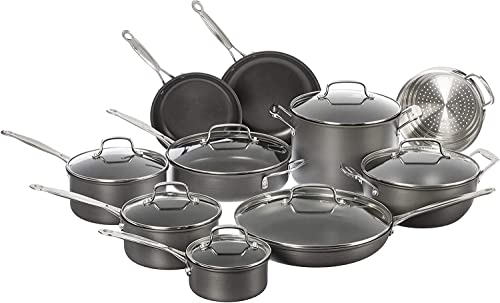
Cuisinart Chef's Classic 17-Piece Cookware Set
Running out of the right pan halfway through dinner gets old fast, especially when a small saucepan is overflowing and the only clean skillet is too cramped for the job. The Cuisinart Chef's Classic 17-Piece Set answers that frustration with a wide range of saucepans, skillets, covered pots, and a steamer insert rather than a stripped-down starter assortment. Its hard-anodized construction, Quantanium-reinforced nonstick surface, and generous oven limits place it firmly among the best nonstick hard anodized cookware options for varied home cooking. That said, seventeen pieces demand serious storage space, and the hand-wash-only care routine won't suit every kitchen.
Cuisinart Chef's Classic 17-Piece Set
The collection starts with 1-quart, 2-quart, and 3-quart saucepans, each paired with a glass cover. That spread handles tiny batches of melted butter, morning oatmeal, rice, sauces, reheated soup, and larger side dishes without forcing every recipe into the same vessel. The gradual sizing feels sensible rather than random, especially when several components of a meal are cooking at once. A small drawback, naturally, is the cabinet space required for three separate covered saucepans.
A covered 3.5-quart sauté pan offers enough depth for chicken pieces, vegetables, pan sauces, and one-pan meals that might spill from a shallow skillet. The straight sides help contain splatter while preserving a broad cooking area, which is useful for browning ingredients before adding liquid. Beside it, the covered 4-quart Dutch oven handles braises, stews, pasta sauces, and modest batches of soup. These two pieces overlap slightly, but their different shapes support different cooking habits rather than feeling like pointless duplication.
The larger 8-quart stockpot is built for pasta water, broth, chili, and batch cooking, while the 20-centimeter steamer insert adds a gentler option for vegetables, dumplings, or seafood. Three skillets measuring 8, 10, and 12 inches cover everything from a single egg to a full batch of sautéed vegetables or several portions of protein. Covers are included for the skillets, a detail that expands their usefulness for simmering and moisture-controlled cooking. The strength here is obvious: range and flexibility; the weakness is equally plain: this isn't a compact set for a narrow cupboard.
Hard-Anodized Strength And Heat Response
Cuisinart describes the anodized exterior as harder than stainless steel, with a dense, nonporous, and wear-resistant structure. That claim speaks to the exterior construction rather than suggesting the nonstick interior can be treated carelessly. Hard-anodized aluminum generally responds to burner changes faster than thick cast iron, helping sauces settle down before they scorch and allowing vegetables to cook without endlessly chasing the heat. The pans should still be warmed gradually because quick response can become a liability if a powerful burner is left cranked up.
The sturdy construction gives the larger vessels a more planted feel on the stovetop. A lightweight stockpot can shift while pasta is stirred, whereas a more substantial body tends to remain stable once filled. On the flip side, added strength usually brings added weight, and an 8-quart pot loaded with water won't be dainty. Two-handed lifting may be the safer, more comfortable approach, particularly when moving hot liquid toward the sink.
Heat distribution matters most across the 12-inch skillet, where a wide base can expose weak spots quickly. Consistent heating helps several pieces of food brown at a similar pace instead of leaving the center dark and the perimeter pale. Still, pan size can't override basic technique, and crowding a skillet traps steam no matter how capable the cookware is. The large cooking surface gives ingredients room, but working in batches remains the better move for crisp edges and controlled browning.
Quantanium Nonstick Cooking Surface
The interiors use a Quantanium-reinforced nonstick surface designed to support food release and easier cleanup. Delicate fish, pancakes, eggs, cheese, and sticky glazes can be frustrating in a pan that grabs before a crust has formed. A reliable nonstick layer makes those foods easier to turn and reduces the amount of residue left behind after dinner. It also allows many recipes to use a lighter coating of oil, though fat still contributes flavor and browning rather than merely preventing sticking.
Nonstick convenience isn't a free pass for harsh treatment. Silicone, wooden, or nylon utensils remain the safer companions because sharp edges and aggressive scraping can shorten the coating's useful life. High heat deserves the same caution, particularly with an empty skillet sitting over a burner while ingredients are being chopped. The pans carry impressive oven ratings, but stovetop overheating can still punish a coated surface long before the exterior shows damage.
The three skillet sizes make the coating useful across different portions. The 8-inch pan suits a quick breakfast or a small side, the 10-inch skillet covers common weeknight portions, and the 12-inch covered skillet creates room for larger meals. Bigger isn't always better, though, since heating an oversized pan for one egg wastes space and may produce less predictable temperature control. Matching the food quantity to the pan keeps the nonstick surface working in a more practical way.
Oven Limits, Glass Lids, And Handles
The cookware is rated oven safe to 500°F, a notably broad range for coated cookware. That ceiling supports stovetop-to-oven recipes such as thick chops, skillet-roasted vegetables, baked pasta, or a frittata finished under controlled oven heat. The glass covers are rated to 450°F, so covered dishes must follow the lower lid limit rather than the higher pan limit. Those numbers add flexibility, but they don't automatically make every piece suitable for direct broiler exposure.
Tempered glass covers help keep heat and moisture inside while preserving a clear view of simmering food. Rice, sauces, and braises benefit because lifting the lid repeatedly can release steam and disturb the cooking process. Glass also brings a tradeoff: greater visibility but more weight, plus a higher chance of awkward storage compared with flat metal lids. A rack or vertical lid organizer may save a fair amount of cabinet frustration.
Solid stainless steel riveted handles provide a firm connection and are designed to stay cool during normal stovetop use. They should still be treated cautiously near open gas flames or after time in the oven, since metal transfers heat and conditions vary from one burner to another. The rivets improve security, yet small food particles can collect around the interior attachment points. A soft brush or sponge edge usually handles those spots more neatly than leaving sauce to dry overnight.
The drip-free rims deserve attention because pouring is one of those small tasks that can either feel controlled or turn into a countertop mess. A shaped rim helps guide sauce, stock, or cooking water into another container with less liquid running down the side. That feature is especially useful on the saucepans, where precision matters while transferring reductions or custards. Cleaner pouring and secure handling aren't flashy selling points, but they reduce everyday annoyance.
Pros Of The Cuisinart 17-Piece Set
The biggest strength is its remarkably broad cooking range. Three saucepans, three skillets, a sauté pan, a Dutch oven, a stockpot, and a steamer insert can support breakfast, sauces, pasta, soups, steaming, shallow frying, and larger one-pan meals. A kitchen replacing mismatched or worn cookware gains a coordinated collection without hunting down individual sizes. The generous assortment also allows several dishes to cook simultaneously without constantly washing and reusing the same pot.
The 500°F pan limit adds genuine flexibility for recipes that begin on the stove and finish in the oven. Many nonstick sets have lower temperature ceilings, so the higher stated rating reduces the need to transfer food into a separate baking dish. The 450°F glass-lid limit is still generous for covered roasting and braising. Careful cooks gain more techniques without giving up the easy-release surface that makes weeknight cleanup manageable.
The combination of a hard-anodized body and reinforced nonstick interior targets two common complaints: flimsy cookware and food that clings. Sturdy stainless handles, glass covers, and drip-free rims round out a design focused on controlled cooking rather than decorative extras. Durability, practical sizing, and oven versatility are the clearest advantages here. The provided product details also indicate substantial wear resistance, though actual longevity will always reflect heat, utensil, washing, and storage habits.
The unrelated topic supplied with the product details doesn't naturally affect cookware performance, so it belongs only as a separate reference: from a practical angle, household equipment outside the kitchen is discussed in car wash machines for home use. Keeping that subject distinct avoids pretending that two unrelated product categories solve the same problem. The cookware itself should be assessed on construction, handling, care requirements, capacity, and cooking behavior.
Cons And Maintenance Tradeoffs
The clearest weakness is the hand-wash-only requirement. Cuisinart instructs owners to clean the set with hot, sudsy water and a sponge or soft dishcloth rather than placing it in a dishwasher. That routine is gentle on the nonstick surface, but it adds work after meals involving several pots and pans. Anyone who treats dishwasher compatibility as nonnegotiable may quickly resent this collection despite its cooking strengths.
Seventeen pieces also create a serious storage challenge. The three covered skillets alone occupy substantial room, and glass lids don't always nest neatly with the cookware. Stacking pans without protectors can allow hard exteriors, rivets, or handles to rub against coated interiors. Cabinet organizers, lid racks, or soft pan separators aren't mandatory, but they make the set far easier to live with.
The nonstick surface requires realistic expectations. Reinforcement may improve durability, yet no coated pan is immune to gouging, excessive heat, abrasive pads, or careless nesting. Long-term performance depends on restraint, including medium burner settings, suitable utensils, and gentle washing. Cooks who prefer metal tools, hard searing, or carefree scrubbing may be better served by uncoated stainless steel or cast iron for those particular jobs.
The large set can also be more cookware than a small household needs. Several pan sizes are useful, but rarely used vessels still consume space and money even if they looked appealing in the original bundle. The best fit is a kitchen that regularly prepares varied meals and has room to store a full collection. A minimalist cook relying on one skillet and one saucepan may view the same generous assortment as clutter rather than convenience.
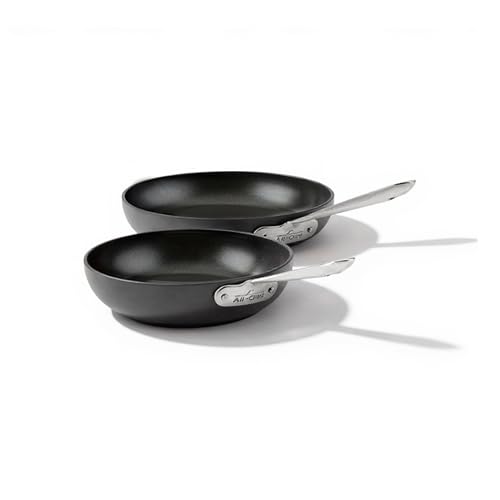
All-Clad HA1 Hard Anodized Fry Pan Set
Breakfast shouldn’t begin with eggs welded to a skillet, and dinner shouldn’t require scraping browned residue until the sponge gives up. The All-Clad HA1 Fry Pan Set takes a focused approach, pairing an 8-inch skillet with a 10-inch skillet instead of filling the cabinet with rarely used extras. Its heavy-gauge aluminum construction, stainless steel base, and PTFE nonstick surface make it a credible entry among the best nonstick hard anodized cookware for everyday frying, browning, and sautéing. Still, the absence of lids and larger cookware pieces means this pair works as a skillet upgrade, not a complete kitchen setup.
All-Clad HA1 Two-Piece Fry Pan Set
The 8-inch fry pan makes sense for small portions that would look lost in a wide skillet. A couple of eggs, a single grilled sandwich, a small batch of mushrooms, or a quick side dish fits without wasting cooking space. Its compact size also feels easier to maneuver during rushed mornings. The tradeoff is capacity, since several pieces of meat or a large vegetable portion will quickly crowd the surface.
The 10-inch fry pan handles more substantial jobs without becoming awkward on a standard burner. It offers enough room for sautéed vegetables, chicken pieces, burgers, or a larger breakfast while remaining manageable with one hand. The two sizes complement each other rather than merely repeating the same function. One can handle a sauce or side while the other takes care of the main ingredient, saving an annoying wash-and-reuse cycle halfway through cooking.
This set keeps the piece count honest. There are no undersized novelty pans, utensils, or lids included simply to make the number on the package look larger. The two practical skillet sizes cover common frying tasks and nest more easily than a full cookware collection. That simplicity suits an established kitchen, though a first-time setup will still need saucepans, a stockpot, and covered cookware.
Heavy-Gauge Aluminum Heat Performance
The HA1 construction uses heavy-gauge aluminum to spread heat across the cooking surface. Aluminum reacts relatively quickly to burner changes, which helps when butter begins browning faster than expected or a sauce needs to settle from a lively simmer. More even heat can also reduce the frustrating pattern of dark food in the center and pale food near the edge. The thicker body adds stability, though it may feel heavier than a thin bargain skillet.
A bonded stainless steel base gives the pans broader stovetop compatibility and a flatter, sturdier foundation. That base allows both skillets to work on induction, a feature many hard-anodized pans lack. It also makes the set useful across gas, electric, ceramic, and induction kitchens without requiring separate cookware. Appliance changes won’t automatically send these pans into retirement.
Heat control still matters, of course. A well-built pan can distribute heat evenly, but it can’t rescue food from an empty skillet left over a roaring burner. Medium heat is sufficient for many eggs, vegetables, and pan-fried meals, while a measured preheat supports better browning on meat. The material rewards steady cooking rather than the old habit of turning every burner to maximum.
PTFE Nonstick Release And Cooking Ease
The cooking surface uses PTFE nonstick to help food release with less resistance. Eggs, fish, pancakes, cheese, and sticky marinades are the foods most likely to expose a weak coating, often tearing before they reach the plate. A smoother surface reduces that struggle and leaves less cooked-on residue behind. It may also allow less oil for release, although a small amount of fat still improves flavor and browning.
All-Clad describes the coating as long-lasting, but sensible care remains part of the deal. Silicone, nylon, and wooden utensils are better companions than sharp metal tools that can scrape or gouge the interior. Repeated high heat can also shorten a coating’s useful life, especially if the pan is empty. The pans are built for convenience, not indestructibility.
The slick interior makes cleanup easier after foods that usually leave a stubborn film. Melted cheese, cooked egg, or a reduced glaze should require less effort than they would on an uncoated surface. A little patience helps, since allowing the pans to cool before washing protects them from abrupt temperature changes. Soap and a soft sponge are generally a better routine than attacking residue with an abrasive pad.
Flared Walls And Everyday Handling
The pans combine a flat cooking surface with flared side walls. The flat base keeps food in direct contact with the heated area, which supports browning and pan-frying. Sloped sides make it easier to slide a spatula underneath eggs, fish, or pancakes without fighting a sharp corner. They also create a smoother path for tossing vegetables with one hand.
Flared walls aren’t equally suited to every recipe. They encourage evaporation and easy turning, but they hold less liquid than a straight-sided sauté pan of similar diameter. A small pan sauce is manageable, while a deeper simmer can creep dangerously close to the rim. The skillet shape favors active frying and sautéing rather than soup, braising, or large one-pan meals.
No lids are included with the set. That omission keeps storage simple, yet it limits moisture control for recipes that need covered simmering. A compatible lid already in the kitchen may solve the issue, but there’s no guarantee of a precise fit. The lack of covers is a clear practical weakness, especially for cooks who frequently finish vegetables or proteins under trapped steam.
Double-Riveted Stainless Steel Handles
Each skillet uses a double-riveted stainless steel handle designed to provide a firm connection. Rivets help prevent the loose or twisting feel that can appear on lower-grade pans after repeated use. A secure handle matters once the 10-inch skillet contains hot oil, meat, or a full serving of vegetables. The polished metal also supports the pans’ high oven-temperature rating.
The contoured handles give the set a clean, streamlined appearance. Bare stainless steel can remain comfortable during ordinary stovetop cooking, but it may become hot near large gas flames or after oven use. A burner that extends beyond the base can send heat directly toward the handle. Oven mitts or a dry towel remain the sensible choice whenever temperature is uncertain.
Riveted handles create small interior crevices around the attachment points. Sauce, oil, and food particles can collect there, requiring a little more attention during washing. A sponge edge or soft brush usually reaches the area without much fuss. The tradeoff is straightforward: stronger attachment in exchange for two raised spots that aren’t quite as easy to wipe as a seamless pan.
Induction And Oven Versatility
The stainless steel base makes both pans compatible with induction as well as other common stovetops. That feature gives this set an edge over many hard-anodized alternatives that work only on gas or electric burners. Induction compatibility is especially useful in apartments, remodeled kitchens, or homes where the cooktop may change later. There’s no need for an adapter or a second skillet set.
Both fry pans are rated oven and broiler safe up to 500°F. That temperature range supports dishes that begin with stovetop browning and finish in the oven, including thick cuts of meat, frittatas, or roasted vegetables. Broiler use demands close attention because direct radiant heat can be intense. Staying within the stated limit matters, but so does keeping the pan at a sensible distance from the heating element.
A 500°F rating sounds generous, yet most nonstick cooking doesn’t require anything close to that level. Lower temperatures are usually enough for eggs, pancakes, vegetables, and many proteins. The higher limit is best treated as occasional flexibility rather than a daily target. Controlled heat protects the coating and makes cooking more predictable.
Cleaning And Coating Care
The cookware is described as dishwasher safe, which can be convenient after a greasy meal or a busy evening. Tossing the pans into a machine saves a few minutes, especially when the sink is already full. All-Clad also recommends washing them with soap and a sponge to help preserve the nonstick surface. That gentler method may be the wiser everyday habit.
Dishwasher detergents and high-temperature cycles can be tougher on coated cookware than ordinary hand washing. The pans may tolerate machine cleaning, but repeated exposure can still affect appearance or coating longevity over time. Warm water and mild soap usually handle residue without much effort because the surface is nonstick. Gentle hand washing is a small inconvenience compared with replacing scratched cookware early.
Storage habits matter as much as cleaning habits. Nesting the 8-inch pan inside the 10-inch pan saves cabinet room, but the smaller pan’s base can rub against the larger pan’s coating. A soft cloth, paper towel, or pan protector between them prevents that contact. This simple step helps preserve the nonstick interior without requiring a dedicated rack.
Strengths, Limits, And Realistic Fit
The set’s strongest combination is even heating, induction compatibility, and easy food release. Many compact nonstick pairs cover basic frying but fail on induction, while some induction-ready skillets feel bulky for a quick breakfast. The HA1 pans balance those needs in two manageable sizes. Their 500°F oven rating also broadens the range of dishes they can handle.
The main limitation is scope. Despite the broad wording in the full product name, the package contains only two fry pans, not saucepans, lids, or a stockpot. That makes the set a focused addition rather than a complete collection. The missing lids and limited capacity may also frustrate cooks who prepare covered dishes or larger family portions.
The supplied internal reference covers a separate household-care subject and has no bearing on skillet performance. From a practical angle, appliance maintenance is discussed in antibacterial washing machine cleaner guidance, while this cookware remains centered on frying, browning, searing, and sautéing. Keeping those subjects apart avoids forcing an artificial relationship between unrelated products. The pans should be judged on heat distribution, coating care, stovetop compatibility, and usable size.
The set is designed in Canonsburg, Pennsylvania, and made in China, according to the supplied product details. Those origin notes don’t predict lifespan or cooking results, but they provide a clearer picture of the product. Realistic expectations suit this pair well: two sturdy nonstick skillets, broad cooktop support, and straightforward maintenance. The appeal lies in focused everyday usefulness rather than an oversized box of cookware.
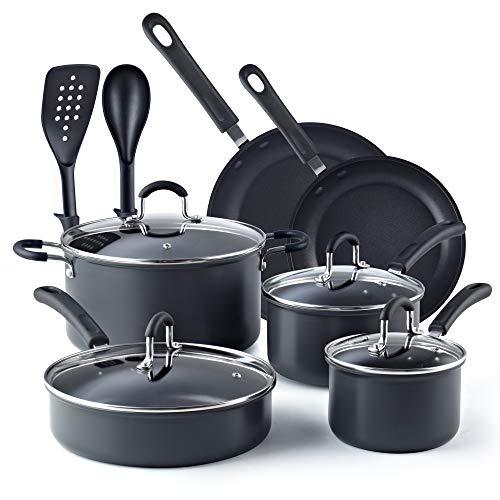
KitchenAid Hard Anodized Induction Cookware Set
Dinner gets frustrating fast when one pan scorches onions while another leaves chicken pale around the edges. The KitchenAid Hard Anodized 10-Piece Set addresses that everyday headache with a thick forged base, hard-anodized aluminum bodies, and triple-layer nonstick interiors built for regular cooking. Its induction-ready construction and broad oven limits give it a strong position among the best nonstick hard anodized cookware for kitchens that need flexibility without collecting a dozen mismatched pans. Still, the different oven limits for covered and uncovered cookware, plus the care demands of any nonstick coating, create a few practical boundaries.
KitchenAid Hard Anodized 10-Piece Set
The ten-piece format aims for useful coverage without turning the cabinet into a cookware warehouse. The supplied description identifies the collection as a pots-and-pans set designed for everyday meals, experimental recipes, and stovetop-to-oven cooking. That balance matters because oversized bundles often include specialty pieces that rarely leave the shelf. A focused cookware assortment generally feels easier to organize, wash, and reach during a busy meal.
The matte black finish gives the collection a restrained, workmanlike appearance. It won’t distract from other appliances, and the darker exterior may hide minor discoloration better than bright polished cookware. Looks aren’t the main event, though; the real appeal lies in the combination of hard-anodized aluminum and an induction-compatible forged base. Those two elements shape how the pans heat, sit on the burner, and respond during daily cooking.
A ten-piece collection can cover many routine jobs while leaving room for a few specialized pans already in the kitchen. It won’t necessarily replace a roasting pan, oversized stockpot, or cast-iron skillet used for very aggressive searing. That’s a fair trade, honestly, because no coated set should be expected to handle every technique under the sun. The KitchenAid collection is better viewed as a daily cooking foundation for sauces, vegetables, proteins, grains, and covered meals.
Forged Base And Consistent Heating
The thick forged base is designed to produce even, consistent heat across the cooking surface. That matters with foods that punish hot spots, such as pancakes, eggs, cream sauces, and breaded cutlets. A pan that heats unevenly can burn one section before another begins to brown, forcing constant repositioning and guesswork. More balanced heat makes timing feel less chaotic and gives ingredients a better chance to finish together.
Browning also benefits from a stable base. Vegetables need steady contact to develop color rather than releasing moisture and steaming in a cool section of the pan. Chicken and other proteins respond better when the cooking surface doesn’t swing wildly between hot and lukewarm zones. The forged foundation won’t replace good technique, but it can make burner adjustments more predictable.
The base works on any stovetop listed in the supplied details, including induction. That compatibility is a meaningful advantage because many hard-anodized cookware sets still exclude magnetic cooktops. Gas, electric, and induction kitchens can use the same collection without an adapter plate or separate skillet. It also gives the cookware more staying power if a future appliance change brings a different heating system.
Even-heating claims don’t mean maximum burner settings are necessary. Hard-anodized aluminum responds efficiently, so medium heat should handle many routine dishes without overstressing the nonstick interior. Empty cookware left over high heat can still become excessively hot, no matter how sturdy the base feels. The sensible rhythm is simple: controlled preheating, moderate temperature, and timely adjustment.
Hard-Anodized Aluminum Construction
The bodies are crafted from hard-anodized aluminum, a material chosen for durability and responsive heating. Hard anodization creates a tougher exterior than untreated aluminum and gives the cookware a dense, practical shell for repeated stovetop use. That added resilience helps the pans feel suited to everyday cooking rather than occasional, delicate handling. Still, the exterior’s toughness shouldn’t be confused with an indestructible nonstick interior.
Aluminum conducts heat quickly, which can be helpful when a sauce threatens to boil over or vegetables need a fast temperature adjustment. Turn the burner down, and the cookware should respond more readily than a thick cast-iron vessel. That responsiveness reduces the lag that sometimes turns a gentle simmer into a scorched bottom. The heat control advantage is especially useful for milk-based sauces, eggs, and other temperature-sensitive foods.
Durable construction often brings a little extra weight. A thicker base feels stable on the cooktop, but a large pan filled with food can become tiring to lift with one hand. That isn’t necessarily a flaw; flimsy cookware creates its own problems by sliding, warping, or feeling unbalanced. The practical difference is that stability and substance may matter more than featherlight handling during demanding meals.
Triple-Layer Nonstick Performance
KitchenAid finishes the cookware with a triple-layer nonstick surface intended to withstand regular cooking and simplify food release. Multiple coating layers are meant to provide a more substantial barrier than a thin, basic application. Eggs, fish, cheese, and sticky sauces can slide more cleanly when the surface is treated properly. Less residue also means cleanup doesn’t have to turn into a wrestling match with a scrubber.
Nonstick cookware often allows recipes to use less added oil for release, though fat still plays a role in flavor and browning. A completely dry pan may cook an egg without sticking, but a small amount of butter can improve texture and taste. The real benefit is control rather than eliminating every drop of oil. The easy-release interior lets cooking preferences guide the amount of fat instead of fear of sticking.
Daily wear and tear remains part of the equation. Silicone, nylon, and wooden utensils are safer than sharp metal tools that can scrape through the coating over time. Abrasive cleaners and rough stacking can create similar damage, even if the cookware looks sturdy from the outside. The triple-layer design offers added protection, but reasonable care still determines how gracefully the surface ages.
High heat deserves restraint as well. Nonstick pans usually perform best at low to medium temperatures, with higher settings reserved for brief, controlled tasks. Leaving the pan empty over a powerful burner can shorten coating life and make food harder to manage once it enters the pan. A durable coating is useful, but it isn’t permission to cook recklessly.
Nonstick Rivets And Easier Cleanup
The interior rivets receive an enhanced nonstick finish, a small detail with genuine practical value. Standard exposed rivets can collect sauce, egg, and browned residue in narrow crevices where a sponge struggles to reach. Coating those attachment points helps food release from more of the interior rather than only the broad center surface. That creates a cleaner, less interrupted cooking area.
Rivets still form raised spots, so they won’t disappear during washing. Thick sauces and melted cheese may settle around them, particularly if food is left to dry after the meal. The coating should make that residue easier to loosen with warm water and a soft sponge. In other words, cleanup becomes simpler, though not entirely effortless.
The cookware and lids are listed as dishwasher safe, which offers a convenient option after a crowded dinner. Machine cleaning can save time when several pans were used at once, and the ability to wash the lids alongside them reduces sink clutter. Hand washing remains gentler for nonstick surfaces, especially over years of repeated cleaning. A dishwasher is handy when needed, while mild soap and a soft sponge are the more cautious routine.
Storage habits also affect the interior. Nesting several pieces saves space, but the base of one pan can rub against the coating below it. Soft pan protectors, clean towels, or felt separators reduce that contact without demanding extra shelving. This modest habit protects the triple-layer surface from avoidable scratches between meals.
Oven Range And Lid Limitations
Uncovered cookware is rated oven safe to 500°F, giving the set broad stovetop-to-oven flexibility. A skillet can begin with browning on the burner and finish in the oven without transferring food into a second dish. That’s useful for thicker cuts of meat, baked pasta, roasted vegetables, or egg dishes that need even top heat. Fewer transfers also mean fewer dishes waiting in the sink.
The lids lower the oven limit to 350°F. Covered recipes must follow that smaller number, even though the pan itself tolerates more heat. This difference is easy to overlook during a rushed recipe, so it deserves a permanent place in the cooking routine. The cookware offers strong oven versatility, but the assembled vessel is only as heat-resistant as its least tolerant component.
A 500°F ceiling doesn’t mean every dish benefits from that temperature. Nonstick cookware is generally happier under controlled heat, and most routine recipes won’t require the maximum rating. The higher limit is best treated as useful headroom for occasional oven finishing. Temperature flexibility adds options, while restraint protects the coating.
Hot handles remain a concern after oven use, regardless of how comfortable they feel on the stovetop. A handle that seems safe during sautéing can become dangerously hot after twenty minutes in an oven. Dry mitts and a clear landing area should be ready before the cookware comes out. That basic habit prevents the unpleasant surprise of grabbing hot metal on autopilot.
Practical Pros Of This Cookware Set
The strongest advantage is the union of induction compatibility and hard-anodized construction. Many nonstick aluminum sets stop short of induction support, forcing magnetic-cooktop owners into a narrower field. KitchenAid’s forged base removes that obstacle while retaining aluminum’s responsive heating. That combination makes the set adaptable across different kitchens and future appliance changes.
The triple-layer nonstick coating is another meaningful strength. Easy release reduces torn eggs, broken fish, and the stubborn cooked-on film that turns washing into a chore. Coated rivets extend that convenience into the interior’s hardest-to-clean areas. For regular breakfast, vegetable, and sauce preparation, those details can save both time and patience.
Dishwasher-safe cookware and lids add flexibility after messy meals. Hand washing may preserve the surface more gently, but machine compatibility is useful when the kitchen is already backed up. The broad oven rating adds another layer of practicality, letting uncovered pans tolerate temperatures up to 500°F. Taken together, easy cleaning, oven versatility, and steady heating form a well-rounded everyday package.
The supplied limited lifetime warranty also adds some reassurance, though warranty coverage always depends on the stated terms and proper care. Manufacturing defects and ordinary wear aren’t necessarily treated the same way. Keeping care instructions and proof of purchase is a sensible precaution. The warranty supports the set’s durability story without erasing the need for thoughtful use.
Cons And Everyday Tradeoffs
The first drawback is the split oven rating. Uncovered cookware can reach 500°F, but lidded pieces stop at 350°F, which may complicate recipes that call for higher covered temperatures. Forgetting that distinction could expose the lids to conditions beyond their listed range. The temperature mismatch isn’t a deal breaker, but it does require attention.
Nonstick surfaces also demand habits that some cooks may not enjoy. Metal utensils, abrasive pads, and prolonged high heat can shorten the coating’s lifespan, even with three layers. Anyone who prefers aggressive searing, hard scraping, or carefree stacking may feel restricted. Stainless steel or cast iron remains better suited to the roughest techniques.
Dishwasher compatibility can be a mixed blessing. It makes cleanup convenient, yet repeated machine cycles may be harsher than gentle hand washing. Owners hoping to preserve the nonstick finish as long as possible may still end up cleaning each piece manually. That creates a gap between what the cookware can tolerate and what may be best for long-term care.
The linked subject supplied with the details belongs to a separate home-furnishing category and doesn’t affect cooking performance. From a practical angle, budget furniture considerations appear in coffee tables under $50, while this cookware set should be judged by heat distribution, food release, cooktop support, and maintenance demands. Keeping the topics separate prevents an unrelated reference from being forced into the product analysis. The actual buying tradeoffs remain coating care, lid temperature limits, storage needs, and preferred cooking style.


Top Rated Best Quality Range Hoods: 2026 Expert Picks
The 12 Best Small Solar Generators 2026

10 Best Quality Semi Automatic Washing Machine of 2026 For Leak-Free Laundry

11 Best Small Washer Machine of 2026 For Everyday Laundry

12 Best Vibration Pads For Washing Machine of 2026 To Stop Walking and Shaking

11 Best Selling Front Load Washing Machine of 2026 For Quiet Odor-Free Laundry

11 Best Washing Machine For King Size Bedding of 2026 To Prevent Cycle Errors

10 Best Small Front Loader Washing Machine of 2026 For Tight Closets






