
Best Heavy Duty Stainless Steel Cookware 2026 Picks

Best heavy duty stainless steel cookware should feel solid without turning every dinner into an arm workout. Thick bases, firmly attached handles, and balanced construction matter far more than a mirror-like finish that looks impressive in a product photo. A dependable set stays flat over high heat, handles sudden temperature changes, and gives food enough contact with the cooking surface to brown instead of steam. That sounds simple, but plenty of lightweight pans buckle, scorch sauces around the edges, or slide across the burner at the worst possible moment.
Multi-ply stainless steel construction usually offers the most practical mix of durability and heat control. Stainless steel itself is tough and nonreactive, while an aluminum or copper core moves heat across the pan more evenly. Fully clad cookware carries that conductive layer through the base and sidewalls, helping onions soften consistently and reducing the cold spots that leave half a batch pale. A thick impact-bonded base can still make sense for stockpots and budget-friendly pieces, though sidewall heating may feel less responsive during delicate reductions.
Weight and balance deserve a closer look because thicker isn't automatically better. A skillet that feels sturdy on the stove may become awkward once it's loaded with chicken, oil, or a heavy pan sauce. Long handles should provide enough leverage without twisting the wrist, while helper handles make larger sauté pans and stockpots easier to move. Still, oversized metal handles can crowd a small cooktop, and they may heat up during long oven sessions, so a dry towel or mitt needs to stay nearby.
Cooking performance depends partly on technique, and stainless steel won't behave like a coated nonstick pan. Preheating the surface, adding fat at the right moment, and letting food release naturally can prevent much of the sticking that causes frustration. Rushing that process often leaves torn fish, shredded chicken skin, and a stubborn layer of browned residue. On the bright side, those browned bits become the foundation for richer gravies, pan sauces, and braising liquids, so the learning curve pays off.
Practical piece selection matters more than a large item count printed on the box. A useful collection usually centers on a medium skillet, a larger frying pan, one or two saucepans, a sauté pan, and a stockpot with well-fitting lids. Tiny pans, filler utensils, and duplicate lids can inflate the advertised number without adding much cooking value. A smaller set with frequently used sizes often saves cabinet space and leaves more room in the budget for thicker construction.
Maintenance is straightforward, but stainless steel isn't completely carefree. Cloudy mineral marks, rainbow heat tint, and cooked-on oil can appear after regular use, especially with hard water or high burner settings. Mild stainless steel cleaner, diluted vinegar, or a baking soda paste usually handles those marks without aggressive scraping. Dishwasher compatibility helps after a busy meal, though hand washing can preserve the finish and prevent harsh detergent from dulling polished surfaces over time.
Induction compatibility should be confirmed instead of assumed, since not every stainless alloy works with magnetic cooktops. A broad, flat base improves burner contact and reduces the annoying wobble that appears on glass surfaces. Oven-safe temperature limits also vary because lids, handle materials, and decorative coatings may tolerate less heat than the pan body. So, matching the cookware to the actual stove, oven habits, storage space, and lifting comfort makes more sense than chasing the heaviest set on the shelf.
- TAR Score9.4
TAR Score is a ranking system developed by TopAppliancesReviews.com. TAR score has no relationship or impact from any manufacturers or sales agent websites. Learn more
- BrandEWFEN

- TAR Score9.0
TAR Score is a ranking system developed by TopAppliancesReviews.com. TAR score has no relationship or impact from any manufacturers or sales agent websites. Learn more
- BrandEWFEN
- TAR Score9.0
TAR Score is a ranking system developed by TopAppliancesReviews.com. TAR score has no relationship or impact from any manufacturers or sales agent websites. Learn more
- BrandEWFEN

- TAR Score9.0
TAR Score is a ranking system developed by TopAppliancesReviews.com. TAR score has no relationship or impact from any manufacturers or sales agent websites. Learn more
- BrandLEGEND COOKWARE

- TAR Score9.0
TAR Score is a ranking system developed by TopAppliancesReviews.com. TAR score has no relationship or impact from any manufacturers or sales agent websites. Learn more
- BrandCuisinart

- TAR Score8.8
TAR Score is a ranking system developed by TopAppliancesReviews.com. TAR score has no relationship or impact from any manufacturers or sales agent websites. Learn more
- BrandCuisinart

- TAR Score8.6
TAR Score is a ranking system developed by TopAppliancesReviews.com. TAR score has no relationship or impact from any manufacturers or sales agent websites. Learn more
- BrandCuisinart
- TAR Score8.6
TAR Score is a ranking system developed by TopAppliancesReviews.com. TAR score has no relationship or impact from any manufacturers or sales agent websites. Learn more
- BrandMueller

- TAR Score8.4
TAR Score is a ranking system developed by TopAppliancesReviews.com. TAR score has no relationship or impact from any manufacturers or sales agent websites. Learn more
- BrandUmite Chef
- TAR Score8.4
TAR Score is a ranking system developed by TopAppliancesReviews.com. TAR score has no relationship or impact from any manufacturers or sales agent websites. Learn more
- BrandT-Fal
Last update on 2026-08-15 / Affiliate links / Images, Product Titles, and Product Highlights from Amazon Product Advertising API
Best Heavy Duty Stainless Steel Cookware Review
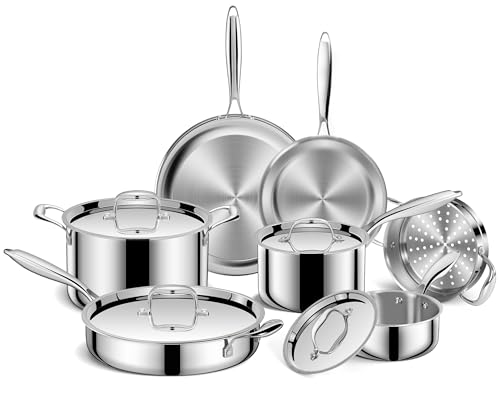
A crowded stovetop exposes weak cookware fast. Thin pans develop hot patches, loose handles make draining awkward, and mismatched lids turn a straightforward dinner into a cabinet-rattling scavenger hunt. The best heavy duty stainless steel cookware should bring steady heating, practical sizes, and enough structural weight to feel dependable without becoming a chore to lift. EWFEN approaches that balance with an 11-piece collection built around three-ply construction, stainless steel lids, and several small usability details that matter during everyday cooking.
EWFEN 3-Ply 11-Piece Cookware Set
The EWFEN 3-Ply 11-Piece Cookware Set covers most daily cooking jobs without stuffing the box with tiny filler pieces. The lineup includes a 1.5-quart saucepan, a 3-quart saucepan, a 3.5-quart sauté pan, a 7-quart stockpot, 8-inch and 10-inch frying pans, matching lids, and a steamer insert. That mix supports quick oatmeal, sauces, sautéed vegetables, shallow braises, pasta, soups, and steamed foods without forcing one pan to handle every task. It’s a sensible spread, though households that cook large batches may eventually want a wider skillet or a second oversized pot.
The two saucepans handle different portions rather than duplicating each other. A 1.5-quart saucepan suits reheating soup, melting butter, cooking grains, or preparing a small batch of gravy, while the 3-quart version has room for pasta sides and larger sauces. The 3.5-quart sauté pan adds straight sides and a broader cooking surface, which helps contain splatter and hold liquid during one-pan meals. Better yet, its lid supports simmering and moisture control, so it can move from browning to covered cooking without changing vessels.
The 7-quart stockpot provides the capacity needed for broth, chili, seafood boils, and family-sized pasta. Once filled with water, though, any stockpot becomes heavy, and a sturdy stainless steel body adds even more heft. That’s where secure handles matter, especially while carrying hot liquid from the burner to the sink. The included steamer insert earns its cabinet space by adding a second cooking method without requiring a separate appliance or dedicated steaming pot.
The two frying pans are useful for splitting small and medium jobs. The 8-inch pan fits eggs, toasted spices, or a single portion, while the 10-inch frying pan has more room for burgers, chicken pieces, or sautéed vegetables. Neither size replaces a 12-inch skillet for cooking several portions at once, and that’s a real limitation for bigger households. Still, their compact dimensions make them easier to heat evenly on standard burners and less cumbersome to wash in a crowded sink.
Three-Ply Construction And Heat Control
The central strength lies in the three-ply stainless steel construction. EWFEN uses a 304 stainless steel cooking surface, a thick aluminum core, and a 430 stainless steel exterior. Each layer serves a different purpose: the interior handles direct food contact, the aluminum spreads heat, and the magnetic exterior supports induction cooking. This layered design addresses one of stainless steel’s biggest weaknesses, since stainless steel alone doesn’t conduct heat as evenly as aluminum.
The aluminum core should help reduce the sharp hot spots commonly found in thin, single-layer cookware. Sauces benefit because the base receives heat across a wider area, lowering the chance that one concentrated zone scorches while the rest barely simmers. Frying pans also gain more consistent browning, provided the burner matches the pan’s diameter. No clad pan can correct an undersized heating element or a flame licking up the sidewalls, so burner selection still plays a role.
The 304 stainless steel interior offers a nonreactive cooking surface for tomato sauce, wine reductions, citrus-based dishes, and other acidic recipes. It won’t rely on a synthetic nonstick layer, and the supplied description identifies the set as PFOA-free. Stainless steel does require technique, however, particularly with eggs, fish, and lean proteins. Preheating the pan, adding enough oil, and waiting for food to release naturally can make the difference between clean browning and a torn, sticky mess.
Heat responsiveness sits somewhere between lightweight aluminum and extremely thick cast iron. The cookware should warm more evenly than basic stainless steel, yet the sturdy build may take a little longer to reach cooking temperature. That extra mass becomes useful during searing and simmering because the pan is less likely to lose all its heat the moment cold food hits the surface. On the flip side, impatient cooks may overshoot the ideal temperature by cranking the burner too high, then spend dinner wrestling with burned oil and stuck-on residue.
Lids, Handles, And Everyday Convenience
The 304 stainless steel lids use wide rims designed to fit both pots and pans within the collection. Shared lid compatibility can cut down on cabinet clutter and reduce the usual hunt for the one lid that belongs to a particular vessel. Metal lids also avoid the cracking risk associated with glass, and they generally tolerate rougher handling. The tradeoff is visibility, since food can’t be checked without lifting the lid and releasing some heat and steam.
A tight lid helps retain moisture during rice cooking, braising, and low simmering. That sealed cooking environment can reduce evaporation and keep meat or vegetables from drying out before they become tender. Still, a metal lid may rattle if steam pressure rises too quickly, so burner control remains important. The wide rim also collects condensation, meaning the lid should be tilted away from the hands when lifted to prevent hot droplets from running toward the fingers.
The cookware uses riveted stainless steel handles, a stronger long-term attachment method than simple screws that may loosen after repeated heating and washing. Rivets provide a secure connection for lifting heavier pieces, especially the sauté pan and stockpot. EWFEN describes the handles as comfortable and cool during use, but stainless steel handles can still warm during long stovetop sessions or oven cooking. A towel or oven mitt belongs nearby, because “stay cool” should never be treated as a promise under every heat condition.
Molded pour spouts and built-in draining holes add practical value to otherwise traditional cookware. Broth, sauce, and cooking liquid can be directed with less dripping down the outer wall, while draining holes help strain pasta or remove larger solids without reaching for a colander. These features are especially handy in smaller kitchens where every extra tool creates another washing task. Care is still needed with heavy pots, since holding a lid in position while tipping several quarts of boiling water demands steady hands.
Cooktop Compatibility And Oven Use
The 430 stainless steel exterior makes the set compatible with induction, gas, electric, and ceramic-glass cooktops. Broad compatibility removes the need to replace cookware after switching appliances or moving into a home with a different stove. Induction support is particularly useful because some stainless steel cookware lacks the magnetic outer layer required for induction burners. A flat, sturdy base should also make better contact with smooth cooktops than thin pans that warp after repeated temperature changes.
Gas burners offer quick heat adjustment, while electric and ceramic surfaces hold residual heat longer. The three-ply body can work across all of them, but each stove demands slightly different timing. Gas flames should stay beneath the base rather than climbing the sides, and glass cooktops reward lifting instead of dragging heavy pans. Scraping a filled stockpot across a smooth surface may leave marks even when the cookware itself remains unharmed.
The set is described as oven safe, expanding the range of meals it can handle. A sauté pan can brown chicken on the stove and finish cooking in the oven, while a saucepan can hold baked dips, small casseroles, or warm side dishes. The provided details don’t state a maximum oven temperature, so extreme heat should be avoided unless the manufacturer’s current care instructions confirm the limit. Lid and handle tolerances may differ from the body, and that distinction matters under a broiler or during high-temperature roasting.
From a practical angle, non-stick stackable cookware represents a separate approach for kitchens that prioritize compact storage and easier food release over an uncoated stainless steel surface. That category doesn’t replace this EWFEN set’s focus on durability, searing, and broad stovetop compatibility. The distinction matters because cookware that stacks neatly and releases eggs easily solves a different frustration than clad steel designed for browning and long-term scrubbing. Treating the two as interchangeable would gloss over meaningful differences in care, heat tolerance, and cooking technique.
Cleaning, Finish, And Long-Term Care
The mirror-finish exterior gives the set a clean, polished appearance, though that shine comes with a maintenance reality. Fingerprints, water spots, and streaks show more clearly on reflective stainless steel than on brushed metal. Dishwasher compatibility makes routine cleanup easier, particularly after a large meal. Even so, repeated exposure to strong dishwasher detergent may gradually dull the polished surface, so hand washing is the gentler route for keeping the finish bright.
Stainless steel can develop rainbow discoloration after high heat and chalky spots from hard water. Those marks usually affect appearance rather than cooking performance. Diluted vinegar can help with mineral residue, while a stainless steel cleaner may loosen cooked-on oil and restore some shine. Abrasive pads should be used carefully because aggressive scrubbing can leave visible scratches across a mirror-polished exterior.
Food sticking is the cleanup complaint most likely to frustrate anyone moving from coated cookware. The fix isn’t endless oil; it’s better heat management. A properly preheated pan allows proteins to form a crust and release more naturally, while a cold pan tends to grip food before browning begins. Once cooking is finished, deglazing with warm water or stock can lift flavorful browned bits before they harden into a stubborn layer.
The rivets inside each vessel may collect grease or sauce around their edges. A small brush helps clean those tight areas, especially after frying or reducing sticky liquids. The dishwasher-safe design saves time, but occasional hand detailing prevents residue from building around hardware and pour spouts. With sensible care, scratches and cosmetic marks will still appear, yet they’re part of normal stainless steel use rather than evidence that the pan has stopped performing.
Pros And Practical Strengths
Even heating stands out as the most meaningful benefit of the layered construction. The aluminum core distributes energy more effectively than a thin stainless steel shell, helping sauces simmer with fewer scorched edges and meats brown across a broader area. That won’t eliminate every temperature difference, but it gives the cook a more forgiving surface. Recipes that shift from searing to simmering should feel easier to control once the burner setting is dialed in.
Useful cookware sizes give the set another advantage. The saucepans aren’t redundant, the sauté pan adds depth, and the stockpot is large enough for serious batch cooking. Two frying pans cover small and medium portions, while the steamer insert adds function without occupying much extra space. The collection feels built around actual cooking jobs rather than an inflated piece count filled with utensils and undersized accessories.
Broad cooktop compatibility makes the set easier to keep through appliance changes. Induction, gas, electric, and ceramic-glass support means the cookware won’t become obsolete after a kitchen remodel or move. The magnetic 430 stainless exterior handles induction needs, while the layered body supports more balanced heat transfer. That flexibility has real value for anyone buying cookware with long-term use in mind.
Pour spouts and draining holes solve small but recurring annoyances. Sauces can be transferred with better control, pasta water can be removed without a separate colander, and steamed foods can move from pot to plate with fewer tools in the sink. Stainless steel lids add durability, and riveted handles feel more secure under load. None of these touches sounds dramatic alone, yet together they make everyday cooking less fiddly.
Cons And Realistic Tradeoffs
Stainless steel has a learning curve, and this set won’t behave like nonstick cookware. Eggs, delicate fish, and starchy foods may cling if the pan is too cool, too hot, or insufficiently lubricated. That can be maddening during the first few uses, especially for someone accustomed to dropping food straight into a cold coated skillet. Technique improves the experience, but the adjustment period is real and shouldn’t be brushed aside.
The weight may feel substantial, particularly with the stockpot and sauté pan full of food. Sturdy construction brings stability and heat retention, yet those same qualities make lifting, draining, and cabinet storage more demanding. Limited wrist strength or shallow shelving could turn the larger pieces into occasional-use cookware. Helper handles reduce the strain, though they don’t change the total weight once several quarts of liquid are involved.
Metal lids block visibility, so checking a simmer means lifting the lid and releasing heat. Glass lids would make it easier to monitor rice, sauces, or steaming vegetables without disturbing the cooking environment. Stainless lids are tougher and less likely to break, but the tradeoff favors durability over convenience. Condensation also runs quickly from metal surfaces, requiring careful handling around hot steam.
The set lacks a larger frying pan, which may be noticeable during family meals. A 10-inch skillet can crowd quickly when searing several chicken thighs, browning multiple burgers, or cooking enough vegetables for four plates. Crowding lowers the pan temperature and encourages steaming instead of browning. The included sizes remain practical for smaller portions, but high-volume skillet cooking may require an additional 12-inch pan.
3-Ply Stainless Steel 11-Piece Cookware Set
A pan that rocks on the burner, scorches sauce around the rim, or loses heat the second cold food lands inside can make a simple dinner feel like hard labor. This 11-piece collection takes a sturdier route, using layered metal construction and practical vessel sizes rather than relying on a flashy piece count. For anyone researching the best heavy duty stainless steel cookware, its combination of a 304 stainless steel interior, aluminum core, induction-ready exterior, and tempered glass lids addresses several everyday annoyances at once. It still asks for proper heat control, though, and cooks accustomed to coated pans will need a little patience.
3-Ply Stainless Steel 11-Piece Cookware Set
The collection includes a 1.5-quart saucepan, a 2.2-quart saucepan, a 3-quart sauté pan, 9.5-inch and 10-inch skillets, a 6-quart stockpot, tempered glass lids, and a steamer insert. That range covers reheating, sauce work, frying, braising, steaming, and larger batches without filling the box with spatulas or tiny accessories. The saucepan sizes sit fairly close together, yet each still has a practical role in a busy kitchen. One can handle grains or a small sauce while the other manages vegetables, soup, or a larger side dish.
The 3-quart sauté pan may become the busiest piece because its straight sides hold liquids better than a shallow skillet. It can brown chicken, catch splatter, simmer a pan sauce, and continue cooking under a lid without transferring food into another vessel. That shape also suits one-pan pasta dishes and shallow braises where both surface area and depth matter. The size may feel tight for six large portions, but it’s manageable for everyday cooking and easier to lift than an oversized braiser.
Two skillets measuring 9.5 and 10 inches sound nearly identical, and that overlap is one of the set’s oddities. The small difference doesn’t create the same clear separation as an 8-inch and 12-inch pairing would. Still, having two medium skillets helps when breakfast eggs and sausage need separate surfaces or when one pan holds protein while the other handles vegetables. The tradeoff is cabinet space, since similar diameters can feel repetitive after the novelty wears off.
The 6-quart stockpot offers enough room for pasta, soup, chili, and homemade broth without becoming unreasonably bulky. Add the steamer insert, and the same pot can handle dumplings, vegetables, seafood, or reheating foods gently above boiling water. Filled to capacity, however, sturdy stainless steel and several quarts of liquid create real weight. Secure side handles help, but pouring hot water still calls for two hands and a clear path to the sink.
Layered Metal That Spreads Heat Better
The cookware uses a three-ply structure built from a 304 stainless steel cooking surface, a thick aluminum core, and a 430 stainless steel exterior. Stainless steel brings durability and resistance to acidic ingredients, while aluminum carries heat faster across the base and walls. The outer layer adds magnetic compatibility for induction burners. Together, those materials give the pans more balanced behavior than thin, single-layer stainless steel commonly found in entry-level sets.
The aluminum core matters most during sauces, searing, and recipes that move between heat levels. A bare stainless steel shell can develop aggressive hot zones directly above the burner, leaving one patch scorched while another barely bubbles. Aluminum spreads that energy outward, which helps onions soften more evenly and reduces constant stirring during thicker sauces. Burner size still matters, naturally, because no layered pan can fully compensate for a tiny heating element under a broad cooking surface.
Heat retention brings both a strength and a small learning curve. The sturdy body won’t cool as abruptly when cold meat hits the pan, so browning has a better chance to develop before juices flood the surface. On the other hand, the cookware may keep climbing in temperature after the burner is reduced, particularly on electric or ceramic glass stoves. Caught daydreaming for a minute, a cook can overshoot the sweet spot and end up scrubbing burnt oil later.
The 304 stainless steel interior creates a nonreactive cooking surface for tomato sauce, vinegar reductions, citrus dishes, and wine-based recipes. There’s no coated layer that requires wooden utensils or gentle sponge-only cleaning. Metal tools may still leave cosmetic scratches, yet those marks generally don’t stop stainless steel from doing its job. The bigger adjustment is food release, since bare steel rewards preheating and patience rather than the instant slipperiness of traditional nonstick cookware.
Glass Lids And Handling Details
The tempered glass lids make it easier to watch rice, sauces, and steaming vegetables without constantly lifting the cover. That visibility saves heat and moisture, especially during low simmering where small temperature changes can alter texture. Wide rims help the lids sit securely and improve their fit across compatible pieces. Glass remains more fragile than stainless steel, though, so careless stacking or a hard knock against the sink carries more risk.
The product description mentions sealed lids that help retain moisture, a useful feature for braising and longer simmering. A well-seated lid slows evaporation, keeping meat from drying before connective tissue softens and reducing how often liquid needs topping up. Condensation will gather underneath the glass, sometimes obscuring the view after several minutes. Even then, being able to glance through the lid beats releasing a cloud of steam every time curiosity strikes.
The riveted handles provide a more permanent connection than screw-mounted handles that can loosen with repeated heating and washing. That secure attachment matters on the stockpot and sauté pan, where liquid and food quickly add several pounds. The handles are described as comfortable and cool during stovetop use, but stainless steel can still warm near the body or after extended cooking. Oven use changes the situation entirely, so mitts remain mandatory once any piece has been heated beyond the burner.
Molded pour spouts and built-in draining holes show a welcome bit of practical thinking. Sauce can move into a serving dish with fewer drips down the pan wall, while pasta water can be strained without reaching for a separate colander. The feature is handy in cramped kitchens where each extra tool adds clutter and washing. Still, tipping a heavy stockpot while holding the lid in place requires steady control, and the draining holes won’t replace a colander for very fine ingredients.
Stovetop Range And Oven Flexibility
The 430 stainless steel exterior allows the set to work on induction, gas, electric, and ceramic glass cooktops. That broad compatibility is useful for a long-term purchase because the cookware can survive a move or appliance change without becoming obsolete. Induction support deserves particular attention, since not every stainless steel pan contains enough magnetic material to activate an induction element. Here, the exterior layer handles that job while the aluminum core manages heat distribution.
Gas responds quickly, which makes temperature corrections fairly easy once the flame is kept beneath the base. Electric and ceramic surfaces hold heat longer, so reducing the setting earlier can prevent sauces from running too hot. Induction reacts fast but can concentrate energy aggressively, making medium settings a sensible starting point. The heavy duty construction offers stability across all four surfaces, though dragging polished cookware over glass may leave scratches.
The set is described as oven safe, allowing a skillet or sauté pan to move from stovetop browning into oven finishing. That opens the door to thick pork chops, baked pasta, skillet cornbread, braised chicken, and similar recipes that benefit from two-stage cooking. No maximum oven temperature appears in the supplied specifications, so the manufacturer’s current care instructions should govern high-heat use. Tempered glass lids may carry a different limit from the metal bodies, especially near a broiler.
From a practical angle, stainless steel cookware without nickel belongs to a related but distinct category centered on alloy composition rather than three-ply performance alone. This set specifically lists a 304 stainless steel interior and a 430 stainless steel exterior, so its appeal rests on layered heating, durability, and broad cooktop support. Those priorities may overlap with material concerns, but they aren’t interchangeable. Clear alloy specifications matter whenever avoiding particular metals is a central requirement.
Cooking Technique And Food Release
Bare stainless steel doesn’t forgive a cold pan filled too quickly. Proper preheating allows microscopic surface gaps to behave more predictably, helping proteins form a browned crust before releasing. Add oil after the pan is warm, then give chicken, fish, or meat enough time to sear without constant nudging. Fiddling too soon is the usual culprit behind torn skin and food welded to the surface.
Eggs remain a tougher assignment because their proteins bond easily with stainless steel. Moderate heat, enough fat, and a fully warmed pan improve the odds, but the result won’t feel as effortless as a coated skillet. That limitation isn’t a defect so much as a material tradeoff. In return, the pan tolerates higher heat, vigorous deglazing, and thorough scrubbing without a delicate nonstick layer wearing away.
The fond left after searing is one reason many cooks stick with stainless steel despite the learning curve. Those browned bits dissolve into stock, wine, or water, forming the base of a flavorful pan sauce. Coated cookware often produces less of that deeply browned residue because food releases before the same crust develops. For gravies, braises, and reduction sauces, a little sticking can actually work in the recipe’s favor.
Low and medium heat will handle more jobs than many people expect. Blasting the burner wastes energy, discolors the pan, and turns cooking oil into a sticky film that’s harder to remove. The aluminum core distributes heat efficiently, so full power is rarely necessary outside boiling water. Once that habit clicks, temperature control becomes easier and cleanup gets noticeably less annoying.
Cleaning And Finish Maintenance
The mirror finish gives the set a sharp, polished look straight from the box. It also shows fingerprints, water marks, and fine scratches more clearly than a brushed finish. Dishwasher compatibility takes the sting out of post-dinner cleanup, yet strong detergents may gradually dull the shine. Hand washing isn’t essential every night, but it’s the gentler route for preserving the reflective exterior.
Hard water can leave chalky spots, while high heat may create blue or rainbow discoloration. These marks usually affect appearance rather than cooking ability. Diluted vinegar can loosen mineral deposits, and a stainless steel cleaner can handle heat tint or stubborn residue. A little cosmetic wear is inevitable, particularly on pans used several times a week.
Burned oil presents a tougher job, especially around rivets and along the outer base. Soaking the warm pan, loosening residue with a wooden utensil, and using a suitable stainless cleaner can reduce aggressive scrubbing. Rivet heads deserve extra attention because sauce and grease gather around their edges. The easy-clean interior is durable, but it isn’t magically self-cleaning after a scorching session.
Dishwasher use makes sense after soups, steamed vegetables, or low-fat cooking with little residue. Heavy searing may be faster to clean by deglazing the warm pan before food deposits harden. That simple habit turns cleanup into a minute of scraping rather than a long soak the next morning. Oddly enough, the same process also preserves flavorful browned bits for sauces instead of sending them down the drain.
Strengths Worth Paying Attention To
Even heat distribution is the set’s clearest strength. The aluminum center spreads burner energy beyond the hottest central point, while the stainless layers add structure and a stable cooking surface. Sauces, sautéed vegetables, and seared proteins all benefit from fewer abrupt temperature zones. The performance still depends on burner matching and heat control, but the construction provides a sound starting point.
Broad cooktop compatibility gives the cookware useful staying power. Gas, electric, ceramic glass, and induction support means a future kitchen change won’t necessarily trigger another cookware purchase. The pieces can also move into the oven for recipes that begin with browning and finish with slower surrounding heat. That flexibility helps the set cover more jobs without adding specialized pans.
The practical touches are modest but genuinely helpful. Pour spouts, draining holes, glass lids, and riveted handles solve small frustrations that show up repeatedly during weeknight cooking. The steamer insert adds another method without taking over a whole cabinet shelf. These aren’t flashy features, yet they reduce the number of extra tools needed around the stove.
The uncoated stainless steel surface offers durability that coated pans can’t always match. Scratches may change the appearance, but there’s no nonstick film to peel or flake after years of utensil contact. Acidic foods can cook without reacting noticeably with the surface, and stuck residue can be scrubbed more firmly. For frequent searing, simmering, and sauce work, that toughness carries more practical value than a spotless showroom finish.
Weaknesses And Daily Tradeoffs
Skillet size duplication is the most obvious weakness in the included assortment. A 9.5-inch and a 10-inch pan serve nearly the same portion range, leaving no true large skillet for crowded family meals. Several burgers or chicken thighs may steam if packed too closely. A broader 12-inch pan would create more useful separation between the two frying pieces.
Food release takes practice, particularly with eggs, fish, and lean meat. Anyone moving directly from nonstick cookware may have a few rough breakfasts before learning the correct preheat and oil routine. The pans reward patience, but they won’t erase poor timing. That extra attention can feel fussy on hurried mornings.
The tempered glass lids offer visibility but add breakage risk and storage concerns. Stacking them carelessly beneath heavy pots can chip an edge or stress the glass, while metal lids would tolerate rough treatment better. Condensation may also cloud the view during simmering. Their benefit is real, though the durability tradeoff deserves a spot in the buying decision.
Substantial weight may become tiring once the stockpot or sauté pan is full. The same metal mass that supports steady heating also makes draining pasta and moving braises harder on the wrists. Small cabinets can pose another headache because the stockpot, steamer, and multiple lids need sensible stacking. Sturdy cookware feels reassuring on the burner, but storage and lifting comfort matter just as much after the meal.
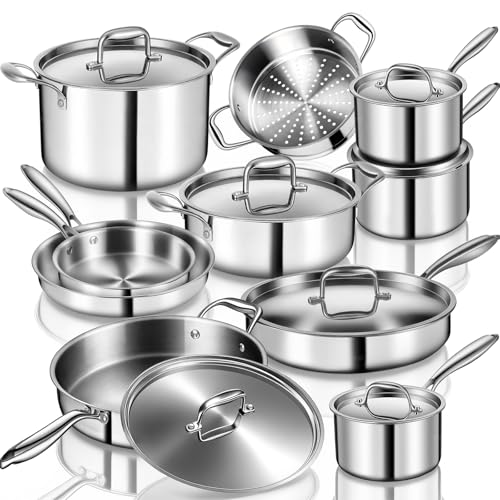
EWFEN 3-Ply 17-Piece Stainless Steel Cookware Set
Running out of the right pan halfway through dinner is more irritating than it sounds. One saucepan is too small, the stockpot is already occupied, and the only skillet left has barely enough room to brown food without crowding it. The best heavy duty stainless steel cookware should remove that bottleneck by offering useful size choices, dependable heat distribution, and enough durability for repeated stovetop and oven use. This EWFEN collection takes that broad approach with 17 pieces, three-ply construction, stainless steel lids, and cookware sized for everything from a single serving of sauce to a large pot of soup.
EWFEN 17-Piece Stainless Steel Cookware Set
The EWFEN 17-Piece Stainless Steel Cookware Set includes a 1-quart saucepan, 2-quart saucepan, 3-quart saucepan, 3.5-quart sauté pan, 8-quart stockpot, 8-inch skillet, 10-inch skillet, 12-inch skillet, and a 4-quart Dutch oven with steamer insert. Matching stainless steel lids are supplied for the covered pieces, including the large skillet. That assortment offers meaningful size differences rather than padding the count with utensils or tiny accessories. A cook can move from warming butter to simmering soup without repeatedly washing the same vessel between steps.
The three saucepans are especially practical for meals with several components cooking at once. The 1-quart saucepan handles melted butter, gravy, oatmeal, or a small serving of vegetables, while the 2-quart and 3-quart pans suit grains, pasta sides, sauces, and reheating. Their graduated capacities make portion control easier and reduce the temptation to use a huge pot for a modest job. The drawback, naturally, is storage, because three long-handled pans need more cabinet room than a basic two-saucepan setup.
The skillet lineup is equally broad. An 8-inch skillet makes sense for one or two eggs, a small portion of vegetables, or toasted spices, while the 10-inch pan suits everyday frying and sautéing. The 12-inch skillet provides the wider cooking area needed for several chicken thighs, burgers, or a larger batch of vegetables. That larger diameter is a welcome difference from sets that stop at 10 inches and leave food crowded together, steaming in its own moisture instead of developing a proper crust.
The 4-quart Dutch oven and steamer insert add flexibility beyond ordinary frying and sauce work. The vessel can handle braises, smaller soups, baked dishes, and slow simmering, while the insert supports vegetables, dumplings, seafood, or gentle reheating above water. Meanwhile, the 8-quart stockpot has room for pasta, broth, chili, or batch cooking. Filled close to capacity, though, the stockpot will be heavy, and that weight deserves respect near a sink full of hot water.
Three-Ply Construction And Heat Behavior
The cookware uses three-ply cladding with a 304 stainless steel interior, a thick aluminum core, and a 430 stainless steel exterior. Each layer has a clear job. The cooking surface resists reaction with acidic foods, the aluminum helps spread heat, and the outer layer supports use on induction cooktops. This arrangement gives the pans more balanced heating than thin stainless steel vessels made from a single sheet of metal.
The aluminum core is the key to reducing harsh hot spots. Stainless steel is durable, but it doesn’t move heat as quickly or evenly as aluminum. Sandwiching aluminum between stainless steel layers allows energy to travel farther across the pan before concentrating in one small area. Sauces benefit from that steadier behavior, and skillet cooking becomes less frustrating when the center isn’t scorching while the outer edge remains barely warm.
Thicker cookware also holds heat more effectively once it reaches temperature. Drop cold chicken into a lightweight pan and the surface temperature can collapse, leaving meat pale and wet. A sturdier clad stainless steel pan should recover more steadily, which helps browning develop before juices flood the surface. The tradeoff is slower adjustment, since a heavy pan may continue cooking aggressively for a moment after the burner is lowered.
Medium heat will handle more work than many cooks expect. The aluminum core transfers energy efficiently, so full burner power can overheat oil, stain the surface, and create stubborn cooked-on residue. A calm preheat followed by moderate heat usually produces better control. Stainless steel rewards restraint, and frankly, turning the burner down often improves both food texture and cleanup.
Stainless Steel Lids And Secure Handles
The set uses 304 stainless steel lids with wide rims designed to fit securely over the cookware. Metal lids offer durability and avoid the breakage risk associated with glass. They also tolerate rougher storage and repeated dishwasher cycles without clouding. The obvious limitation is visibility, since checking a simmer requires lifting the lid and releasing some heat and moisture.
A well-fitted lid helps create a moist cooking environment for braises, rice, soups, and slow-simmered sauces. Less steam escapes, so food can remain tender without constant topping up of liquid. Wide rims may also help direct condensation back into the vessel rather than letting it spill onto the stovetop. Still, steam gathers underneath metal quickly, so lids should be tilted away from the hands and face when lifted.
The riveted handles provide a more permanent attachment than handles secured by ordinary screws. That matters on larger pieces where food and liquid add considerable weight. Rivets can withstand repeated lifting, heating, and washing without needing occasional tightening. They do create small crevices inside the cookware, however, and sauce or grease can collect around those points if they aren’t cleaned carefully.
EWFEN describes the handles as comfortable and cool during use. That’s useful for routine stovetop cooking, but stainless steel handles can still warm near the pan body or during long sessions. Oven use changes the situation completely because every exposed metal surface can become hot. Keeping a dry towel or oven mitt close by is common sense, especially with the Dutch oven, sauté pan, and stockpot.
Pouring, Draining, And Everyday Workflow
Molded pour spouts make the cookware more convenient for broth, sauces, and cooking liquids. A controlled pouring edge reduces the drips that normally run down a rounded pot wall and pool on the counter. That small detail matters most with hot liquid, where a cleaner stream is safer as well as neater. It also helps transfer pan sauces into a serving vessel without wasting the flavorful part along the rim.
Built-in draining holes add another practical layer. Pasta water and larger solids can be strained without pulling out a separate colander, which saves both space and cleanup. The feature works particularly well for vegetables, potatoes, and short pasta shapes. Fine grains and very small ingredients may still slip through, so the draining lid won’t replace a mesh strainer for every recipe.
The 12-inch skillet with lid deserves attention because it can shift from open searing to covered cooking without moving food into another pan. Chicken can brown first, then finish gently with added liquid under the lid. Vegetables can sauté, steam briefly, and return to dry heat in the same vessel. That kind of flexibility reduces dishwashing and keeps stovetop space from becoming a traffic jam.
The broad range of vessels also helps organize meal timing. One saucepan can hold a sauce, another can cook grains, the stockpot can handle pasta, and a skillet can brown the main ingredient. That sounds ordinary until a smaller set forces constant transfers and emergency washing. The 17-piece configuration makes more sense in kitchens where several dishes often cook side by side, though a minimalist cook may see some pieces sitting unused.
Cooktop Compatibility And Oven Use
The 430 stainless steel exterior makes the cookware compatible with induction, gas, electric, and ceramic glass cooktops. This broad range is useful for anyone who expects to move, remodel, or replace an appliance later. Induction compatibility is particularly valuable because not all stainless steel cookware contains a magnetic outer layer. Here, the exterior supplies that magnetic response while the interior layers handle cooking performance.
Gas burners respond quickly, but flames should remain under the base instead of climbing the sides. Electric and ceramic surfaces retain heat after the setting changes, so turning the burner down earlier helps prevent scorching. Induction can heat the pan quickly and may feel aggressive at first. The three-ply body provides a stable foundation across all these surfaces, but each stove still demands its own timing.
The cookware is described as oven safe, which expands its usefulness for dishes that start on the stovetop and finish under surrounding heat. A skillet can sear meat before baking, the Dutch oven can braise slowly, and the sauté pan can carry a sauce-based dish into the oven. The supplied information doesn’t list a maximum oven temperature. High-heat use should therefore follow the manufacturer’s current care guidance rather than assumptions based solely on the metal construction.
Smooth cooktops require another bit of care because heavy cookware can scratch if dragged. Lifting a filled stockpot isn’t always convenient, but sliding it across ceramic glass may leave marks over time. A flat base should sit securely and make good burner contact. Even so, heavy duty cookware asks for deliberate handling, especially once a large vessel contains several quarts of food or water.
Cooking Performance Without Nonstick Coating
The cookware is described as free from PFOA, PTFE, and PFOS, and the cooking surface relies on stainless steel rather than a traditional nonstick coating. That brings durability and fewer concerns about damaging a delicate layer with metal utensils or firm scrubbing. It also means food release depends on technique. Eggs, fish, and lean proteins can stick badly if the pan is cold, overheated, or short on fat.
Proper preheating changes the experience. Warm the pan gradually, add oil after the surface is hot, and give protein enough time to form a crust before moving it. The food often releases more naturally once browning has developed. Impatience is the enemy here, and poking at chicken every few seconds usually tears the surface before it’s ready.
The bits left behind after searing form fond, which is one of stainless steel’s strongest culinary advantages. Stock, wine, or water can dissolve those browned deposits into a sauce with deeper flavor. A coated skillet may release food more easily, but it often produces less of that concentrated residue. For gravies, reductions, and pan sauces, a little controlled sticking is useful rather than annoying.
High-acid foods also fit comfortably with the 304 stainless steel interior. Tomato sauce, citrus-based dishes, and vinegar reductions can simmer without the metallic reaction associated with some bare aluminum cookware. That makes the saucepans and Dutch oven more flexible for longer cooking. Cosmetic staining may still occur, but the material choice supports a broad range of ingredients.
Cleaning And Long-Term Appearance
The mirror-finish exterior looks polished but reveals fingerprints, streaks, and water spots easily. That’s the price of a reflective surface. Dishwasher compatibility offers welcome convenience after a large meal, though harsh detergent may gradually soften the shine. Hand washing takes more effort, but it gives the finish a better chance of staying bright.
Hard water may leave chalky spots, and high heat can create rainbow discoloration. These marks usually affect appearance rather than cooking performance. Diluted vinegar can help with mineral residue, while a stainless steel cleaner can address heat tint and stubborn oil. Scratches will develop with use, especially on the highly polished exterior, and that’s normal rather than catastrophic.
Burned food is easier to handle before it dries completely. Adding warm water to the pan and loosening residue while the surface is still slightly warm can save a long soak later. A wooden utensil can lift softened deposits without gouging the finish. Around the interior rivets, a small brush may be needed to remove sauce and grease that a sponge misses.
The dishwasher is useful, but not every mess needs a full machine cycle. Deglazing immediately after cooking can turn stuck bits into sauce or loosen them for quick washing. That habit reduces both scrubbing and wasted flavor. The set is easy to maintain by stainless steel standards, though “dishwasher safe” shouldn’t be confused with “always spotless without effort.”
Where The Set Feels Strongest
Piece selection is the clearest strength. Three saucepans, three skillets, a sauté pan, Dutch oven, stockpot, steamer, and matching lids cover a wide cooking range. The capacities are spread logically, so each vessel has a recognizable role. This is far more useful than a large advertised count built from measuring spoons and plastic utensils.
Three-ply heating gives the collection a strong technical foundation. The aluminum core supports even heat movement, while stainless steel adds durability and a stable food-contact surface. Induction compatibility broadens the set’s usefulness further. Those construction choices matter during actual cooking because they address warping, uneven browning, and short cookware lifespans.
The 12-inch skillet is another meaningful advantage. Large skillets are often missing from bundled sets, yet they’re essential for avoiding overcrowding. More surface area means better evaporation and more room for food to brown properly. Covering that skillet with a matching lid also expands it into a shallow braising or steaming vessel.
Pour spouts, draining holes, and the steamer insert improve everyday workflow without making the cookware gimmicky. These features reduce the need for extra tools and simplify tasks that happen often. The stainless steel lids trade visibility for durability, a sensible choice in a set meant for repeated use. Taken piece by piece, the design emphasizes utility rather than decoration alone.
Tradeoffs That Deserve Attention
Storage demand is the first obvious drawback. Seventeen pieces occupy serious cabinet space, especially with three skillets, several saucepans, multiple lids, and a large stockpot. Nesting can help, but metal surfaces may scratch if stacked without protection. Small kitchens may struggle to keep every piece accessible without turning the cabinet into a balancing act.
Weight is another realistic concern. Three-ply cookware feels reassuring on the stove, yet larger pieces become cumbersome after food and liquid are added. The 8-quart stockpot and 4-quart Dutch oven may be difficult to drain or carry with one hand. Secure handles help, but they don’t erase the total load.
The stainless steel learning curve may frustrate cooks used to coated cookware. Delicate foods won’t slide around effortlessly unless temperature and fat are managed well. That takes practice, and rushed mornings aren’t always the best classroom. The reward is durability and stronger browning, but the adjustment period is real.
From a separate household-maintenance angle, a neutral reference related to appliance and plumbing concerns appears in washing machines for septic systems. That topic doesn’t affect this cookware set’s heating, durability, or kitchen performance, so it belongs outside the product’s cooking analysis. Its relevance is limited to broader home equipment planning rather than any feature of the EWFEN set. Keeping that distinction clear avoids forcing an unrelated household subject into the cookware’s strengths or weaknesses.
Legend 5-Ply 12-Piece Stainless Steel Cookware Set
Heavy cookware can inspire confidence right up until a loaded stockpot has to move from burner to sink. Thin cookware creates the opposite headache, heating quickly but often losing stability once temperatures climb. The best heavy duty stainless steel cookware has to strike a tricky balance between substantial construction, manageable handling, and responsive heat control. The Legend 12-piece set leans firmly toward durability with a five-ply body, 3mm thickness, coating-free cooking surfaces, and an oven rating reaching 800°F.
Legend 5-Ply Cookware Set
The Legend 5-Ply Cookware Set is built around five bonded layers of stainless steel and aluminum. That combination is meant to spread burner heat across the cooking surface while holding enough energy for steady browning. The structure feels aimed at demanding techniques such as searing, reducing sauces, and moving cookware from a hot burner into the oven. It isn’t designed to mimic lightweight nonstick pans, and that difference shapes nearly every part of the cooking experience.
The supplied description identifies a 12-piece pots and pans collection, although individual vessel sizes aren’t listed in the provided information. That prevents a detailed assessment of whether the assortment favors saucepans, skillets, or larger stockpots. Still, a 12-piece configuration commonly leaves room for several everyday vessels and their lids rather than a single specialized pan. Storage planning matters because thick cookware and matching lids can consume cabinet space faster than expected.
The polished stainless steel finish gives the set a traditional professional-kitchen appearance. It also makes fingerprints, water spots, and fine scratches easier to notice than they would be on a brushed surface. Those cosmetic changes don’t automatically affect cooking performance, but anyone hoping to preserve a showroom shine will spend more time wiping and drying. Practical cooks may simply accept the marks as part of using uncoated stainless steel regularly.
The design is deliberately straightforward: metal construction, riveted handles, sealed rims, and no synthetic cooking layer. That simplicity can be reassuring because there’s no coating to peel after repeated high-heat use. On the other hand, bare steel demands more technique and cleanup attention. The set makes the most sense where durability and browning matter more than effortless food release.
Five-Ply Heating And Temperature Control
The five-ply construction combines steel for strength with aluminum for heat movement. Stainless steel alone is durable but relatively slow at spreading heat, while aluminum reacts faster and carries energy outward from the burner. Bonding the two materials in multiple layers helps reduce sharp temperature differences between the center and edges. That matters during pan sauces, sautéing, and shallow frying, where one scorched patch can throw off the entire dish.
Legend states that the cookware heats evenly without hot spots. Real cooking still depends on burner diameter, preheating habits, and how much cold food enters the pan at once. A wide skillet placed over a small electric coil can still develop temperature differences, regardless of its internal layers. Even so, the thick aluminum and steel body gives heat more material through which to spread than a thin, single-layer pan.
The extra mass also improves heat retention. A thinner skillet can lose much of its stored heat when several cold steaks or chicken pieces hit the surface, resulting in pale food and released moisture. A 3mm, five-layer body should resist that sudden drop more effectively, helping the cooking surface recover during searing. The flip side is slower cooling, so lowering the burner doesn’t stop the cooking action instantly.
That lingering heat requires a more attentive hand. Sauces may continue bubbling after the setting is reduced, and oil can keep getting hotter while ingredients are being prepared. Medium heat will often accomplish more than expected because the cookware stores and distributes energy efficiently. Cranking the burner to maximum may save a minute during preheating, but it can also create burnt oil, discoloration, and a rough cleanup session.
Steel Surface Without A Coating
The interior uses uncoated stainless steel, so food contacts metal rather than a synthetic nonstick layer. This gives the cookware a tougher surface for browning, deglazing, and regular use with a broader range of utensils. Scratches may appear, but there’s no coating that depends on remaining perfectly intact. That makes the pans better suited to firm scraping and the kind of pan-sauce work that follows an aggressive sear.
Food release, however, won’t happen automatically. Stainless steel needs a gradual preheat, a measured amount of cooking fat, and enough patience for protein to form a crust before being moved. Chicken skin that seems glued to the pan may release cleanly once it has browned, while premature flipping can tear it apart. The proper preheating routine isn’t difficult, but it does take practice.
Eggs and delicate fish reveal the weakness fastest. Both can stick stubbornly if the temperature is slightly off or the surface lacks enough fat. A coated skillet remains easier for rushed breakfasts and fragile foods, no matter how sturdy the stainless steel set may be. The Legend cookware earns its keep through searing, oven finishing, braising, and sauce development rather than slippery low-fat cooking.
The description states that the cookware contains no coatings and is made without forever chemicals associated with some treated surfaces. That characteristic may appeal to households that prefer cooking on plain metal. It also removes the need to replace a pan simply because its surface treatment has worn thin. Expectations still need to stay realistic, since coating-free doesn’t mean maintenance-free or stick-proof.
High-Heat Oven And Cooktop Flexibility
An 800°F oven-safe rating gives the Legend set far more high-temperature headroom than many cookware collections. The pans can begin on the stovetop and continue in the oven without transferring food into a separate baking dish. That helps with thick steaks, roasted chicken pieces, skillet breads, and braises that benefit from surrounding heat. Few ordinary home recipes need the full stated limit, but the rating suggests the metal construction isn’t restricted by low-temperature handle materials.
The set works on gas, electric, induction, and glass cooktops. Broad compatibility matters for a cookware purchase intended to last through kitchen changes. An induction-ready base allows the pans to remain useful after switching from a traditional electric range, while a flat bottom supports contact with smooth glass surfaces. Heavy vessels should be lifted rather than dragged across glass to reduce the chance of scratching.
Gas burners offer fast adjustment, though flames should remain beneath the base instead of wrapping around the sidewalls. Induction can bring thick cookware up to temperature surprisingly quickly, so lower settings may be more effective than expected. Electric elements react more slowly and hold residual heat after being turned down. The five-ply body works across all of them, but each heat source still rewards slightly different timing.
From a separate household-appliance perspective, one neutral reference related to operating noise appears in quiet washing machines. That subject has no direct bearing on the cookware’s heat distribution, oven safety, or food-contact surface. It belongs to broader household equipment planning rather than this set’s kitchen performance. Keeping those categories separate avoids forcing an unrelated appliance topic into the cookware analysis.
Handles, Rims, And Daily Handling
The cookware uses cast hollow riveted handles, combining secure attachment with a shape intended to slow heat transfer. Rivets generally hold more reliably than ordinary screws, especially on pans that are lifted daily under substantial weight. Hollow construction may help the grip stay cooler during stovetop cooking because less solid metal carries heat toward the hand. Still, any handle can become hot near the pan body or during extended high-heat use.
Oven cooking changes the equation completely. Once a pan has been inside a hot oven, the handle must be treated as hot even if it stayed comfortable on the burner. A dry mitt is essential because damp fabric can transfer heat quickly and cause burns. The 800°F capability increases versatility, but it also makes careful handling more important.
The 3mm body adds reassuring stability, yet it also creates a noticeable lifting burden. A skillet may feel manageable while empty and considerably more demanding once filled with meat, vegetables, and sauce. Larger pots become heavier still after several quarts of water are added. Anyone with limited grip strength may appreciate the secure handles while still finding the overall cookware weight tiring.
Flared sealed rims are designed to improve pouring and reduce drips down the outside wall. That helps with broth, sauces, and cooking liquids that otherwise leave sticky streaks on the exterior. A clean rim also makes deglazed sauces easier to transfer into a bowl or serving dish. It’s a small design choice, but one that becomes useful every time hot liquid needs to move without making a mess.
Cleaning And Finish Maintenance
Legend recommends hand washing, which may disappoint anyone hoping to place every piece in the dishwasher after dinner. Hand cleaning gives more control over the polished finish and may reduce detergent-related dulling. It also means a large meal can leave several heavy pans waiting at the sink. The maintenance burden isn’t extreme, but it’s higher than a dishwasher-first cookware set.
Stuck food responds best to early attention. Warm water added shortly after cooking can loosen residue before it hardens, while deglazing turns browned deposits into the base of a sauce. Burned oil may need soaking or a stainless steel cleaner. The uncoated surface tolerates more assertive cleaning than delicate nonstick cookware, although aggressive abrasives can scratch the polish.
Rainbow tint may develop after high heat, and hard water can leave cloudy mineral marks. These changes generally affect appearance rather than performance. Diluted vinegar often helps remove mineral residue, while a suitable stainless cleaner can address heat stains. Anyone bothered by every mark may find the polished finish fussy, whereas a working kitchen will probably treat those signs as ordinary wear.
Rivets require a little extra attention because oil and sauce can settle around their edges. A narrow brush or the corner of a sponge helps clean those tight spots. Drying the cookware soon after washing reduces water marks and keeps the exterior looking sharper. The long-term durability is a major attraction, but maintaining the original shine takes more effort than simply maintaining cooking function.
Pros That Matter In Real Cooking
Even heat distribution is the central strength of this set. Five bonded layers help spread energy across the cooking surface, reducing the intense central heat common in thin pans. That steadier behavior supports sauces, browning, and recipes requiring controlled temperature changes. The result depends on sound technique, but the construction gives the cook a more forgiving platform.
High-temperature durability is another clear advantage. A stated 800°F oven rating allows stovetop-to-oven cooking without worrying about low-heat plastic grips or coated surfaces. Thick 3mm construction is also intended to resist warping under high heat. That combination favors cooks who sear hard, roast often, or use cookware for extended oven sessions.
The coating-free steel interior removes concerns about scratching or gradually wearing through a nonstick layer. Metal utensils, firm deglazing, and vigorous scrubbing become less nerve-racking. Acidic sauces can cook against stainless steel without exposing an aluminum core. The surface may look used over time, but its basic cooking function doesn’t depend on remaining cosmetically perfect.
Broad cooktop compatibility adds long-term flexibility. Gas, electric, glass, and induction support means the set can move between homes or survive a range replacement. Secure riveted handles and flared rims also make everyday use more practical. These strengths aren’t flashy, but they address the details that determine whether cookware stays in regular rotation.
Cons And Practical Limitations
Substantial weight is the most obvious tradeoff. Five layers and 3mm thickness create stability, but they also make every pan heavier before food is added. Large vessels may become awkward during draining, serving, or washing. Secure handles help control the load, though they can’t make the mass disappear.
Food sticking will frustrate anyone expecting nonstick behavior. Eggs, fish, and lean meat need careful preheating, oil, and timing. Rushed cooking can leave torn food and a stubborn layer on the pan. The learning curve is manageable, but it’s still a genuine weakness for quick, low-effort meals.
The hand-wash recommendation adds time after cooking. A polished 12-piece collection can create a sizable cleanup job when several pans are used together. Dishwasher-friendly cookware would be more convenient for hectic households, even if the finish eventually dulled. Here, preserving appearance and following the stated care guidance require more hands-on maintenance.
Slow cooling can be both helpful and annoying. Retained heat supports searing and stable simmering, but it also means the pan keeps cooking after the burner is lowered. Delicate sauces can overshoot their target if they aren’t moved off the heat in time. Thick construction rewards attention, so this set feels better suited to deliberate cooking than hurried improvisation.
Cuisinart MultiClad Pro 12-Piece Cookware Set
A skillet that scorches onions in the center while leaving the edges pale can throw dinner off before the main ingredient even hits the pan. Uneven heating, flimsy handles, and poorly fitted lids become especially irritating once cookware sees daily use rather than occasional weekend duty. The best heavy duty stainless steel cookware should feel steady over heat, move comfortably between stove and oven, and survive firm scrubbing without relying on a fragile coating. The Cuisinart MultiClad Pro set tackles those practical demands with triple-ply construction, an aluminum core, stainless steel lids, riveted handles, and a useful 12-piece assortment.
Cuisinart MultiClad Pro Set
The Cuisinart MultiClad Pro Set includes a 1.5-quart saucepan, a 3-quart saucepan, a 3.5-quart sauté pan with helper handle, an 8-quart stockpot, 8-inch and 10-inch skillets, plus a 20-centimeter steamer insert. Lids are included for the saucepans, sauté pan, stockpot, and steamer setup. That lineup covers everyday sauce work, frying, steaming, braising, boiling, and batch cooking without padding the advertised piece count with utensils. Each vessel has a recognizable role, which matters far more than a box filled with accessories that rarely leave the drawer.
The 1.5-quart saucepan suits small jobs such as oatmeal, melted butter, reheated soup, or a modest batch of gravy. Its 3-quart companion handles grains, vegetables, pasta sides, and larger sauces without forcing a half-empty stockpot onto the burner. The difference between those capacities is meaningful enough to avoid obvious duplication. Better yet, having both available keeps meal preparation moving when several components need separate heat levels.
The 3.5-quart sauté pan may be the workhorse of the collection. Straight sides contain splatter, hold liquid for braising, and provide more usable volume than a shallow skillet with a similar diameter. The helper handle earns its keep once the pan is loaded with chicken, vegetables, and sauce. Still, the pan will feel heavier than a basic aluminum vessel, especially while moving it from the stovetop into a hot oven.
The 8-quart stockpot provides enough room for soup, pasta, broth, and larger batches. Paired with the steamer insert, it can also handle vegetables, dumplings, seafood, or gentle reheating above simmering water. Filled with several quarts of liquid, though, an 8-quart stainless steel pot becomes a serious load. Secure side handles help, but draining boiling water still demands a clear sink area and a steady two-handed grip.
Triple-Ply Heat Distribution
The set uses triple-ply construction built around a pure aluminum core between stainless steel layers. Aluminum carries heat faster than stainless steel, while the steel provides durability, a stable cooking surface, and a polished interior. Cuisinart describes its Heat Surround design as distributing energy along both the bottom and sidewalls. That sidewall heating is useful during reductions, soups, and sautéing because ingredients near the perimeter don’t rely solely on heat creeping outward from the center.
Even heating doesn’t remove the need for burner discipline. A 10-inch skillet placed over a very small electric coil can still develop temperature differences, and an oversized gas flame can climb the pan walls and overheat the handle area. The aluminum core improves the pan’s ability to spread energy, but burner diameter and heat setting remain part of the equation. Medium heat will often accomplish more than expected with clad cookware, so blasting the control knob usually creates more cleanup than speed.
The pans should hold temperature more steadily than thin stamped steel. Drop cold chicken into a lightweight skillet and the surface temperature can collapse, causing moisture to pool before browning begins. A thicker tri-ply body has more stored energy, helping the pan recover as food is added. The tradeoff is slower cooling, which means a sauce may keep bubbling aggressively after the burner is lowered.
That lingering heat rewards attention. Moving a pan partly off the burner or transferring it to a cool surface can stop cooking more effectively than simply turning the dial down. Delicate sauces, butter, and garlic can go from nicely browned to bitter while the metal remains hot. In plain English, the cookware gives strong control, but it expects the cook to stay awake at the wheel.
Polished Interior And Food Release
The mirror-finish stainless steel interior is designed not to react with food, discolor easily, or alter flavors. Tomato sauce, wine reductions, citrus-based dishes, and vinegar-heavy recipes can cook directly against the steel surface. That makes the saucepans and sauté pan flexible for acidic ingredients that may react with exposed aluminum. The polished finish also makes browned residue easier to see, which helps during deglazing and sauce building.
This is not nonstick cookware, and pretending otherwise would set up the wrong expectations. Eggs, fish, and lean meat can cling if the pan is underheated, overheated, or short on cooking fat. Proper preheating matters: warm the empty pan gradually, add oil, then allow food to form a crust before attempting to move it. A piece of chicken that seems stubbornly attached may release naturally once browning has developed.
The slight sticking that occurs during searing can create fond, those browned bits left behind after meat or vegetables cook. Add stock, wine, or water, and the residue loosens into a pan sauce with deeper flavor. A coated skillet may release food more readily, but it often produces less of this concentrated browning. For gravy, reductions, and braised dishes, stainless steel’s behavior becomes an advantage rather than a nuisance.
Quick breakfasts remain a weak spot. A coated pan is easier for rushed eggs or delicate crepes, especially when minimal oil is preferred. The Cuisinart set asks for more technique and a little cleanup afterward. In return, the uncoated cooking surface can tolerate higher heat, stronger scraping, and regular deglazing without a synthetic layer gradually wearing away.
Handles, Lids, And Pouring Control
The Cool Grip handles are made from solid stainless steel and secured with rivets. Riveted construction creates a firm attachment that won’t depend on screws needing occasional tightening. The long handles are designed to stay cooler on the stovetop, while the sauté pan’s helper grip provides extra control under load. Even so, metal near the pan body can warm during long cooking sessions, and every handle becomes hot inside the oven.
Balance matters as much as handle temperature. A sturdy skillet should feel planted on the burner without becoming awkward to tilt while pouring sauce or sliding food onto a plate. The 10-inch skillet and sauté pan carry more weight once filled, so grip shape and leverage make a noticeable difference. The helper handle is especially useful for oven transfers because one-handed lifting can twist the wrist when the pan contains several pounds of food.
The tight-fitting stainless steel lids seal in steam, juices, and moisture during simmering or braising. Metal lids also avoid the breakage risk associated with glass and tolerate rougher cabinet storage. Their weakness is visibility, since the food can’t be watched without lifting the cover. Every peek releases steam and lowers the internal temperature slightly, which can matter during rice cooking or steady low simmering.
Tapered rims support drip-free pouring, a practical touch for broth, sauce, and cooking liquid. A flared edge directs the stream outward instead of allowing it to crawl down the exterior wall. That makes transferring gravy or draining liquid less messy, though a full stockpot still needs careful handling. The feature sounds minor on paper, but it shows its value every time the counter avoids a sticky trail.
Cooktop And Oven Performance
The cookware works with induction, electric, gas, and glass cooktops. Broad compatibility is helpful for a long-term purchase because a stove replacement won’t necessarily make the set obsolete. Induction support is particularly valuable, since some stainless steel pans lack the magnetic composition required to activate an induction element. The flat bases also support stable contact with smooth electric and ceramic surfaces.
Gas gives fast visual heat control, though flames should remain beneath the base rather than wrapping around the sidewalls. Electric burners react more slowly, so reducing heat early helps prevent a sauce from overshooting. Induction can heat cookware quickly and may feel surprisingly aggressive at high settings. The triple-ply construction handles each source differently, but it provides a consistent metal platform across all of them.
An oven-safe rating of 500°F allows the pans to move from stovetop browning into oven finishing. Chicken can sear in the sauté pan and continue roasting under surrounding heat, while a skillet can handle baked pasta, cornbread, or thick chops. The all-metal handles and lids support that flexibility without plastic components setting a lower temperature ceiling. Oven mitts remain mandatory, naturally, because a stainless steel grip offers no visual warning that it has become dangerously hot.
From a separate household-maintenance angle, a neutral reference related to indoor air concerns appears in air purifiers for VOCs. That subject doesn’t affect this cookware set’s heat distribution, food-contact surface, or induction performance. Its relevance belongs to broader home air management rather than any cooking feature of the Cuisinart collection. Keeping the topics apart avoids manufacturing a connection where none exists.
Cleaning And Surface Care
The set is dishwasher safe, which takes some pressure off cleanup after a multi-pan meal. Stainless steel doesn’t require the delicate sponge-only treatment associated with many coated surfaces. Still, dishwasher detergent and repeated high-temperature drying may gradually soften the polished appearance. Hand washing isn’t required, but it can help preserve the finish and reduce water spotting.
Stuck food responds best before it dries into a hard layer. Adding warm water to a recently used pan and loosening residue with a wooden utensil can save a long soak later. Deglazing also lifts browned deposits while turning them into usable flavor. The polished cooking surface is sturdy, though aggressive steel wool can leave visible scratches.
Rainbow tint may appear after high heat, while hard water can leave cloudy mineral marks. These cosmetic changes generally don’t affect cooking performance. Diluted vinegar can help with mineral deposits, and stainless steel cleaner may reduce heat discoloration or cooked-on oil. A brushed exterior hides everyday wear better than mirror-polished sides, which is one practical benefit of the MultiClad Pro finish.
Rivets create small cleaning zones where grease and sauce can gather. A narrow brush or the corner of a sponge helps reach those edges. Drying the cookware after washing reduces spots and keeps the brushed exterior looking neater. The dishwasher-friendly design simplifies routine care, but a little hand detailing prevents residue from building up around the hardware.
Practical Strengths
Balanced piece selection is a major strength. The two saucepans cover clearly different capacities, the sauté pan handles deeper one-pan meals, and the stockpot supports larger cooking jobs. Two skillet sizes take care of small and medium frying tasks, while the steamer insert adds another method without requiring a dedicated appliance. The set feels planned around real recipes rather than an inflated number on the packaging.
Heat Surround construction gives the cookware a sound technical foundation. Extending heat distribution along the sidewalls can help sauces reduce more evenly and prevent ingredients near the edge from lagging behind the center. The aluminum core adds responsiveness without exposing aluminum to food. That layered design supports both durability and more predictable cooking behavior.
The 500°F oven rating expands recipe flexibility. Stove-to-oven cooking saves time, reduces transfers, and keeps flavorful browned residue in the same vessel. Riveted handles and metal lids fit that high-heat approach. There’s no low-temperature plastic grip forcing an early stop during roasting or baking.
Tapered rims and secure lids address small frustrations that show up repeatedly. Liquid pours with better control, while covered dishes retain more moisture during simmering. The helper handle improves balance on the sauté pan, and the brushed exterior is less fussy than a fully mirrored body. These details don’t sound dramatic, yet they’re the sort of features that decide whether cookware feels smooth or irritating during daily use.
Realistic Weaknesses
Stainless steel food release presents the clearest learning curve. Eggs and delicate proteins won’t behave like they do on a coated surface. Incorrect preheating can leave food stuck hard enough to require soaking and scrubbing. Experienced heat control makes a big difference, but busy cooks may not enjoy practicing before breakfast.
Weight also deserves attention. Triple-ply construction feels stable and holds heat well, yet the stockpot and sauté pan become demanding once filled. The helper handle improves control, but carrying several quarts of soup still takes both hands. Limited grip strength could make the larger vessels less comfortable for frequent use.
The set stops at a 10-inch skillet, which may feel cramped for larger batches. Several chicken thighs, burgers, or servings of vegetables can crowd the cooking surface and trap steam. A 12-inch pan would create more room for browning without cooking in shifts. The included skillets remain useful, but bigger meals may call for an additional wide pan.
Stainless steel lids block the view, forcing the lid to be lifted whenever food needs checking. That releases steam and interrupts the cooking environment, especially during rice, steaming, or slow simmering. Metal lids are tougher than glass and tolerate oven heat well, so the tradeoff favors durability over visibility. Whether that feels sensible or annoying depends on how often covered cooking appears in the weekly routine.


Top Rated Best Quality Range Hoods: 2026 Expert Picks
The 12 Best Small Solar Generators 2026

10 Best Quality Semi Automatic Washing Machine of 2026 For Leak-Free Laundry

11 Best Small Washer Machine of 2026 For Everyday Laundry

12 Best Vibration Pads For Washing Machine of 2026 To Stop Walking and Shaking

11 Best Selling Front Load Washing Machine of 2026 For Quiet Odor-Free Laundry

11 Best Washing Machine For King Size Bedding of 2026 To Prevent Cycle Errors

10 Best Small Front Loader Washing Machine of 2026 For Tight Closets






