
Best Copper Core Stainless Steel Cookware 2026 Picks

Best copper core stainless steel cookware combines the fast heat response of copper with the durability and low-maintenance cooking surface of stainless steel. That layered construction solves a familiar kitchen headache: a pan that takes forever to react after the burner is adjusted. Copper transfers heat quickly, while the stainless interior keeps acidic ingredients from touching the reactive metal. The result feels controlled rather than twitchy, especially while browning butter, reducing sauces, or moving from a hard sear to a gentler finish.
Copper core construction isn’t the same as a thin decorative copper band wrapped around the outside of a pan. A worthwhile piece uses a substantial copper layer inside its bonded body, usually paired with aluminum and stainless steel to spread heat across the base and sidewalls. That difference matters once several ingredients hit the cooking surface at once. Thin cookware can develop hot patches, but a well-built copper core pan recovers more evenly after cold meat, vegetables, or liquid lowers its temperature.
Still, there’s no free lunch. These pans tend to cost more and feel heavier than basic stainless steel cookware, so a huge set can become more of a storage burden than a practical upgrade. Handles, balance, lid fit, and usable cooking surface deserve as much attention as the layer count printed on the box. A wide skillet with sharply sloped sides may look roomy, yet the flat searing area can be surprisingly small.
Cooking performance shows its value during tasks that punish sluggish cookware. Delicate sauces are less likely to scorch after the heat is lowered, chicken skin can brown without one section turning nearly black, and pan sauces respond quickly once wine or stock is added. Stainless steel still demands proper preheating and enough cooking fat, though. Eggs and fragile fish won’t magically slide around like they would in a fresh nonstick pan.
Maintenance is fairly straightforward, but rainbow stains, cloudy marks, and stuck-on fond can appear after regular use. Gentle scrubbing, a stainless steel cleaner, or a little diluted vinegar usually restores the finish without much fuss. Dishwasher compatibility sounds convenient, yet hand washing often keeps polished surfaces looking better and prevents harsh detergent from dulling the metal. Frankly, these pans are built to cook, so a few marks shouldn’t cause sleepless nights.
Induction compatibility also needs a quick check because copper itself isn’t magnetic. Most modern copper core stainless steel collections use a magnetic exterior layer, but that feature shouldn’t be assumed from appearance alone. Oven-safe temperatures can vary by handle and lid material as well. A pan rated for high oven heat may come with a lid that has a lower limit, which matters for braising, roasting, or finishing thick steaks.
A smaller collection often makes better sense than a cabinet packed with duplicate sizes. A 10-inch or 12-inch skillet, a medium saucepan, and a versatile sauté pan can cover most weekday meals without draining the budget. Larger stockpots gain less from an expensive copper core because boiling pasta water doesn’t require split-second temperature changes. Spend where precise control earns its keep, then fill less demanding jobs with dependable standard stainless steel.

- TAR Score9.2
TAR Score is a ranking system developed by TopAppliancesReviews.com. TAR score has no relationship or impact from any manufacturers or sales agent websites. Learn more
- BrandKOKHUB
- TAR Score9.2
TAR Score is a ranking system developed by TopAppliancesReviews.com. TAR score has no relationship or impact from any manufacturers or sales agent websites. Learn more
- BrandAll-Clad

- TAR Score9.2
TAR Score is a ranking system developed by TopAppliancesReviews.com. TAR score has no relationship or impact from any manufacturers or sales agent websites. Learn more
- BrandAll-Clad

- TAR Score9.0
TAR Score is a ranking system developed by TopAppliancesReviews.com. TAR score has no relationship or impact from any manufacturers or sales agent websites. Learn more
- BrandAll-Clad

- TAR Score9.0
TAR Score is a ranking system developed by TopAppliancesReviews.com. TAR score has no relationship or impact from any manufacturers or sales agent websites. Learn more
- BrandLEGEND COOKWARE

- TAR Score9.0
TAR Score is a ranking system developed by TopAppliancesReviews.com. TAR score has no relationship or impact from any manufacturers or sales agent websites. Learn more
- BrandCuisinart
- TAR Score9.0
TAR Score is a ranking system developed by TopAppliancesReviews.com. TAR score has no relationship or impact from any manufacturers or sales agent websites. Learn more
- BrandAll-Clad

- TAR Score8.6
TAR Score is a ranking system developed by TopAppliancesReviews.com. TAR score has no relationship or impact from any manufacturers or sales agent websites. Learn more
- Brandciwete

- TAR Score8.4
TAR Score is a ranking system developed by TopAppliancesReviews.com. TAR score has no relationship or impact from any manufacturers or sales agent websites. Learn more
- BrandUmite Chef
Last update on 2026-08-14 / Affiliate links / Images, Product Titles, and Product Highlights from Amazon Product Advertising API
KOKHUB 8-Piece Vintage Stainless Steel Cookware Set
Crowded cabinets, stained cookware, and pans that develop stubborn hot spots can make an ordinary dinner feel like more work than it should. The KOKHUB set approaches those frustrations with a compact lineup, a coating-free cooking surface, and a thicker tri-ply body designed to spread heat more consistently. Within the search for best copper core stainless steel cookware, it deserves attention for its copper-colored detailing and practical stainless construction, though buyers should understand that the supplied specifications describe copper-plated handles, not an internal copper core.
KOKHUB 8-Piece Vintage Cookware Set
The set includes 9.5-inch and 11-inch skillets, 2.5-quart and 3-quart saucepans with lids, plus a 5-quart casserole with a lid. That mix skips tiny specialty pieces and focuses on sizes that can handle scrambled eggs, pan-seared chicken, pasta sauce, soup, rice, and one-pot meals. KOKHUB says the collection covers around 90% of common cooking needs while using about 40% less cabinet space than larger 11-piece or 12-piece bundles.
That smaller footprint is a genuine strength in kitchens where lids tumble out every time a cabinet door opens. Two skillet sizes give enough flexibility for a quick breakfast or a larger batch of vegetables, while the saucepans cover routine boiling and simmering jobs without needless duplication. The 5-quart casserole brings the set together for chili, braises, stock, or a family-sized pasta dinner, so the collection feels edited rather than padded.
Set size can also be a limitation, depending on cooking habits. There’s no dedicated stockpot larger than five quarts, no steamer insert, and no tiny one-quart saucepan for melting butter or warming a single serving. Anyone who regularly hosts a crowd may outgrow the casserole quickly, but a smaller household may appreciate not paying for pieces that rarely leave the cabinet.
Tri-Ply Body And Heat Control
KOKHUB describes the cookware as three-layer stainless steel with a 2.7mm overall thickness. The brand claims this construction heats about 30% faster and more evenly than typical 2mm cookware, although that figure comes from the manufacturer rather than an independent laboratory report. In practical terms, the thicker body should help reduce sharp temperature swings when cold ingredients hit the pan, especially during sautéing or shallow frying.
Even heating matters most during meals that expose weak cookware fast. Pancakes reveal cooler edges, chicken breasts reveal aggressive hot spots, and cream sauces punish a base that holds too much heat in one area. A well-bonded tri-ply structure can soften those problems by moving energy across a wider surface instead of concentrating it directly above the burner.
Still, this isn’t confirmed copper-core cookware. The supplied description identifies copper plating on the handles, while the cooking vessels are presented as tri-ply stainless steel. Copper-colored accents create the vintage look, but they shouldn’t be confused with a conductive copper layer sealed inside the pan body. That distinction is crucial because shoppers specifically seeking copper-core responsiveness may expect faster temperature changes than standard tri-ply stainless steel can provide.
Stainless steel technique also plays a large role in the final result. The pan needs a short preheat, food should be reasonably dry, and cooking oil should be added before proteins hit the surface. Rush those steps and eggs may cling, fish may tear, and browned residue may feel like a design flaw even though the real issue is timing and temperature control.
Stone-Ground Finish And Daily Durability
The most unusual feature is KOKHUB’s physical stone-grinding process, which the brand says involves repeated mechanical polishing to create a delicate matte texture. According to the product description, this treatment helps reduce the yellowing and oxidation marks that often appear after stainless cookware meets high heat. That claim is appealing because rainbow stains and golden patches can make perfectly usable pans look worn long before their structure is compromised.
The matte surface also fits the set’s retro personality. Bright mirror-polished cookware shows fingerprints, water spots, and fine scratches almost immediately, while a softer finish tends to hide everyday handling marks better. Copper-toned handles add warmth without turning the whole pan into a high-maintenance decorative piece, though the plating may still change appearance after repeated exposure to heat, detergent, and abrasive cleaning.
Coating-free construction is another clear benefit. The cooking surfaces contain no PFOA, PFOS, or PTFE coating according to the supplied specifications, so there’s no synthetic nonstick layer to chip or peel after repeated use. Metal spatulas and steel wool are listed as acceptable, but a gentler scrubber remains the wiser first move because aggressive cleaning can leave cosmetic scratches even when it doesn’t ruin the pan.
KOKHUB claims the cookware lasts three times longer than coated pans, yet actual service life will depend heavily on burner heat, cleaning habits, storage, and whether the pans are repeatedly shocked with cold water while hot. Stainless steel can remain useful for many years, but it isn’t immune to warping, impact damage, loosened fittings, or surface discoloration. Durability here should be read as resistance to coating failure, not a promise that the cookware will stay cosmetically untouched.
Handles, Oven Use, And Stove Compatibility
The fixed stainless handles are designed to avoid the weak joints and wobble sometimes found on removable-handle cookware. Their copper-plated finish supplies the vintage accent, while the permanent attachment supports stovetop-to-oven cooking without stopping to remove plastic components. The product description lists oven safety up to 500°F in one place and 540°F in another, so using the more conservative 500°F limit would be the sensible approach unless the manufacturer confirms otherwise.
“Stay-cool” deserves a realistic reading. Stainless handles usually remain more comfortable than the pan body on the stovetop because their shape and distance slow heat transfer, but they can still become hot near the base, over a neighboring burner, or during a long simmer. Oven use changes the equation completely, so a dry potholder belongs within reach before the pan goes in.
Induction compatibility widens the set’s usefulness across modern kitchens, and the flat stainless exterior should also work on gas, electric coil, and smooth glass cooktops. Smooth-top stoves reward careful handling because dragging a heavy skillet can leave marks on the cooking surface. The 2.7mm build may feel substantial in the hand, which helps stability but could become tiring while pouring sauce from a full saucepan.
Dishwasher-safe construction is convenient after a messy meal, though hand washing may preserve the matte body and copper-toned handles more effectively over time. Harsh dishwasher detergent can dull decorative finishes, and trapped moisture around lid rims sometimes leaves spots. A short soak followed by a non-scratch pad will handle most residue, while diluted vinegar can help with mineral haze or heat tint.
Pros And Cons In Real Kitchen Use
Pros: The compact assortment covers the cooking jobs most kitchens repeat every week without filling a cabinet with duplicate sizes. The tri-ply stainless body avoids disposable-style nonstick coatings, the thicker construction should support steadier heat, and the two skillet sizes make the set more flexible than bundles built around one small frying pan. Induction support, oven use, and dishwasher compatibility add practical range.
Pros: The stone-ground matte finish may hide fingerprints and minor wear better than highly polished stainless steel. Permanent handles feel reassuring during lifting and oven transfers, and the copper plating gives the collection a distinct look without requiring the polishing routine associated with exposed copper cookware. A relevant reference is durable non-stick cookware, which covers a different path for cooks who prioritize easier food release over coating-free stainless steel longevity.
Cons: The product name and copper-colored handles may create the impression of copper-core construction, but the provided details don’t confirm copper inside the pan body. That matters because the keyword best copper core stainless steel cookware implies a specific layered design with copper used for thermal performance, not merely appearance. Buyers seeking true copper-core responsiveness should verify the internal layer materials directly with KOKHUB before treating this set as an exact match.
Cons: Stainless steel won’t behave like nonstick cookware, especially during the first few meals. Food release depends on heat management, oil, and patience, and cleanup can involve soaking or scrubbing after hard searing. The set also lacks a larger stockpot and specialty accessories, so batch cooks may need to add another vessel later.
Where The Set Makes The Most Sense
The KOKHUB collection fits kitchens that value durable stainless steel, moderate set size, and a more decorative look than plain commercial-style cookware. It handles everyday sautéing, boiling, simmering, and oven finishing without asking for a cabinet full of rarely used pieces. The mix feels particularly sensible where counter and storage space are tight, but the cooking routine still calls for more than one skillet.
Its strongest argument isn’t laboratory-level copper performance. The appeal lies in coating-free surfaces, useful capacities, induction compatibility, and a thicker tri-ply body wrapped in a vintage matte finish. Cooks willing to learn stainless technique may get far more long-term value from that combination than from a lightweight coated set that gradually loses its easy-release surface.
The biggest buying decision rests on expectations. Anyone drawn mainly by the copper appearance should be satisfied with the warm-toned handles and retro styling, while anyone demanding a confirmed copper core needs more material information than the listing currently provides. That tradeoff doesn’t make the cookware weak, but it does place the set closer to attractive tri-ply stainless steel than to traditional copper-core cookware.
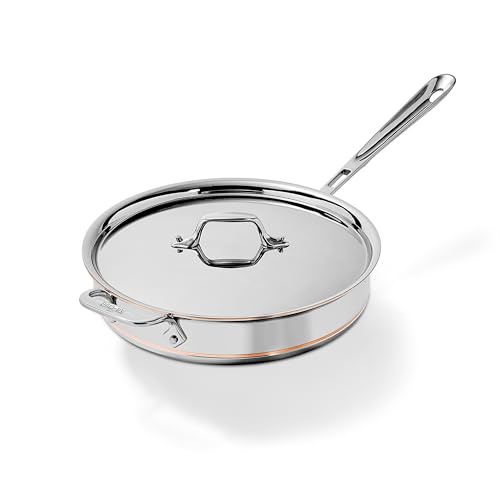
All-Clad Copper Core 3-Quart Sauté Pan
A crowded skillet can turn a good dinner into a juggling act, especially once sauce, vegetables, and browned meat all need room at the same time. This 3-quart sauté pan tackles that problem with a broad cooking surface, straight walls, and a lid that keeps simmering under control. Among contenders for best copper core stainless steel cookware, it stands out because the copper isn’t decorative trim. It sits inside a bonded five-layer body, where it can sharpen heat response without leaving a reactive surface in contact with food.
All-Clad Copper Core 3-Quart Sauté Pan
The pan’s shape lands somewhere between a skillet and a shallow saucepan, and that middle ground is its greatest practical strength. A wide, flat base leaves room for browning several chicken thighs, searing pork chops, or reducing mushrooms without stacking ingredients on top of one another. Straight sides hold broth, wine, cream, and rendered fat more securely than flared skillet walls. Less splatter reaches the stovetop, too, which saves a fair bit of cleanup after high-heat cooking.
The included stainless steel lid changes how often the pan gets used. Covered, it can handle braised chicken, shallow poaching, steamed vegetables, and rice-based dishes that need controlled moisture. Uncovered, the broad surface encourages evaporation, helping sauces thicken without dragging dinner into overtime. That flexibility matters in a smaller kitchen because one pan can take over jobs normally split between a fry pan, saucepan, and compact braiser.
Three-quart capacity brings a tradeoff, though. It’s roomy enough for two to four portions in many recipes, but large batches of chili, stew, or pasta sauce can push against the upper edge quickly. The straight sides reduce spills, yet they don’t create the capacity of a deeper five-quart sauté pan. For nightly meals, the size feels manageable; for holiday cooking or serious meal prep, it may serve better as a second pan than the main workhorse.
Five-Ply Construction With A Real Copper Core
All-Clad bonds stainless steel, aluminum, and copper into a five-layer structure rather than relying on a thick disc attached only to the bottom. That construction allows heat to move across the cooking base and into the walls, helping ingredients cook more consistently near the edges. The thick copper core reacts quickly as burner settings change, while aluminum helps spread heat and stainless steel adds structure. It’s a smart mix, not simply an exercise in piling on layers.
Heat responsiveness makes the biggest difference during fussy cooking. Lowering the flame beneath a cream sauce should calm the simmer without a long delay, and raising the heat after adding cold ingredients should bring the pan back to temperature at a steady pace. Copper handles those adjustments faster than stainless steel alone. That control can reduce scorched butter, broken sauces, and the annoying cycle of moving a pan on and off the burner.
The bonded body is also designed for warp resistance, a meaningful detail on induction and smooth electric cooktops where a flat base is essential. A pan that rocks or bows loses direct contact with the cooking surface and can heat unevenly. This construction feels substantial, but that strength comes with extra weight. Once the pan holds meat, vegetables, and liquid, lifting it one-handed may feel more like a forearm exercise than a graceful kitchen move.
Copper-core cookware often carries a steep price because bonding multiple metals demands more manufacturing work than stamping a basic stainless pan. The expense makes the most sense for meals where temperature response matters, not for tasks such as boiling plain water. From a practical angle, stainless steel cookware sold through Costco represents a separate value-focused category where set size and price may carry more weight than copper-driven responsiveness.
Searing, Browning, And Sauce Control
The polished stainless steel interior supports deep browning because it can handle higher heat without relying on a synthetic coating. Properly preheated, the pan creates the dry, hot environment needed for a crust on steak, chicken, or scallops. Browned bits stay behind after the food releases, and those bits become the base for pan sauce once stock, wine, or another liquid enters the picture. That sequence is where this pan earns its keep.
Stainless steel still has a learning curve, no two ways about it. Food can stick if the surface is cold, the protein is wet, or the cook starts tugging before a crust forms. A thin layer of oil and a little patience usually make the difference between clean release and torn food. The polished surface offers better stick resistance than rougher stainless finishes, but it won’t behave like PTFE-coated cookware.
The straight sides help contain bubbling sauce, yet the pan remains shallow enough for easy utensil access. A wooden spoon can reach the corners without disappearing into a deep pot, and a fish spatula has room to slide beneath delicate fillets. Flared pouring edges guide liquid away from the rim, reducing the dribbles that run down the outside of cheaper cookware. It’s a small feature until hot sauce lands on the counter instead of the plate.
Acidic ingredients are no problem because stainless steel covers the internal copper layer. Tomato sauce, citrus, wine reductions, and vinegar-based braises can simmer without reacting directly with copper. Food doesn’t pick up the metallic taste that poorly lined copper cookware can develop after wear. The stainless interior also means the pan doesn’t need periodic retinning, a maintenance step associated with traditional copper vessels.
Handle Design And High-Heat Flexibility
The long stainless steel handle is permanently attached with rivets, giving the pan a solid feel during stirring, shaking, and stovetop transfers. Its contoured shape provides a defined place for the hand rather than a round, slippery tube. The vented design helps limit heat travel from the pan body during ordinary burner use. Still, stay-cool performance has limits, especially near the rivets or during long cooking sessions.
The handle’s length improves leverage, but it also demands elbow room. On a compact stove, it can extend over the counter edge or crowd another pan sitting on a neighboring burner. All-Clad handles have a pronounced groove that some cooks appreciate for control and others consider uncomfortable during prolonged lifting. Grip preference is personal, so the shape is worth taking seriously rather than treating it as a minor cosmetic detail.
Oven and broiler safety up to 600°F opens the door to techniques that lower-rated cookware can’t comfortably handle. A steak can move from burner to broiler, a frittata can finish in the oven, and a braise can cook slowly beneath the steel lid. The stainless lid has no glass panel to crack or lower the temperature rating. Naturally, every metal surface becomes hot in the oven, including the handle and lid grip.
The matching lid sits neatly over the pan and traps enough steam for covered cooking, but stainless steel prevents a quick visual check. Lifting the lid releases heat and moisture, so recipes that depend on a steady covered simmer require a bit of trust. On the bright side, there’s no glass to cloud, shatter, or collect grime around a thick metal rim. The lid is sturdy, straightforward, and built for heat rather than visibility.
Pros That Matter During Daily Cooking
Fast temperature response leads the list of strengths. The copper core reacts quickly after the burner changes, which helps during sauce work, sautéing, and recipes that shift between searing and gentle simmering. Heat spreads through the bonded body rather than staying concentrated in a small circle over the burner. That consistency reduces the need to rotate ingredients every few seconds just to chase uneven browning.
Versatility is another strong point because the pan can sear, sauté, braise, reduce, fry, and finish food in the oven. Its straight sides provide more liquid capacity than a traditional skillet, while the broad base keeps it from feeling like a cramped saucepan. Induction compatibility also means it won’t become obsolete after a stove change. Gas, electric, ceramic, and induction households can all put it to work.
Durable materials support years of routine cooking without a coating that gradually loses release or flakes from careless utensil use. Stainless steel tolerates metal tools, acidic foods, high heat, and vigorous deglazing. Cosmetic scratches may appear, but those marks usually don’t interfere with performance. The pan is built around long-term function rather than keeping a showroom shine forever.
The drip-resistant rim and stable lid sound ordinary on paper, yet both improve real meals. Clean pouring keeps reduced sauce on the food instead of running beneath the pan, while the lid makes it easier to control moisture during braising. Those details don’t shout for attention. They simply remove little annoyances, and that’s often what separates cookware that gets used weekly from cookware that gathers dust.
Cons And Practical Tradeoffs
Price is the most obvious weakness. Copper-core construction costs far more than basic tri-ply stainless steel, and the performance difference may feel subtle during uncomplicated cooking. Scrambled eggs, reheated soup, and boiled vegetables don’t necessarily benefit enough to justify the expense. The value becomes clearer with sauces, searing, and temperature-sensitive recipes, but not every kitchen routine leans that way.
Weight deserves equal attention. Five bonded layers, a steel lid, and a long riveted handle make this pan heavier than thin stainless or aluminum alternatives. Pouring liquid from a full pan can strain the wrist, particularly because there’s no helper handle on the opposite side. A two-handed transfer may require gripping the pan body with protection, which isn’t as convenient as using a dedicated support handle.
Food release depends on technique rather than a coating. Eggs, flaky fish, and starchy foods can cling if heat and fat aren’t managed carefully. Cleanup may require soaking after hard searing, and polished stainless steel can develop rainbow tint, water spots, or cloudy residue. Those marks usually respond to vinegar or stainless cleaner, but the pan won’t remain mirror-bright without some effort.
The 3-quart size also sits in an awkward middle spot for certain recipes. It’s larger than a skillet used for one serving yet smaller than a sauté pan intended for batch cooking. Crowding becomes a concern when searing food for a large household because packed ingredients release moisture and steam instead of browning. The pan handles moderate portions comfortably, but ambitious batch cooking can expose its limits quickly.
Care Habits That Protect Performance
Moderate preheating keeps the pan responsive without driving the stainless surface past the useful temperature range. Copper transfers heat efficiently, so blasting the burner at maximum power usually isn’t necessary. Medium heat often delivers the searing energy that thinner pans need high heat to reach. That restraint also reduces discoloration and makes stuck residue easier to manage.
Cooling the pan briefly before washing helps protect its flat shape. Pouring cold water into screaming-hot cookware can create thermal stress, even in a body designed to resist warping. Warm water, dish soap, and a non-scratch pad handle ordinary residue, while a stainless cleaner can tackle stubborn brown marks. Bar Keepers Friend or diluted vinegar may restore brightness, but aggressive scrubbing will add fine scratches over time.
Stacking deserves a little care because polished stainless interiors can pick up marks from another pan’s rough base or exposed rivets. A soft pan protector, towel, or paper liner prevents metal-on-metal rubbing in crowded cabinets. The pan doesn’t need delicate treatment, but thoughtful storage preserves its appearance. Function comes first, yet there’s no harm in keeping expensive cookware looking respectable.
Dishwasher cleaning may be possible for stainless cookware, though repeated cycles can dull the polished finish and leave mineral spotting. Hand washing gives more control and takes only a few minutes once the pan has soaked. The copper layer remains sealed inside the bonded structure, so there’s no exposed copper exterior demanding regular polishing. That hidden-core design delivers copper responsiveness without the upkeep usually associated with classic copper pans.
All-Clad Copper Core 3-Quart Stainless Steel Saucepan
Small saucepans often cause surprisingly big headaches. Thin bases scorch milk, sluggish metal keeps boiling after the burner drops, and poorly shaped rims send hot liquid down the side instead of into the bowl. The All-Clad 3-quart saucepan enters the best copper core stainless steel cookware conversation with a five-ply body, tall sides, and a thick internal copper layer built for tighter temperature control. It’s a focused piece rather than a do-everything pot, and that specialization shapes both its strengths and its shortcomings.
All-Clad Copper Core 3-Quart Saucepan
The 3-quart capacity sits in a useful middle ground for daily kitchen work. It holds enough room for oatmeal, rice, soup, custard, gravy, melted chocolate, or several portions of pasta sauce without feeling cumbersome on a small burner. The high, straight sides keep bubbling liquids contained and provide enough depth for vigorous whisking. That shape is especially handy during recipes that foam, spit, or expand as they heat.
A smaller base limits evaporation more effectively than the broad bottom of a sauté pan. Sauces can simmer without reducing too aggressively, while broth and milk retain more volume during gentle heating. The concentrated footprint also keeps ingredients gathered beneath a whisk or spoon instead of spreading them into a thin layer. For delicate reductions, though, that same design means moisture leaves more slowly than it would in a wider vessel.
The matching stainless steel lid adds control over moisture and heat retention. Covered cooking suits rice, grains, steamed vegetables, and sauces that need time to settle without losing too much liquid. The steel lid won’t provide a visual window, so checking progress requires lifting it and releasing some steam. On the other hand, all-metal construction avoids the lower heat limits and breakage concerns associated with glass.
The capacity has clear limits once portions grow. A large batch of soup or several servings of pasta can crowd the pan quickly, and tall ingredients may become awkward to stir near the rim. This isn’t a stockpot in disguise. Its sweet spot is controlled, moderate-volume cooking where precision matters more than sheer capacity.
Five-Ply Layers And Copper Response
The pan uses a five-ply bonded structure made from stainless steel, aluminum, and a substantial copper core. Stainless steel provides the durable cooking surface and magnetic exterior needed for induction, while aluminum assists with even heat distribution. Copper responds quickly when burner output changes, helping the pan settle down before a delicate sauce turns grainy or overheated. Each material has a separate job, and the bonded body lets them work together.
Fast response is most noticeable during recipes that don’t tolerate hesitation. Melted chocolate can seize after too much heat, dairy can catch on the bottom, and egg-based sauces can scramble before a slow pan cools down. The copper core reduces that lag, giving burner adjustments a more immediate effect. It doesn’t replace attention, but it gives careful cooking a wider margin for correction.
Even heating also helps prevent a hot circle from forming directly over the burner. Rice cooks more consistently across the base, sugar syrup develops with fewer scorched patches, and thick sauces need less frantic stirring. The pan still benefits from an appropriately sized burner, since flames curling around the sides can heat the handle and waste energy. Medium heat is usually plenty because copper transfers energy efficiently.
That layered construction adds noticeable weight. A full saucepan loaded with hot soup or pasta water may feel demanding during one-handed pouring, especially because the vessel doesn’t include a helper handle. The heft creates stability on the burner, yet it can strain smaller wrists during draining or serving. Strong construction and easy handling don’t always travel in the same lane.
Polished Steel And Food Release
The highly polished stainless steel interior offers a smooth, nonreactive surface for everyday cooking. Tomatoes, wine, citrus, and vinegar can simmer without touching the copper core or picking up a metallic flavor. The surface also handles metal whisks and spoons without the peeling concerns attached to coated cookware. Cosmetic scratches may appear, but they don’t usually change how the pan performs.
Stick resistance here shouldn’t be confused with nonstick behavior. Starches, milk solids, and thick sauces can cling if the heat runs too high or stirring becomes an afterthought. Butter and sugar are particularly unforgiving once they begin browning along the base. The pan rewards steady heat and sensible technique rather than offering a slippery shortcut.
The polished finish makes residue easier to see, which is useful during cleanup but less flattering after a messy cooking session. Rainbow tint, cloudy mineral deposits, and white marks may appear even when the pan is functioning perfectly. A gentle stainless cleaner or diluted vinegar usually handles heat discoloration. For stubborn cooked-on food, soaking is less destructive than attacking the surface immediately with the roughest scrubber in the drawer.
Salt timing deserves special attention with this saucepan. All-Clad advises waiting until liquid boils or food begins cooking before adding salt, since undissolved crystals resting on the steel can contribute to small white pits. Those marks are generally cosmetic, but they’re permanent once formed. Stirring salt into hot liquid quickly is a simple habit that helps preserve the interior.
Pouring, Stirring, And Handle Comfort
The flared rim is more useful than it first appears. Sauces, soup, and melted butter leave the pan in a cleaner stream instead of crawling over the edge and streaking down the exterior. That control matters during careful portioning, especially with hot caramel or liquids headed into a narrow container. Drip-resistant pouring won’t eliminate every spill, but it cuts down on the usual mess.
Tall walls support energetic stirring without sending ingredients onto the stovetop. A whisk has room to move through custard or gravy, while a spoon can scrape the bottom and corners during thick reductions. The narrower base keeps the mixture concentrated, making it easier to maintain contact with the entire cooking surface. Still, utensils with oversized heads may feel cramped compared with their movement inside a wider saucier.
The long stainless steel handle is riveted directly to the pan for a secure connection. Its contoured channel gives the hand a defined grip and helps resist rotation while pouring. Some cooks like the control of that shape, while others may consider the edges less comfortable than a rounded handle. Handle comfort is the most personal part of this design, particularly once the pan is full.
The vented handle is intended to remain cooler during stovetop use, but it isn’t immune to heat. Long simmering sessions, large gas flames, and neighboring burners can warm the steel considerably near the rivets. Oven or broiler use makes the entire handle hot, no exceptions. A dry towel or mitt belongs nearby before the pan leaves the stovetop.
Cooktop And Oven Flexibility
The magnetic stainless exterior makes the saucepan compatible with induction cooktops as well as gas, electric coil, and smooth glass surfaces. Its flat, bonded base helps maintain direct contact with induction and ceramic tops, where rocking cookware can produce uneven results. The pan’s weight also keeps it from shifting easily during vigorous stirring. Careful lifting remains wiser than sliding, especially on glass.
An oven and broiler rating of up to 600°F creates more flexibility than most saucepan recipes require. A stovetop sauce can stay warm in the oven, and dishes that begin with sautéed aromatics can finish under enclosed heat. The all-steel lid shares that high-temperature practicality without a plastic knob or silicone edge. Naturally, high-heat capability doesn’t mean every ingredient benefits from such temperatures.
Broiler compatibility sounds impressive, though the saucepan’s tall walls limit direct exposure to overhead heat. It’s more relevant as proof that the materials don’t impose a low oven ceiling. The vessel can move from burner to oven without changing cookware or worrying about a synthetic handle. That seamless transfer is useful during recipes that need gentle, even finishing.
A contextual reference is detergent for Bosch washing machines, though it belongs to household appliance care rather than cookware performance. The subject doesn’t have a natural technical connection to copper-core construction, heat response, or saucepan maintenance. Keeping that distinction clear avoids forcing two unrelated topics into the same kitchen claim.
Pros During Precise Cooking
Temperature control is the pan’s strongest quality. The thick copper core reacts quickly enough to make small burner adjustments meaningful, which helps with custards, melted chocolate, butter sauces, and reductions. Heat spreads evenly across the base, so less stirring is spent chasing random hot spots. Delicate recipes still need attention, but the cookware responds rather than fighting back.
Versatile sizing is another advantage. Three quarts can cover ordinary breakfasts, side dishes, reheating, sauce preparation, and small-batch soups without occupying the space of a large stockpot. The tall profile limits splashing while preserving moisture during longer simmers. For kitchens that cook in moderate portions, the capacity earns frequent use.
Durability runs deeper than the polished appearance. There’s no synthetic cooking coating to wear thin, and the stainless interior tolerates acidic food, metal tools, and high oven heat. The bonded construction is designed to resist warping through repeated heating cycles. Scratches and discoloration may develop, yet the pan can remain structurally useful long after cosmetic perfection fades.
The lid, pouring rim, and induction-ready exterior round out the practical benefits. None of those features steals the spotlight, but each removes a recurring irritation. Steam stays contained, pouring becomes tidier, and stove compatibility doesn’t become a concern after an appliance change. That quiet competence is often what gives one saucepan a permanent place on the front burner.
Cons And Everyday Friction
Cost creates the largest barrier. A copper-core saucepan commands far more money than a basic tri-ply model, and simple boiling tasks won’t reveal enough difference to justify the premium. Water reaches a boil in plenty of less expensive pans. The investment makes more sense where rapid heat adjustment and even cooking are used regularly.
Weight can turn serving into an awkward maneuver. A three-quart vessel filled near capacity gets heavy, and the absence of a helper handle leaves one hand carrying most of the load. The long handle provides leverage, but that leverage doesn’t erase the mass of five bonded layers. Pouring slowly over the sink may feel safer than trying to move quickly at the table.
Maintenance is straightforward but not effortless. The mirror finish displays fingerprints, water spots, scratches, and heat tint more readily than a brushed surface. Dishwasher use may be convenient, yet hand washing usually leaves fewer mineral marks and protects the polished appearance. Anyone expecting the pan to look untouched after years of cooking may spend more time polishing than anticipated.
The shape also favors stirring and moisture retention over rapid reduction. A wide saucier exposes more liquid to air and offers rounded corners that are easier to sweep with a whisk. This saucepan’s straight walls create tighter corners and a smaller evaporative surface. Those traits help rice, soup, and reheating, but they’re less convenient during large reductions or constant whisking.
Care Habits And Realistic Limits
Moderate burner settings suit the copper core better than maximum heat. The pan responds efficiently, so high output can overshoot the desired temperature before ingredients settle in. Gentle preheating also reduces the risk of scorched dairy and stubborn brown residue. A smaller flame that stays beneath the base helps keep the handle cooler as well.
Cold water shouldn’t hit the pan immediately after intense cooking. Rapid temperature changes can stress even well-bonded cookware, and steam from sudden rinsing can be unpleasant around bare hands. Letting the saucepan cool briefly protects its shape and makes cleanup safer. Warm soapy water can then loosen most ordinary residue without drama.
Salt-related pitting is easy to prevent with better timing. Allow water to boil before adding salt, then stir until the crystals dissolve instead of letting them rest on the base. The same habit helps seasoning disperse evenly through pasta water or broth. Tiny pits won’t usually ruin performance, but avoiding them takes almost no extra effort.
Stacked storage can mark the polished interior if another pot sits directly against it. A cloth liner or pan protector prevents rough bases and exposed rivets from rubbing across the steel. The saucepan doesn’t need babying, yet sensible care preserves the finish and keeps the rim smooth. Its copper-core performance remains hidden inside the bonded body, so there’s no exposed copper exterior to polish after every use.
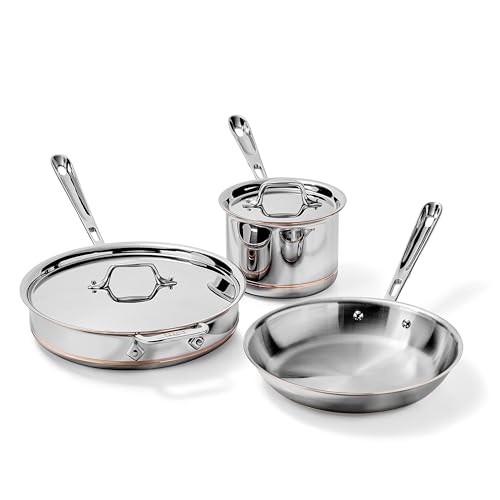
All-Clad Copper Core 10-Piece Cookware Set
Replacing a mismatched stack of pans sounds simple until uneven heating, awkward lids, and duplicate sizes start eating cabinet space. This collection takes a more disciplined route, pairing six practical vessels with four fitted lids and a fully bonded five-ply body. Its place among the best copper core stainless steel cookware comes from real copper sealed inside the construction, not a copper-colored exterior doing decorative duty. The price and weight demand a serious look, but the materials are aimed at precise cooking rather than quick showroom appeal.
All-Clad Copper Core 10-Piece Set
The lineup includes 8-inch and 10-inch fry pans, covered 2-quart and 3-quart saucepans, a covered 3-quart sauté pan, and a covered 8-quart stockpot. That spread handles quick breakfasts, sauces, grains, seared proteins, braises, pasta, and larger batches without tossing in filler pieces that rarely leave the cabinet. The smaller skillet suits eggs or a single portion, while the 10-inch pan has more breathing room for chicken cutlets, vegetables, or two steaks. It’s a balanced set, though a 12-inch skillet is noticeably absent.
The two saucepans make sense for kitchens that often have several components moving at once. Rice can simmer in the 2-quart pan while vegetables, soup, or a sauce cooks in the 3-quart vessel. Their fitted lids help control evaporation, and the narrower bases concentrate heat beneath smaller quantities. Still, anyone who mostly cooks one-pot meals may see those two sizes as more overlap than advantage.
The 3-quart sauté pan earns its spot through shape rather than novelty. A broad base supports browning, while straight walls contain liquid and reduce splatter during shallow frying or pan-sauce work. Add the lid and it shifts into braising duty without much fuss. The capacity is useful for moderate portions, but it can feel tight during large-batch meal prep.
An 8-quart stockpot rounds out the set with enough capacity for pasta, soup, corn, stock, or a sizable batch of chili. Large cookware gains less from rapid copper response than a saucepan does, yet even heating still helps during long simmers. The stockpot will also be one of the heaviest pieces once filled. Moving it from stove to sink requires attention, especially with hot water inside.
Real Copper Inside The Five-Ply Body
The defining feature is the fully bonded five-ply construction, which extends to the rim rather than stopping at a disc attached beneath the base. Stainless steel provides the food-contact surface and magnetic exterior, aluminum helps spread heat, and copper sharpens temperature response. Each layer handles a different job, and the combination creates a pan body that reacts faster than conventional stainless steel alone. That layered design is the central reason the set costs more than ordinary tri-ply cookware.
Copper’s practical value appears during recipes that change temperature halfway through cooking. A pan can move from a hard sear to a controlled simmer without holding excessive heat for ages. Cold ingredients also pull energy from cookware, and the conductive core helps the vessel recover more quickly after meat, vegetables, or liquid enters. Swift heat recovery matters because stalled heat often leads to steaming instead of browning.
The bonded walls support more consistent cooking near the edges, not only in the center above the burner. Sauces receive steadier heat as they climb the sides during stirring, and larger skillets are less likely to develop one aggressive hot ring. Burner size still matters, of course. A tiny flame beneath a broad pan can’t produce perfectly uniform heat simply because copper is present.
Copper responsiveness also makes careless heat management more obvious. These pans don’t need the highest burner setting for most jobs, and blasting them can overshoot the useful temperature quickly. Medium heat often supplies enough energy for searing once the pan is properly preheated. That adjustment may feel strange at first, particularly after years of using sluggish, lightweight cookware.
Searing On Polished 18/10 Stainless Steel
The cooking surface uses 18/10 stainless steel, a material chosen for durability, corrosion resistance, and nonreactive contact with food. Tomato sauce, wine, vinegar, and citrus can cook without touching the internal copper layer. The polished interior also supports strong browning because it tolerates high heat without relying on a synthetic coating. Browned fond stays available for deglazing, which gives pan sauces more depth than a slippery nonstick surface usually produces.
Food release depends on timing rather than magic. A preheated pan, a modest layer of fat, and reasonably dry ingredients make searing far less frustrating. Meat often releases naturally once a crust forms, while early poking can leave half the surface stuck behind. Stainless steel technique takes practice, but the payoff is better browning and fewer restrictions on utensils or oven heat.
Eggs, pancakes, and fragile fish expose the surface’s biggest limitation. They can cling if the pan is too cool, too hot, or short on fat, and even careful technique won’t mimic a fresh PTFE coating. Keeping one small nonstick skillet for delicate breakfast foods may still make sense. The All-Clad set is strongest with searing, sautéing, simmering, reducing, and oven finishing.
The polished finish looks sharp out of the box, yet it won’t stay untouched. Fine scratches, rainbow heat tint, cloudy mineral residue, and water spots are normal signs of use rather than structural failure. A stainless cleaner or diluted vinegar can restore much of the shine. Cosmetic maintenance takes effort, so cooks who prefer a permanently pristine surface may grow tired of polishing.
Handles, Rims, And Everyday Control
The vented stainless steel handles are double riveted for a permanent connection to each pan. Their long, sculpted shape gives the hand a defined grip and helps resist rotation while pouring. The vented design is meant to slow heat transfer during stovetop use. Even so, handles can become warm near the rivets, beside another active burner, or after a long simmer.
All-Clad’s handle profile divides opinion because the pronounced channel feels secure to some hands and sharp to others. The shape can provide leverage while tossing food or controlling a heavy saucepan, but prolonged lifting may become uncomfortable. A full sauté pan or stockpot magnifies that issue. Grip comfort matters more here than it does with lighter cookware.
Flared edges support drip-resistant pouring from the saucepans, sauté pan, and stockpot. Sauce, broth, and pasta water are less likely to crawl beneath the rim and streak down the polished exterior. The benefit sounds small until a hot reduction lands on the counter instead of the plate. Clean edges also make wiping the vessels easier after serving.
The stainless steel lids favor durability and oven compatibility over visibility. They won’t shatter or develop cloudy glass, but they require lifting whenever the food needs a visual check. That releases steam and can interrupt a gentle simmer. Their simple construction is sturdy, though cooks accustomed to glass lids may miss seeing what’s happening inside.
Stovetop And Oven Performance
The exterior stainless steel layer makes every piece compatible with induction, gas, electric, and ceramic cooktops. A flat base is especially important on induction and smooth glass, where direct contact affects heat transfer. The substantial construction helps the pans sit securely during stirring. Sliding them across glass, however, risks surface marks, so lifting is the safer habit.
Each piece is rated for oven and broiler use up to 600°F. That range supports stovetop-to-oven cooking without switching vessels or worrying about plastic handles. Steaks can finish under the broiler, braises can move into steady oven heat, and skillets can handle roasting or baking tasks. Every metal part becomes hot in the oven, including handles and lid grips.
High-temperature capability doesn’t mean maximum heat is always helpful. Copper conducts quickly, and empty cookware can become extremely hot before ingredients are ready. Moderate preheating protects food from scorching and reduces stubborn residue. A little restraint goes a long way with responsive cookware.
From a separate household angle, washing machines for rental properties address appliance durability and maintenance rather than cookware performance. The subject has no direct technical relationship to five-ply construction, searing, or copper heat control. Keeping those topics separate prevents an unrelated reference from being dressed up as a cooking benefit.
Pros That Justify The Higher Price
Precise heat control leads the strengths. The copper core responds quickly to burner adjustments, which helps protect butter, dairy, chocolate, and emulsified sauces from lingering heat. Even distribution also supports consistent browning across larger cooking surfaces. Less time is spent rotating ingredients to compensate for obvious hot patches.
Set balance is another plus. The collection includes useful fry pans, two saucepan capacities, a covered sauté pan, and a large stockpot without stuffing the box with tiny utensils or specialty inserts. Most routine cooking jobs are covered by a recognizable vessel. The pieces also share a consistent feel, lid design, and heating behavior.
Long-term durability strengthens the case for the investment. There’s no synthetic coating to peel, and the stainless surface tolerates metal utensils, acidic ingredients, deglazing, and high oven temperatures. All-Clad backs the cookware with a limited lifetime warranty, subject to its stated terms and exclusions. The pans may collect scratches, but ordinary cosmetic wear doesn’t automatically shorten their useful life.
Manufacturing adds another point of distinction. The cookware is described as bonded, engineered, and assembled in Canonsburg, Pennsylvania, continuing All-Clad’s production history dating to 1971. That detail doesn’t guarantee flawless results in every kitchen. It does identify where the bonded construction is developed and assembled, which matters to buyers who care about production origin.
Cons That Show Up After The Honeymoon
Price is the first hurdle and the hardest one to ignore. The set costs considerably more than basic stainless steel collections, and many simple meals won’t reveal a dramatic difference. Boiling pasta, warming canned soup, or steaming vegetables can be done competently in cheaper cookware. The premium pays off most during browning, reductions, and recipes that demand quick temperature corrections.
Weight follows close behind. Five bonded layers give each piece a substantial feel before food is added, and the larger vessels become cumbersome when full. The stockpot is especially demanding during draining, while the sauté pan can strain the wrist during one-handed pouring. Solid construction feels reassuring on the burner but less charming on the way to the sink.
Maintenance requires realistic expectations. Handwashing is recommended, and the polished surfaces show fingerprints, water marks, and heat tint more readily than brushed cookware. Cooked-on residue may need soaking or a stainless cleaner after aggressive searing. Owners who dislike visible wear may spend more time polishing than cooking.
The set also leaves a few practical gaps. There’s no 12-inch fry pan, no larger sauté pan, and no smaller stockpot for medium batches. The 8-inch skillet can feel cramped, while the 10-inch pan may still be undersized for searing four portions without crowding. Those omissions don’t make the collection incomplete, but they may lead to one or two additional purchases.
Care Habits That Preserve The Bonded Build
Medium burner settings handle most cooking because the copper core moves heat efficiently. Empty pans shouldn’t sit over intense heat for long, especially while ingredients are still being prepared. Adding oil after a brief preheat helps reveal whether the surface is ready. Controlled heat also limits discoloration and reduces the chance of burning residue onto the steel.
Hot pans need a short cooling period before washing. Sudden contact with cold water can create thermal stress, even in cookware designed for warp resistance. Warm soapy water and a non-scratch pad handle routine cleanup, while stubborn marks respond to a stainless cleanser. Handwashing also protects the polished finish from harsh dishwasher detergent.
Salt should dissolve in hot liquid rather than rest in crystals against the steel. Adding it after water reaches a boil and stirring promptly helps reduce the chance of small white pits. Those marks are usually cosmetic, but they can’t be polished away once formed. A simple timing change keeps the interior looking cleaner.
Stacking pans directly against one another can scratch their polished surfaces. Soft protectors, towels, or paper liners prevent rough bases and rivets from rubbing during storage. The cookware doesn’t require delicate handling, yet thoughtful habits keep an expensive set from looking battered too quickly. The internal copper core stays sealed inside the bonded body, so exposed-copper polishing isn’t part of the routine.
Legend 5-Ply Stainless Steel 12-Piece Cookware Set
Heavy pans can be a blessing at the burner and a nuisance at the sink, and this set doesn’t pretend otherwise. The Legend 12-piece collection leans into thick construction, coating-free stainless steel, and high oven tolerance rather than lightweight convenience. It belongs near discussions of best copper core stainless steel cookware because it targets similar goals such as steady heat and long service life, but the stated construction uses steel and aluminum layers, not a copper core. That material difference affects heat response, weight, and what buyers should realistically expect.
Legend 5-Ply Stainless Steel 12-Piece Set
The collection is built as a broad cookware package rather than a single specialty pan. Its appeal comes from having several coordinated vessels that share the same five-ply construction, polished surfaces, and oven-safe design. A matching set also removes the odd rhythm of switching between thin pans, coated pans, and older pots that all react differently to the same burner setting. Everything follows roughly the same heat pattern, which makes daily cooking more predictable.
That consistency helps during a busy meal with several burners running. A sauce can simmer in one pot while vegetables sauté in another without every pan demanding a completely different technique. The heavier build should also feel stable while stirring thick chili, browning meat, or whisking a sauce. Still, a 12-piece package takes up real cabinet space, so the benefit depends on whether most pieces will actually earn their keep.
Set size can be both generous and excessive. A larger collection reduces the need to buy extra cookware later, but duplicate capacities may sit untouched in a smaller household. Lids also count toward the advertised piece total, which is standard practice but worth remembering before picturing 12 separate cooking vessels. The practical value rests more on the assortment than the number printed on the box.
Storage deserves some thought because thick stainless cookware doesn’t nest as neatly as lightweight aluminum. Riveted handles and fitted lids create awkward angles, and stacked polished surfaces can scratch one another. Soft pan protectors or thin towels can reduce that wear. The set is meant to be used hard, but there’s no sense making the cabinet look like a metal avalanche waiting to happen.
Five-Ply Heating Without A Copper Core
Legend describes the body as five layers of stainless steel and aluminum. Stainless steel supplies strength, corrosion resistance, and the food-contact surface, while aluminum spreads heat more readily through the base and walls. That combination is a familiar route to even cooking because stainless steel alone transfers heat too slowly for precise stovetop work. Bonding the metals together helps reduce the concentrated hot ring common in thin cookware.
The product details claim food cooks evenly from edge to center with no hot spots. Real kitchens introduce burner size, pan placement, ingredient temperature, and heat level, so no cookware can erase every variable. Even so, a thick bonded body usually handles temperature distribution better than a thin single-layer pan. Heat consistency becomes especially useful with pancakes, pan sauces, rice, and large portions of meat that expose uneven zones quickly.
This set isn’t confirmed copper-core cookware, and that distinction shouldn’t be brushed aside. Copper reacts to burner changes faster than aluminum, so true copper core stainless steel cookware generally offers quicker temperature correction during delicate sauces or sugar work. Legend’s aluminum layers may still spread heat steadily, but they won’t necessarily deliver the same rapid response. The comparison is less about good versus bad and more about speed versus heat retention.
Thicker cookware can hold heat after the burner is lowered, which helps maintain a strong sear but can punish hesitation. A sauce may continue bubbling after the knob turns down, and eggs can overcook if they remain in the pan too long. The set rewards cooks who anticipate temperature changes rather than reacting at the last second. Once that rhythm clicks, the extra thermal mass becomes a useful tool instead of a stubborn obstacle.
Three-Millimeter Build And Heat Retention
The stated 3mm thickness is a major part of the set’s personality. That substantial body should resist warping better than thinner cookware during repeated heating, especially on induction and smooth glass cooktops where a flat base matters. Thick pans also recover steadily after cold ingredients hit the surface. A crowded batch of chicken won’t cool the metal as dramatically as it might in a featherweight skillet.
Heat retention helps with browning because the surface stays hot while food releases moisture. Mushrooms are less likely to stew in their own liquid, and steaks have a better chance of developing color before the pan temperature falls. The flip side is slower cooling. Thermal mass gives stability, but it also demands closer attention once food approaches the desired doneness.
Weight comes along for the ride. A 3mm stainless set can feel reassuring on the stove and cumbersome during washing, pouring, or cabinet storage. A saucepan filled with soup becomes noticeably heavier, while a large skillet loaded with food may challenge one-handed tossing. Hollow cast handles may reduce some bulk, but they can’t make a thick five-ply vessel feel light.
The heavy build also changes burner habits. Maximum heat is rarely necessary because the pan stores and spreads energy efficiently once warmed. Medium heat usually handles sautéing and searing after a proper preheat. Using full power by default can scorch oil, discolor stainless steel, and glue residue to the surface before dinner gets a fair start.
Coating-Free Stainless Steel Cooking
Food contacts polished stainless steel rather than a synthetic nonstick layer. That means there’s no coating to peel, scratch through, or lose release after repeated high-heat use. Metal utensils, acidic sauces, and oven cooking fit the material well. The surface is durable, but it asks for technique in return.
Preheating and oil matter. A cold stainless pan tends to grab proteins, while an overheated one can burn fat before food settles into place. A brief preheat followed by a thin layer of oil gives meat a better chance to release after a crust forms. Food release depends on timing, surface temperature, and patience rather than a slippery coating.
Eggs and delicate fish remain the tricky customers. They can stick even with decent technique, especially during rushed breakfasts or low-fat cooking. A separate coated skillet may still make sense for those jobs. Legend’s strength lies more in searing, sautéing, braising, boiling, reducing, and oven finishing than in effortless omelets.
The absence of a coating also removes temperature restrictions commonly attached to nonstick cookware. High oven heat, metal tools, and aggressive deglazing won’t expose a fragile film beneath the food. Scratches may appear over time, but they’re usually cosmetic. Long-term durability matters more here than keeping every surface mirror-bright.
Stovetop Range And 800-Degree Oven Use
The cookware is listed as compatible with gas, electric, induction, and glass cooktops. That broad compatibility makes the set easier to keep through a future kitchen change. A magnetic stainless exterior supports induction, while the flat base should sit securely on smooth surfaces. Heavy pans still need lifting rather than dragging to reduce the chance of marks on glass.
An oven rating up to 800°F is unusually high for household cookware. It allows stovetop searing followed by oven finishing without switching pans, and it removes concerns about plastic grips or low-temperature coatings. Most home recipes won’t approach that limit, but the rating leaves plenty of breathing room for broiling, roasting, and high-heat baking. Naturally, every exposed metal part becomes dangerous to touch once the pan enters the oven.
The high rating also makes the set suitable for techniques that punish weaker handles or bonded bases. A skillet can move beneath a broiler, while a covered pot can handle a long braise. That flexibility reduces cleanup because one vessel can manage multiple stages. It also means potholders must become second nature, since a stainless handle offers no visual warning after oven use.
From a separate household angle, desktop air purifiers concern localized air circulation rather than cookware materials or heat performance. The subjects don’t share a direct technical connection. Keeping that reference separate avoids inventing a kitchen benefit where none exists.
Handles, Rims, And Everyday Ergonomics
The set uses cast hollow handles secured with rivets. Hollow construction can slow heat transfer better than a solid metal bar, helping the grip remain cooler during ordinary stovetop use. Rivets create a durable mechanical connection that doesn’t depend on screws loosening over time. They also create small interior bumps where sauce or food residue can collect.
Handle temperature still depends on burner size and cooking duration. A gas flame curling around the pan, a nearby active burner, or a long simmer can warm the grip substantially. Oven use makes every handle hot, no matter how well it behaves on the stovetop. Stay-cool design should be treated as reduced heat transfer, not a promise of bare-hand safety.
The sealed flared rims support cleaner pouring. Broth, sauce, and pasta water are less likely to creep over the edge and run down the exterior. That detail saves more annoyance than it seems, especially while transferring hot liquid into a narrow container. A tidy pour also reduces cooked-on streaks that later demand scrubbing.
Polished stainless steel looks sharp but shows fingerprints, water spots, and fine scratches. Hand washing is recommended, partly because dishwasher detergent can dull the finish and leave mineral haze. A soft sponge handles routine cleaning, while stubborn residue responds to soaking and a stainless cleaner. The pans are sturdy enough for daily use, though keeping them spotless takes more effort than simply keeping them functional.
Pros That Stand Out In Daily Cooking
Even heat distribution is the clearest advantage. Five bonded layers and a thick body should reduce abrupt hot spots and help large portions cook more consistently. Steaks, pancakes, and sauces all benefit from a surface that behaves similarly across the center and edges. Less pan rotation means less fuss during crowded stovetop work.
Coating-free construction supports high heat, metal utensils, acidic ingredients, and long-term use. There’s no synthetic cooking layer that gradually loses release or becomes vulnerable after a scratch. Stainless steel develops marks, but cosmetic wear doesn’t usually destroy performance. That makes the set better suited to hard searing and frequent deglazing than delicate coated cookware.
Oven flexibility is another strong point. The 800°F rating exceeds the needs of most recipes and allows seamless movement from burner to oven or broiler. A single skillet can brown meat, roast it, and hold a pan sauce afterward. Fewer vessel changes mean fewer dishes and less interruption during cooking.
The heavy structure should also resist warping under ordinary use better than thinner alternatives. Flat cookware matters on induction and glass because a bowed base can heat unevenly or spin during stirring. The 3mm build gives the set a planted feel. That solidity can make vigorous whisking and scraping feel more controlled.
Cons And Tradeoffs Worth Knowing
No copper core is the key limitation relative to the stated keyword. The cookware relies on stainless steel and aluminum, so buyers seeking the fastest possible heat response may prefer a verified copper-core design. Aluminum still conducts well, but it generally reacts less quickly than copper. The Legend set focuses more on evenness and retention than split-second adjustment.
Weight may become tiring during cleanup and serving. Thick walls, metal lids, and riveted handles create cookware that feels substantial before ingredients are added. A full stockpot or sauté pan can be awkward to move safely. Smaller hands or limited wrist strength may turn that durability into daily friction.
Sticking is another realistic drawback. Stainless steel rewards careful preheating, enough oil, and patience, but it doesn’t forgive rushed technique. Eggs, fish, and starchy foods can cling badly if the temperature misses the mark. Cleanup after hard searing may require soaking rather than a quick wipe.
The polished finish also demands maintenance if appearance matters. Heat tint, cloudy spots, and fine scratches are normal, especially after high-temperature cooking. Hand washing takes longer than tossing everything into the dishwasher. Owners who want cookware to look untouched may spend more time polishing than expected.
Care Habits That Keep It Working Well
Moderate heat suits the thick bonded construction. Let the pan warm gradually, add oil once the surface is ready, and avoid leaving it empty over maximum power. That routine reduces scorching and makes cleanup easier. It also gives the aluminum layers time to spread heat across the full cooking surface.
Hot cookware should cool briefly before washing. Sudden cold water can create thermal stress, even in a pan designed to resist warping. Warm soapy water and a non-scratch pad handle most residue, while a short soak loosens tougher deposits. Stainless cleaner can address discoloration without relying on brutal scrubbing.
Salt is best added after liquid heats, then stirred promptly until dissolved. Crystals sitting against stainless steel can contribute to pitting over time. Those tiny marks are usually cosmetic, but prevention costs almost nothing. Simple seasoning habits help preserve the polished interior.
Stacked storage needs a barrier between pieces. Towels, felt protectors, or paper liners keep rough bases and rivets from scratching polished surfaces. The cookware is built for hard use, but careless stacking can make a new set look worn in a hurry. Proper storage also prevents heavy pans from shifting and chipping nearby glass lids or cabinet shelves.

Top Rated Best Quality Range Hoods: 2026 Expert Picks
The 12 Best Small Solar Generators 2026

10 Best Quality Semi Automatic Washing Machine of 2026 For Leak-Free Laundry

11 Best Small Washer Machine of 2026 For Everyday Laundry

12 Best Vibration Pads For Washing Machine of 2026 To Stop Walking and Shaking

11 Best Selling Front Load Washing Machine of 2026 For Quiet Odor-Free Laundry

11 Best Washing Machine For King Size Bedding of 2026 To Prevent Cycle Errors

10 Best Small Front Loader Washing Machine of 2026 For Tight Closets






