
Best Cooking Utensil Set for Nonstick Cookware 2026

A reliable best cooking utensil set for nonstick cookware should protect the pan before it tries to impress anyone with flashy colors or an oversized piece count. Hard metal edges can scrape a delicate coating, while rough seams may leave small marks that grow worse with repeated use. Silicone, wood, and carefully finished nylon are gentler choices, but each material behaves differently around heat, stains, odors, and heavy foods. The right set balances surface protection, control, cleanup, and storage without filling the drawer with tools that rarely leave it.
Food-grade silicone utensils feel soft against coated skillets and usually handle stirring, folding, scraping, and serving without making that awful scratching sound. A firm inner core matters, though, because a floppy turner can buckle under a thick burger or loaded pancake. One-piece construction also deserves attention since handles with removable heads may trap water, grease, or dish soap in hidden gaps. Still, silicone isn't flawless, and pale pieces can pick up color from tomato sauce, curry, or chili oil after enough meals.
Wooden utensils bring a firmer feel and won't conduct much heat toward the hand, which helps during long batches of sauce or risotto. Their rounded edges are kind to nonstick surfaces, and a broad wooden spoon can move dense mixtures more confidently than a thin silicone spoon. But wood asks for a little care. Leaving it in a sink, running it through harsh dishwasher cycles, or storing it while damp may lead to rough grain, warping, or lingering smells.
Nylon cooking tools often cost less and feel lighter, yet heat limits can become a sticking point. A turner resting against a hot pan rim may soften or develop a rough edge, and that damaged edge can become harder on the coating than expected. Heat ratings should match real cooking habits, especially for searing, shallow frying, or recipes that keep a utensil close to the burner. Well-finished nylon still works nicely for eggs, crepes, and gentle sautéing, but it isn't always the safest bet for high-heat routines.
Piece count can be misleading, plain and simple. A practical nonstick cookware utensil set usually needs a slotted turner, solid spoon, slotted spoon, ladle, flexible spatula, pasta server, and dependable tongs. Extra brushes, tiny spreaders, or duplicate spoons may look generous in the package but add clutter without solving everyday problems. A compact set with sturdy, distinct tools often earns its keep faster than a huge bundle built around numbers.
Handles deserve a closer look because greasy fingers expose weak design quickly. Textured grips, balanced weight, and enough length to keep hands away from steam make meal prep feel less fussy. Hanging loops help in narrow kitchens, while a countertop holder keeps frequently used pieces within reach, though the holder itself needs enough drainage to avoid collecting murky water. In the end, realistic expectations matter: Gentle tools can extend the life of a nonstick pan, but they can't rescue a coating damaged by overheating, abrasive cleaning, or years of wear.

- TAR Score9.6
TAR Score is a ranking system developed by TopAppliancesReviews.com. TAR score has no relationship or impact from any manufacturers or sales agent websites. Learn more
- BrandHOTEC

- TAR Score9.6
TAR Score is a ranking system developed by TopAppliancesReviews.com. TAR score has no relationship or impact from any manufacturers or sales agent websites. Learn more
- BrandKAKAMINA

- TAR Score9.4
TAR Score is a ranking system developed by TopAppliancesReviews.com. TAR score has no relationship or impact from any manufacturers or sales agent websites. Learn more
- BrandAstercook
- TAR Score9.2
TAR Score is a ranking system developed by TopAppliancesReviews.com. TAR score has no relationship or impact from any manufacturers or sales agent websites. Learn more
- BrandBESTZMWK
- TAR Score9.2
TAR Score is a ranking system developed by TopAppliancesReviews.com. TAR score has no relationship or impact from any manufacturers or sales agent websites. Learn more
- BrandYoehka

- TAR Score9.2
TAR Score is a ranking system developed by TopAppliancesReviews.com. TAR score has no relationship or impact from any manufacturers or sales agent websites. Learn more
- BrandCAROTE

- TAR Score9.2
TAR Score is a ranking system developed by TopAppliancesReviews.com. TAR score has no relationship or impact from any manufacturers or sales agent websites. Learn more
- BrandAOTHOD

- TAR Score9.0
TAR Score is a ranking system developed by TopAppliancesReviews.com. TAR score has no relationship or impact from any manufacturers or sales agent websites. Learn more
- BrandUmite Chef

- TAR Score9.0
TAR Score is a ranking system developed by TopAppliancesReviews.com. TAR score has no relationship or impact from any manufacturers or sales agent websites. Learn more
- BrandUmite Chef

- TAR Score9.0
TAR Score is a ranking system developed by TopAppliancesReviews.com. TAR score has no relationship or impact from any manufacturers or sales agent websites. Learn more
- Brandoannao
Last update on 2026-08-15 / Affiliate links / Images, Product Titles, and Product Highlights from Amazon Product Advertising API
HOTEC 14-Piece Silicone Utensil Set Review
A crowded utensil drawer has a funny way of turning a simple dinner into a scavenger hunt. One spatula bends, another scratches the pan, and the whisk somehow disappears right when the sauce starts to lump. The best cooking utensil set for nonstick cookware should cut through that nonsense by keeping the essential tools together, protecting coated surfaces, and handling heat without turning soft around the edges. HOTEC’s 14-piece khaki set aims squarely at that everyday frustration with silicone heads, stainless steel reinforcement, a countertop holder, and a spoon rest that keeps drips from wandering across the stove.
HOTEC 14-Piece Silicone Utensil Set
The set covers a surprisingly broad range of kitchen jobs without leaning too heavily on duplicate pieces. Inside are a spoon rest, utensil holder, whisk, basting brush, ladle, pasta server, slotted spatula, medium turner, large turner, tongs, solid spoon, slotted spoon, scraper spatula, and skimmer. That mix gives the collection a practical edge because it handles flipping, stirring, draining, serving, brushing, whisking, and scraping without forcing one tool to do three jobs badly. The 14-piece assortment feels built around actual meal prep rather than inflated package numbers.
The three turner-style tools deserve attention because nonstick cooking often falls apart at the flipping stage. A narrow slotted spatula suits eggs and delicate foods, while the medium and large turners give broader support under pancakes, burgers, fish fillets, or grilled sandwiches. That range helps prevent the familiar half-flipped mess caused by a tool that’s too small or too flexible. Better surface coverage means less poking, fewer repeated attempts, and a cleaner release from coated pans.
The ladle, solid spoon, slotted spoon, pasta server, and skimmer round out the set for soups, sauces, vegetables, noodles, and fried foods. Those pieces reduce the temptation to grab a metal spoon from another drawer, which is exactly how nonstick surfaces pick up little scratches over time. The silicone heads create a softer contact point while still giving enough shape for scooping and serving. Non-scratch utensil heads are the heart of the set, and they’re the main reason this collection makes sense beside coated cookware.
Heat Resistance And Cookware Protection
HOTEC lists the silicone as heat resistant up to 446°F, a useful ceiling for common stovetop tasks such as sautéing, scrambling eggs, simmering sauces, and pan-frying. That rating doesn’t mean a utensil should sit against a hot burner or rest in an empty skillet for ages, but it gives the set more breathing room than lightweight plastic tools that may soften near high heat. The practical benefit is confidence during busy cooking, especially when a spoon or turner briefly touches the side of a hot pan. No one wants to fish a warped spatula out of dinner.
The silicone heads also address the biggest concern surrounding nonstick cookware: preserving the cooking surface. Metal tools can leave marks quickly, while rough nylon edges may become abrasive after repeated heating and washing. Silicone is softer, smoother, and less likely to scrape through a delicate coating during normal use. Cookware protection matters because a nonstick pan only saves time if food still releases cleanly and cleanup remains easy.
A separate cookware reference fits naturally here because utensil material and pan construction work as a pair rather than isolated purchases. The broader relationship between coated cooking surfaces and compatible tools appears in best non-stick induction cookware sets, where surface care remains part of the day-to-day ownership equation. HOTEC’s soft silicone heads make more sense beside those pans than rigid metal utensils that can defeat the point of the coating. Tool-to-pan compatibility is a small detail until scratches start showing up.
The stainless steel inside the handles adds welcome structure to the silicone exterior. Pure silicone tools can feel floppy under heavier food, particularly with thick burgers, dense pasta, or a loaded serving spoon. Reinforcement helps the utensils hold their shape and transfer pressure more predictably from the hand to the food. Stainless steel support gives the set a sturdier feel without exposing the cookware to metal contact at the working end.
Countertop Storage And Daily Convenience
The included stainless steel holder solves a common storage problem before it becomes a drawer problem. HOTEC describes it as heavy enough to remain steady on the counter, which matters because a lightweight caddy can tip when several long-handled utensils lean in the same direction. Keeping the core tools upright and visible also makes cooking feel less fussy. Countertop access means the turner, spoon, or ladle is within reach instead of buried under measuring cups and bottle openers.
The spoon rest is more useful than it first appears. Sauce-covered utensils usually end up on a plate, paper towel, pan lid, or bare counter, and none of those choices is especially tidy. A thick silicone rest gives wet spoons and spatulas a stable place to land between stirs. Cleaner prep space sounds minor, yet it can make a noticeable difference during recipes that require constant stirring or several utensils at once.
The khaki color brings a softer, calmer look than bright rainbow sets, though appearance is obviously a matter of taste. Neutral tones tend to sit comfortably beside stainless steel appliances, wooden cutting boards, cream countertops, and darker cookware. The holder keeps the matching set visually organized rather than scattered around the kitchen. A coordinated countertop setup won’t improve the food, but it can make a busy cooking area feel less cluttered.
Space remains a tradeoff. A 14-piece set with a freestanding holder claims a permanent footprint on the counter, and cramped kitchens may not have much room to spare. Storing everything in a drawer is possible, but that weakens one of the product’s strongest conveniences. The holder is most valuable where counter access matters more than preserving every inch of workspace.
Cleaning, Materials, And Maintenance
HOTEC states that the utensils are dishwasher safe, which takes some sting out of cleaning after oily sauces, scrambled eggs, or sticky batters. Silicone generally releases food more easily than unfinished wood, and it doesn’t need the drying care that wooden tools demand. Hand washing should also be straightforward because the heads don’t rely on porous grain that can absorb moisture. The easier the cleanup, the more likely the full set gets used instead of becoming countertop decoration.
The food-grade silicone is described as BPA free, while the internal stainless steel is presented as non-rusting. Those details matter most in a set that will repeatedly contact hot, wet, and acidic foods. Silicone won’t behave exactly like wood or nylon, though. Light-colored heads may gradually show stains from tomato sauce, turmeric, chili oil, or deeply colored marinades, so the khaki finish may reveal some evidence of regular cooking over time.
Dishwasher convenience also comes with a small practical caution. Long utensils can shift around inside a crowded machine, and silicone pieces sometimes hold small droplets in curves or handle openings after the cycle ends. Giving them space and allowing them to dry fully before returning them to the holder helps keep the storage area fresh. Simple drying habits matter more than aggressive scrubbing.
The whisk and tongs introduce different cleaning needs from the solid silicone tools. Whisk wires can trap thick batter, melted cheese, or egg residue, while tongs have hinges and narrow contact points that deserve a closer rinse. Neither issue is unusual, but the phrase “dishwasher safe” shouldn’t be mistaken for “nothing ever sticks anywhere.” Occasional spot cleaning is a realistic part of owning a mixed utensil set.
Strengths, Weaknesses, And Realistic Use
The clearest strength is the combination of soft silicone heads and reinforced handles. That pairing protects nonstick pans while avoiding the limp feel common in cheaper all-silicone tools. The broad selection also covers most everyday cooking without demanding extra purchases right away. For a new kitchen, a replacement set, or a move away from metal utensils, the package checks many practical boxes in one shot.
The turner selection is another strong point because different foods need different widths and shapes. A large pancake doesn’t behave like a fried egg, and a fish fillet doesn’t need the same support as sautéed vegetables. Providing three spatula-style tools reduces awkward compromises during cooking. Task-specific shapes improve control and help keep fragile food intact.
The main weakness is that fourteen pieces can still be more than some kitchens need. A cook who mainly uses one skillet and a saucepan may reach for only four or five tools regularly, leaving the rest to occupy space. The holder keeps everything together, but it doesn’t shrink the collection. Set size is a benefit only when the included variety matches the meals being cooked.
Silicone also has its own feel, and not everyone loves it. Some cooks prefer the rigid edge of a thin nylon turner or the firm response of wood, especially for scraping browned bits or working with dense dough. HOTEC’s stainless steel reinforcement should help, yet the silicone working ends will still feel softer than metal. Surface safety comes with a softer touch, and that tradeoff is worth understanding before expecting restaurant-style rigidity.
The set is best judged as a practical nonstick companion rather than a replacement for every kitchen tool. It isn’t meant for cutting, carving, crushing, or heavy-duty scraping, and the silicone heads should stay away from open flames or direct burner contact. Used for stirring, flipping, serving, draining, whisking, and brushing, the collection fits its role well. Realistic use keeps the utensils useful longer and gives coated cookware the gentler treatment it needs.
Best Silicone Turner Set For Nonstick Cookware
Flipping a soft egg with a stiff metal turner can feel like trying to lift tissue paper with a shovel. The food tears, the coating gets scraped, and breakfast suddenly becomes more annoying than it has any right to be. This five-piece collection approaches the best cooking utensil set for nonstick cookware question from a narrower angle by focusing entirely on spatulas made for lifting, turning, and sliding beneath delicate foods. Instead of padding the package with tools that may sit untouched, it supplies five distinct turner shapes for everyday pan work.
Five-Piece Silicone Turner Set
The set includes a long slotted turner, a wide slotted turner, a large pancake spatula, a silicone cookie spatula, and a long slotted fish turner. That range sounds repetitive at first glance, but the differences become useful once food size, weight, and fragility enter the picture. A wide pancake turner supports more surface area, while a narrow fish turner can slip beneath thin fillets without pushing them around the pan. Each shape has a clearer job than a generic one-size-fits-all spatula.
The long slotted model suits foods that release grease or moisture during cooking. Slots let excess oil drain back into the pan instead of following the food onto the plate, which is handy with burgers, fried vegetables, or bacon. The wider version offers more support under grilled sandwiches, larger eggs, or several small pieces moved at once. Drainage and surface coverage are small design differences, yet they change how cleanly food reaches the plate.
The large pancake spatula handles the broad, floppy foods that often fold over a narrow turner. Pancakes, omelets, quesadillas, and crepes benefit from a wider base because the food stays supported through the lift and flip. Less sagging means fewer torn edges and fewer awkward rescue attempts with a second utensil. Broad support is the standout advantage here, especially during breakfast cooking.
The cookie spatula brings a smaller working edge to the set. It can slide under cookies, brownies, small patties, or individual portions where a full-size turner feels clumsy. That tighter profile also helps around crowded baking sheets or compact skillets. Precision handling makes this piece more practical than it may look in the package.
Nonstick Protection Without A Flimsy Feel
The spatulas are made from 100 percent food-grade silicone, according to the supplied product details. Silicone creates a softer contact point than exposed metal, helping reduce the risk of scratches on coated pans during normal flipping and serving. That matters because nonstick cookware depends on a smooth surface to release food cleanly. A few rough tools can undo the convenience that made the pan appealing in the first place.
Softness alone isn’t enough, though. A turner that bends under a pancake or loaded burger quickly becomes frustrating, even if it never scratches the pan. The different sizes in this set let the cook match the utensil to the food rather than forcing a narrow spatula under something broad and heavy. Better tool matching improves control and reduces the twisting pressure that can damage delicate food.
The long fish turner is particularly relevant for fragile pieces. Thin fish fillets, fried eggs, and soft vegetable patties often break because the utensil can’t reach far enough underneath them. A longer, narrower shape spreads support along the food instead of concentrating pressure at one point. Gentler lifting helps preserve texture and presentation without requiring a metal blade.
Silicone does feel different from stainless steel or rigid nylon. The edge may not scrape deeply browned residue from a pan, and it won’t deliver the same stiff response as a commercial metal turner. That tradeoff is part of protecting nonstick surfaces rather than a hidden defect. Surface safety takes priority over aggressive scraping, so cooks who regularly deglaze stainless steel pans may still want a separate metal tool for that job.
Heat Resistance For Busy Stovetop Cooking
The stated 600°F heat resistance gives these spatulas a generous temperature margin for ordinary stovetop cooking. Eggs, pancakes, fish, burgers, and sautéed vegetables are typically handled well below that level, so brief contact with a hot pan shouldn’t create the same concern associated with low-heat plastic tools. The material is described as resistant to melting and warping during cooking. That extra tolerance is reassuring during rushed meals when a spatula rests against the pan edge for a moment.
High heat resistance still doesn’t make silicone indestructible. Direct contact with an open flame, a glowing burner, or a hot grill grate can expose any utensil to harsher conditions than routine pan cooking. Leaving the head pressed against an empty skillet for a long stretch also serves no practical purpose. Reasonable heat habits help preserve the utensil even when the material carries a strong temperature rating.
The heat rating becomes more useful in kitchens where low-cost nylon spatulas have softened or developed rough edges. A warped turner can lose its flat profile, making it harder to slide beneath eggs or pancakes. Roughened edges may also become less friendly to coated cookware over time. Shape retention under heat supports both better handling and gentler pan contact.
Cookware material still shapes the overall experience, and a related perspective appears in non-toxic stainless steel cookware sets, where higher-heat cooking and utensil compatibility follow a different set of tradeoffs. Stainless steel can tolerate metal tools, while nonstick coatings benefit from softer silicone edges. The five-piece set fits the latter situation more naturally, though its heat resistance also makes it useful around many conventional pans. Matching the utensil to the cooking surface remains more important than relying on one tool for every pan.
Grip, Control, And Everyday Handling
The spatulas use an ergonomic anti-slip handle intended to provide a more secure grip. That design matters when hands are damp, oily, or moving quickly between prep and stovetop work. A slippery handle can turn a simple flip into a dropped utensil or splattered pan. Better grip gives the wrist more control without demanding a tight, tiring squeeze.
Handle comfort also affects longer cooking sessions. Flipping batch after batch of pancakes or working through several fish fillets can make a thin, hard handle dig into the palm. An ergonomic shape spreads pressure more evenly and helps keep the utensil steady. Comfortable control becomes more noticeable during repetitive tasks than during a single quick egg.
The different turner lengths provide useful distance from hot oil and steam. A longer handle keeps fingers farther from the pan, while the extended head reaches beneath food without requiring the hand to hover over the heat. That extra reach is especially welcome during shallow frying or cooking on a crowded stovetop. Safer hand placement is an understated benefit that improves confidence around splattering food.
Size variety can also create a storage challenge. Five broad spatulas take more room than a mixed utensil set with narrow spoons and brushes, and the package details don’t mention a dedicated holder. A deep drawer, wall hooks, or a roomy countertop crock may be needed to keep the set organized. Storage space is the main practical tradeoff for a collection built around several wide turner heads.
Cleaning And Long-Term Practicality
The set is described as dishwasher safe, which keeps cleanup simple after greasy or sticky cooking. Silicone’s nonstick surface helps prevent egg, batter, cheese, and sauce from clinging as stubbornly as they might to textured wood. Hand washing should also be manageable with warm water and dish soap. That flexibility makes the utensils easier to fit into different cleanup routines.
Slots require a little more attention than solid spatula heads. Melted cheese, thick batter, or cooked egg can settle inside the openings, especially if the utensil sits unwashed after cooking. A quick rinse before food dries usually prevents that minor nuisance. Prompt rinsing keeps the slotted pieces from needing extra scrubbing later.
Silicone may gradually absorb stains or odors from strongly colored foods, depending on use and cleaning habits. Tomato sauce, turmeric, chili oil, and dark marinades can leave marks on lighter utensils even when the surface is clean. That doesn’t necessarily affect function, but it may matter to anyone who prefers spotless-looking tools. Cosmetic staining is a realistic limitation of many silicone kitchen products.
The five-piece format works best for kitchens that already have spoons, ladles, whisks, and tongs but need better tools for coated skillets. It isn’t a complete cooking collection, and it doesn’t pretend to cover stirring, serving soup, or handling pasta. Its strength lies in offering several flipping shapes without exposing nonstick pans to metal edges. Focused versatility makes the set useful for eggs, pancakes, fish, cookies, sandwiches, and other foods that depend on a clean lift.
Strengths And Limits In Real Kitchen Use
The strongest feature is the five-shape selection. Many utensil bundles include only one turner, forcing it to handle everything from a tiny egg to an oversized pancake. This set takes the opposite route and supplies tools with distinct widths and profiles. That approach improves food support without inflating the package with unrelated gadgets.
The 600°F heat rating is another meaningful strength, particularly for cooks tired of plastic spatulas softening near hot pans. Combined with silicone construction, it addresses two recurring frustrations at once: heat exposure and cookware scratching. The anti-slip handles add a third layer of practicality by improving control. Together, those features make the set feel purpose-built rather than randomly assembled.
The narrow focus is also its clearest weakness. Five spatulas can feel excessive in a small kitchen, especially where drawer space is tight or cooking habits rarely extend beyond simple eggs and sandwiches. A single medium turner might cover enough ground for occasional use. The full set earns its space only when different food sizes and textures appear regularly.
The silicone edges won’t satisfy every cooking style. Firm scraping, pressing smash burgers, or loosening heavily seared food may call for a more rigid metal turner on an appropriate cooking surface. Nonstick pans generally don’t benefit from that aggressive approach anyway, so the limitation aligns with the set’s intended role. Gentle flipping, safe contact, and easy cleanup are where these spatulas make the most sense.
Astercook 39-Piece Silicone Utensils Review
Kitchen drawers have a sneaky habit of collecting mismatched tools that bend, stain, scratch pans, or vanish right when dinner gets hectic. A broad collection can fix that mess, but only if the pieces feel useful rather than tossed in to inflate the count. The Astercook set approaches the best cooking utensil set for nonstick cookware category with 39 pieces, food-grade silicone heads, smooth wooden handles, and a stated heat tolerance of up to 446°F. That combination puts cookware protection, variety, and visual warmth at the center of the package.
Astercook 39-Piece Utensil Set
The 39-piece assortment is the first thing that separates this Astercook collection from smaller starter bundles. A large count can cover everyday cooking, baking, serving, and prep without requiring a second round of shopping for missing tools. That’s especially handy in a kitchen where one person is stirring a sauce while another is flipping food, brushing pastry, or handling baked goods. The real appeal isn’t the number printed on the box, though; it’s the chance to keep several jobs moving without washing the same spatula between every step.
Astercook uses food-grade silicone for the working ends and pairs it with wooden handles. Silicone gives the utensils a softer contact point against coated pots and pans, while wood adds firmness and a warmer grip than bare metal. The pairing also keeps the tools from looking overly industrial on an open rack or countertop holder. Black heads and natural handles bring a tidy, understated look that fits both modern and traditional kitchens without shouting for attention.
A set this large makes the most sense where cooking habits are varied. Simple breakfasts may use only a turner and spoon, while weekend baking or a holiday meal can pull several tools into action at once. Broad task coverage reduces the odds of reaching for a metal fork, serving spoon, or other pan-unfriendly substitute during a busy recipe. Still, anyone with a tiny drawer or limited counter space should pause and think about storage before welcoming 39 separate pieces into the room.
Silicone Heads And Nonstick Pan Protection
The strongest reason to consider this set is its soft silicone construction. Nonstick coatings can be damaged by sharp corners, exposed metal edges, and rough utensils that scrape across the cooking surface. Silicone moves more gently against the pan, helping preserve the smooth finish that lets eggs, pancakes, and sauces release with less sticking. That gentler contact won’t stop wear caused by overheating or abrasive cleaning, but it removes one common source of avoidable damage.
The supplied details describe a seamless design, which matters for more than appearance. Gaps between a handle and utensil head can trap food residue, oily water, or soap, particularly after thick batters and sticky sauces. A smoother transition leaves fewer awkward crevices to scrub and makes quick rinsing less of a chore. That’s the sort of practical detail that earns appreciation after dinner, when nobody feels like poking dried food out of a narrow joint.
Silicone also suits delicate foods that need a little patience rather than brute force. A softer spatula can slide beneath eggs, fish, crepes, or cookies without attacking either the food or the pan beneath it. Non-scratch handling becomes especially useful with newer cookware that still has a clean, intact coating worth protecting. On the flip side, silicone won’t scrape deeply browned residue as aggressively as a rigid metal turner, so this set favors gentler cookware and cooking methods over hard searing and heavy scraping.
Heat Resistance During Everyday Cooking
Astercook states that the utensils can handle temperatures up to 446°F without melting or warping. That rating covers common stovetop work such as simmering soup, sautéing vegetables, stirring sauces, and turning food in a hot skillet. It also offers more reassurance than low-cost plastic tools that may soften after resting against a warm pan edge. During a rushed meal, that extra margin can spare a utensil from becoming misshapen after a brief lapse in attention.
Heat resistance isn’t the same as fire resistance, naturally. Wooden handles and silicone heads should still stay away from open flames, glowing burners, and prolonged contact with an empty overheated pan. Careful placement matters because a high temperature rating describes the material’s tolerance, not permission to leave the utensil sitting in direct heat. A spoon rest or cool section of the counter remains the smarter parking spot between stirs.
The combination of silicone and wood also helps with hand comfort around hot cookware. Silicone doesn’t transfer heat as quickly as exposed metal, and wooden handles tend to remain more comfortable during longer stirring sessions. That can make a difference with risotto, gravy, custard, or any recipe that keeps a hand near the stovetop for several minutes. Lower heat transfer won’t replace sensible handling, but it helps the utensils feel calmer and less fussy during routine cooking.
Wooden Handles, Grip, And Storage
The smooth wooden handles give the set a firmer backbone and a more natural feel in the hand. Silicone-only utensils can sometimes feel overly flexible, particularly under dense foods or a fully loaded spoon. Wood adds structure without exposing the pan to metal at the working end. That mix supports better control while preserving the softer contact needed for nonstick cookware.
Astercook also includes easy-to-hang handles, according to the supplied description. Hanging storage can be a lifesaver in kitchens where drawer space is already packed with peelers, measuring spoons, and assorted gadgets. It also keeps frequently used pieces visible instead of buried beneath less useful tools. Open storage does come with a tradeoff, though, since exposed utensils may collect dust or cooking grease and need an occasional rinse before use.
Wood requires more attention than stainless steel or one-piece silicone. Long soaking, harsh dishwasher cycles, and storage while damp can encourage roughness, splitting, or discoloration over time. The product description emphasizes easy cleaning but doesn’t specifically state that the wooden handles are dishwasher safe, so careful hand washing is the more cautious approach. Basic wood care isn’t difficult, yet it’s worth factoring in for anyone who wants every kitchen tool to go straight into the dishwasher.
Odor Resistance And Cleanup Tradeoffs
The silicone is described as odor-resistant and stain-resistant, both useful claims for tools that may move between garlic, tomato sauce, curry, eggs, and sweet batter. Silicone generally doesn’t absorb moisture the way unfinished wood can, and a seamless head should be easier to wipe clean after thick or oily foods. That helps prevent yesterday’s dinner from making an unwanted appearance in today’s frosting. Realistically, strong pigments may still leave some cosmetic traces over time, especially on heavily used pieces.
Cleanup should be straightforward at the silicone end because food has fewer porous surfaces to cling to. Warm water, mild dish soap, and a soft sponge should handle most residue without rough scrubbing. Gentle cleaning also protects the finish of the wooden handles and keeps the silicone from being damaged by sharp cleaning tools. Letting each piece dry fully before storage is the small habit that keeps the collection feeling fresh.
Thirty-nine pieces also mean more items to wash after a large cooking session. That sounds obvious, but it’s easy to overlook when the set’s variety encourages grabbing a fresh utensil for every task. A smaller bundle naturally limits the cleanup pile, while this one trades simplicity for convenience during preparation. The maintenance burden depends less on the material and more on how freely the full collection gets used.
Strengths, Weaknesses, And Best-Fit Situations
The biggest strength is range without metal contact. A broad utensil selection can support multiple recipes while keeping hard edges away from nonstick cookware. The food-grade silicone, 446°F heat tolerance, and wooden handles create a sensible balance between protection, grip, and everyday durability. For a kitchen starting from scratch, that breadth may be more practical than buying individual pieces one by one.
The largest weakness is equally clear: 39 pieces require space. Apartment kitchens, compact drawers, and crowded countertops may struggle to store the whole collection neatly. Some pieces may also overlap in function, depending on how often baking, serving, or specialized prep happens. A big set earns its keep through variety, but it can become clutter if only a handful of tools see regular use.
The wooden handles bring character and control, though they also introduce more maintenance than all-silicone or stainless steel designs. Moisture needs to be managed, and careless soaking can shorten the handles’ useful life. That’s not a deal breaker, just a practical difference that deserves daylight. Appearance and comfort come with upkeep, so the set favors kitchens where hand washing a few tools doesn’t feel like pulling teeth.
The supplied internal reference points to a separate appliance category, so its relationship to these utensils is indirect rather than forced. Household equipment choices beyond cookware are discussed in American-made washing machine options, while this Astercook set stays focused on food preparation and pan care. Keeping those topics separate avoids pretending that one improves the other. Astercook’s value rests on utensil variety, heat tolerance, and nonstick protection, not on unrelated household purchases.
33-Piece Silicone And Stainless Steel Utensil Set Review
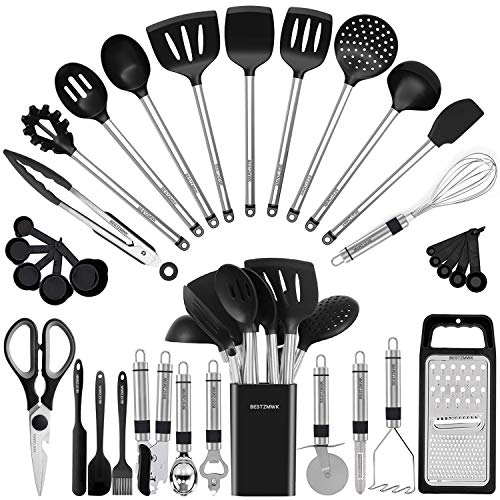
A missing can opener or bent spatula can derail dinner faster than a complicated recipe. This 33-piece collection tackles that headache by putting cooking, baking, measuring, opening, peeling, cutting, and serving tools into one coordinated package. For anyone sorting through the best cooking utensil set for nonstick cookware, the main draw is clear: soft silicone heads protect coated pans, while stainless steel handles add the firmness that lightweight plastic tools often lack. It’s a broad setup, though, so the real question isn’t whether it includes enough pieces, but whether those pieces fit the way the kitchen is actually used.
33-Piece Silicone Kitchen Utensil Set
The 33-piece lineup reaches far beyond the usual spoon-and-spatula bundle. It includes a slotted spatula, slotted spoon, flexible spatula, slotted turner, solid turner, pasta server, solid spoon, kitchen tongs, draining spoon, whisk, deep soup ladle, brushes, a peeler, pizza cutter, bottle opener, can opener, grater, scissors, measuring cups, measuring spoons, smaller spatulas, and a holder. That breadth gives the set a starter-kitchen feel rather than limiting it to stovetop utensils. A single package can cover scrambled eggs in the morning, pizza at lunch, soup at dinner, and a batch of cookies without sending anyone rummaging through three different drawers.
The variety also reduces the temptation to improvise with tools that aren’t suited to coated cookware. A metal fork may seem harmless for lifting a burger, and a dinner spoon might appear good enough for stirring sauce, but repeated contact can leave marks on softer surfaces. Dedicated silicone tools keep those shortcuts from becoming routine. The set’s biggest practical advantage is having the right type of utensil close at hand before a poor substitute reaches the pan.
A package this large can still be overkill in a compact kitchen. Several pieces overlap in function, and measuring tools, scissors, openers, and a grater don’t belong beside every stove. More pieces mean more storage decisions, plain and simple. The included holder helps with daily utensils, but the full collection will probably need drawer, cabinet, or hanging space beyond that countertop container.
Silicone Heads Protect Coated Cookware
The non-scratch silicone heads are the central reason this set belongs in a discussion about nonstick cookware. Silicone makes softer contact with coated skillets, saucepans, and bakeware than exposed stainless steel. That matters during repetitive motions such as stirring, scraping around corners, lifting eggs, or turning pancakes. One careless scrape may not ruin a pan, but daily friction from hard-edged tools can gradually wear away the slick surface that makes cooking and cleanup easier.
Flexible silicone also slips around curved pan walls more naturally than a stiff metal spoon. A scraper can collect sauce from the sides, while a soft turner can work beneath delicate foods without digging into the coating. Gentle contact and flexible edges help reduce food waste as well as cookware wear. Batter, gravy, melted cheese, and thick sauces are easier to gather when the utensil bends slightly instead of leaving a stubborn layer behind.
Silicone isn’t the right material for every job, and that’s worth saying out loud. It won’t carve through deeply browned residue like a thin metal turner, nor will it provide the rigid leverage needed for aggressive scraping. Pan protection comes with a softer working edge, which suits nonstick surfaces but may feel less satisfying on uncoated stainless steel or cast iron. The material fits gentle flipping, stirring, serving, and scraping much better than hard searing or smash-burger duty.
Stainless Steel Handles Add Structure
The handles use 304 stainless steel, according to the supplied product details, giving the utensils more backbone than all-plastic designs. Thin plastic handles can flex under a loaded spoon or heavy portion of pasta, while wood may crack if it’s soaked, dried carelessly, or knocked around for years. Stainless steel offers a firmer feel and doesn’t absorb water, odors, or cooking oils. That structural difference is especially noticeable with the ladle, turners, tongs, and pasta server, where pressure travels through the handle during use.
The combination of steel handles and silicone heads creates a useful split between strength and surface safety. The hand gets a sturdy grip, while the pan contacts the softer end. Reinforced control without exposed metal at the head is the set’s defining construction choice. It avoids the flimsy feel of bargain plastic utensils without asking nonstick cookware to endure a hard steel edge.
Metal handles can transfer more heat than wood or thick silicone, so placement still matters. Leaving a utensil leaning inside a hot pot for an extended stretch may warm the handle, particularly near the metal connection point. Smart resting habits are the easy fix: use the holder, hang the tool, or place it on a spoon rest between stirs. The material is sturdy, but it doesn’t make careless stovetop placement a good idea.
A Broad Mix For Cooking And Prep
The core stovetop pieces handle most everyday meals without much fuss. Slotted and solid turners cover eggs, pancakes, burgers, and sandwiches, while the slotted spoon and draining spoon handle vegetables or fried foods that need excess liquid left behind. A pasta server, deep ladle, whisk, and tongs round out the heavier rotation. Task-specific shapes keep one utensil from being forced into jobs it handles poorly.
The prep tools stretch the set beyond the stove. A peeler, grater, scissors, measuring cups, measuring spoons, bottle opener, can opener, pizza cutter, and brushes support the small jobs that often interrupt cooking. That mix can be particularly useful in a first apartment or recently stocked kitchen where the missing basics become obvious one recipe at a time. Wide coverage saves separate purchases, although established kitchens may already own several of these pieces.
The smaller spatulas and brushes help with baking, glazing, scraping jars, and spreading sauces. They may not see daily use, but they fill gaps that full-size turners and spoons can’t handle neatly. A narrow spatula reaches into containers, while a brush distributes melted butter, oil, marinades, or egg wash without pouring too much in one spot. Small tools solve small annoyances, and those annoyances tend to appear right when both hands are busy.
Plastic-Free Construction And Material Claims
The supplied description states that the set contains no plastic and is free of BPA and latex. That construction will appeal to kitchens trying to reduce reliance on rigid plastic tools that may bend, stain, or feel rough after repeated heating. Silicone and stainless steel each bring different strengths, with silicone protecting the cookware and steel keeping the handle firm. The result is a material mix built around durability and easier pan care rather than the lowest possible weight.
“Plastic-free” doesn’t mean maintenance-free, of course. Silicone can collect a light greasy film if it isn’t washed thoroughly, while stainless steel may show water spots after air drying. Routine soap-and-water care keeps both materials looking cleaner and feeling less slick. Strongly colored foods may also leave cosmetic staining on lighter silicone pieces, though the product details don’t specify the set’s long-term stain behavior.
The manufacturer describes the utensils as resistant to bending, breaking, and rusting compared with common plastic, wooden, and metallic alternatives. Those are design intentions rather than proof that any kitchen tool will literally last forever. Realistic durability still depends on heat exposure, cleaning habits, storage, and how much force gets applied. A whisk, peeler, or can opener experiences different stresses from a spoon, so the whole set shouldn’t be judged by one blanket durability promise.
Dishwasher Cleaning And Storage
The utensils are described as dishwasher safe, which makes the large piece count easier to live with. Grease, oil, batter, and sauce can pile up quickly during a multi-dish meal, and hand washing thirty-plus tools would get old in a hurry. Dishwasher compatibility turns the set into a more practical daily option rather than a collection saved for occasional use. Silicone’s smoother surface should also release many foods without prolonged soaking.
Some pieces will still benefit from a quick rinse before loading. Whisks can trap egg or batter between wires, graters hold shreds in narrow openings, and can openers collect residue around the cutting wheel. Prompt rinsing prevents dried buildup and keeps small moving parts from becoming sticky. Dishwasher safe doesn’t mean every crevice magically empties itself.
The handle holes support hanging storage, which can free up drawer space and keep commonly used tools visible. The included holder offers another option for spatulas, spoons, and tongs that stay in regular rotation. Flexible storage is a real strength, but hanging thirty-three pieces would create more visual clutter than most kitchens need. A sensible setup would keep daily tools near the stove and store measuring or prep accessories elsewhere.
Everyday Strengths And Practical Weaknesses
The strongest feature is the combination of scope and cookware protection. Few sets cover this many cooking and prep jobs while also centering silicone heads for coated pans. The stainless steel handles address the sagging and bending that can plague light plastic tools. For a kitchen missing most of its basics, the package can reduce the hassle of building a collection piece by piece.
The biggest drawback is clutter. A person who already owns measuring cups, scissors, peelers, openers, and baking tools may end up with duplicates that rarely leave the drawer. Thirty-three pieces only add value when the variety gets used. Otherwise, the generous count becomes a storage problem dressed up as convenience.
The set also won’t replace specialized heavy-duty tools. Silicone turners aren’t meant for forceful scraping on stainless steel pans, and a bundled grater or can opener may not match the feel of a dedicated full-size model. Broad usefulness differs from specialized performance, so expectations should stay grounded. This collection aims to cover many ordinary jobs competently, not dominate every single one.
How The Unrelated Reference Fits
The supplied internal path points to a blender topic rather than cookware or utensils, so forcing a connection would muddy the review. A separate appliance reference appears in Vitamix E310 pricing information, while this 33-piece set remains focused on hand tools used for cooking, baking, measuring, opening, and serving. The topics share a kitchen setting, but they solve different problems and shouldn’t be treated as interchangeable purchases.
The utensil set earns attention through silicone pan protection, sturdy stainless steel handles, dishwasher compatibility, and a broad mix of tools. Those features matter most where mismatched gadgets, scratched cookware, and missing prep pieces keep slowing down routine meals. A smaller kitchen may prefer a tighter collection, but a newly stocked space can put much more of the package to work. The usefulness depends less on the headline number and more on whether cooking habits genuinely call for that range.
The most sensible expectation is a capable all-around starter collection with a few inevitable overlaps. Daily staples such as the turners, spoons, ladle, tongs, whisk, and pasta server are likely to carry most of the workload, while the openers, measuring pieces, brushes, and specialty accessories fill occasional gaps. Nonstick-safe heads and firm handles remain the practical core. Everything else adds convenience, provided there’s enough room to keep it organized.
Yoehka 4-Piece Silicone Utensil Set Review
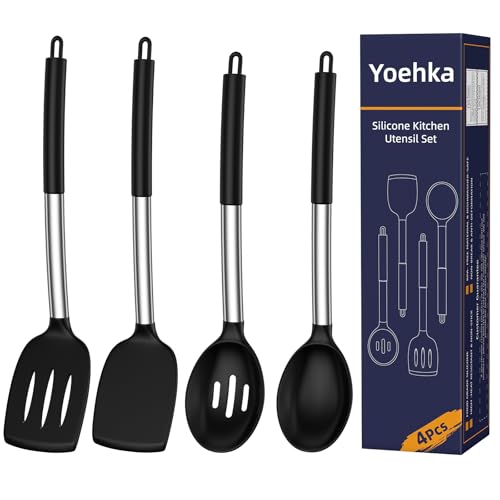
A small utensil set has nowhere to hide. Every piece needs to earn its spot, especially in a kitchen where drawer space is tight and coated pans need gentler treatment than metal tools can provide. The Yoehka collection takes a focused route within the best cooking utensil set for nonstick cookware category by supplying four everyday essentials rather than a crowded bundle of specialty gadgets. With two spoons, two turners, silicone working ends, stainless steel handles, and a stated heat resistance of 446°F, the set aims to handle the jobs that show up most often without turning storage into a puzzle.
Yoehka 4-Piece Silicone Utensil Set
The package includes a solid spoon, slotted spoon, slotted turner, and solid turner. That’s a lean lineup, but the choices make sense for routine stovetop cooking. The spoons cover stirring, scooping, draining, and serving, while the turners handle eggs, pancakes, vegetables, burgers, and other foods that need to be lifted or flipped. Nothing here feels decorative, and that practical restraint is refreshing after seeing sets that count bottle stoppers and tiny brushes as major cooking tools.
The solid spoon works best for sauces, soups, stews, rice, and dishes where liquid needs to stay with the food. Its slotted partner lets broth, grease, or cooking water fall away before the food reaches the plate. Two spoon styles may sound basic, yet they prevent the awkward habit of using one utensil for every task and dripping liquid across the counter. A simple tool that suits the job often saves more frustration than a flashy accessory used twice a year.
The two turners follow the same sensible logic. A solid turner supports softer or saucier foods, while the slotted version lets excess oil drain as food is lifted. Eggs, pancakes, grilled sandwiches, and sautéed vegetables all benefit from a broad, smooth surface that won’t scrape the pan beneath them. Focused versatility is the set’s main strength, though anyone needing a whisk, ladle, tongs, or scraper will have to add those separately.
Heat Resistance And Stovetop Control
Yoehka states that the silicone can withstand temperatures up to 446°F. That rating provides a comfortable margin for common tasks such as frying eggs, sautéing vegetables, simmering sauces, and stirring thick stews. It also addresses a familiar problem with lightweight plastic tools that soften, curl, or develop rough edges after repeated exposure to hot pans. A utensil that keeps its shape is easier to guide and less likely to drag awkwardly across food or cookware.
Heat resistance doesn’t mean the tools should be left against an open flame or parked inside an empty hot skillet. Silicone handles brief contact with hot cookware well, but direct burner exposure is a different story altogether. Good stovetop habits still matter, so resting the utensils on a spoon rest or cool counter area will do more for longevity than relying solely on the temperature rating. No material benefits from being forgotten beside a flame.
The supplied description also emphasizes a balance between sturdiness and flexibility. That balance matters because a spoon needs enough backbone to move thick chili or stew, while a turner should flex enough to slide beneath a delicate egg without bulldozing it across the pan. Controlled flexibility helps the tool follow the curve of the cookware while still responding to pressure from the hand. Too rigid feels harsh, too soft feels useless, and this set is designed to sit somewhere in the middle.
The ergonomic soft-grip handles are intended to stay cool and reduce hand fatigue. That may not seem like a big deal during a two-minute egg, but it matters more during longer recipes that demand steady stirring or repeated flipping. A secure grip also helps when hands are damp or lightly coated with oil. Comfort and control work together, since a utensil that feels stable requires less squeezing and fewer awkward wrist adjustments.
Protection For Nonstick Cookware
The silicone working ends are the reason this set fits the best cooking utensil set for nonstick cookware discussion so naturally. Coated pans depend on a smooth cooking surface, and exposed metal edges can leave scratches that gradually interfere with clean food release. Silicone moves across the surface more gently, reducing the risk of damage during stirring, turning, and serving. That softer contact is especially useful for newer pans where preserving the finish still feels worth the extra care.
The turners should suit delicate foods particularly well. Fried eggs, crepes, fish fillets, and pancakes can tear when a stiff utensil catches the edge instead of sliding underneath. A flexible silicone head can ease beneath the food with less force and fewer repeated attempts. Gentler lifting protects both the meal and the cookware, which is a tidy little win during rushed breakfasts or weeknight dinners.
Silicone does come with a tradeoff. It won’t scrape up stubborn browned bits as aggressively as a thin stainless steel spatula, and it isn’t meant for pressing hard against a scorching griddle. Nonstick safety favors a softer edge, so this set is better suited to coated cookware and moderate cooking techniques than heavy searing on bare steel or cast iron. That limitation isn’t a flaw so much as a reminder that tools perform best when matched to the right surface.
Cookware ventilation and utensil choice solve entirely different kitchen problems, so the supplied internal reference belongs as a separate point rather than a forced connection. Ventilation planning is covered in 36-inch range hood options, while the Yoehka set stays focused on gentle pan contact and everyday hand control. Surface protection remains the relevant advantage here, and the utensils don’t need an unrelated appliance claim to justify their role.
Cleaning, Storage, And Daily Upkeep
The utensils can be rinsed with soapy water or placed in the dishwasher, according to the provided details. That flexibility helps after oily sautés, sticky sauces, or egg residue that would otherwise sit in the sink until later. Dishwasher compatibility is convenient, though the manufacturer recommends hand washing for longer-lasting performance. That recommendation makes sense for a mixed-material design where the stainless steel handles and silicone heads may benefit from gentler care.
Non-porous silicone is described as resistant to stains and odors. It shouldn’t absorb moisture like unfinished wood, and smooth surfaces generally release food more easily than rough or cracked plastic. Still, strongly colored ingredients such as tomato sauce, turmeric, or chili oil can sometimes leave cosmetic traces on silicone over time. Easy cleaning doesn’t guarantee a spotless appearance forever, but surface discoloration usually matters less than odor retention or structural damage.
Built-in hanging holes give the set two storage paths. The utensils can hang from hooks near the stove or lie flat in a drawer, depending on available space. Flexible storage is especially helpful with only four pieces because the collection doesn’t demand a large countertop holder or deep crock. A narrow drawer can absorb the whole set without becoming a tangled mess.
The stainless steel handles add a polished look, but they may show water spots after washing if they’re left to air dry. A quick wipe keeps them looking cleaner, though that’s purely cosmetic. The more meaningful habit is drying the connection points thoroughly before storage. Simple maintenance helps preserve the feel of the handles and keeps moisture from lingering where the silicone and metal meet.
Strengths, Weaknesses, And Best-Fit Use
The strongest feature is the carefully limited four-piece design. Each utensil handles a familiar task, and there’s little filler in the package. That makes the set easier to store, easier to clean, and less likely to leave half its pieces untouched. Kitchens that already own tongs, a whisk, and a ladle may appreciate this tighter focus more than another oversized bundle.
The 446°F heat rating, soft silicone heads, and ergonomic handles work together rather than operating as isolated selling points. Heat tolerance helps the tools maintain shape, silicone protects coated cookware, and the grip supports control during repetitive motions. The design feels coherent, which is more valuable than a long feature list with no clear relationship to daily cooking. Every major choice points toward easier flipping, stirring, and serving on nonstick surfaces.
The obvious weakness is limited coverage. Four tools won’t handle whisking eggs, brushing pastries, serving soup, gripping hot food, or scraping narrow jars. This isn’t a complete kitchen setup, despite how useful the included pieces may be. Anyone stocking a kitchen from scratch will need additional utensils, while an established kitchen can treat the Yoehka set as a focused replacement for worn spoons and turners.
The set also favors moderate stovetop cooking rather than aggressive high-force techniques. Thick stews, eggs, pancakes, vegetables, and everyday skillet meals fit the design well, but hard scraping and heavy pressing belong to other tools and other cookware surfaces. Realistic expectations matter, and this collection makes the most sense where nonstick pan care, compact storage, and comfortable handling rank above having every possible gadget in one box.


Top Rated Best Quality Range Hoods: 2026 Expert Picks
The 12 Best Small Solar Generators 2026

10 Best Quality Semi Automatic Washing Machine of 2026 For Leak-Free Laundry

11 Best Small Washer Machine of 2026 For Everyday Laundry

12 Best Vibration Pads For Washing Machine of 2026 To Stop Walking and Shaking

11 Best Selling Front Load Washing Machine of 2026 For Quiet Odor-Free Laundry

11 Best Washing Machine For King Size Bedding of 2026 To Prevent Cycle Errors

10 Best Small Front Loader Washing Machine of 2026 For Tight Closets






