
Best Cast Iron Cookware for Beginners 2026 Guide

Best cast iron cookware for beginners should make everyday cooking easier, not turn dinner into a maintenance project. A dependable starter piece heats steadily, holds warmth after food hits the surface, and develops a smoother cooking finish with regular use. Still, cast iron has quirks that glossy product descriptions often skip, including substantial weight, slower temperature changes, and the need to dry the surface promptly. Those details matter far more than decorative packaging or an oversized bundle filled with pans that rarely leave the cabinet.
A 10-inch or 12-inch skillet usually offers the most practical starting point. The smaller size feels easier to lift, wash, and maneuver, while the larger pan provides enough room to brown several chicken thighs or cook a family-sized batch of cornbread. Bigger isn't always better, though. A loaded 12-inch skillet can feel surprisingly heavy, especially while moving it from the stove to the oven, so comfortable handles and a useful helper grip deserve close attention.
Pre-seasoned cast iron removes some early guesswork, but it won't behave exactly like a synthetic nonstick pan straight out of the box. Eggs may cling if the skillet is cold, under-oiled, or heated too aggressively. Give the pan a few minutes to warm over medium or medium-low heat, add a modest layer of fat, and let food release naturally before flipping it. That small shift in technique often solves the sticking problem people mistakenly blame on the cookware.
Seasoning sounds fussy, yet the routine is fairly down-to-earth. Wash away food residue, dry the pan completely, and wipe on an extremely thin film of cooking oil before storage. Thick oil leaves a gummy surface, so more isn't better here. Soap is acceptable in modest amounts, but long soaking sessions and damp cabinets can invite rust before you know it.
Surface texture also shapes the cooking experience. Many affordable modern skillets have a pebbled interior that gradually becomes slicker as layers of seasoning build. A smoother interior may release delicate foods sooner, though it often costs more and still requires sound heat control. Either finish can handle steaks, vegetables, biscuits, shallow frying, and oven baking once the basic rhythm clicks.
A starter set can look tempting, but several heavy pieces may create more clutter than value. One skillet and a matching lid often cover more meals than a five-piece collection with duplicate sizes. A Dutch oven becomes worthwhile for bread, braises, chili, and slow-cooked meals, yet it adds weight and requires more storage room. Buy around actual cooking habits rather than the number printed on the box.
Heat source compatibility is one of cast iron's strongest advantages. It works on gas, electric coils, glass-top ranges, induction burners, grills, camp stoves, and inside most ovens. Glass cooktops call for careful handling because sliding the rough base can scratch the surface. Lift the pan, set it down gently, and match the burner size to the skillet base for steadier heating.
Realistic expectations prevent most disappointment. Cast iron won't react instantly when the burner is lowered, and bare handles become dangerously hot during stovetop or oven use. Silicone grips can help during brief handling, but a dry oven mitt remains the safer bet for longer cooking sessions. With sensible heat, quick drying, and light seasoning, the cookware becomes less demanding over time and far more rewarding to use.

- TAR Score9.6
TAR Score is a ranking system developed by TopAppliancesReviews.com. TAR score has no relationship or impact from any manufacturers or sales agent websites. Learn more
- BrandLodge

- TAR Score8.2
TAR Score is a ranking system developed by TopAppliancesReviews.com. TAR score has no relationship or impact from any manufacturers or sales agent websites. Learn more
- BrandAsderote

- TAR Score8.3
TAR Score is a ranking system developed by TopAppliancesReviews.com. TAR score has no relationship or impact from any manufacturers or sales agent websites. Learn more
- BrandLodge
- TAR Score8.6
TAR Score is a ranking system developed by TopAppliancesReviews.com. TAR score has no relationship or impact from any manufacturers or sales agent websites. Learn more
- BrandLodge

- TAR Score7.9
TAR Score is a ranking system developed by TopAppliancesReviews.com. TAR score has no relationship or impact from any manufacturers or sales agent websites. Learn more
- BrandLodge

- TAR Score9.2
TAR Score is a ranking system developed by TopAppliancesReviews.com. TAR score has no relationship or impact from any manufacturers or sales agent websites. Learn more
- BrandLodge

- TAR Score9.5
TAR Score is a ranking system developed by TopAppliancesReviews.com. TAR score has no relationship or impact from any manufacturers or sales agent websites. Learn more
- BrandUtopia Kitchen

- TAR Score9.1
TAR Score is a ranking system developed by TopAppliancesReviews.com. TAR score has no relationship or impact from any manufacturers or sales agent websites. Learn more
- BrandUtopia Kitchen

- TAR Score8.8
TAR Score is a ranking system developed by TopAppliancesReviews.com. TAR score has no relationship or impact from any manufacturers or sales agent websites. Learn more
- BrandCuisinel

- TAR Score7.3
TAR Score is a ranking system developed by TopAppliancesReviews.com. TAR score has no relationship or impact from any manufacturers or sales agent websites. Learn more
- BrandEDGING CASTING
Last update on 2026-08-14 / Affiliate links / Images, Product Titles, and Product Highlights from Amazon Product Advertising API
Lodge 4-Quart Camp Dutch Oven For Beginners
A heavy pot can either simplify outdoor cooking or turn every meal into a wrestling match. This Lodge model keeps the design fairly traditional, pairing a compact 4-quart capacity with a flanged lid, sturdy cast iron walls, and handles built for moving the pot around a fire setup. For anyone researching the best cast iron cookware for beginners, that simplicity matters because there are fewer moving parts, coatings, and fragile pieces to worry about. Still, the weight, seasoning routine, and camp-focused shape deserve a clear-eyed look before it earns space in the gear pile.
Lodge 4-Quart Camp Dutch Oven
The 4-quart capacity lands in a practical middle ground. It can handle chili, beans, stew, cobbler, small roasts, or a batch of biscuits without feeling comically oversized for a modest meal. That size also makes ingredient ratios easier to control, since a huge pot often spreads food too thin and encourages scorching around the edges. Packed with dinner, though, this oven still gets heavy, so lifting it from a low fire takes steady hands and a decent grip.
Lodge uses a pre-seasoned cast iron surface, which removes the bare-metal starting point that can frustrate first-time owners. The factory seasoning gives the pot some initial protection and a usable cooking surface, but it shouldn't be mistaken for synthetic nonstick coating. Dough, eggs, and lean meat can cling if the pot is cold, under-oiled, or heated too hard. With a thin layer of fat and patient preheating, the cooking surface becomes noticeably easier to manage.
The included lid has a raised rim designed to hold hot coals. That detail makes top-and-bottom heating possible, allowing the pot to work more like a small outdoor oven than a basic stew vessel. Bread, biscuits, casseroles, and cobblers benefit from heat above the food instead of relying entirely on the bottom flame. Coal placement takes a little practice, mind you, because too many coals underneath can burn dinner before the top has browned.
Dual handles give this pot more flexibility than a single loop alone. The bail handle helps suspend or lift the oven around a campfire, while the side grip points offer added control during repositioning. Every handle becomes hot during cooking, so thick gloves or a lid lifter aren't optional niceties. That sounds obvious, yet cast iron holds heat long after the flames settle, and a quick barehanded adjustment can become a painful mistake.
Heat Control Around A Fire
Cast iron's defining strength is steady heat retention. Once this Dutch oven warms through, it resists sharp temperature drops when cold ingredients are added, helping meat brown more consistently and stews return to a simmer without endless burner adjustment. That same strength creates a tradeoff. Lowering the flame won't cool the pot quickly, so burned onions or thick sauces can keep cooking even after the heat source changes.
Campfire cooking adds another wrinkle because flames aren't as predictable as a kitchen burner. A bed of glowing coals usually gives more even heat than tall, flickering fire, especially for recipes that need forty minutes or longer. Rotating the pot and lid occasionally can reduce hot spots without turning the process into a science experiment. Small adjustments matter, but constant fiddling defeats the point and lets heat escape every time the lid comes off.
The flanged lid makes coal placement easier, yet ash can collect around the rim. Lift the lid carelessly and that ash may tumble into the food, which is hardly the smoky flavor anyone had in mind. A lid lifter allows a straighter, calmer motion and keeps hands farther from hot metal. Tapping loose ash away from the edge before opening the pot also prevents a gritty surprise at serving time.
The oven can also be used on a stove, grill, or inside a conventional oven, although the camp-style legs affect how naturally it sits on some flat surfaces. Gas grates and grills generally accommodate the shape better than smooth electric or glass cooktops. On a glass surface, the feet concentrate weight into smaller contact points and can create scratching or stability concerns. This isn't the most convenient all-purpose indoor Dutch oven, and pretending otherwise would gloss over an important limitation.
Cooking Range And Everyday Use
Slow-cooked meals suit this pot beautifully because thick cast iron walls soften temperature swings and surround food with retained heat. Beans, braised meat, soups, and one-pot dinners can simmer steadily once the oven reaches the right temperature. The lid also holds moisture reasonably well, helping tougher cuts become tender rather than dry and stringy. Opening it every few minutes, however, dumps heat and extends the cooking time, so curiosity needs a leash.
Baking is where the camp design earns its keep. Coals on the lid help brown biscuits and cobbler topping while heat from below sets the base. A thin metal trivet or parchment can make delicate dough easier to manage, though parchment should stay trimmed inside the pot and away from open flame. Greasing the interior before adding dough also improves release and protects the seasoning from sticky sugary residue.
Frying is possible, but the pot's depth changes the rhythm compared with a skillet. Tall sides contain splatter and hold a useful volume of oil, which is handy for chicken pieces, fish, or dough. The downside is access, since turning food inside a deep, hot vessel feels less nimble than working in a shallow pan. Long tongs and a stable cooking platform reduce awkward movements around bubbling oil.
Acidic recipes deserve restraint while the seasoning is still young. Tomatoes, wine, and vinegar can spend some time in seasoned cast iron, but long acidic simmers may dull the surface or add a faint metallic note. A quick tomato-based stew usually isn't a crisis, especially after the seasoning has matured. Repeated all-day acidic cooking, though, asks more of the finish than this kind of cookware handles gracefully.
Cleaning And Seasoning Without Fuss
Cleaning feels intimidating only until the routine becomes automatic. Let the oven cool enough to handle safely, scrape away food, wash it with warm water and a brush, then dry it completely. A small amount of mild soap won't destroy well-bonded seasoning, despite the folklore that treats soap like poison. Long soaking is the real troublemaker because standing water can creep into thin spots and start rust.
Drying over low heat is more reliable than leaving the pot on a towel. Once the remaining moisture has evaporated, a very thin coat of oil helps maintain the seasoned surface. Wipe that oil back off until the metal looks nearly dry, because a thick layer becomes sticky and attracts dust. That tiny detail separates a smooth maintenance routine from a tacky pot that feels dirty even after washing.
Rust spots aren't the end of the road. Light rust can be scrubbed away, followed by thorough drying and a fresh seasoning cycle. Cast iron is forgiving in that sense, which is one reason it suits rough outdoor use better than coated cookware that can chip permanently. The tradeoff is obvious: durability doesn't mean zero care, and storing the pot damp will eventually punish even a sturdy piece.
Storage benefits from a little airflow. Placing a folded paper towel between the lid and rim helps absorb stray moisture and keeps the lid from sealing the interior shut. The pot should stay in a dry cabinet, gear bin, or camp kitchen box rather than a humid shed floor. Oil can also turn stale during very long storage, so the final coating needs to be whisper-thin rather than visibly wet.
Pros And Cons In Real Use
Pros: The compact capacity is easier to heat evenly than a large family-sized camp oven, and the flanged lid supports true top-and-bottom cooking with coals. Pre-seasoning shortens the setup process, while the cast iron body handles open-fire cooking without delicate finishes or plastic parts. The pot also moves comfortably between savory dishes and baked desserts once temperature control starts to feel familiar.
Pros: Heat retention reduces constant flame adjustment and keeps food warm at the campsite after it leaves the coals. The lid can sometimes double as a griddle-like surface when flipped and supported safely, though its exact usefulness depends on the fire setup. Lodge's straightforward construction leaves little to break, and scratches that would ruin coated cookware can usually be repaired through cleaning and reseasoning.
Cons: Weight is the biggest daily drawback. Cast iron is heavy before food goes in, and a full 4-quart oven becomes awkward around low fire rings or uneven ground. The handles also stay hot for a long time, making gloves, tongs, and a lid tool part of the actual cooking system. Anyone expecting lightweight convenience will probably find the pot more demanding than anticipated.
Cons: The camp legs and coal-ready lid make it less natural for smooth indoor cooktops than a flat-bottomed Dutch oven. Seasoning requires occasional attention, acidic food calls for sensible limits, and careless storage can lead to rust. There is also a learning curve with coal placement, since outdoor heat doesn't arrive with neat numbered settings. These aren't fatal flaws, but they do define who will enjoy using the oven and who may leave it gathering dust.
How It Fits A Starter Cookware Setup
A single camp Dutch oven can cover an impressive range of meals, but it won't replace every pan. Skillet tasks such as quick eggs, pancakes, or shallow sautéing feel more natural in a lower-sided piece. This pot leans toward slow cooking, baking, braising, and campfire meals, so its value depends on whether those jobs match the cooking routine. Buying it solely because cast iron lasts for decades isn't enough if the shape rarely fits the meal.
The 4-quart size keeps portions manageable and shortens the warm-up time compared with a massive camp oven. It also fits more easily into a vehicle, storage tote, or crowded gear shelf. Still, larger groups may need a bigger capacity, especially for bulky dishes such as whole chicken, layered casseroles, or large batches of stew. Packing two smaller ovens can offer more recipe flexibility, though it also doubles the cleanup and weight.
From a practical angle, non-toxic ceramic cookware sets belong to a separate indoor-cooking category built around lighter handling and coated surfaces rather than coal-based outdoor heat. That distinction matters because the Lodge camp oven solves durability and heat-retention problems, while ceramic cookware addresses different priorities such as lower weight and easier release. Treating them as interchangeable would ignore the way each material behaves during actual cooking.
The Lodge oven rewards slow, steady technique rather than constant tinkering. Moderate heat, dry storage, careful lifting, and thin seasoning layers keep it dependable without turning maintenance into a hobby. Its strongest qualities are also its most honest ones: rugged construction, flexible camp cooking, and repairable seasoning. Its weaknesses remain just as concrete, namely weight, slow temperature response, and a shape that favors the campsite over a smooth kitchen range.
Asderote 6-Piece Cast Iron Cookware Set
A crowded kitchen can make a supposedly useful cookware bundle feel more like a storage problem than a solution. This six-piece Asderote set takes the opposite route by covering several distinct cooking jobs with a 5-quart Dutch oven, two skillets, a round griddle, and a square grill pan. That range gives the set a natural place among the best cast iron cookware for beginners, especially where one purchase needs to handle frying, baking, searing, simmering, and camp cooking. The tradeoff, naturally, is weight and upkeep, because six pieces of cast iron ask for more cabinet space and more drying time than a single starter skillet.
Asderote 6-Piece Cast Iron Set
The set includes an 8-inch skillet and a 10.25-inch skillet, which is a sensible pairing rather than a pair of near-duplicates. The smaller pan suits eggs, a grilled sandwich, toasted spices, or a single serving of vegetables without leaving half the cooking surface empty. The larger skillet gives meat and potatoes enough breathing room to brown instead of steaming in crowded juices. Together, they let a new cook learn portion control without immediately wrestling with an oversized pan.
The 5-quart Dutch oven with lid expands the set beyond quick stovetop meals. It can support soups, beans, braised meat, bread, chili, and slow-cooked dishes that need steady heat around the sides as well as the base. Five quarts offers useful capacity for shared meals, though the pot becomes noticeably heavier once it is filled. Moving it from stovetop to oven calls for two secure hands and dry oven mitts, not a casual one-handed grab.
A 10.5-inch round griddle brings a lower profile that works well for pancakes, tortillas, flatbreads, bacon, and toasted sandwiches. Low sides make flipping easier than it would be inside a deep skillet, and the broad surface provides direct contact with the burner. Grease can escape more easily, however, because there is less wall height to contain it. That makes the griddle better suited to controlled portions than a crowded batch of fatty food.
The square grill pan adds a different style of cooking, using raised ridges to lift food above rendered fat and leave defined sear marks. Chicken, sliced vegetables, burgers, and thicker cuts can benefit from that elevated surface. Cleanup is less effortless than with a flat skillet, since bits of food and oil can settle between the ridges. A stiff brush and a little patience are part of the bargain.
Pre-Seasoning And First Use
Pre-seasoned cast iron shortens the path from unboxing to cooking, but it doesn't erase the learning curve. The surface arrives with a protective layer that helps reduce immediate rust risk and gives oil something to bond with during early meals. It still won't behave like synthetic nonstick cookware on day one, especially with eggs or delicate fish. Moderate heat, enough fat, and patience do more for food release than simply turning the burner higher.
First use should stay simple. A quick wash, complete drying, and a light film of oil prepare the cookware without stripping away the existing seasoning. Thick oil creates sticky patches, so the right amount is barely visible. Wipe until the surface looks almost dry, then store the pieces in a moisture-free spot.
Heat control matters because cast iron warms slowly and holds that heat stubbornly. Medium or medium-low settings often handle more cooking than beginners expect, while high heat can scorch oil before the entire pan reaches an even temperature. A few extra minutes of preheating produces more predictable browning and fewer hot spots. Once the pan is hot, burner adjustments take time to show up, so early restraint pays off.
Seasoning improves through repeated cooking, particularly with foods that use a modest amount of oil. Potatoes, cornbread, sautéed vegetables, and browned meat can gradually strengthen the finish when the pans are cleaned and dried properly afterward. Acidic sauces are better kept brief while the seasoning is still developing. Long tomato or vinegar-heavy simmers can dull a young surface and leave a faint metallic edge.
Cooking Flexibility Across The Set
The strongest argument for this bundle is task separation. The griddle handles flat foods, the grill pan tackles ridged searing, the skillets cover daily frying and baking, and the Dutch oven manages slow, deep cooking. That division prevents one pan from becoming the awkward answer to every recipe. It also makes simultaneous cooking easier, such as browning meat in the large skillet while vegetables cook in the smaller one.
Oven use broadens the set's range beyond stovetop meals. A skillet can start chicken on the burner and finish it in the oven, while the Dutch oven can move from searing to slow braising without transferring food to another vessel. The same heat retention that helps with crust and browning also means handles stay dangerously hot. A towel draped over a warm handle can be forgotten, so a dry mitt or dedicated grip is the safer habit.
Camping adds another practical layer. Cast iron tolerates grills and campfire setups better than cookware with plastic handles or delicate coatings, making the set suitable for rougher outdoor conditions. The downside is transport weight, which matters more on a campsite than in a kitchen cabinet. Carrying every piece rarely makes sense, so selecting one skillet and the Dutch oven may be the smarter packing choice.
From a material standpoint, a related reference appears in stainless steel clad cookware, which behaves differently by responding faster to temperature changes and requiring less seasoning care. That contrast helps clarify what this Asderote set does well: retaining heat, developing a seasoned surface, and moving between stove, oven, grill, and campfire. Stainless steel usually feels lighter and more reactive, while cast iron rewards slower technique. Neither approach solves every cooking problem.
Weight, Storage, And Daily Handling
Weight is the clearest weakness across the collection. Even the smaller skillet feels denser than aluminum or many stainless steel pans, and the Dutch oven becomes a serious lift once full. That heft helps stabilize the cookware on a burner, but it can make draining, washing, and cabinet storage more demanding. Weak wrists or high shelves may turn routine handling into an avoidable hassle.
Storage deserves planning before the whole set enters the kitchen. Stacking saves room, though bare cast iron surfaces can rub against each other and trap moisture between pieces. Paper towels or pan protectors create a little airflow and reduce scraping. The square grill pan may also complicate neat stacking because its shape differs from the round skillets and griddle.
Handles need respect rather than trust. Cast iron handles heat along with the pan, and they remain hot after food leaves the stove. Silicone sleeves may help during brief stovetop handling, but they are not a substitute for proper oven protection. The Dutch oven, in particular, should be moved with a balanced two-handed grip once food and liquid add more mass.
Glass cooktops require gentle placement. Rough cast iron bases can scratch if dragged, and the combined weight of a filled Dutch oven should be lowered carefully rather than dropped. Matching the pan base to the burner supports steadier heating and reduces wasted energy around the edges. Lift, place, and leave the cookware still whenever possible.
Cleaning And Maintenance Tradeoffs
Cleaning is straightforward once the routine becomes automatic, but neglect shows quickly. Warm water, a brush, and a scraper handle most residue without long soaking. A modest amount of mild soap is unlikely to ruin established seasoning, despite old kitchen folklore. Standing water is the bigger problem because it gives rust time to form.
Drying over low heat removes moisture that a towel can miss. After the surface is dry, a thin oil wipe protects exposed areas and supports the seasoning layer. Too much oil leaves the cookware tacky, catches dust, and may smell stale during storage. Less really is more here.
The grill pan takes the most effort because its raised ridges trap charred bits and grease. Cleaning while the pan is warm, not blazing hot, helps loosen residue before it hardens. A stiff brush reaches the channels better than a soft sponge. That extra work is the price of ridged searing, and some cooks may decide the visual grill marks aren't worth it.
Rust is repairable rather than fatal. Light corrosion can be scrubbed away, followed by thorough drying and a new seasoning cycle. This repairability separates cast iron from coated cookware that may become unusable after deep scratching or peeling. The benefit is longevity, but the responsibility is regular care.
Practical Strengths And Weaknesses
Strength: The six-piece layout covers more cooking methods than a lone skillet without relying on gimmicky accessories. The two skillet sizes are meaningfully different, the Dutch oven brings depth, and the griddle provides a useful low-sided surface. The set can handle everyday meals, oven recipes, and outdoor cooking with the same core material. That flexibility is especially useful where cookware needs to earn its cabinet space.
Strength: Cast iron's heat retention supports deep browning and stable simmering once the cookware is fully warmed. Cold ingredients don't drop the surface temperature as sharply as they might in a thin pan. This helps steaks, chicken, potatoes, and cornbread develop stronger crusts. The result depends on technique, though, not magic.
Weakness: Six heavy pieces create a larger maintenance load than one or two carefully chosen pans. Every item needs complete drying, occasional oiling, and rust-conscious storage. The grill pan also introduces a more involved cleanup routine than the flat pieces. A compact kitchen may feel crowded quickly.
Weakness: The set includes overlapping capabilities that not every household will use equally. The griddle and skillets can handle some of the same foods, while the grill pan may spend more time stored than cooking. That doesn't make the bundle poorly designed, but it does mean value depends on using several shapes rather than relying on one favorite pan. Realistic cooking habits matter more than the piece count printed on the box.
Where The Set Makes The Most Sense
This set fits kitchens where variety matters more than minimalism. A single purchase provides tools for eggs, steaks, pancakes, stews, bread, grilled vegetables, and camp meals without mixing several cookware materials. That consistency simplifies heat behavior because every piece responds in the same slow, steady way. It also means the same cleaning habits apply across the collection.
A smaller starter setup may be wiser where cabinet room is tight or heavy cookware rarely leaves the shelf. The 10.25-inch skillet and Dutch oven cover a large share of common meals by themselves, making the remaining pieces less essential. Still, the full bundle becomes more useful when multiple dishes cook at once. Batch cooking, shared meals, and outdoor weekends give the set more chances to prove its worth.
Realistic expectations keep the experience positive. The cookware won't cool quickly, release every food without oil, or clean itself after dinner. It will hold heat, tolerate rough cooking environments, and recover from minor seasoning mistakes. That combination favors patience over convenience.
The Asderote collection stands out through broad coverage, pre-seasoned surfaces, and multi-environment use. Its drawbacks remain equally clear: substantial weight, storage demands, and a maintenance routine that can't be skipped forever. The set rewards steady habits and measured heat rather than speed. For a kitchen ready to use several shapes regularly, those tradeoffs can feel reasonable rather than burdensome.
Lodge Seasoned Cast Iron 5-Piece Bundle
Buying several pans at once can either simplify a kitchen or create a heavy stack that barely gets used. This Lodge bundle makes a stronger case than most because each piece handles a clearly different job, from quick eggs on the griddle to slow braising in the Dutch oven. For anyone sorting through the best cast iron cookware for beginners, the appeal lies in its familiar shapes, pre-seasoned surfaces, and broad compatibility across indoor and outdoor heat sources. The learning curve still exists, though, and no amount of sturdy construction removes the need for sensible heat control, careful drying, and two-handed lifting.
Lodge Seasoned Cast Iron 5-Piece Set
The bundle includes a 10.5-inch griddle, an 8-inch skillet, a 10.25-inch skillet, a 10.25-inch Dutch oven, and a matching lid. That mix covers more practical ground than a collection built around several nearly identical frying pans. Small breakfasts, family-style sides, skillet dinners, baked recipes, and slow-cooked meals all have a suitable vessel. Better yet, the matching lid adds flexibility without introducing another awkward size to store.
The 8-inch skillet is the quiet workhorse for small portions. It suits a couple of eggs, a grilled sandwich, toasted nuts, melted butter, or a single chicken breast without wasting burner space. Its compact size also makes early cast iron practice less intimidating because it is easier to lift and wash than the larger pieces. The tradeoff is limited room, so crowded ingredients may steam rather than brown.
The 10.25-inch skillet handles the jobs that outgrow the smaller pan. Chicken thighs, burgers, cornbread, roasted vegetables, and one-pan meals fit more naturally across the wider cooking surface. Its size still feels manageable on a standard burner, yet it offers enough space to leave gaps between food. Those gaps matter because moisture needs somewhere to escape if a crisp crust is the goal.
The 10.5-inch griddle brings a low-sided shape that makes flipping pancakes, tortillas, flatbreads, and toasted sandwiches easier. A spatula can slide beneath food without bumping into tall skillet walls, and the broad surface gives direct contact with the heat. Grease control is the obvious compromise. Bacon or fatty sausage can send drippings toward the edge, so crowded batches require more attention than they would in a deeper pan.
Pre-Seasoned Surface And First Meals
Lodge seasons the cookware with 100% natural vegetable oil, giving the iron an initial layer of protection before it reaches the stove. That starting point helps reduce immediate rust concerns and saves the trouble of seasoning bare metal from scratch. Still, pre-seasoned doesn't mean maintenance-free or perfectly slick. Delicate foods can cling if the pan is underheated, overheated, or short on cooking fat.
A calm first meal sets the right tone. Potatoes, cornbread, onions, or meat cooked with a modest amount of oil tend to be less frustrating than attempting an almost oil-free egg straight away. The cookware benefits from steady medium heat and enough preheating time for the entire base to warm. Rushing that step often creates a hot center and cooler edges, which leads to uneven browning.
Food release depends as much on technique as seasoning. Meat often sticks at first, then loosens naturally once a proper crust forms. Tugging too early can tear the surface and leave browned bits behind. Patience feels like a small thing, but with cast iron, it is often the difference between clean release and a messy pan.
The seasoning becomes more dependable through repeated cooking and careful cleanup. Thin layers of oil bond better than thick coatings, which can turn gummy and collect dust. After washing and drying, the surface should look nearly dry rather than glossy and wet. That restrained routine supports a smoother finish without making upkeep feel like a weekend project.
Heat Retention And Everyday Control
Heat retention is the bundle's defining strength. Once the iron is fully warmed, adding cold ingredients causes less of a temperature drop than it would in a thin pan. That steadiness helps meat sear, vegetables brown, and cornbread develop crisp edges. It also keeps food warm at the table longer, which is handy when the rest of dinner runs a few minutes late.
The same quality creates a learning curve. Cast iron doesn't respond instantly when the burner is turned down, so an overheated pan keeps pushing heat into the food. Beginners sometimes compensate by moving the dial constantly, but that can create more confusion than control. Starting lower and allowing extra preheating time usually produces steadier results.
Even heating improves once the pan has had time to warm across the full base. A quick blast of high heat may leave the center far hotter than the perimeter, especially on a small burner. Rotating the pan occasionally can help on uneven stovetops, though matching the burner size to the cookware matters more. A few extra minutes upfront often prevent scorched centers and pale edges.
Residual heat can also finish food after the burner is off. Eggs, sauces, and toasted spices may continue cooking longer than expected, so removing the pan slightly early can be useful. This isn't a flaw so much as a different rhythm. Once that rhythm clicks, the cookware feels predictable rather than stubborn.
Dutch Oven And Self-Basting Lid
The 10.25-inch Dutch oven expands the bundle into simmering, braising, roasting, and baking. Its deeper sides suit soups, beans, chili, stews, and larger cuts that need time surrounded by steady heat. The pot can begin on the stove and move directly into the oven without transferring ingredients. Fewer dishes pile up, and browned bits remain in the same vessel where they can flavor the cooking liquid.
The cast iron cover includes self-basting tips beneath the lid. Condensation gathers and drips back over the food rather than running only toward the sides. That design can support moisture retention during braises and slow-cooked meals, especially where the lid stays closed for long stretches. Opening it repeatedly, of course, releases heat and steam, so curiosity is best kept in check.
The lid also fits the 10.25-inch skillet, which adds genuine usefulness rather than serving one pot alone. Covered stovetop cooking helps soften vegetables, finish thicker cuts, and control splatter. It can also hold moisture during shallow braising or gently finish food after searing. A shared lid reduces clutter while giving the skillet a wider cooking range.
Weight is the main drawback once the Dutch oven is full. Liquid, meat, and vegetables add considerable mass to an already heavy pot. Easy-grip handles improve control, but they don't make the load light. A balanced two-handed lift with dry oven mitts remains the safest approach.
Handles, Lifting, And Kitchen Safety
The cookware uses easy-grip handles intended to provide secure control during lifting and repositioning. The helper handle on the larger skillet matters because a full pan can be awkward to manage with one hand. That second grip also makes it easier to move the skillet from stove to oven without tilting hot food. Practical, yes, but every inch of exposed iron can become hot.
Handle covers can help during brief stovetop use, though they aren't a blanket solution. Some sleeves aren't designed for oven temperatures, and a handle that feels protected may still transfer heat over time. A dry oven mitt is the more dependable choice for baking, broiling, or moving cookware after extended cooking. Damp cloths should stay away because trapped moisture can produce steam burns.
The secure control promised by broad handles depends partly on storage and positioning. A handle sticking over the edge of a stove invites bumps, especially in a busy kitchen. Turning it inward reduces that risk without crowding adjacent burners. On a campfire setup, stable ground and deliberate placement matter just as much as the handle shape.
Cast iron stays hot longer than its appearance suggests. A pan resting on a cool burner may still be hot enough to burn skin several minutes later. Leaving an oven mitt over the handle can serve as a visual reminder, provided the mitt isn't exposed to active flame. That small habit prevents the classic mistake of grabbing a pan that looks harmless.
From Stovetop To Campfire
This set supports cooking in the oven, on the stove, on the grill, and over a campfire. Few cookware materials move across those environments with so little concern about handles, coatings, or delicate finishes. A skillet can sear over a kitchen burner one day and cook breakfast over coals the next. The Dutch oven can handle bread indoors or slow-cooked beans beside a campsite.
Induction compatibility adds another useful layer. Cast iron's magnetic base works naturally with induction cooktops, provided the pan sits flat and matches the burner area reasonably well. Its weight keeps it stable, though that same weight calls for gentle placement. Sliding rough iron across a glass surface can cause scratches, so lifting is better than dragging.
Gas stoves provide visible flame control, while electric and induction surfaces rely more on preheating discipline. None of those heat sources changes the basic rule: cast iron rewards moderation. High heat may be useful for certain searing jobs, but it isn't the default setting for every meal. Medium heat can become surprisingly intense once the cookware is fully warmed.
Campfire use brings its own rhythm. Glowing coals offer steadier heat than tall flames, and a stable grate reduces the chance of tipping. Soot on the exterior is normal outdoors, though it can make storage messy if the pot goes straight into a cabinet. A dedicated bag or towel helps keep the rest of the gear cleaner.
Cleaning Without Damaging The Seasoning
Cleaning cast iron doesn't require complicated rituals. Warm water, a stiff brush, and a scraper handle most food residue, especially if the pan is cleaned before stubborn bits harden. A small amount of mild soap is generally less harmful than prolonged soaking. Water left sitting in the cookware is the bigger threat because it can start rust quickly.
Drying over low heat removes moisture from pores and corners that a towel may miss. Once the surface is dry, a tiny amount of vegetable oil can be wiped across the iron. The key word is tiny. Excess oil creates sticky patches rather than a stronger layer of seasoning.
Stuck-on food occasionally needs a little more persuasion. Coarse salt and a damp cloth can loosen residue without aggressive scraping, while simmering a small amount of water may soften stubborn bits. Harsh metal scouring can strip seasoning if used carelessly. The goal is to remove debris without polishing the pan back to bare iron.
Rust remains repairable, which is one of cast iron's practical advantages. Light corrosion can be scrubbed away, followed by thorough drying and reseasoning. A scratched synthetic coating often can't be restored in the same way. Cast iron asks for maintenance, but it also gives second chances.
Strengths, Weaknesses, And Tradeoffs
Strength: The five-piece arrangement covers daily frying, flat-top cooking, baking, simmering, roasting, and outdoor meals without relying on fragile components. The two skillet sizes feel purposeful, while the Dutch oven and matching lid extend the set into slower recipes. One material handles all of it. That consistency makes the cooking behavior easier to learn across the bundle.
Strength: The combination of heat retention, even heating, and pre-seasoning addresses several common beginner frustrations. Food stays hot, browning becomes more stable after proper preheating, and the cookware arrives protected by vegetable-oil seasoning. The surfaces also improve as good habits build. There isn't a disposable coating standing between the food and the iron.
Weakness: The bundle is heavy, and every piece requires prompt drying. Cabinet shelves need enough room and support, while stacking benefits from paper towels or pan protectors between surfaces. The griddle's shallow edge also limits grease control. These aren't small details in a compact kitchen.
Weakness: Cast iron's slow response can frustrate anyone accustomed to lightweight aluminum. Turning down the burner won't rescue an overheated pan immediately, and delicate food takes practice. The set also lacks the low-effort cleanup of a modern coated pan. Its value comes from durability and cooking range, not effortless convenience.
Material Differences Worth Keeping In Mind
Cast iron favors stored heat and steady cooking, while other cookware materials may emphasize faster response or lighter handling. That distinction matters more than brand slogans because it changes how a meal unfolds. A cast iron skillet rewards patient preheating and deliberate burner control. A lighter pan may react faster but lose heat more quickly when food is added.
From a separate household-maintenance angle, a neutral reference appears in washing machines for work clothes, where durability and routine care also shape long-term usefulness. The subject is unrelated to cookware performance, so it doesn't affect how this Lodge set cooks. It does, however, reflect the same practical question of whether sturdy equipment fits the demands of frequent, messy use.
Cast iron seasoning also separates this set from stainless steel and coated cookware. Stainless steel doesn't need an oil-bonded finish, while synthetic nonstick surfaces usually demand gentler utensils and lower heat. Lodge's iron can be reseasoned after wear, yet it also needs drying and occasional oiling. The maintenance isn't difficult, but it is part of ownership rather than an optional extra.
The bundle makes the most sense where several pieces will be used regularly. A small skillet, medium skillet, griddle, and Dutch oven offer real variety, but they also occupy meaningful storage space. The cooking payoff comes through repetition, as heat control and seasoning care become familiar. Left unused in a damp cabinet, the same sturdy set can turn into a stack of avoidable chores.
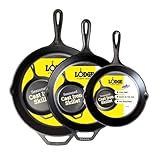
Lodge Pre-Seasoned Cast Iron Skillet Set
Three skillet sizes can solve a surprising number of kitchen headaches, provided they don’t become three heavy pans collecting dust in a lower cabinet. This Lodge set includes 8-inch, 10.25-inch, and 12-inch skillets, giving small portions, everyday dinners, and larger batches their own cooking space. That practical spread places it firmly among the best cast iron cookware for beginners because it removes the guesswork around choosing one do-everything diameter. Still, the set asks for patient preheating, prompt drying, and realistic expectations about weight.
Lodge 3-Piece Cast Iron Skillet Set
The 8-inch skillet handles compact jobs without heating a large cooking surface for one serving. Eggs, a single burger, toasted spices, melted butter, or a small side of vegetables fit comfortably without looking lost in the pan. Its lighter footprint also makes it easier to practice cast iron basics, especially lifting, cleaning, and applying a thin coat of oil. Space runs out quickly, though, so crowding it with several ingredients can trap steam and soften the browning.
The 10.25-inch skillet is likely to become the everyday piece because it balances capacity with manageable handling. It offers enough room for several chicken thighs, cornbread, sautéed vegetables, or a skillet meal without taking over the entire stovetop. The broader base allows moisture to escape around food, which supports better crust development. Filled with a dense meal, it still has some heft, so the helper grip becomes more than a decorative detail.
The 12-inch skillet earns its place during larger dinners and batch cooking. More surface area means burgers, chops, potatoes, and vegetables can sit with useful gaps instead of piling together. That space helps ingredients sear rather than simmer in released moisture. The drawback is plain as day: once full, the pan can be awkward to move, drain, or wash in a small sink.
All three skillets share the same basic cooking behavior, which makes the set easier to learn than a mixed-material collection. Heat adjustments, seasoning habits, and cleaning routines carry from one size to the next. That consistency reduces the fiddling that comes with switching between thin aluminum, coated pans, and heavier iron. The only real decision at mealtime is choosing how much cooking room the recipe needs.
PFAS-Free Seasoned Cooking Surface
Lodge states that these skillets are free from PFAS, PFOA, and PTFE, relying instead on seasoned cast iron for food release. The surface is pre-seasoned with 100% natural vegetable oil, so there isn’t a synthetic nonstick layer sitting on top of the metal. That construction suits kitchens trying to avoid fluorinated coatings without giving up browning and oven use. It doesn’t mean food will slide around effortlessly on the first morning, however.
Pre-seasoning provides a useful starting layer rather than a finished destination. Regular cooking with moderate amounts of fat gradually builds additional seasoning, especially with foods such as potatoes, cornbread, onions, and meat. Thin bonded layers create a more dependable surface over time. Heavy oiling does the opposite, leaving sticky patches that feel grimy and attract dust.
Eggs and delicate fish expose weak technique faster than sturdier foods. A cold pan can grab proteins, while an overheated surface can scorch butter before the food settles. Gentle preheating and a small amount of cooking fat give the seasoning a fair chance to do its job. Once food forms a crust, it often releases more naturally than it would under constant poking and scraping.
The naturally seasoned finish also has one major advantage over a permanently damaged coating: it can be renewed. Scratches, thin spots, and light rust don’t automatically send the skillet to the trash. Cleaning, drying, and reseasoning can restore the working surface. That repairability rewards steady ownership, although it also means maintenance can’t be ignored forever.
Heat Distribution And Temperature Control
Heat retention is the quality people notice first once the skillet reaches cooking temperature. Adding cold meat or vegetables doesn’t cool the surface as sharply as it might in a lightweight pan. That stored heat encourages stronger browning and steadier frying. Food also stays warm longer after the burner is switched off, which helps when several parts of dinner finish at different times.
Cast iron needs time to warm across the entire base. Cranking the burner to high may heat the center quickly while leaving the outer area noticeably cooler. Medium or medium-low heat, paired with a patient preheat, produces a more even working surface. A few extra minutes at the start can save a batch of scorched onions later.
Slow temperature response is the flip side of strong heat retention. Turning the burner down doesn’t cool the skillet immediately, so an overheated pan keeps pushing energy into the food. Moving the skillet off the burner may be necessary if oil begins smoking or a sauce reduces too quickly. That slower rhythm feels odd at first, but it becomes predictable after a handful of meals.
The three sizes react slightly differently because each contains a different amount of iron. The smaller skillet warms sooner and suits short jobs, while the 12-inch pan benefits from a longer, more deliberate preheat. Burner size also matters, particularly with the largest piece. A tiny heating element beneath a broad base can create a hot center and cooler perimeter even with good technique.
Versatility Across Cooking Methods
These skillets support searing, sautéing, baking, broiling, braising, frying, and grilling. A steak can begin on the stovetop, while cornbread, biscuits, or a fruit cobbler can cook entirely in the oven. The same pan can move from browning chicken to finishing it under gentle oven heat. Fewer transfers mean fewer dishes and less flavor left behind in another vessel.
Cooktop flexibility broadens the set’s usefulness. The skillets can be used on conventional stovetops, induction surfaces, grills, and open flames according to the provided product details. Cast iron’s magnetic base makes it naturally compatible with induction. Glass cooktops need careful handling, though, because dragging the rough base can scratch the surface.
Outdoor cooking suits the lack of plastic handles and synthetic coating. A grill or campfire can handle jobs ranging from breakfast potatoes to pan-fried fish, provided the skillet sits on a stable grate. Glowing coals usually offer steadier heat than tall flames. Soot on the exterior is normal outdoors, and a dedicated storage bag keeps it from rubbing onto other gear.
The 12-inch pan makes sense for shared camp meals, while the 8-inch skillet feels better suited to a compact breakfast. Carrying the complete set into the woods, on the other hand, may be overkill unless vehicle space is generous. Cast iron weight becomes more noticeable away from the kitchen. Selecting one size for the planned meal is often more sensible than hauling all three.
Rust Recovery And Seasoning Care
A spot that resembles rust upon arrival may be oil that hasn’t fully carbonized, according to the supplied product information. Actual rust can also appear after damp storage or incomplete drying. Lodge’s suggested recovery process involves cleaning the area with steel wool, drying the skillet, and reseasoning it with vegetable oil. That straightforward repair route helps prevent a minor cosmetic issue from becoming a reason to abandon the pan.
Water exposure causes more trouble than a quick wash. Soaking a skillet in the sink gives moisture time to reach vulnerable areas, especially where seasoning is thin. Warm water, a brush, and a scraper usually remove ordinary residue without a lengthy bath. A modest amount of mild dish soap can be used without treating the pan like fragile glass.
Drying over low heat removes moisture that a towel may leave around the handle or rim. Once dry, the surface needs only a whisper-thin layer of vegetable oil. Wiping away the visible excess prevents the tacky finish that beginners often mistake for stronger seasoning. The pan should look protected, not wet.
Storage works better with a little airflow. A paper towel between stacked skillets helps absorb stray moisture and reduces metal-on-metal rubbing. The heavy 12-inch piece belongs on a sturdy shelf rather than a flimsy upper cabinet. Dry storage and thin oiling do more for longevity than complicated rituals.
Handles, Weight, And Daily Comfort
Weight is the set’s biggest practical weakness. The 8-inch skillet feels relatively approachable, but the 12-inch model becomes demanding once loaded with food. Tilting it to pour grease or moving it from stove to oven can strain the wrist if the helper grip is ignored. Two-handed lifting is the sensible approach, not an admission of defeat.
Cast iron handles become hot along with the cooking surface. That includes stovetop use, especially during longer sessions or when the pan sits partly over a neighboring burner. A dry oven mitt provides more dependable protection than a damp towel, which can create steam against the skin. Handle sleeves may help briefly, but their heat limits still matter.
The larger skillet’s helper handle improves balance while carrying heavy food. It also makes washing easier because the pan can be supported from both sides instead of hanging from one wrist. Still, broad sinks and low storage shelves make ownership noticeably easier. Small kitchens may struggle with the physical footprint even if the cooking performance fits well.
The three-piece format also creates a stacking issue. Nesting saves space, but direct contact can rub seasoning and trap moisture between surfaces. Pan protectors or folded paper towels reduce both problems. The stack remains heavy, so it should be placed where pulling out one pan won’t send the others sliding forward.
Pros And Cons In Practical Use
Pros: Three well-separated sizes give the set more useful range than a bundle of nearly identical pans. The 8-inch piece handles small portions, the 10.25-inch skillet covers daily cooking, and the 12-inch pan provides room for larger batches. That progression lets cooking capacity scale without changing materials or relearning heat behavior. Each pan can also move across the stove, oven, grill, or open flame.
Pros: The PFAS-free seasoned surface avoids PFOA and PTFE while remaining repairable through reseasoning. Natural vegetable oil provides the initial finish, and repeated use can strengthen it. Heat retention supports deep browning and stable frying once the pan is properly warmed. Made in the USA by a family-owned company dating to 1896, the set also carries a long manufacturing history stated in the product details.
Cons: None of the skillets offers instant synthetic-style food release without proper technique. Preheating, cooking fat, and patience still matter, particularly with eggs, fish, or lean meat. The surface can rust if left wet, and every wash needs to be followed by complete drying. That routine is simple, but it’s less hands-off than coated cookware.
Cons: The 12-inch skillet may be too heavy or bulky for some kitchens, while the 8-inch pan may feel limiting for shared meals. Buying all three also creates overlapping capability because many recipes fit comfortably in the middle size. The set earns its cabinet space only when both small and large portions appear regularly. Otherwise, one carefully chosen skillet may handle most weekly cooking.
How The Set Differs From Other Materials
Cast iron stores heat, while lighter cookware tends to react faster to burner changes. That difference shapes cooking technique more than surface appearance. Lodge skillets favor deliberate preheating and steady temperatures, particularly for searing and baking. Lightweight pans feel quicker but may cool sharply once a cold steak or batch of vegetables hits the surface.
Synthetic nonstick cookware usually offers easier release early on, yet its coating can’t be rebuilt indefinitely after serious wear. These Lodge skillets demand more initial practice but allow the seasoning to be refreshed. Stainless steel skips the seasoning routine, though delicate food can stick without careful heat and fat control. Each material solves a different frustration rather than winning every kitchen task.
From a separate appliance-care angle, one neutral reference is blenders for hard vegetables, where motor strength and ingredient preparation matter more than cookware material. That subject doesn’t affect the skillets’ heating, seasoning, or handling. It simply reflects another kitchen task where choosing the right tool reduces unnecessary strain and uneven results.
The clearest difference is that cast iron improves through repeated use but punishes careless storage. A seasoned surface can become smoother and more dependable, while moisture can produce rust surprisingly fast. The three-pan set offers room to grow from single portions to larger meals without switching cookware styles. Its benefits show up through patient cooking, and its weaknesses show up whenever weight or maintenance becomes an afterthought.
Lodge 12-Inch Cast Iron Skillet With Red Handle
A roomy skillet sounds useful until it’s loaded with chicken, potatoes, and enough retained heat to make one-handed lifting a bad idea. Lodge addresses that everyday headache with a 12-inch cooking surface, an ergonomic assist handle, and a red silicone holder for the main handle. Those details make this pan a practical candidate among the best cast iron cookware for beginners, particularly for meals that need real browning space rather than a cramped center pile. It’s still heavy, slow to cool, and dependent on basic seasoning care, so convenience comes with a few old-school responsibilities.
Lodge 12-Inch Skillet With Red Handle
The 12-inch diameter gives ingredients enough room to spread out, which matters more than it may seem. Crowded chicken thighs release moisture and begin steaming, while properly spaced pieces have a better chance to form a browned crust. The same logic applies to potatoes, burgers, vegetables, and pork chops. For larger meals, that extra surface can reduce the need to cook in several small batches.
A bigger pan also creates a bigger handling challenge. Once the skillet holds food, oil, or a bubbling sauce, its weight shifts from merely noticeable to genuinely demanding. The assist handle gives the second hand a stable place to grip, making oven transfers and stovetop repositioning less awkward. That’s a practical feature, not window dressing, especially when the pan is too full to tilt safely from one long handle.
The skillet’s shape supports searing, sautéing, baking, broiling, braising, frying, and grilling. A steak can start over direct heat, while cornbread or a skillet dessert can bake without switching vessels. Chicken can brown on the stove and finish in the oven, keeping the flavorful bits in the same pan. Fewer transfers mean less cleanup and fewer chances to lose heat during cooking.
Seasoning Without Synthetic Coatings
Lodge makes this cookware with iron and oil rather than a synthetic nonstick coating. The supplied information states that the skillet is made without PFOA and PTFE, which may ease concerns about coated surfaces wearing down through years of cooking. Seasoning provides the release layer instead, and that layer can be maintained or rebuilt. It’s a different deal from disposable nonstick convenience, but one with far more room for repair.
The factory applies 100% natural vegetable oil before the skillet leaves production. That pre-seasoning means the pan isn’t arriving as vulnerable bare iron, yet it shouldn’t be mistaken for a frictionless cooking surface. Fresh seasoning often needs several well-managed meals before eggs and delicate fish become less finicky. Moderate heat, enough fat, and a little patience do more than aggressively scraping at food that hasn’t released.
Seasoning improves through thin, repeated layers rather than one heavy coat. Too much oil can leave the surface sticky, patchy, or unpleasant to handle. After washing and drying, a tiny amount spread across the warm iron is usually plenty, followed by wiping away the visible excess. Thin oiling and complete drying keep maintenance grounded and manageable.
Heat Retention And Cooking Rhythm
Heat retention is where this skillet earns its keep. Once warmed, the iron holds onto energy as cold ingredients hit the pan, helping the surface recover without a sharp temperature drop. That steadiness supports crust formation on steaks, burgers, and vegetables. It also keeps food warm longer after the burner is turned off, which can be handy during a slow-moving dinner service.
There’s a catch, naturally. Cast iron doesn’t respond quickly when the heat is lowered, so an overheated skillet keeps cooking with stubborn enthusiasm. Starting around medium heat and allowing the pan to warm gradually is often more reliable than blasting it on high. The skillet’s large base also benefits from a burner that covers a reasonable portion of the bottom.
Even heating develops through time, not brute force. A hurried preheat may leave the center much hotter than the outer cooking area, particularly on a small element. Giving the skillet several minutes to warm can reduce pale edges and scorched centers. Once that slower rhythm becomes familiar, burner adjustments feel less like guesswork.
Silicone Handle Holder And Assist Grip
The included red silicone hot handle holder adds a useful barrier during stovetop cooking. Bare cast iron handles absorb heat from the pan and can become too hot to touch, even when they aren’t directly over a flame. The sleeve provides a more comfortable grip for brief adjustments and serving. Its bright color also acts as a visual reminder that the handle area deserves caution.
Silicone protection doesn’t make the skillet careless-proof. A holder can warm during long cooking sessions, and heat limitations still matter near ovens, broilers, grills, or open flames. A dry oven mitt remains the safer choice for oven transfers and extended high-heat use. Handle protection should support good habits rather than replace them.
The assist handle changes how the pan feels during lifting. Instead of placing the entire load on one wrist, both hands can share the weight and keep the skillet level. That helps while carrying hot oil, a braised dish, or a heavy skillet meal across the kitchen. The added grip also makes washing less clumsy, particularly in a deep sink where the long handle alone can feel unwieldy.
Stove, Oven, Grill, And Campfire Use
This Lodge skillet is designed for use on the stove, in the oven, on the grill, and over a campfire. Its lack of plastic cookware parts or fragile synthetic coating makes those transitions straightforward. Breakfast can cook over outdoor coals, while dinner can begin on a kitchen burner and finish under oven heat. That range gives one pan several jobs instead of limiting it to ordinary frying.
Campfire cooking rewards the skillet’s durability but exposes its handling tradeoffs. Glowing coals provide steadier heat than tall flames, and a secure grate helps support the broad, heavy base. The silicone holder needs sensible placement around direct fire, since exposed flames are a different environment from an indoor burner. Soot on the exterior is also normal, so outdoor storage may need a separate bag or cloth.
Glass and induction cooktops call for deliberate handling. Cast iron’s magnetic construction suits induction cooking, while its weight keeps the pan stable once placed. Dragging the base across glass can scratch the surface, though, so lifting is better than sliding. The assist handle makes that careful movement easier without changing the skillet’s substantial heft.
Cleaning, Drying, And Rust Control
Cleaning cast iron is less mysterious than the folklore suggests. Warm water, a scraper, and a firm brush can remove ordinary residue without leaving the skillet soaking in the sink. A small amount of mild soap doesn’t automatically erase properly bonded seasoning. Standing water is the larger concern because it creates an easy opening for rust.
Drying over low stove heat helps evaporate moisture that a towel may miss around the rim or handles. Once the pan is completely dry, a whisper-thin layer of vegetable oil supports the seasoned surface. The skillet shouldn’t look wet or feel tacky afterward. Excess oil isn’t extra protection; it’s usually the beginning of a gummy mess.
Rust doesn’t necessarily mean the skillet is ruined. Light corrosion can be scrubbed away, followed by drying and a fresh seasoning treatment. That repairability is a meaningful strength of bare cast iron because surface damage doesn’t always become permanent. Still, prevention is easier than restoration, so damp cabinets and long soaking sessions are habits worth avoiding.
Pros And Cons In Daily Cooking
Pros: The broad surface gives food room to brown instead of trapping steam between crowded pieces. Heat retention supports searing, frying, baking, and slow stovetop cooking once the skillet is properly preheated. The assist handle improves balance, while the silicone holder offers added comfort during shorter stovetop tasks. Its iron-and-oil surface can also be renewed rather than discarded after ordinary wear.
Pros: This pan moves between multiple heat sources without requiring separate cookware for indoor and outdoor meals. Its pre-seasoned finish provides a workable starting point, and repeated cooking can strengthen that surface. Lodge is described as a family-owned American company dating to 1896, with this skillet made in the USA. Those details add manufacturing context without changing the practical need for regular care.
Cons: Weight is the most obvious drawback, particularly after the 12-inch pan is filled. Slow temperature response can also punish an overly aggressive burner setting because lowering the heat won’t cool the iron immediately. The skillet requires drying after washing, occasional oiling, and thoughtful storage. Anyone expecting lightweight handling and zero maintenance may tire of those demands.
Space, Storage, And Realistic Fit
A 12-inch skillet occupies meaningful cabinet and stovetop space. Its long handle can interfere with nearby pans, while the wide base may overwhelm a compact burner. Hanging storage can keep it accessible, provided the hook and mounting point can support the weight. A low, sturdy shelf is often simpler than lifting the skillet into a high cabinet.
The size pays off most during shared meals, batch cooking, and recipes that need open surface area. Small portions can still cook in it, but heating a wide pan for one egg feels inefficient and leaves more iron to wash afterward. A smaller skillet may remain more convenient for quick breakfasts. This Lodge model makes better sense as the roomy workhorse rather than the tiny-task specialist.
From a separate equipment-maintenance angle, a neutral reference appears in washing machines for hair salons, where repeated exposure to demanding loads also makes durability and upkeep central concerns. That subject doesn’t affect the skillet’s seasoning, heating behavior, or cooking results. It simply illustrates how sturdy equipment still depends on maintenance routines that match the work being asked of it.
Where Its Strengths Meet Its Limits
The skillet’s main strength is its combination of cooking room, retained heat, and a repairable seasoned surface. It handles meals that move from stovetop to oven without forcing food into another pan. Large cuts and crowded vegetable batches benefit from the wider base. Those advantages become most noticeable after the cook learns to preheat gradually rather than rush the process.
The main weakness is that convenience has limits. The silicone holder softens the handling problem but doesn’t remove the pan’s weight or residual heat. Pre-seasoning shortens the setup period but doesn’t guarantee effortless release with every ingredient. Cast iron rewards technique, and this large skillet makes both good and bad technique easier to notice.
Realistic expectations keep the relationship civil. The Lodge 12-inch skillet won’t respond like lightweight aluminum, cool like stainless steel, or behave exactly like a fresh synthetic nonstick pan. It offers something different: durable iron construction, broad cooking flexibility, strong heat retention, and seasoning that can improve with use. Those benefits come with weight, slower response, and a cleaning routine that ends only after the surface is fully dry.


Top Rated Best Quality Range Hoods: 2026 Expert Picks

The 12 Best Small Solar Generators 2026

10 Best Quality Semi Automatic Washing Machine of 2026 For Leak-Free Laundry

11 Best Small Washer Machine of 2026 For Everyday Laundry

12 Best Vibration Pads For Washing Machine of 2026 To Stop Walking and Shaking

11 Best Selling Front Load Washing Machine of 2026 For Quiet Odor-Free Laundry

11 Best Washing Machine For King Size Bedding of 2026 To Prevent Cycle Errors

10 Best Small Front Loader Washing Machine of 2026 For Tight Closets






