
Best Camping Cookware for Two 2026: Pack Light, Eat Well

Best camping cookware for two should make outdoor meals easier without swallowing half the backpack. A compact set needs enough room for pasta, soup, oatmeal, or a shared skillet breakfast, yet bulky extras quickly become dead weight. The sweet spot usually includes a medium pot, a useful lid, and a pan that can handle more than warming tortillas. Packed together, those pieces should leave space for a stove, fuel canister, lighter, and small cleaning cloth.
Cookware capacity matters more than an impressive piece count. A pot around 1.5 to 2 liters generally gives two portions enough breathing room without boiling over at the first stir. Tiny nesting cups and miniature bowls may look clever in photos, but they often add clutter while doing little for actual cooking. Fewer well-sized pieces tend to earn their place more often, especially after a long day when nobody wants to solve a metal puzzle before dinner.
Aluminum camping cookware heats quickly and keeps pack weight under control, though thin pieces can develop hot spots over narrow backpacking burners. Stainless steel handles scraping, higher heat, and rough cleaning better, but the extra ounces become noticeable on longer walks. Titanium trims weight beautifully, yet its price can sting, and delicate heat control is needed to keep food from scorching. No material wins every contest, so the right tradeoff depends on distance, cooking habits, and how carefully the set will be treated.
Secure folding handles deserve close attention because a full pot of boiling water is no place for a loose connection. Silicone-coated grips feel more comfortable, but they still need distance from open flames to avoid damage. Bare metal handles tolerate heat better and pack neatly, though a bandanna or glove may be needed before lifting the pot. Also, lids with drain holes or firm knobs save a surprising amount of hassle while preparing noodles, rice, or dehydrated meals.
Nesting design can turn scattered camp kitchen gear into one tidy bundle. The most practical setup holds a small stove and fuel canister inside the main pot without forcing the lid upward. That sounds like a minor detail, but rattling pieces and awkward packing get old fast on uneven trails. A storage sack helps control soot, although mesh bags can snag and thin fabric may eventually wear through around sharp pan edges.
Realistic expectations matter, too. Most lightweight sets won’t brown food as evenly as a heavy kitchen skillet, and narrow pans can feel cramped once vegetables and protein share the surface. Couples who mainly boil water can skip a frying pan entirely, while campsite cooks planning eggs, fish, or pancakes will appreciate a wider base. Simple cleanup, balanced weight, and usable dimensions matter far more than decorative accessories that stay buried at the bottom of the gear bin.

- TAR Score9.0
TAR Score is a ranking system developed by TopAppliancesReviews.com. TAR score has no relationship or impact from any manufacturers or sales agent websites. Learn more
- BrandTHTYBROS
- TAR Score9.0
TAR Score is a ranking system developed by TopAppliancesReviews.com. TAR score has no relationship or impact from any manufacturers or sales agent websites. Learn more
- BrandTHTYBROS

- TAR Score9.0
TAR Score is a ranking system developed by TopAppliancesReviews.com. TAR score has no relationship or impact from any manufacturers or sales agent websites. Learn more
- BrandAlocs

- TAR Score9.0
TAR Score is a ranking system developed by TopAppliancesReviews.com. TAR score has no relationship or impact from any manufacturers or sales agent websites. Learn more
- BrandFire-Maple

- TAR Score8.8
TAR Score is a ranking system developed by TopAppliancesReviews.com. TAR score has no relationship or impact from any manufacturers or sales agent websites. Learn more
- BrandOdoland

- TAR Score8.4
TAR Score is a ranking system developed by TopAppliancesReviews.com. TAR score has no relationship or impact from any manufacturers or sales agent websites. Learn more
- BrandFitense
Last update on 2026-08-15 / Affiliate links / Images, Product Titles, and Product Highlights from Amazon Product Advertising API
THTYBROS 17-Piece Camping Cookware Kit
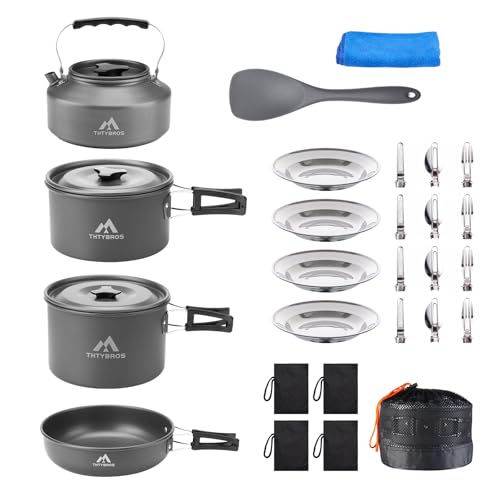
Two hungry campers can make a surprisingly large mess with mismatched pots, loose utensils, and mugs clipped wherever space permits. The THTYBROS 17-Piece Camping Cookware Kit tackles that clutter by packing a 1.70-liter pot, a 1.15-liter kettle, a 7-inch frying pan, and tableware for two into one compact bundle. For anyone researching the best camping cookware for two, its main appeal is straightforward: it covers cooking, serving, eating, and cleanup without requiring a second kitchen bag. That broad equipment list sounds generous, though the real value depends on how well the pieces match the trip.
THTYBROS 17-Piece Cookware Kit
The centerpiece is the 1.70-liter cooking pot, a sensible size for preparing soup, noodles, oatmeal, rice, or a shared one-pot meal. It provides more breathing room than a tiny solo pot, so stirring dinner is less likely to send sauce over the rim. The matching 1.15-liter kettle keeps hot-water duties separate, which helps during mornings when coffee and breakfast need to happen at nearly the same time. That division of labor can make a cramped campsite routine feel far less chaotic.
A 7-inch frying pan adds flexibility for eggs, sliced sausage, vegetables, or small portions of fish, but its limited diameter deserves realistic expectations. Two full breakfasts may need to be cooked in stages, especially if both people expect wide pancakes or several eggs at once. Still, the pan gives this kit more range than boil-only systems that mainly serve dehydrated meals. Its compact dimensions favor portability over a restaurant-style cooking surface, and that’s a fair trade for a nesting set.
The included stainless steel plates and 200-milliliter cups remove the need to buy separate eating gear. Two forks, two knives, and two spoons come with storage bags, helping keep small metal pieces from scattering through the main pack. A bamboo spoon, cleaning cloth, and cleaning ball round out the practical extras rather than padding the count with decorative accessories. Even so, the cups are small, so anyone who likes a generous morning drink may still prefer a larger insulated mug.
Hard-Anodized Aluminum In Daily Camp Use
The cookware body uses hard-anodized aluminum, a material valued outdoors for its low weight and quick heat response. According to the supplied specifications, the surface is designed to resist high temperatures, scratching, corrosion, and oxidation while remaining easy to clean. Fast heat conduction can reduce the time a stove runs, which matters when fuel is limited or wind keeps stealing heat. Careful burner control is still wise because lightweight aluminum can react quickly to flame adjustments.
Even heating is supported by a brushed and oxidized surface treatment intended to improve sturdiness and distribute heat more consistently. That can help with simple camp meals, particularly foods that need a steady simmer rather than an aggressive boil. Thin cookware should never be treated like heavy cast iron, though, and high flames can still create hot spots under dense foods. A little stirring and moderate heat will usually produce better results than cranking the stove and hoping for the best.
The listed oil-saving design may appeal to campers who want easier cleanup and lighter food packing, but it shouldn’t be mistaken for a guarantee that nothing will stick. Eggs, pancake batter, and sugary sauces remain more demanding than broth or boiling water. In some outdoor kitchens, cookware coating concerns also shape buying decisions, and a separate reference appears in best non-stick cookware without forever chemicals for readers considering that broader material question. The THTYBROS kit itself should be judged according to the hard-anodized aluminum details supplied here.
Handles, Packing, And Campsite Convenience
The silicone-covered handles are designed to provide a heat-resistant, non-slip grip, which helps when lifting a full pot from a compact stove. Their ergonomic shape should feel more controlled than a narrow strip of bare metal, particularly with damp or cold hands. Silicone still needs sensible positioning around open flames because direct fire can damage soft handle coverings. Keeping the flame beneath the cookware base, rather than curling around the sides, protects both the handles and the cook.
Every piece nests into a package measuring roughly 7.5 by 7.5 by 5 inches, then fits inside the included nylon mesh carrying bag. That compact footprint is useful in a vehicle storage bin, canoe barrel, picnic basket, or roomy hiking pack. Nesting also cuts down on the metallic clatter created by loose plates, utensils, and pans bouncing separately. Packing the cleaning cloth between hard pieces may further reduce noise and surface rubbing during travel.
The complete kit weighs 2.75 pounds, which places it in an interesting middle ground. The weight is manageable for traditional camping, short hikes, picnics, and trips where two people can divide shared equipment. Ultralight backpackers may consider it heavy because stainless steel plates, cups, and full cutlery sets add ounces that minimalist travelers often avoid. For relaxed backpacking or base-camp cooking, however, carrying a complete two-person setup may be worth more than shaving every possible gram.
Cooking For Two Without Extra Kitchen Clutter
The strongest practical benefit is all-in-one organization. One person can handle the kettle while the other uses the pot or frying pan, allowing breakfast or dinner tasks to overlap instead of forming a slow queue around one vessel. Separate plates and cutlery also make shared meals feel more comfortable than eating directly from the cooking pot. That small bit of order matters after a tiring day when patience is running thin and daylight is disappearing.
Camp menus built around pasta, ramen, soup, couscous, oatmeal, and hot drinks fit this cookware especially well. The pot and kettle capacities support two modest portions without forcing campers to carry family-sized equipment. Frying tasks are possible, but the 7-inch pan rewards simple recipes and smaller batches. Anyone planning elaborate skillet dinners should bring a wider pan, while campers who favor quick meals will probably appreciate the compact setup more.
Cleanup support includes a cloth and cleaning ball, so the set arrives with basic tools for wiping grease and loosening stuck food. Hard-anodized aluminum is described as easy to clean, yet abrasive scrubbing should still be approached carefully to preserve the surface over time. Wiping the cookware soon after eating, while residue is still soft, saves water and elbow grease. The mesh bag allows ventilation after washing, although the pieces should be reasonably dry before packing to avoid trapped moisture around utensils.
Strengths And Tradeoffs Worth Weighing
The kit’s clearest strength is its completeness: cookware, kettle, cups, plates, cutlery, serving spoon, cleaning tools, and storage are all included. That makes trip preparation easier because fewer small items need to be remembered separately. Its compact nesting layout also suits limited storage, where every loose object becomes one more thing to chase. For two people starting without an established camp kitchen, that convenience can carry real weight.
The main tradeoff is that a 17-piece package inevitably includes items some campers won’t use. Minimalists may leave the plates, knives, cleaning ball, or small cups at home, reducing the advantage of buying a fully equipped kit. The 2.75-pound total is also easier to justify for car camping than for long-distance hiking. Splitting the cookware, food, stove, and fuel between two packs can make the load more reasonable on shorter backpacking routes.
Another limitation lies in the compact frying pan and modest cup capacity. The pan supports small portions but won’t provide much room for browning a full dinner for two in one pass, while 200-milliliter cups may feel undersized for tea, coffee, or cocoa. Those details don’t undermine the whole set; they simply define how it works best. Practical buyers should treat it as a compact camp kitchen rather than a miniature copy of full-size cookware at home.
Where This Kit Makes The Most Sense
The THTYBROS cookware set suits trips where shared meals matter but packing space remains limited. Weekend camping, fishing trips, picnics, roadside stops, and short backpacking routes all fit its mix of capacity and portability. The included tableware reduces planning for campers who don’t already own matching outdoor dishes. In that setting, the extra pieces feel useful instead of excessive.
Couples who mostly boil water may prefer a smaller system, while campers who cook real ingredients can benefit from the pot, kettle, and frying pan combination. Having three cooking vessels creates more menu freedom without carrying several unrelated products. Fuel efficiency may improve through aluminum’s quick heat conduction, provided flames are kept controlled and cookware is covered when appropriate. Wind protection around the stove can matter just as much as the material itself.
For the best camping cookware for two, balance matters more than the biggest accessory count or the lightest possible number on a scale. This kit favors organization, shared use, and broad meal coverage, while accepting some extra weight and a small frying surface. Its supplied dimensions, capacities, and nested package make the value easy to understand without leaning on unverified ratings or exaggerated claims. The practical question is whether a complete camp kitchen earns more space in the pack than a stripped-down boiling pot, and this set makes a credible case for campers who prefer the former.
THTYBROS 27-Piece Camping Cookware Mess Kit
Shared camp meals can get messy fast when mugs, plates, utensils, and pans are packed in separate corners of the car or backpack. The THTYBROS 27-Piece Camping Cookware Mess Kit answers that problem with a nested kitchen designed around cooking and serving for two to four people. For anyone weighing the best camping cookware for two, the attraction lies in having a kettle, pots, pans, plates, utensils, storage bags, and cleanup gear gathered into one compact package. It’s a fuller setup than a bare-bones backpacking pot, yet the listed weight stays under 2.5 pounds.
THTYBROS 27-Piece Camping Mess Kit
The 27-piece arrangement covers far more than basic boiling. It includes non-stick pots and pans, a kettle, stainless steel plates, forks, knives, spoons, a spatula, storage bags, and a quick-dry cleaning cloth. That breadth helps reduce the familiar last-minute scramble for a missing spoon or an improvised serving tool. Packed as one system, the pieces also make it easier to keep food gear separate from clothing, tent stakes, and other dusty equipment.
A complete kit makes the most sense when meals involve more than pouring hot water into a pouch. Pancakes can cook in the non-stick pan, while the kettle handles coffee, tea, or water for oatmeal. The pots can manage soup, pasta, rice, or a shared one-pot dinner without forcing every task through the same vessel. That division saves time around a small stove, especially during chilly mornings when nobody feels like waiting through three separate cooking rounds.
The included stainless steel plates and utensils also change the feel of a campsite meal. Eating from proper plates is less awkward than balancing food on pot lids or taking turns with one bowl. Stainless steel resists the cracking and chipping that can happen with rigid plastic dishware during transport. Still, a 27-piece count sounds larger than it feels because individual forks, spoons, knives, bags, and accessories are each counted separately.
Compact Packing Without Loose Camp-Kitchen Clutter
The nesting design is one of the strongest parts of this set. Every piece, including the kettle, is intended to fit inside the cookware, creating a packed bundle described as smaller than a football. That matters in a backpack, RV cabinet, or crowded car trunk where odd-shaped kitchen gear tends to waste valuable space. A tight nest also reduces clanking, though slipping the cleaning cloth between metal pieces can quiet things down even further.
With a listed total weight under 2.5 pounds, the kit aims for a balance between completeness and portability. Two people can split the shared load by placing cookware in one pack and food or fuel in the other. Long-distance hikers who count every ounce may still view the plates and full utensil sets as optional baggage. For weekend backpacking, car camping, picnics, and short approaches, the broader equipment package may feel worth the extra weight.
Multiple heavy-duty carrying bags help keep utensils and cookware organized instead of letting small parts drift through the main storage sack. The large mesh bag provides ventilation, which is handy after washing when the cloth or cookware may remain slightly damp. Mesh won’t contain soot as effectively as a solid pouch, so blackened pot bottoms may need an extra wrap before going near clean gear. That’s a small packing habit, but it can spare a jacket or sleeping bag from an ugly smear.
Non-Stick Cookware And Stainless Steel Components
The pots and pans use a food-safe non-stick coating described as scratch resistant. Non-stick surfaces can make eggs, pancakes, and sticky sauces easier to manage over compact camp burners, where precise heat control isn’t always possible. Less food residue also means cleanup can require less water, a welcome benefit at dry campsites or trail stops. Even scratch-resistant cookware deserves gentle treatment, so metal scraping and aggressive scouring are best avoided.
The utensils and plates are made from 304 stainless steel, a practical material for repeated outdoor handling. It won’t absorb food odors, and it tolerates contact with hot meals better than flimsy disposable dishes. Stainless steel pieces do add some weight and may become warm when holding very hot food. Even so, their resistance to bending and breakage suits camps where equipment gets packed, dropped, and washed on rough surfaces.
Cookware materials often raise broader questions about coatings, bare metals, and long-term kitchen preferences. A related material discussion appears in best stainless steel cookware with glass lids, which offers a useful reference point for readers considering stainless steel beyond campsite plates and utensils. The THTYBROS set itself uses a mixed-material approach, pairing coated cookware with stainless steel serving pieces. That combination favors easy cooking and durable tableware rather than relying on one material for every job.
Heat Control, Handles, And Practical Cooking
The set includes heat-resistant grips and sturdy rivets, both of which matter once a pot is full of boiling water. Secure handles help reduce wobbling while lifting cookware from a narrow backpacking stove. Heat resistance doesn’t mean the grips should sit over flames, though, because fire curling around a small pot can still damage handle materials. Keeping the burner centered beneath the cookware protects the grips and usually improves fuel use as well.
Non-stick pans tend to respond best to low or medium heat, particularly on concentrated camp stoves. A full blast can overheat the center before the outer cooking surface catches up, leaving pancakes dark in one spot and pale in another. Preheating briefly, then lowering the flame, gives the coating a fairer shot at even cooking. The same approach saves fuel, which can matter more than shaving a minute from breakfast.
The kettle adds welcome separation between meal preparation and hot drinks. Water can heat while a pan is being cleared or while ingredients are portioned for the next dish. That sounds like a small convenience, but camp kitchens often have one burner and several people waiting on it. A dedicated kettle streamlines the routine and keeps coffee water from tasting like last night’s tomato sauce.
Cooking Capacity For Two To Four People
The stated range of two to four campers gives this kit some flexibility, but meal style will shape how comfortable that range feels. Two people can use the cookware without pushing capacity, leaving room for stirring and serving. Four people may need simpler menus, staggered portions, or recipes built around soup, pasta, and other shared dishes. That isn’t unusual for compact camp cookware, where portability often matters more than banquet-sized pans.
For two campers, the best camping cookware for two should avoid both extremes: too little capacity and too much unused bulk. This set leans toward generous versatility, making it suitable for trips where breakfast, dinner, and hot drinks all matter. The extra plates and utensils also allow occasional guests or family members to join without requiring a second mess kit. Solo travelers, on the other hand, may consider much of the package unnecessary.
Meal planning becomes easier when the cookware matches realistic camp habits. Pancakes, scrambled eggs, noodles, chili, oatmeal, and heated canned meals fit the pots, pans, and kettle format well. Large steaks, wide omelets, or several burgers may overwhelm compact cookware and require batches. The kit favors practical camp food over elaborate stovetop cooking, which is exactly where a portable nested system tends to earn its keep.
Cleanup, Storage, And Everyday Tradeoffs
The included quick-dry microfiber cloth helps wipe condensation, grease, and food residue before the cookware goes back into storage. Quick drying is useful in humid camps where thick cotton cloths can stay wet for hours. The non-stick surfaces may shorten cleanup after sticky foods, though a small amount of warm water and mild soap remains the safer routine. Packing cookware while it’s still greasy can trap odors inside the nested set.
The main strength is convenience rather than extreme minimalism. One purchase provides cooking vessels, serving pieces, eating utensils, carrying bags, and cleaning support, reducing the number of separate items to assemble. The main weakness is that not every piece will matter on every trip. Backpackers can leave extras behind, but doing so partly undercuts the appeal of a carefully organized all-in-one package.
Realistic expectations keep this kit in the right lane. It offers a compact outdoor kitchen for people who value organized meals, shared cookware, and less disposable dishware. It won’t replace a broad home skillet, and the full piece count may feel excessive for boil-only travel. For camping pairs who cook more than freeze-dried food, the mix of nested portability, non-stick cookware, stainless steel tableware, and useful accessories addresses many of the small frustrations that can turn dinner outdoors into a chore.
Alocs 17-Piece Camping Cookware Set
A crowded campsite kitchen can turn dinner into a juggling act, especially once two meals, hot drinks, and cleanup all compete for the same small pot. The Alocs 17-Piece Camping Cookware Set takes a roomier approach with two pots, an 8-inch frying pan, a kettle, and enough tableware to keep shared meals organized. That combination gives the best camping cookware for two more flexibility than a minimalist boil-only kit, though its 3.5-pound weight clearly favors cooking comfort over ounce-counting. For short hikes, fishing weekends, beach meals, and traditional camping, that tradeoff may be exactly the point.
Alocs Camping Cookware Kit
The heart of this kit is its 3-liter pot, which offers useful headroom for pasta, stew, soup, or a shared rice dish. A smaller 1.7-liter pot handles side dishes, oatmeal, or reheating without forcing every recipe into the same vessel. That two-pot setup matters once breakfast gets busy, since coffee water can heat separately while food cooks nearby. It’s a simple difference, but it keeps one person from standing around hungry while the other guards a single crowded pan.
The included 8-inch frying pan gives eggs, vegetables, sausage, and small portions of fish more room than many compact two-person sets provide. It still isn’t a full-size kitchen skillet, so wide pancakes or several servings may need to be cooked in batches. Even so, that extra inch or two can make stirring and flipping far less awkward over a camp stove. A modest coating of oil, as the care instructions recommend, should also help reduce sticking and make the pan easier to wipe down afterward.
A dedicated 0.8-liter kettle rounds out the core cookware and keeps hot-water jobs from tying up a cooking pot. Its capacity suits a couple of smaller drinks or enough water for instant oatmeal and a warm beverage, though campers who fill oversized mugs may need a second boil. The kettle also keeps coffee or tea water away from savory food residue left in the pots. That separation sounds fussy until a morning drink picks up yesterday’s stew flavor, and then it suddenly makes perfect sense.
Hard-Anodized Aluminum And Campfire Use
The pots and pan are made from hard-anodized aluminum, a material chosen here for low weight, quick heating, and resistance to oxidation. According to the supplied details, the cookware is non-toxic, scratch resistant, and able to tolerate high temperatures. Aluminum responds quickly to flame changes, which can help conserve fuel on a compact burner. That same responsiveness means cooks shouldn’t walk away from thick sauces or rice because heat can build faster than it does in heavier home cookware.
Alocs states that the set can be used directly over a campfire for stewing, boiling, cooking, and stir-frying. Direct-fire versatility is handy at campsites where a stove is unavailable or reserved for other tasks. Still, campfire flames rarely spread heat evenly, and soot will collect on the outside of the cookware. Keeping the vessels near a controlled bed of coals rather than in tall, licking flames should make cooking calmer and reduce unnecessary stress on the handles.
The material balance favors fast heat transfer rather than the slow, steady behavior of cast iron. Water should come up to temperature without a long wait, and quick meals won’t demand excessive fuel. The flip side is that lightweight aluminum doesn’t store heat as deeply, so temperatures may drop when cold ingredients are added. Gentle adjustments, regular stirring, and a lid over the pot can smooth out those swings without turning dinner into a science project.
Handles, Grip, And Heat Management
The cookware uses thermally insulated plastic handles intended to reduce the chance of burns during outdoor cooking. Their textured, anti-slip surfaces should feel more secure than narrow bare-metal grips, particularly with wet hands or light gloves. A comfortable handle also matters once the 3-liter pot is full, since water and food add noticeable weight. Secure rivets support that load, though every handle should still be checked before lifting a hot, heavy vessel.
Heat-resistant plastic isn’t the same as flameproof material. The main safety tradeoff appears when large campfire flames curl around the sides of the pot and reach the grips. Keeping heat centered below the cookware protects the handles and gives the food a more predictable cooking surface. Over a gas stove, a moderate flame is usually enough because aluminum conducts heat quickly and doesn’t need a roaring burner to get moving.
Longer cooking sessions make the ergonomic grip more valuable than it first appears. Stirring a stew, draining pasta, or shifting a pan repeatedly gets tiring when handles pinch the fingers or rotate unexpectedly. The anti-slip texture addresses that everyday nuisance without adding a complicated locking mechanism. Even so, a cloth or heat-resistant glove remains sensible around an open fire, especially after the cookware has been sitting over heat for several minutes.
Tableware For Shared Outdoor Meals
Two 180-milliliter stainless steel cups, four plates, and two complete utensil sets expand the package beyond basic cookware. The stainless steel tableware won’t crack like brittle plastic and can handle the rough handling common in a packed car or crowded storage bin. Four plates also provide extra serving surfaces for sides, ingredients, or occasional guests. For two campers, those extras can double as prep trays instead of sitting unused.
The cups are compact, which keeps the nested bundle manageable but may feel limiting for anyone who likes a large coffee. Their 180-milliliter capacity is closer to a modest serving than a deep campsite mug. That isn’t necessarily a flaw, since smaller cups cool less slowly and tuck neatly into the cookware. Still, bringing insulated mugs may make sense during cold-weather trips, leaving the included cups for sauces, snacks, or measuring portions.
The utensils cover the basics with forks, knives, and spoons for two, reducing the odds of improvising with a pocketknife at dinner. A separate material discussion, unrelated to this camp kit but relevant to household cleaning routines, appears in best washing machine cleaner for pet hair. The cookware package itself stays focused on outdoor organization through two storage bags, a cleaning sponge, and a mesh carrying bag. Those small additions help keep greasy cookware apart from clean clothing and loose utensils from disappearing into the bottom of a backpack.
Packing Size And Real Trail Weight
The pots and frying pan nest together into a bundle measuring roughly 8 inches in diameter and 5 inches high. That footprint is compact enough for a car-camping bin, canoe pack, picnic basket, or larger hiking backpack. Fitting everything into one carry bag also cuts down on the familiar clatter of cookware bouncing around separately. Slipping the included cloth between metal pieces can further reduce noise and prevent rubbing during transport.
Total weight is listed at 3.5 pounds, making this a comfort-oriented system rather than an ultralight one. Two people can divide the load by carrying cookware in one pack and food, fuel, or shelter components in the other. Short approaches and relaxed backpacking trips suit that arrangement better than long-distance routes where every ounce matters. Car campers, anglers, and beachgoers are less likely to mind the weight because the larger pots and complete tableware save separate packing.
The main strength of the nested design is organization, not invisibility. A three-liter pot naturally occupies more room than a solo mug, yet it also cooks a proper shared meal without crowding. The mesh bag adds ventilation after washing, although soot may pass through and mark nearby gear. Wrapping blackened cookware in one of the storage bags before placing it inside the mesh carrier can keep the rest of the pack cleaner.
Cleaning Habits And Coating Care
The supplied care instructions recommend using a small amount of oil before cooking and cleaning the set gently afterward. That routine protects the non-stick surface while helping foods such as eggs, pancakes, and fish release more easily. Abrasive scrubbers and sharp utensils should be avoided because repeated scratching can shorten the useful life of the coating. Wooden, silicone, or smooth plastic tools would be kinder choices around the pan and pots.
The included cleaning sponge handles light residue, but burnt sugar or dried starch may need a brief soak rather than harder scrubbing. Warm water and a soft wipe usually make more sense than attacking the surface with whatever rough object happens to be nearby. The care requirement isn’t difficult, though it does demand more attention than bare stainless steel cookware. Campers who routinely use metal forks as spatulas may need to adjust that habit.
Drying matters, too, because every piece nests tightly inside the next. Trapped moisture can create stale odors in the bags and leave the stainless steel components damp for longer than expected. The mesh carrier helps air circulate, but cookware should still be wiped before it’s packed away. At home, separating the pieces until fully dry will be easier on both the bags and the cooking surfaces.
Where The Set Fits And Where It Does Not
The generous pot sizes make this set well suited to campers who prefer actual meals over a strict boil-and-eat routine. Couples can prepare soup, pasta, breakfast, and hot drinks without constantly washing one vessel between tasks. That range gives the best camping cookware for two a comfortable, almost base-camp feel while remaining compact enough to carry. It also leaves capacity for an extra serving when appetites run large after a day outdoors.
Minimalist hikers may see the 3.5-pound weight as the biggest weakness. Four plates, two pots, a pan, a kettle, cups, and complete utensils are useful only if those pieces are regularly used. Travelers who mainly heat water could cut considerable weight with a smaller pot and two spoons. This Alocs kit makes more sense for cooks who value menu flexibility and shared tableware over stripped-down efficiency.
The 8-inch pan, dual-pot arrangement, and campfire compatibility create a broad cooking range, but realistic expectations still apply. Compact outdoor cookware won’t brown food like a thick home skillet, and direct flames demand active heat control. The difference lies in having enough capacity and tools to cook comfortably for two without hauling a box of mismatched kitchen pieces. For trips built around fishing, hiking, beach dining, picnics, or a relaxed campsite breakfast, that practical middle ground is where this set earns its space.
Fire-Maple Feast 2 Camping Cookware Set
Camp meals have a funny way of exposing weak gear fast. A loose handle, a lid that slides into the dirt, or a pan that takes up half the backpack can turn a simple breakfast into a minor headache. The Fire-Maple Feast 2 Camping Cookware Set takes a stripped-down approach to the best camping cookware for two, packing a pot, kettle, griddle pan, two bowls, cooking paddle, and sponge into one nested bundle. Its strongest appeal is balance: enough pieces for real cooking, without dragging along a full cupboard’s worth of extras.
Fire-Maple Feast 2 Cookware Set
The seven-piece setup covers the basics without inflating the count with duplicate utensils or tiny accessories. A lidded pot handles noodles, soup, rice, oatmeal, or a shared stew, while the separate kettle keeps drinking water away from food residue. The griddle pan brings eggs, sausages, vegetables, and flatbreads into the picture, so the set isn’t limited to boil-only meals. Two bowls make serving straightforward, and the cooking paddle keeps metal utensils away from the cookware surface.
The included lids feature built-in drain holes, a small detail that earns its keep during pasta nights or when excess water needs to leave the pot without taking dinner with it. A proper lid also helps water boil faster and reduces fuel waste in cool or breezy conditions. That said, drain holes can let steam escape during slow simmering, so lid position may need a little attention. It’s not a major drawback, just one of those practical quirks that becomes noticeable once a meal is bubbling.
The set is designed for one to three people, which puts two campers right in its comfort zone. One person could use it without carrying a ridiculous amount of excess gear, while three may need simpler recipes or smaller servings. For two, the cookware offers enough flexibility to prepare breakfast and dinner without constantly washing the same vessel between steps. That middle-ground capacity is often more useful than ultra-small solo gear or bulky family cookware.
Materials And Outdoor Durability
The cookware combines hard-anodized aluminum and stainless steel, aiming for a practical blend of low weight and durability. Hard-anodized aluminum heats quickly, an advantage when fuel is limited or everyone’s hungry after a long hike. Stainless steel components add toughness in areas that benefit from extra structure. The supplied description doesn’t specify the exact thickness of each piece, so expectations should stay grounded in the behavior of compact camping cookware rather than heavy kitchen pans.
Fast heat transfer is useful, but it also means the cooking surface responds quickly to a concentrated burner. Thick sauces, rice, and pancake batter may scorch if the flame stays too high. Moderate heat and regular stirring make more sense than blasting the center of the pan and hoping for even browning. That’s standard camp-stove technique, yet it matters more with lightweight cookware because there’s less mass to soften sudden temperature changes.
The main strength of this material choice is portability without relying on fragile plastic cooking vessels. The main weakness is that lightweight aluminum won’t hold heat like cast iron or a thick stainless steel skillet. Food may cool sooner after the burner is turned off, and browning can be less uniform across the griddle pan. For backpacking and compact storage, though, that tradeoff is easier to accept than hauling a much heavier pan into camp.
Locking Handles And Cooking Control
The pot and griddle pan use Fire-Maple’s locking handle design, giving each vessel a more secure grip during cooking. A handle that locks into position can reduce wobbling while stirring, lifting, or draining hot food. Once the meal is finished, the handles fold away so the pieces can nest without awkward metal arms sticking out. That dual-purpose design directly addresses two common frustrations: unstable cookware on the stove and wasted space inside the pack.
Locking mechanisms still deserve a quick check before every use. Dirt, grease, or food residue around the hinge can interfere with a clean lock, especially after several days outdoors. The safety benefit depends on the handle being fully engaged before a loaded pot leaves the burner. A few seconds of inspection beats discovering a loose grip while holding boiling water over uneven ground.
Foldaway handles also improve storage efficiency, but they may warm up during longer cooking sessions. The product description emphasizes secure locking rather than insulated handle coverings, so a cloth or camp glove may be useful around sustained heat. Keeping flames centered below the base reduces heat creeping toward the handle and protects the cookware from unnecessary scorching. Small burners pair naturally with this set because oversized flames waste fuel and climb the sides.
Nesting, Packing, And Trail Practicality
Every component fits inside the others and stores in a mesh drawstring bag. That nesting layout keeps the cookware together instead of letting the kettle, bowls, and pan drift into separate corners of a backpack. It also makes packing faster because one bundle replaces several loose objects. The mesh bag encourages airflow after cleaning, though damp pieces should still be wiped before storage to avoid stale smells inside the nested set.
The package is described as small enough for backpacking, with uses extending to hiking, picnics, car camping, and emergency supplies. Its limited piece count works in its favor here because nothing feels obviously redundant. Campers who already carry personal mugs and utensils won’t be paying a weight penalty for duplicates inside the cookware set. That cleaner inventory makes the Feast 2 easier to tailor to different trips.
Nested cookware can rattle while walking, particularly when metal pieces rub against one another. The included sponge can serve double duty by cushioning the interior, and a small cloth between the kettle and pot can quiet the rest. This isn’t a design failure; it’s simply a familiar trait of compact metal cookware. Packed thoughtfully, the space-saving design becomes one of the set’s most useful everyday advantages.
Pros That Matter Around Camp
The most convincing advantage is the well-edited selection of cookware. A pot, kettle, pan, bowls, paddle, and sponge cover cooking, serving, and cleanup without turning the set into a 20-piece inventory exercise. Separate hot-water and food vessels keep meal preparation moving, especially during mornings when coffee and breakfast both need attention. For two people, that can cut down on waiting and unnecessary washing.
The draining lids and locking handles show attention to routine camp tasks rather than decorative features. Draining noodles without carrying a separate colander saves pack space, while folding handles make nesting cleaner and safer. The bowls also eliminate the awkward habit of eating directly from a hot pot or sharing one container. These details don’t sound dramatic, but together they make outdoor cooking feel less improvised.
Portability is another clear strength. The entire kit fits into one mesh bag and is intended for one to three people, so it avoids the oversized proportions of family cookware. Its hard-anodized aluminum construction supports quick heating without the bulk of cast iron. For short backpacking trips, fishing weekends, roadside picnics, or emergency storage, the set covers several roles without demanding much organizational effort.
Cons And Realistic Limitations
The seven-piece format leaves out personal cutlery and drinking cups, so those items need to come from elsewhere. Some campers will prefer that freedom, while others may want a package that includes every spoon, fork, and mug. The griddle pan also has to handle every frying task, which may mean cooking in batches if two large portions are planned. Compact dimensions naturally limit how much food can spread across the surface at once.
Lightweight cookware brings the weakness of quicker hot spots, especially over narrow, powerful burners. Pancakes, eggs, or thick sauces require closer attention than boiling water. The kit’s description doesn’t promise a specialized non-stick coating, so adding a little oil and using the cooking paddle are sensible habits. Aggressive scraping with metal tools could shorten the useful life of the surface even if the anodized finish is durable.
The mesh bag improves ventilation but won’t fully contain soot from campfire cooking. Blackened pot bottoms can mark nearby clothing or gear unless the cookware is wrapped before packing. From a separate equipment-maintenance angle, a relevant reference is best wind turbine charge controller, though that topic isn’t connected to the cooking performance of this set. The Fire-Maple kit’s own storage limitation is simple: ventilation is useful, but soot control requires an extra barrier.
Best Uses And Practical Fit
The best camping cookware for two needs to match actual meals, not an imagined outdoor banquet. This set suits oatmeal, noodles, rice, soup, eggs, sautéed vegetables, hot drinks, and simple one-pan breakfasts. The separate kettle and pot make it easier to manage two tasks without stopping to rinse cookware midway through the routine. Campers who enjoy practical meals rather than elaborate multi-course cooking will get the clearest benefit.
Backpackers may appreciate the compact nesting system, while car campers could value the same design simply because it keeps a storage bin tidy. Emergency kits also benefit from cookware that stays together and includes basic cleaning support. Larger groups, frequent skillet cooks, or anyone preparing wide portions may prefer more pan space. The stated one-to-three-person range is believable as a capacity guide, but two remains the most comfortable fit for varied meals.
The Feast 2 sits between minimalist boiling gear and a large camp kitchen, and that difference defines its role. It carries more cooking flexibility than a single pot while avoiding stacks of plates, cutlery, and accessories that may never leave the bag. The locking handles, drainage lids, nesting construction, and mixed-metal build all solve specific outdoor annoyances. Its limitations are equally plain: modest frying space, no included eating utensils, and the heat-control demands that come with lightweight cookware.
Odoland Camping Cookware Mess Kit
Space disappears quickly once food, fuel, clothing, and shelter gear begin competing inside a backpack. A compact cooking system can ease that pressure, and the Odoland Camping Cookware Mess Kit keeps the setup focused with one 1,900-milliliter pot and one 860-milliliter frying pan. That simple pairing fits the practical idea behind the best camping cookware for two: enough capacity for shared meals without carrying plates, cups, and accessories that may never leave the bag. At only 1 pound, it favors hikers who’d rather build their own eating kit around two useful cooking vessels.
Odoland Two-Piece Camping Cookware
The 1,900-milliliter pot supplies enough room for noodles, oatmeal, soup, rice, or a modest one-pot dinner for two. Its capacity leaves some space for stirring, which matters because an overfilled trail pot can bubble over the second the flame gets lively. A lid helps water reach a boil faster while keeping leaves, dust, and the odd curious insect away from dinner. The setup is basic, but that’s part of its charm.
An 860-milliliter frying pan broadens the menu beyond boiled meals. Eggs, sliced sausage, vegetables, small pancakes, or a couple of fish fillets can fit, though generous portions may require two rounds. The pan’s compact size makes it easier to pack but less forgiving during ambitious campsite cooking. Folks expecting a wide breakfast skillet may feel cramped, while simple cooks will likely appreciate the lower bulk.
The two-piece format also makes packing decisions refreshingly straightforward. There’s no kettle, cutlery set, or stack of dishes to sort through before leaving home. That minimalist strength suits campers who already own mugs and utensils or prefer eating from the pot and pan. The tradeoff is equally clear: personal tableware has to be packed separately.
Locking Handles With One-Touch Folding
Both cooking vessels use locking handles with a one-touch folding design. The handles extend for cooking, lock into position for a steadier grip, and fold against the cookware during storage. That arrangement reduces awkward protrusions inside the mesh bag and helps the pan nest neatly with the pot. It’s the sort of mechanical detail that matters more after a few miles of gear rattling against everything else.
A secure handle is especially valuable while draining boiling water or moving a full pot off a narrow stove. The stainless steel handle construction adds support, yet any locking joint should be checked before lifting. Food particles or grit around the hinge can prevent a mechanism from seating properly. A quick visual check takes seconds and keeps a hot dinner from becoming a campsite disaster.
Metal handles can still absorb heat during longer cooking sessions, particularly if flames climb around the cookware’s sides. The main safety limitation is that locking strength doesn’t guarantee a cool grip. Centering the flame beneath the base and keeping a cloth or camp glove nearby is sensible. Well controlled heat also protects the pan’s coating and reduces wasted fuel.
Hard-Anodized Aluminum Performance
The pot and pan use hard-anodized aluminum, a material that keeps weight low while conducting heat quickly. Fast response can shorten the wait for boiling water, which is welcome on cold mornings or after a long day of hiking. Aluminum doesn’t need an oversized flame to get moving, so a modest burner setting often does the job. That can help stretch a fuel canister over a longer trip.
Quick heat transfer has a flip side. The cookware may develop concentrated hot spots over small backpacking burners, especially during frying. Eggs, pancake batter, and thick sauces need moderate heat and a little attention rather than a roaring flame. Stirring frequently and adding a small amount of oil can reduce sticking and uneven browning.
The supplied details describe the pot as sturdy and built for extended outdoor use, but lightweight cookware should still be handled with realistic care. Hard impacts, repeated scraping with sharp metal utensils, or crushing pressure inside a tightly packed vehicle can shorten its working life. The difference from heavier cookware lies in portability rather than brute-force toughness. This set earns its place by being easy to carry, not by pretending to behave like cast iron.
Useful Lid Design And Easy Straining
The pot lid includes drain holes, allowing excess water to leave without carrying a separate strainer. Pasta, boiled vegetables, and instant noodles become easier to manage because the lid can hold food back while water pours away. That’s a practical space-saving feature rather than a flashy extra. Small conveniences like this can shave frustration from a cramped outdoor kitchen.
A heat-resistant lid handle also gives the cook a dedicated grip for checking food or managing steam. Heat resistant doesn’t mean completely cool, though, especially after the lid sits over boiling water for several minutes. Steam escaping near the handle can be just as uncomfortable as direct contact with hot metal. Lifting the lid away from the face and hands remains the safer habit.
Drain holes slightly change how the lid traps moisture during a simmer. Some steam can escape, so rice or slow-cooked dishes may need a touch more water or closer monitoring. The benefit is convenient straining, while the weakness is a little less control over retained steam. For noodles, soup, and quick camp meals, that compromise is unlikely to cause much trouble.
Trail Weight And Nesting Efficiency
The complete set weighs 1 pound, or roughly 0.45 kilograms, which is one of its strongest practical selling points. That figure includes cookware for boiling and frying without drifting into the weight of a full mess kit. Two campers can share the load easily, or one person can carry the entire set without giving up much pack space. For weekend backpacking, the weight feels easier to justify than a multi-piece camp kitchen.
The pot and pan nest together and slide into a drawstring mesh bag. Folding handles reduce the packed footprint, keeping the bundle compact and less likely to snag on other gear. The mesh material allows some airflow after washing, although greasy or sooty cookware may mark nearby clothing. Wrapping the outside with a small cloth before packing can keep the mess under control.
The cookware’s compact form suits backpacks, picnic baskets, emergency bins, and crowded car-camping totes. Its space-saving advantage is strongest for trips where storage matters more than having every kitchen accessory included. There’s enough structure to cook a proper meal, but little padding in the inventory. That lean design makes omissions obvious, yet it also prevents the kit from becoming another bag of forgotten extras.
Pros That Stand Out On Short Trips
The clearest pro is the relationship between useful capacity and low weight. A 1,900-milliliter pot handles shared dishes, while the frying pan adds enough range for breakfast or simple sautéing. That combination supports more than boil-only travel without forcing campers to carry several vessels. For two people, it’s a sensible middle ground.
The locking folding handles solve both handling and packing problems in one design. They create a steadier grip over heat, then disappear against the cookware once dinner is finished. The lid’s drain holes also remove the need for a colander. Each feature addresses a specific campsite annoyance rather than merely increasing the piece count.
From a practical angle, an unrelated household reference appears in best washing machine for hash, while the Odoland set remains centered on lightweight outdoor cooking. Its own strongest case is simplicity: two cooking pieces, a lid, and one carrying bag. Nothing about the setup demands a complicated packing checklist. That can be refreshing for campers who already have their preferred mugs, spoons, and eating bowls.
Cons And Practical Boundaries
The biggest con is the lack of included tableware. Two campers still need cups, bowls, and utensils unless they plan to eat directly from the cookware. That keeps the listed weight low, but it also means the set isn’t a complete dining system. Buyers expecting a ready-made mess kit may consider the package a little too bare.
The pan’s 860-milliliter capacity creates another limitation. It can handle modest servings, yet two large breakfasts may require batch cooking. Compact pans also crowd ingredients together, which can lead to steaming instead of browning. That’s manageable with smaller portions, but cooks who enjoy elaborate meals may want a wider surface.
Hard-anodized aluminum demands sensible heat control and reasonable care. The lightweight strength comes with less thermal mass, so food can scorch quickly if the stove runs too hot. Metal utensils and rough scrubbers may also be harder on the cooking surface than softer tools. The set fits quick, uncomplicated meals better than slow, high-heat cooking.
Where This Compact Kit Fits Best
The best camping cookware for two doesn’t always need seventeen or twenty-seven pieces. Short backpacking trips, fishing days, picnics, and minimalist car camping often call for just enough cookware to boil, fry, and serve. This Odoland kit meets that need without filling the pack with duplicate dishes. Its one-pound weight makes the argument especially convincing on foot.
Meals such as ramen, oatmeal, soup, couscous, scrambled eggs, and sautéed vegetables suit the pot-and-pan combination nicely. The drainage lid simplifies pasta and boiled food, while the frying pan gives breakfast more personality than a single mug-shaped pot could manage. Large servings, multi-course meals, and group cooking fall outside its natural lane. Two modest appetites are a better match than a hungry crowd.
The set works best where low weight, compact nesting, and basic versatility matter more than bundled accessories. Its strengths are easy to name: practical pot capacity, a useful frying pan, folding locking handles, quick-heating aluminum, and simple storage. Its weaknesses are just as honest: no personal tableware, limited frying area, and the need for attentive heat management. That straightforward balance keeps the Odoland kit from promising more than its two-piece design can reasonably deliver.

Top Rated Best Quality Range Hoods: 2026 Expert Picks
The 12 Best Small Solar Generators 2026

10 Best Quality Semi Automatic Washing Machine of 2026 For Leak-Free Laundry

11 Best Small Washer Machine of 2026 For Everyday Laundry

12 Best Vibration Pads For Washing Machine of 2026 To Stop Walking and Shaking

11 Best Selling Front Load Washing Machine of 2026 For Quiet Odor-Free Laundry

11 Best Washing Machine For King Size Bedding of 2026 To Prevent Cycle Errors

10 Best Small Front Loader Washing Machine of 2026 For Tight Closets






