
Best Camping Cast Iron Cookware 2026: Campfire Picks

Best camping cast iron cookware earns its place beside the tent by handling rough heat, uneven coals, and meals that need more patience than a thin aluminum pan can offer. A thick skillet holds temperature after cold food hits the surface, so steaks keep sizzling instead of turning gray in a cooling pan. That steady heat also helps potatoes brown, cornbread form a crisp edge, and breakfast hash cook without leaving half the batch pale. Still, cast iron is heavy, and pretending otherwise only leads to an overloaded pack and a sore walk back to camp.
Pre-seasoned cast iron saves some early work, but the factory coating isn't a free pass for careless storage. A quick wipe of oil after cleaning helps prevent orange rust spots, especially after damp mornings, unexpected rain, or nights near a humid lake. Soap won't instantly ruin a well-built seasoning layer, though long soaking and aggressive scrubbing can strip away the surface you've worked to improve. Honestly, drying the cookware over low heat matters more than following old campfire myths.
Size makes a bigger difference than flashy bundle counts. A 10-inch skillet handles eggs, bacon, burgers, and small side dishes without swallowing the entire cooking grate, while a 12-inch pan offers more room but adds noticeable weight. A cast iron Dutch oven opens the door to chili, stew, biscuits, cobbler, and slow-cooked meat, yet it needs stable coals and enough storage space for the bulky lid. Bigger isn't automatically better, particularly when the campsite sits far from the vehicle.
Handles deserve a close look because cast iron gets hot from edge to edge. A long skillet handle gives useful leverage, but it can become awkward inside a crowded camp kitchen or small storage bin. Helper handles make lifting safer once the pan is loaded with food, and loop handles usually fit better in compact setups. Even so, a sturdy glove or thick handle cover remains essential because a bare hand and heated iron are a bad combination, plain and simple.
Campfire cookware also needs a surface that matches the way meals are actually prepared. Smooth interiors release eggs and pancakes more easily after proper seasoning, while rougher textures may take longer to develop that slick, dark finish. Lidded pieces retain moisture for braises and stews, but trapped condensation can soften foods that should stay crisp. So, matching the pan to the menu prevents frustration better than buying the largest set on the shelf.
Cleaning at camp works best when it's handled before food dries into a stubborn crust. Warm water, a scraper, and coarse salt can loosen stuck bits without turning cleanup into a drawn-out chore. After drying, a whisper-thin coat of oil protects the metal without leaving a sticky film that collects dust inside the storage bag. Packed with a paper towel between stacked pieces, durable cast iron cookware can travel without grinding seasoned surfaces against each other.
Heat control takes practice because cast iron responds slowly. Moving a pan away from the hottest coals won't cool it right away, so food can keep cooking long after the flame drops. Starting with moderate heat, rotating the cookware, and building a broad coal bed usually produces steadier results than balancing everything over one fierce flame. That small shift in technique cuts down on burned bottoms, raw centers, and the familiar scramble to rescue dinner.
The strongest setup isn't always a boxed collection with several rarely used pieces. One dependable skillet and one compact Dutch oven can cover frying, searing, baking, simmering, and reheating without filling the vehicle with dead weight. A griddle adds value for larger breakfasts, though its open surface won't help much with soups or slow braises. Pick cookware around real camp menus, carrying distance, and available heat sources, and the kit will feel useful rather than merely impressive.

- TAR Score9.4
TAR Score is a ranking system developed by TopAppliancesReviews.com. TAR score has no relationship or impact from any manufacturers or sales agent websites. Learn more
- BrandLodge

- TAR Score9.4
TAR Score is a ranking system developed by TopAppliancesReviews.com. TAR score has no relationship or impact from any manufacturers or sales agent websites. Learn more
- BrandNSIRONS
- TAR Score9.2
TAR Score is a ranking system developed by TopAppliancesReviews.com. TAR score has no relationship or impact from any manufacturers or sales agent websites. Learn more
- BrandEDGING CASTING

- TAR Score9.2
TAR Score is a ranking system developed by TopAppliancesReviews.com. TAR score has no relationship or impact from any manufacturers or sales agent websites. Learn more
- BrandEDGING CASTING

- TAR Score9.2
TAR Score is a ranking system developed by TopAppliancesReviews.com. TAR score has no relationship or impact from any manufacturers or sales agent websites. Learn more
- BrandAmazon Basics

- TAR Score9.2
TAR Score is a ranking system developed by TopAppliancesReviews.com. TAR score has no relationship or impact from any manufacturers or sales agent websites. Learn more
- BrandOnewly

- TAR Score9.0
TAR Score is a ranking system developed by TopAppliancesReviews.com. TAR score has no relationship or impact from any manufacturers or sales agent websites. Learn more
- BrandCoghlan's

- TAR Score8.8
TAR Score is a ranking system developed by TopAppliancesReviews.com. TAR score has no relationship or impact from any manufacturers or sales agent websites. Learn more
- BrandRELIANCER

- TAR Score8.6
TAR Score is a ranking system developed by TopAppliancesReviews.com. TAR score has no relationship or impact from any manufacturers or sales agent websites. Learn more
- BrandUtopia Kitchen
- TAR Score8.6
TAR Score is a ranking system developed by TopAppliancesReviews.com. TAR score has no relationship or impact from any manufacturers or sales agent websites. Learn more
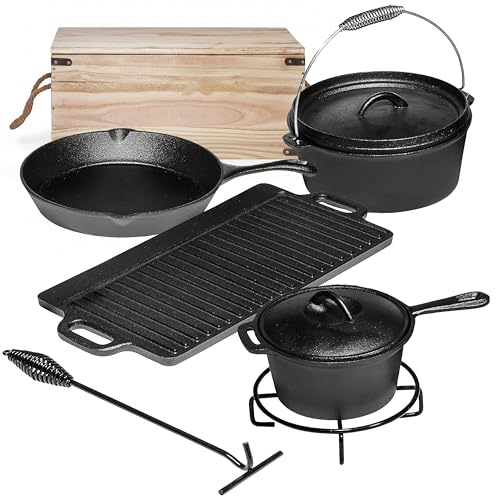
- BrandBruntmor
Last update on 2026-08-15 / Affiliate links / Images, Product Titles, and Product Highlights from Amazon Product Advertising API
Best Camping Cast Iron Cookware for Campfire Meals
Cooking outdoors gets old fast when thin pans develop hot spots, handles wobble, and dinner sticks before the fire settles down. The Lodge bundle takes a sturdier route, pairing familiar pan sizes with the steady heating expected from best camping cast iron cookware. It isn’t built for ultralight packing, and nobody will mistake five iron pieces for a compact hiking kit. Still, for campgrounds, cabins, RV trips, and backyard fires, the set brings enough flexibility to cook breakfast, dinner, and a late-night cobbler without digging through a box of mismatched pans.
Lodge Seasoned Cast Iron 5-Piece Bundle
The set includes a 10.5-inch griddle, an 8-inch skillet, a 10.25-inch skillet, a 10.25-inch Dutch oven, and a matching 10.25-inch lid. Each piece fills a different role instead of merely inflating the item count. The smaller skillet handles eggs, sauces, or a modest portion of vegetables, while the larger skillet gives burgers and steaks enough room to brown. Meanwhile, the Dutch oven covers chili, stew, braised meat, bread, and campfire desserts that need deeper walls and enclosed heat.
Pre-seasoning with 100% natural vegetable oil means the pans arrive with a usable protective layer already in place. That surface isn’t identical to synthetic nonstick cookware, so delicate foods may still cling until the seasoning grows smoother through regular cooking. Bacon, burgers, cornbread, and other foods containing some fat can help develop the finish over time. A little patience pays off here, but cooks expecting a slippery coating straight from the box may need to adjust their technique.
The 10.25-inch lid adds more value than a spare accessory usually does. Its self-basting tips direct condensed moisture back across food, helping roasts, stews, and braised dishes stay moist during a long cook. The lid also reduces heat loss when a campfire cools or the wind picks up around the cooking area. Crisp foods are a different story, since trapped steam can soften a browned surface if the lid stays on too long.
Easy-grip handles provide secure control while repositioning an empty skillet or turning the Dutch oven away from a hot patch of coals. Once the cookware is filled, however, the combined weight becomes noticeable in a hurry. Thick gloves or proper campfire mitts remain essential because every exposed iron surface can become dangerously hot. The handles improve leverage, but they don’t protect bare hands from stored heat.
Heat Performance Over A Campfire
Heat retention is the bundle’s strongest cooking advantage. Cold meat won’t pull the skillet temperature down as sharply as it can with a lightweight pan, so burgers keep sizzling and steaks continue developing a crust. Potatoes also brown more consistently once the iron is properly preheated. That stored heat makes camp cooking less dependent on keeping every flame perfectly even, which is handy because firewood rarely cooperates like a kitchen burner.
The flip side is slower temperature response. Moving a hot skillet away from the flames doesn’t cool it immediately, and food can continue cooking while the pan appears to be resting. Onions may go from golden to scorched if the pan starts too hot, while eggs can turn rubbery before the iron loses enough heat. Moderate preheating and a broad coal bed usually produce better results than setting the cookware above one fierce flame.
The 10.5-inch griddle suits pancakes, toast, tortillas, quesadillas, and breakfast meat because its low sides leave plenty of room for a spatula. A flat camp stove or stable grill grate gives it the most predictable surface. Direct flames require more attention, especially with bacon or sausage, since rendered fat can reach the fire and trigger smoky flare-ups. The open design is useful, but it won’t contain grease as neatly as either skillet.
The Dutch oven settles into slower cooking with less fuss once its heavy walls come up to temperature. Beans, chili, stew, and braised meat benefit from steady enclosed heat, particularly during cool evenings when thinner cookware loses warmth quickly. The lid holds moisture inside and reduces the need for constant stirring. Still, lifting a full pot from a low fire can be awkward, so a stable cooking area and deliberate movements matter more than speed.
Cooking Flexibility At Camp And Home
The set can sear, sauté, simmer, bake, broil, braise, roast, fry, and grill, which sounds broad because it genuinely is. The cookware works in an oven, on a standard stove, over a grill, above a campfire, and on an induction cooktop. That multi-surface compatibility keeps the bundle useful after camping season ends. Weeknight burgers, baked cornbread, roasted vegetables, and slow-cooked meals can all be handled indoors with the same pieces.
Pan size affects usefulness more than a long feature list. The 8-inch skillet is convenient for small portions, but it can feel cramped when several people expect breakfast at the same time. The 10.25-inch skillet offers a better balance for shared meals without becoming as cumbersome as a very large camp pan. Neither skillet replaces the Dutch oven, though, since soup, stew, and covered baking need deeper sides and more capacity.
The bundle also reduces the usual lid problem. Camp kitchens often end up with several pans and one lid that almost fits, leaving steam and heat to escape around the edge. Lodge includes a lid sized for the 10.25-inch Dutch oven, giving slow-cooked meals a dependable seal. That matched cookware design saves space compared with packing a separate lid for every vessel, even though the overall set remains bulky.
For kitchens that need a lighter coated pan beside traditional iron, consider non-aluminum nonstick cookware for meals where quick release and easier lifting matter more than campfire durability. That material serves a different purpose, particularly for delicate eggs or fast weekday cooking. The Lodge set remains the sturdier choice around coals, grills, and high oven temperatures. Keeping those roles separate prevents unrealistic expectations from either cooking surface.
Seasoning And Cleanup In Real Conditions
Cast iron maintenance is simple, but it can’t be ignored. Warm water, a pan scraper, and a stiff brush usually remove fresh residue before it hardens. A small amount of mild soap won’t automatically ruin established seasoning, despite the warnings still repeated around some campsites. Long soaking causes more trouble because exposed iron and standing water are an easy recipe for rust.
Drying deserves more attention than scrubbing. Wiping a pan with a towel may leave moisture inside the textured surface, especially around the handle connection and rim. Low heat evaporates that remaining water before storage. A whisper-thin layer of oil then reinforces the protective seasoning without leaving a sticky film that collects ash and grit.
Camp storage adds another wrinkle. Soot from a wood fire transfers easily to tents, clothing, vehicle interiors, and food containers. A dedicated crate or sturdy cookware bag keeps the dirty exterior isolated from the rest of the gear. Paper towels placed between stacked pieces protect the seasoned cooking surfaces and absorb small traces of moisture during transport.
Acidic recipes require sensible timing, particularly while the seasoning is still young. Tomato-heavy sauces and other acidic foods can weaken a thin finish during a long simmer, sometimes leaving the surface dull or the food slightly metallic. A well-established seasoning layer handles occasional acidic cooking more comfortably. Even then, transferring leftovers out of the pot after the meal is smarter than storing them in cast iron overnight.
Pros Of The Lodge Cast Iron Bundle
Reliable heat retention sits at the top of the strengths list. The pans hold cooking temperature after cold ingredients are added, helping meat sear and vegetables brown instead of turning watery. Thick iron also softens some of the temperature swings produced by shifting campfire coals. That steadiness won’t replace fire management, but it gives the cook more room for error.
The five-piece selection is practical rather than repetitive. A small skillet, larger skillet, flat griddle, Dutch oven, and matching lid cover distinct cooking jobs. Breakfast can stay on the griddle while a side dish cooks in the smaller pan, or the Dutch oven can simmer dinner while the larger skillet handles meat. Each piece earns its packing space more convincingly than the tiny filler pans included in some bundles.
Durable bare cast iron tolerates metal utensils, rough storage, grills, ovens, and open-fire cooking without relying on a fragile synthetic coating. Scratched seasoning can usually be repaired with cleaning, oil, and heat instead of forcing the entire pan into retirement. The cookware may outlast many lighter camp sets if it’s kept dry. That long service life helps justify the extra weight for trips where carrying distance isn’t a major concern.
Indoor usefulness keeps the set from becoming seasonal equipment. Induction compatibility is especially helpful because not every piece of traditional cookware works on those cooktops. The skillets and Dutch oven can move from a home stove into the oven for dishes that start with browning and finish with slower heat. That flexibility makes the bundle easier to use regularly instead of leaving it packed away between camping weekends.
Cons And Limits Worth Knowing
Weight is the largest drawback, plain and simple. Five cast iron pieces are better suited to car camping, RV travel, cabins, and permanent fire pits than backpacking or long walks from a parking area. Add food to the Dutch oven and the load becomes heavier still. Anyone counting ounces will leave this bundle behind, no matter how well it cooks.
Storage space can also become a headache in a small vehicle or crowded gear closet. Long skillet handles protrude, the Dutch oven occupies a noticeable footprint, and the griddle needs padding to avoid rubbing against the other pieces. Nesting helps, but it doesn’t turn the bundle into a compact cook kit. A solid crate makes transport easier while taking up even more room.
Slow heat response rewards patience and punishes distraction. The skillet takes time to preheat, then stays hot after the fire drops or the burner is lowered. Delicate food can stick if the iron is too cool, while oil and seasoning can scorch if the temperature climbs too high. Cooks accustomed to thin aluminum pans may need a few meals before the timing feels natural.
Routine care is another unavoidable tradeoff. The cookware must be cleaned, dried thoroughly, and lightly oiled before long storage, especially after damp camping trips. Rust can appear if the pans are packed wet or left in a humid shed. The process isn’t difficult, but it demands more attention than cookware that can be washed and forgotten in a closed tote.
12-Quart Pre-Seasoned Camping Dutch Oven Review
A small cooking pot can turn dinner for a crowded campsite into a drawn-out relay of half-finished batches. This 12-quart model takes the opposite approach, offering enough room for substantial meals while delivering the steady heat associated with best camping cast iron cookware. Its size favors group camping, RV trips, backyard fires, and vehicle-accessible sites rather than lightweight travel. The pot is undeniably bulky, but that bulk supports deep simmering, broad-surface frying, covered baking, and fewer rounds of cooking.
12-Quart Cast Iron Camp Dutch Oven
The 12-quart capacity is the defining feature of this camp Dutch oven. According to the supplied product details, it can prepare food for roughly six to ten people, depending on portion size and the recipe being cooked. Its 16-inch diameter creates enough room for a large stew, several sausages, pancakes, or a generous mixture of meat and vegetables. That broader surface can reduce crowding, which helps ingredients brown instead of releasing moisture and steaming together.
Cast iron construction gives the pot strong heat retention and steady heating once it reaches the desired temperature. Cold ingredients won’t cool the cooking surface as quickly as they might in a thin metal pot, so meat can continue browning and liquids can return to a simmer without a long interruption. The thick walls also help soften some temperature fluctuations caused by shifting campfire coals. Still, cast iron responds slowly, so a sudden increase or decrease in heat won’t produce an immediate change.
The pot arrives pre-seasoned, providing an initial protective layer that supports cooking and helps limit direct exposure of the iron to moisture. That surface shouldn’t be confused with a synthetic nonstick coating, though. Pancakes, eggs, and sticky sauces may still grab the iron if it’s insufficiently preheated or used without enough cooking fat. Repeated cooking, careful cleaning, and a thin coat of oil after drying can gradually strengthen the seasoning.
Capacity Built For Shared Camp Meals
A crowded campsite often exposes the limits of undersized cookware. One batch finishes, another starts, and the first plates are already cooling before the final servings leave the fire. The large cooking capacity of this Dutch oven can reduce that stop-and-start routine by holding a substantial quantity at once. Chili, stew, braised meat, soup, and mixed breakfast dishes all make practical use of the deep body.
The 16-inch diameter also gives ingredients more breathing room across the bottom. Sausages and meat can sit against the hot surface rather than piling on top of each other, while pancakes can be spaced more comfortably than they would be in a narrow pot. That said, the deep sidewalls make flipping delicate foods less convenient than it would be on a shallow griddle. Long utensils help keep hands away from the heat and make reaching across the wide base less awkward.
Smaller meals reveal the other side of the size equation. Heating a large cast iron vessel for one or two portions requires more time, fuel, and storage space than using a compact skillet. The 12-quart volume earns its keep when several plates need filling, but it may feel excessive during a quiet weekend for two. Matching the pot to the usual headcount matters more than simply choosing the largest capacity available.
Steady Heat For Slow And Direct Cooking
Heat retention suits recipes that depend on a consistent simmer. Once the iron is hot, stew, beans, braised meat, and soup can continue cooking even when a wood fire briefly weakens. That stored energy helps reduce sharp temperature drops after cold vegetables, broth, or meat enter the pot. It doesn’t eliminate the need to manage the fire, but it gives the cook a little more breathing room.
Frying and browning benefit from the same thermal stability. A properly preheated base can maintain contact heat as sausages, potatoes, or meat are added, helping surfaces develop color instead of turning pale and watery. The wide cast iron base also spreads heat across a larger cooking area. Uneven coals can still create hotter zones, so rotating the pot or rearranging the heat source remains part of the job.
Slow response is the main tradeoff. Pulling the Dutch oven away from the fire doesn’t stop cooking at once because the iron continues releasing stored heat into the food. Sauces can thicken further, oil can remain dangerously hot, and vegetables can soften past the intended point. Early temperature adjustments work better than waiting until food is already bubbling too aggressively.
Lid Lifter And Spiral Handle Design
The included lid lifter addresses a genuine campfire problem. A cast iron lid becomes heavy, sooty, and extremely hot after sitting near flames or holding coals during baking. The lifter adds distance between the hand and the heated surface while providing leverage for controlled removal. It also reduces the temptation to improvise with a short utensil, towel, or unstable stick.
Controlled lid movement matters because ash and hot coals can slide toward the food if the lid tilts suddenly. A firm lifting motion helps keep debris on top while the lid is moved to a safe resting place. The lid-handling accessory doesn’t remove every hazard, since the lid still needs a heat-resistant surface once it comes off. Dry grass, plastic tables, and unstable rocks are poor landing spots for hot iron.
The metal bail includes a spiral-shaped handle section designed to reduce heat conduction toward the gripping area. That detail may make handling more manageable, but it shouldn’t be treated as a guarantee that the handle will remain cool. Radiant heat from coals and prolonged exposure can warm the entire assembly. Thick gloves and deliberate lifting remain necessary, especially after the pot has been filled with food.
Cooking Range Beyond Basic Stew
The pot supports stewing, braising, frying, and grilling according to the supplied description. Meat can be browned in the base, vegetables can be softened in the same fat, and liquid can then be added for a slow finish without transferring ingredients between vessels. That one-pot workflow reduces cleanup and keeps browned flavor inside the meal. Deep walls also help contain splatter while frying over an outdoor heat source.
Covered cooking adds another layer of flexibility. The pot can hold moist heat around roasts, braises, casseroles, and other dishes that benefit from a protected cooking chamber. Campfire baking is also possible when heat is arranged above and below the vessel, though successful results still depend on careful coal placement. Surrounding heat matters more for bread and baked dishes than a fierce flame aimed only at the bottom.
Indoor cookware has a different set of practical demands, particularly on controlled electric burners. From that angle, stainless steel cookware for electric stoves provides a useful material reference where faster response and lower weight may matter more than campfire durability. This cast iron pot remains better aligned with coals, grills, prolonged heat, and large outdoor meals. The materials serve different routines rather than solving every cooking task equally well.
Cleaning And Seasoning Routine
The recommended cleaning process starts with hot water and a brush after cooking. Removing residue while the pot is still warm prevents food from drying into a stubborn layer along the bottom and sidewalls. Long soaking should be avoided because standing water can reach weak areas in the seasoning and encourage rust. Filling a large iron pot with wash water also makes it unnecessarily heavy and awkward to handle.
Drying is more important than making the surface look polished. The provided instructions recommend wiping the warm pot with a towel and then applying heat until any remaining moisture has evaporated. Water can hide around the rim, handle attachments, and textured areas even after the visible surface appears dry. Complete moisture removal protects the iron during storage and reduces unpleasant surprises before the next trip.
A thin application of oil should follow drying. Too much oil can create a sticky surface that collects dust, ash, and storage debris, so more isn’t better here. Wiping the oil across the interior and then removing the excess leaves a light protective film. The seasoned finish also benefits from storage in a dry location with a small amount of airflow beneath the lid.
Practical Strengths Of The Design
Large-batch efficiency is the clearest advantage. Preparing one substantial pot of food saves the repeated preheating, stirring, and serving required by several smaller batches. Group meals can reach the table closer together, which matters on chilly evenings when finished food loses heat quickly. The supplied six-to-ten-person estimate gives the capacity a clear purpose rather than making it large for its own sake.
Durable cast iron also tolerates the rough handling common around campsites. The material doesn’t depend on a delicate synthetic coating that requires soft utensils and careful stacking. Surface seasoning can become scratched or worn, yet it can be renewed through cleaning, oiling, and heating. Proper care gives the pot the potential to remain useful for a very long time.
The included handling features add practical value. The lid lifter supports safer lid removal, and the spiral bail section is designed to reduce direct heat transfer toward the gripping point. Both details address everyday problems caused by heavy, hot cookware rather than adding decorative extras. Gloves, stable footing, and thoughtful placement are still required, but the accessories make those routines less clumsy.
Weight And Storage Tradeoffs
Heavy weight is the most obvious limitation. The pot is far better suited to car camping, RV travel, backyard cooking, cabins, and established fire pits than hiking or minimalist packing. Cast iron is already substantial before the lid, lifter, and food are added. A full batch of stew can make relocation difficult, so the safest setup keeps the pot near its cooking position.
The 16-inch footprint also takes up meaningful room in a vehicle or storage cabinet. Its wide body, lid, and raised handle won’t disappear neatly inside a small nesting cook kit. A sturdy crate or dedicated bag can contain soot and protect nearby equipment, but that container adds more bulk. Tightly packed trunks may force a choice between this oven and other large pieces of camp gear.
Maintenance is another realistic tradeoff. The pot needs prompt cleaning, full drying, light oiling, and dry storage rather than being left damp in a closed tote. Campers who prefer cookware that can be ignored overnight may consider that routine fussy. Rust prevention isn’t difficult, but skipping it can turn a manageable cleanup into a longer restoration job before the next meal.
Best Camping Cast Iron Cookware With A Skillet Lid
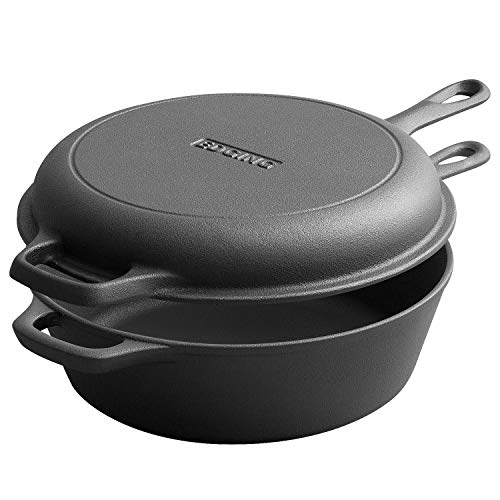
Limited packing space makes every piece of camp cookware justify its place in the vehicle, especially once food, fuel, tents, and coolers start competing for room. The EDGING CASTING set tackles that problem by combining a 3-quart Dutch oven with a shallow skillet that also serves as its lid. That 2-in-1 design gives the best camping cast iron cookware category a practical twist, since one compact pairing can handle soups, fried breakfasts, baked dishes, and seared meat. It’s still cast iron, so weight and maintenance come with the territory, but the flexible layout cuts down on redundant cookware.
EDGING CASTING 2-in-1 Dutch Oven Set
The set includes a 3-quart cast iron pot and a 10-inch shallow skillet that fits over the pot as a lid. Used together, they create an enclosed Dutch oven for baking, roasting, braising, and slow cooking. Separated, they become two independent cooking surfaces, allowing soup to simmer below while vegetables, eggs, or meat cook in the skillet. That clever split gives the set more range than a standard Dutch oven with a lid that can’t do much on its own.
Both pieces arrive pre-seasoned with vegetable oil, and the supplied product information states that no synthetic coatings or chemicals are used. The initial seasoning protects the iron and provides a workable cooking surface, though it won’t behave exactly like a modern coated nonstick pan. Eggs, pancakes, and delicate fish may still cling if the skillet is too cool, too dry, or flipped before a crust develops. A little cooking fat and patient preheating go a long way.
The compact capacity suits meals that don’t require an oversized camp cauldron. A 3-quart pot can handle chili, soup, beans, braised meat, or a modest casserole without consuming the storage space of a larger group-sized oven. The 10-inch skillet lid adds enough surface for breakfast food, burgers, vegetables, and flatbreads. Large gatherings will outgrow the set quickly, but smaller cooking jobs benefit from its manageable proportions.
Two Cooking Pieces Without Extra Clutter
The skillet lid is the standout feature because it performs a real cooking job instead of serving as dead weight between meals. Flipped upright, it becomes a shallow pan for frying eggs, browning sausage, searing meat, or sautéing vegetables. Placed over the pot, it traps heat and moisture for baking or slow cooking. This dual-purpose construction makes packing simpler and reduces the number of separate pans rattling around in a camp box.
Using both pieces at once adds flexibility during busy meal preparation. The pot can hold soup or stew while the skillet handles onions, meat, or a quick side dish. Once the skillet work is finished, it can return to the pot as a lid, carrying those browned flavors into the main recipe. That workflow saves washing another pan and keeps the cooking process moving without much fuss.
The design has limits, of course. A shallow skillet doesn’t contain grease as well as a deep frying pan, and using it as a lid means it won’t be available for another task at the same time. The shared-lid arrangement requires a little planning if several dishes need to stay covered or cook simultaneously. Still, for a compact setup, the tradeoff feels sensible rather than restrictive.
Heat Storage And Campfire Control
Cast iron absorbs heat gradually, then holds onto it with stubborn determination. That efficient heat storage helps the pot maintain a simmer after cool ingredients are added, while the skillet keeps enough surface heat to brown meat without immediately going limp. Campfire temperatures rarely stay perfectly steady, so a material that smooths out some of those fluctuations can make cooking less frantic. The iron won’t correct a badly arranged fire, but it offers more stability than a thin pan.
The special surface structure described in the product details supports heat transfer across the cooking area. Once properly warmed, the pot and skillet can distribute energy through the base and walls rather than concentrating everything in one narrow spot. Hot zones may still form over uneven coals or small burners, so rotating the cookware remains useful. Even heating improves with patient preheating, not with blasting the pan over the fiercest flame available.
Slow response is the price paid for strong retention. Lowering a burner or moving the pan away from the fire won’t stop cooking immediately because stored heat continues reaching the food. Delicate ingredients can overcook while the iron is cooling, and oil can remain dangerously hot longer than expected. Small heat adjustments and early timing work better than waiting until food is already scorching.
Handle Length And Everyday Control
Each piece has a 4.8-inch integrated handle, giving the pot and skillet more leverage than stubby loop handles. The extra length can make tossing vegetables, turning the skillet, and moving an empty piece feel more controlled. Integrated construction also removes screws or joints that might loosen after repeated heating and cooling. Around an open fire, though, longer handles still need to be positioned away from direct flames whenever possible.
Cast iron handles become hot along with the cooking surface. Extra length may place the hand farther from the center of the pan, but it doesn’t create a cool-touch grip. A dry, heat-resistant glove remains essential, especially after extended baking, broiling, or campfire cooking. The solid handle design improves control, yet safe handling still depends on preparation rather than bare-handed confidence.
Weight changes the feel of those handles once food is added. The skillet is easier to manage than a large Dutch oven lid, but the filled 3-quart pot can still pull heavily against the wrist. Two-handed support may be more comfortable when moving a full meal from the heat. A stable grate and a clear landing area reduce the need for awkward midair adjustments.
Cooking Range From Soup To Skillet Meals
The supplied details list soups, stews, baking, roasting, frying, grilling, broiling, braising, and sautéing among the set’s intended uses. That broad cooking range comes from the pairing of a deep pot and shallow skillet rather than from one piece trying to handle every job. The pot favors liquid-heavy dishes and enclosed cooking, while the skillet handles direct contact with hot iron. Together, they cover a surprising amount of camp cooking without becoming a sprawling collection.
Baking benefits from the skillet lid because the two pieces create a compact enclosed chamber. Bread, biscuits, cobbler, and small casseroles can cook with surrounding heat when the pot is placed over controlled coals. The skillet lid can also hold heat above the food if the campfire setup allows safe coal placement. Campfire baking still takes practice, since temperature depends on coal arrangement rather than a numbered oven dial.
Frying and sautéing feel more natural in the shallow skillet. Its lower sides leave better access for a spatula, making burgers, eggs, vegetables, and flatbreads easier to turn than they would be inside the deeper pot. Grease splatter is more exposed, so fatty foods need careful heat control over flames. The pot remains the safer place for deep simmering and recipes with a larger amount of liquid.
Cleaning And Seasoning After The Meal
The recommended care routine begins with hand washing in warm water. Cleaning soon after cooking keeps residue from hardening across the iron and reduces the need for aggressive scraping. Long soaking should be avoided because water can work through weak spots in the seasoning and encourage rust. A brush or scraper usually handles stuck food without turning cleanup into a wrestling match.
Thorough drying matters more than leaving the surface spotless and shiny. The product instructions recommend placing the cookware on a stove over medium heat after washing so remaining moisture can evaporate. At camp, low controlled heat can perform the same job, provided the pieces aren’t left unattended. Complete drying is especially important around the handle base, rim, and textured cooking surface.
Natural oil should be applied after drying, but only in a very thin layer. Excess oil can become sticky, collect dust, and leave a gummy coating before the next trip. Wiping the surface with a cloth or paper towel removes the extra while leaving enough protection behind. Stored in a dry place, the seasoned cast iron surface should become easier to maintain as cooking and care build up the finish.
Pros Of The EDGING CASTING Set
The biggest strength is functional efficiency. One skillet doubles as the lid, giving the set two cooking surfaces without adding a separate piece that serves only one purpose. The pot and skillet can work together or independently, which supports both one-pot meals and split preparation. That flexibility is useful in compact camp kitchens where storage space disappears fast.
Heat retention is another clear advantage. The cast iron construction holds temperature well during searing, simmering, baking, and roasting. Cold ingredients cause less dramatic temperature loss once the cookware is properly heated. That steadiness helps produce browned meat, consistent stews, and baked dishes with fewer abrupt heat swings.
The integrated long handles improve leverage. Their 4.8-inch length provides more room for control while tossing, turning, or repositioning the cookware. Solid cast construction avoids loose handle hardware and supports long-term durability with proper care. The pre-seasoned surface also reduces the amount of preparation needed before the first basic cooking session.
Cons And Realistic Tradeoffs
Cast iron weight remains the main weakness. This set is easier to pack than a large multi-piece bundle, but it’s still much heavier than aluminum or thin stainless steel camping cookware. Backpacking and long carries won’t play to its strengths. Car camping, cabin stays, and fixed cooking areas make far more sense.
The 3-quart capacity can feel restrictive during large group meals. It handles smaller batches efficiently, yet it won’t replace a deep 8-quart or 12-quart camp oven for feeding a crowd. Cooking for several hungry adults may require repeated batches or another pot. The 10-inch skillet also has limited room once several burgers or large cuts of meat enter the picture.
Maintenance requires consistency. The cookware needs hand washing, full drying, light oiling, and dry storage after use. Skipping those steps can lead to rust or a weakened seasoning layer. From a separate household angle, a neutral reference related to laundry routines is washing machines for homes with pets, though that topic has no direct connection to cast iron cooking performance.
EDGING CASTING 5-Quart Dutch Oven Skillet Set
Camp cookware often looks compact in a product photo, then turns into a frustrating pile of mismatched lids, shallow pans, and pots that can’t handle a full meal. This 5-quart set takes a tidier route by pairing a deep Dutch oven with a shallow skillet that doubles as its lid. That 2-in-1 layout gives the best camping cast iron cookware category a practical advantage, especially when storage space matters but cooking flexibility can’t be sacrificed. It’s heavier than thin camping cookware, of course, yet the extra iron supports steadier heat, broader cooking methods, and fewer redundant pieces.
EDGING CASTING 5-Quart Dutch Oven Set
The set combines a 5-quart Dutch oven with a shallow cast iron skillet that fits over the pot as a lid. Used together, the two pieces create an enclosed vessel for baking, roasting, braising, and slow-cooked meals. Used separately, they provide two independent cooking surfaces for tasks such as simmering stew in the pot while frying vegetables or meat in the skillet. That difference matters at camp, where one extra functional pan can save a surprising amount of time.
The cookware arrives pre-seasoned with vegetable oil, and the supplied details state that no synthetic coatings or chemicals are used. Pre-seasoning gives the iron an initial protective layer and makes the set ready for basic cooking without a lengthy first-use process. Still, seasoned cast iron doesn’t behave exactly like a synthetic nonstick surface, so eggs, bread dough, or delicate fish may cling if the cookware is underheated or used with too little fat. Moderate heat and patient food release are part of the deal.
The 5-quart size sits in a useful middle ground. It offers more room than a compact 3-quart pot without becoming as cumbersome as a large group-sized Dutch oven. Soups, stews, casseroles, bread, roasted vegetables, and family-style camp meals fit the medium-capacity design more naturally than they would in a small skillet. On the other hand, very large gatherings may still need a second vessel or repeated batches.
Two-Piece Design And Cooking Flexibility
The shallow skillet lid is more than a cover. Flipped over and placed on heat, it becomes a separate cooking pan for frying bacon, browning meat, sautéing vegetables, or warming flatbread. Returned to the pot, it traps heat and moisture for slower recipes. This dual-purpose skillet lid cuts down on dead weight because every piece performs more than one job.
Cooking two parts of a meal at once becomes possible without hauling another pan. The Dutch oven can hold chili or soup while the skillet handles onions, sausage, or a side dish. Once that work is done, the skillet can go back on top as a lid, keeping the main pot covered. That sequence feels efficient rather than fussy, particularly in a small camp kitchen where burner space and cleanup water are limited.
The shared design does introduce a tradeoff. Once the skillet is serving as the lid, it can’t cook a separate dish at the same time. Likewise, the shallow walls contain less grease than a deep frying pan, so fatty foods need more careful heat control. The space-saving benefit is real, but meal planning still matters if several items need simultaneous cooking.
Heat Transfer And Campfire Performance
Cast iron stores heat slowly, then releases it steadily. That heat retention helps the Dutch oven maintain a simmer after cold ingredients are added and gives the skillet enough stored energy to brown food instead of cooling immediately. Campfire heat can shift with every coal and gust of wind, so a dense material that softens those changes is genuinely useful. It won’t fix a badly arranged fire, but it makes temperature swings less dramatic.
The product details also point to the surface structure of cast iron as part of its heat transfer behavior. Once the pot and skillet are properly warmed, energy spreads through the base and walls rather than staying concentrated in one tiny area. Uneven flames can still create hot spots, so rotating the cookware remains sensible. Patient preheating delivers better results than throwing cold iron over the fiercest part of the fire.
Slow response is the flip side of steady heat. Moving the cookware away from the flame doesn’t stop cooking at once because the iron continues releasing stored energy. Sauces may keep thickening, vegetables can soften further, and oil may stay dangerously hot for several minutes. Early adjustments and moderate heat work better than waiting until food is already scorching.
Loop Handles And Everyday Control
Both pieces use integrated loop handles rather than a single long handle. That layout keeps the cookware compact and gives both hands a secure place to grip while moving a full pot. Integrated construction also avoids screws or rivets that might loosen after repeated heating and cooling. For heavy cast iron, two balanced lifting points make more sense than relying on wrist strength alone.
The helper handles are especially useful once the 5-quart pot is loaded with stew, roast, or baked food. A filled Dutch oven can become awkward quickly, and balanced lifting reduces the chance of tilting hot liquid toward one side. Thick gloves are still essential because the handles heat along with the rest of the cookware. Secure control doesn’t mean cool-touch safety.
Loop handles also make the set easier to fit inside a camp bin or vehicle compartment. Long skillet handles often stick out, catch on other gear, and demand extra storage room. These shorter grips keep the footprint tighter, though they also place hands closer to the hot body of the pan. That compact-handle difference favors storage efficiency over distance from radiant heat.
Cooking Range From Bread To Braised Meat
The supplied product description lists soups, stews, baking, roasting, frying, grilling, broiling, braising, and sautéing among the intended cooking methods. The deep pot handles liquid-heavy meals and slow cooking, while the skillet suits direct contact with hot iron. Together, they cover a broad range without pretending one shape can handle every task equally well. That split cooking role is the set’s strongest practical feature.
Baking benefits from the enclosed Dutch oven setup. Bread, biscuits, cobbler, and casseroles can cook with heat surrounding the food instead of striking only the bottom. Controlled coals above and below the cookware can create a more oven-like environment outdoors. Still, campfire baking requires practice because there’s no numbered dial to correct an overly hot coal bed.
Frying and sautéing feel more natural in the shallow skillet. Lower walls make it easier to reach food with a spatula, turn meat, and remove delicate items without scraping them against a deep pot. The 5-quart base can also brown larger portions before liquid is added for braising. That one-vessel workflow keeps browned flavor in the meal and reduces the number of dishes waiting at cleanup.
Care Routine And Seasoning Maintenance
The recommended care process begins with hand washing in warm water. Cleaning while the cookware is still warm helps loosen residue before it dries into a hard layer. Long soaking should be avoided because moisture can work through weak areas in the seasoning and start rust. A brush, scraper, or soft cleaning tool is usually enough for ordinary camp meals.
Drying needs to be thorough rather than hurried. The supplied instructions recommend placing the cookware on a stove over medium heat after washing so remaining moisture can evaporate. At camp, low controlled heat can serve the same purpose as long as the pieces are watched closely. Complete drying protects the iron around rims, handles, and textured surfaces where water can hide.
A super-thin coat of natural oil should follow. Too much oil can turn sticky, collect dust, and leave the pan feeling gummy before the next use. Wiping away the excess with a cloth or paper towel leaves enough protection without creating buildup. Stored in a dry place, the seasoned surface should become easier to maintain as repeated cooking strengthens the finish.
Pros Of The EDGING CASTING Set
The strongest advantage is the 2-in-1 construction. The skillet works as a separate pan and as the Dutch oven lid, so the set delivers two cooking surfaces without adding a single-purpose cover. That arrangement saves storage space and supports more flexible meal preparation. It also reduces the number of loose pieces that need to be packed, cleaned, and kept together.
The 5-quart capacity offers useful balance. It’s large enough for soups, stews, bread, roasts, and family-style meals without becoming as bulky as oversized camp ovens. The size also suits indoor cooking, backyard grilling, and BBQ use between camping trips. That broader usefulness helps prevent the set from becoming equipment that sits untouched for most of the year.
Heat storage is another clear strength. Cast iron maintains temperature after cold food enters the pan, supporting better browning and steadier simmering. Integrated loop handles provide balanced control, while the pre-seasoned finish reduces initial preparation. Proper care can also renew the surface if seasoning becomes worn or scratched.
Cons And Practical Limitations
Weight remains the biggest weakness. Cast iron is far heavier than aluminum or thin stainless steel, even in a compact two-piece format. This set makes more sense for car camping, RV trips, cabins, backyard cooking, and established fire pits than for backpacking. Carrying both pieces over a long distance can turn a convenient cooking set into an unnecessary burden.
The shared skillet lid creates scheduling limits. The skillet can’t fry a separate dish while it’s covering the Dutch oven, so some meals require cooking in stages. Its shallow sides also contain less grease and liquid than a deeper pan. A little planning solves most of that, but the design isn’t as flexible as owning two pans plus a separate lid.
Maintenance demands consistency. The cookware needs hand washing, complete drying, light oiling, and dry storage after use. Leaving it damp in a tote can lead to rust, while using too much oil can leave a sticky finish. From a separate household angle, a neutral reference is washing machines for boats, though that subject has no direct bearing on cast iron cooking performance.
Amazon Basics Pre-Seasoned Cast Iron 5-Piece Set
A crowded camp kitchen can turn breakfast into a juggling act, especially when one undersized pan has to handle eggs, bacon, and potatoes in rotation. This five-piece collection offers a more organized setup, combining several useful sizes with the steady heating expected from best camping cast iron cookware. The pieces aren’t light, and the pre-seasoned surfaces shouldn’t be mistaken for modern nonstick coatings. Still, the mix of a griddle, two skillets, a Dutch oven, and a fitted lid covers far more outdoor meals than a single-purpose pan ever could.
Amazon Basics Cast Iron 5-Piece Set
The collection includes a 10.5-inch griddle, an 8-inch skillet, a 10.25-inch skillet, and a 10.25-inch Dutch oven with its own lid. Those pieces aren’t random fillers tossed together to make the set look larger. The small skillet suits eggs, sauces, and modest portions, while the larger skillet gives burgers, vegetables, and breakfast hash more room to brown. Meanwhile, the Dutch oven handles soups, braises, baked dishes, and meals that need deeper walls.
The five-piece arrangement makes meal planning less awkward because each pan serves a noticeably different role. Pancakes can cook on the low-sided griddle while bacon or potatoes occupy a skillet, reducing the need to wipe one surface clean between every task. The Dutch oven can stay on slower heat with chili or stew while the shallower pieces manage faster cooking. That flexibility matters most when several dishes need to reach the table before the first one goes cold.
The supplied dimensions are 14.17 by 12.2 by 10.63 inches, which gives a useful sense of the packed footprint. This isn’t a tiny nesting kit that disappears into a backpack, but the pieces can be stacked with padding between them for vehicle transport. The compact stacking potential helps, although the skillet handles still require room inside a bin or trunk. A sturdy crate makes more sense than a soft bag once the full set and lid are packed together.
Heat Distribution And Temperature Retention
Even heat distribution is one of the central reasons cast iron remains useful around campfires and grills. Once the cookware has warmed through, the thick metal spreads energy across the base instead of reacting sharply to every small flame change. Cold meat or vegetables are less likely to pull the pan temperature down immediately. That steadier behavior helps food brown instead of sitting in released moisture and turning pale.
Heat retention brings a second benefit during outdoor cooking. A fading coal bed or quick gust of wind won’t cool thick cast iron as rapidly as it would thin camping cookware. The stored heat keeps stews simmering and skillets sizzling for longer stretches. Still, slow temperature response cuts both ways because an overheated pan keeps cooking even after it’s moved away from the flame.
Moderate preheating is the sensible approach. Blasting cold cast iron over the hottest part of a fire can create aggressive hot zones before the rest of the pan catches up. A more gradual warmup, followed by small heat adjustments, gives the iron time to stabilize. The thermal mass then becomes an advantage rather than a source of scorched onions and burned oil.
Griddle, Skillets, And Dutch Oven Roles
The 10.5-inch griddle is well suited to pancakes, toast, tortillas, quesadillas, and other foods that benefit from low edges. A spatula can slide underneath more easily than it can inside a deep skillet, which makes breakfast less clumsy. Grease control is the tradeoff, since bacon or sausage fat has less room to stay contained. Over open flames, that can lead to smoke or flare-ups unless the heat is kept under control.
The two skillets offer useful separation between small and medium cooking jobs. The 8-inch pan can handle a couple of eggs, a small side, or a sauce without leaving food spread thin across an oversized surface. The 10.25-inch skillet provides more room for meat, vegetables, and shared portions while remaining easier to manage than a very large camp pan. Neither size is built for feeding a crowd by itself, but together they cover a broad range of everyday meals.
The Dutch oven brings depth and covered cooking to the set. Chili, soup, braised meat, baked beans, casseroles, and bread all benefit from its taller walls and fitted lid. The 10.25-inch Dutch oven also reduces splatter during frying and keeps moisture inside during slower cooking. Its capacity won’t match an oversized group camp oven, yet it suits moderate meals without becoming needlessly bulky.
Pre-Seasoning And Food Release
The cookware arrives pre-seasoned, so the iron has an initial protective layer before the first meal. That saves the trouble of starting with bare metal, but the product details clearly note that pre-seasoning doesn’t create a true nonstick function. Eggs, pancakes, and delicate fish can still cling if the pan is too cool, too dry, or disturbed before a crust develops. A little patience and enough cooking fat matter more than wishful thinking.
Food release should improve as the seasoning becomes more established through regular use and proper care. Fatty foods, moderate heat, and thin oil applications can gradually build a darker, smoother surface. The seasoning layer may develop unevenly at first, especially across areas that receive different amounts of heat. That variation is normal, though careless soaking or storage can undo the progress quickly.
Acidic ingredients deserve restraint during long cooks, particularly while the seasoning is still young. Tomato-heavy sauces and similar foods can weaken a thin protective layer if left simmering for an extended period. Occasional use isn’t necessarily a disaster, but transferring leftovers after cooking is smarter than storing them in the pot overnight. Realistic expectations make the set easier to appreciate because seasoned iron rewards technique rather than replacing it.
Oven Safety And Handling Demands
The set is listed as oven safe to 500 degrees Fahrenheit, which supports roasting, baking, broiling, and recipes that move from a stovetop or grill into enclosed heat. That range gives the cookware more year-round usefulness beyond camping trips. Cornbread, roasted vegetables, baked pasta, and slow-cooked meat all fit comfortably within the stated limit. The pieces can stay in regular kitchen rotation instead of sitting unused between outdoor weekends.
Every handle becomes hot during cooking. The supplied instructions call for hot pads, oven mitts, or potholders while moving or removing the cookware from a stove or oven. That warning matters just as much around a campfire, where radiant heat can warm handles even when they aren’t directly above the flame. Heat-safe handling is part of using cast iron properly, not an optional precaution.
Weight increases the handling challenge, particularly once the Dutch oven is full. A pot loaded with stew or braised meat can become awkward to lift from a low fire, and a single-handed move may put unnecessary strain on the wrist. Stable footing, two-handed control, and a prepared landing spot reduce the chance of spills. The heavy construction supports steady cooking, but it demands deliberate movement.
Cleaning And Storage Requirements
The cookware is listed as hand wash only, which rules out tossing the pieces into a dishwasher after a long trip. Warm water, a brush, and a scraper should handle most residue if cleanup begins before food dries hard. Long soaking is a poor habit because moisture can penetrate weak areas in the seasoning and encourage rust. A stubborn patch is easier to manage with gentle scraping than with hours underwater.
Drying should happen immediately after washing. A towel removes visible water, while low heat helps evaporate moisture hidden around the rim, handle connection, and textured surface. Once dry, a whisper-thin coat of oil protects the iron during storage. The thin oil layer matters because excess oil can turn sticky and collect dust, ash, or debris inside the camp bin.
Stacking requires a little care too. Paper towels or thin cloths between pieces help protect seasoned surfaces and absorb traces of moisture. A dedicated box also keeps soot from direct-fire cooking away from tents, clothes, and vehicle upholstery. Dry storage is the difference between cookware that’s ready for the next trip and cookware that needs rust removal before breakfast.
Strengths In A Real Camp Kitchen
Versatility is the clearest strength. The set covers flat-top cooking, shallow frying, searing, simmering, covered braising, and baking without relying on a collection of unrelated pans. Each piece has a distinct purpose, so the bundle doesn’t feel padded with decorative extras. For car camping or cabin cooking, that range can replace several lightweight pans that don’t hold heat as steadily.
Heat stability is another practical advantage. Meat can keep searing after it hits the skillet, while stews and sauces stay warmer through short changes in fire intensity. Cast iron also tolerates metal utensils and rougher handling better than cookware with a delicate synthetic coating. Surface wear can often be corrected through cleaning and reseasoning rather than forcing the pan into retirement.
The stated 500-degree oven limit adds indoor value. A skillet can begin on the stove and finish in the oven, while the Dutch oven can handle baked or slow-roasted dishes without switching vessels. That indoor and outdoor flexibility makes the set easier to use often enough to justify its storage space. Regular cooking also gives the seasoning more opportunities to develop.
Weaknesses And Practical Tradeoffs
Weight is the biggest weakness, plain and simple. Four cast iron vessels plus a lid make sense in a vehicle-supported campsite, but they’re poorly suited to backpacking or long carries from a remote parking area. Add food, utensils, and a storage crate, and the total load grows quickly. Lightweight travel calls for a different material even if that means giving up some heat retention.
The lack of true nonstick performance may frustrate cooks expecting eggs to slide around immediately. Pre-seasoning offers a starting point, not a flawless release surface. Heat control, cooking fat, and patience still determine whether delicate food sticks. Anyone unwilling to maintain seasoning may see the set as more work than it’s worth.
From a separate practical angle, a related household reference appears in immersion blender options associated with Bon Appetit, though that topic doesn’t affect this cookware set’s campfire performance. The more relevant limitation remains storage because long handles and multiple heavy pieces consume noticeable room. The five-piece footprint is manageable in a large trunk or cabin kitchen, but cramped vehicles may struggle to accommodate it.
Routine maintenance is the final tradeoff. Hand washing, immediate drying, light oiling, and moisture-free storage take more effort than rinsing a coated pan and putting it away. Skipping those steps can lead to rust or weakened seasoning. The process isn’t complicated, but cast iron rewards consistency and makes neglect obvious.


Top Rated Best Quality Range Hoods: 2026 Expert Picks

The 12 Best Small Solar Generators 2026

10 Best Quality Semi Automatic Washing Machine of 2026 For Leak-Free Laundry

11 Best Small Washer Machine of 2026 For Everyday Laundry

12 Best Vibration Pads For Washing Machine of 2026 To Stop Walking and Shaking

11 Best Selling Front Load Washing Machine of 2026 For Quiet Odor-Free Laundry

11 Best Washing Machine For King Size Bedding of 2026 To Prevent Cycle Errors

10 Best Small Front Loader Washing Machine of 2026 For Tight Closets






