
Best All Clad Cookware Line 2026: Smart Picks

The best all clad cookware line isn’t automatically the thickest, shiniest, or most expensive collection on the shelf. The smarter pick depends on how quickly a pan should respond, how much weight feels comfortable at the stove, and whether polished stainless steel is worth the extra upkeep. All-Clad offers several constructions that can look nearly identical from across the kitchen, yet their behavior over heat can differ in ways that matter during a rushed breakfast or a slow Sunday sauce. That’s where the fine print starts earning its keep.
D3 Stainless remains the practical reference point because its tri-ply build balances heat control, durability, and manageable weight. An aluminum core runs between stainless steel layers, helping the pan warm evenly without turning every skillet into a two-handed lifting exercise. It suits cooks who want crisp browning, steady simmering, and cookware that can move from stovetop to oven without much fuss. Still, stainless steel has a learning curve, and eggs won’t politely release from a cold, dry pan just because the logo carries prestige.
D5 Stainless adds layers and a steadier heating personality, which can help tame temperature swings during sauces, custards, and longer stovetop sessions. The tradeoff is easy to feel before dinner even starts: more weight, slower response, and a higher price. That extra stability may be useful on powerful burners or in kitchens where controlled heat matters more than rapid adjustments. For quick sautéing and frequent tossing, though, the additional heft can become a pain in the wrist rather than a hidden advantage.
Copper Core brings faster response by placing copper within the bonded construction. A small burner adjustment shows up in the pan sooner, giving delicate fish, caramel, and pan sauces a little more breathing room before they cross the line from done to overdone. The exposed copper band looks sharp, but it can discolor, so keeping that showroom finish means occasional polishing. Frankly, the cooking benefits are real, yet the cost makes the most sense when precise temperature changes are part of the regular routine rather than a once-a-year project.
Graphite Core tackles a different frustration: heavy cookware that becomes awkward once food, liquid, and a lid join the party. Its lighter construction can make lifting, pouring, and moving between burners less cumbersome while still supporting even heating. The catch is price, plus the fact that lighter weight doesn’t magically remove the habits stainless steel demands. Proper preheating, enough cooking fat, and patient release still matter, especially with proteins that tend to cling before a crust forms.
Set size deserves a hard look, too. A giant box may appear economical, but small saucepans, oversized stockpots, and duplicate pieces often spend years gathering dust. A focused set with a skillet, saucepan, sauté pan, and useful stockpot usually covers more real meals with less cabinet chaos. So, the strongest value often comes from D3 Stainless, while D5, Copper Core, and Graphite Core earn their keep through specific improvements in stability, responsiveness, or handling.

- TAR Score9.4
TAR Score is a ranking system developed by TopAppliancesReviews.com. TAR score has no relationship or impact from any manufacturers or sales agent websites. Learn more
- BrandAll-Clad

- TAR Score9.2
TAR Score is a ranking system developed by TopAppliancesReviews.com. TAR score has no relationship or impact from any manufacturers or sales agent websites. Learn more
- BrandAll-Clad
- TAR Score9.2
TAR Score is a ranking system developed by TopAppliancesReviews.com. TAR score has no relationship or impact from any manufacturers or sales agent websites. Learn more
- BrandAll-Clad

- TAR Score9.0
TAR Score is a ranking system developed by TopAppliancesReviews.com. TAR score has no relationship or impact from any manufacturers or sales agent websites. Learn more
- BrandAll-Clad
- TAR Score9.0
TAR Score is a ranking system developed by TopAppliancesReviews.com. TAR score has no relationship or impact from any manufacturers or sales agent websites. Learn more
- BrandAll-Clad
- TAR Score9.0
TAR Score is a ranking system developed by TopAppliancesReviews.com. TAR score has no relationship or impact from any manufacturers or sales agent websites. Learn more
- BrandAll-Clad

- TAR Score9.0
TAR Score is a ranking system developed by TopAppliancesReviews.com. TAR score has no relationship or impact from any manufacturers or sales agent websites. Learn more
- BrandAll-Clad

- TAR Score9.0
TAR Score is a ranking system developed by TopAppliancesReviews.com. TAR score has no relationship or impact from any manufacturers or sales agent websites. Learn more
- BrandAll-Clad
Last update on 2026-08-14 / Affiliate links / Images, Product Titles, and Product Highlights from Amazon Product Advertising API
All-Clad Simply Strain 6-Quart Multipot Review
Draining a heavy pot of boiling water can turn an ordinary pasta night into an awkward balancing act, especially once a loose colander and slippery oven mitts enter the picture. The All-Clad Simply Strain Multipot tackles that nuisance with a locking straining lid built directly into the cookware, keeping the process contained and noticeably less fussy. Within the broader search for the best all clad cookware line, this piece stands apart as a practical specialist rather than a traditional bonded skillet or saucepan. Its appeal rests on convenience, sturdy stainless-steel construction, and the flexibility to handle far more than noodles.
All-Clad Simply Strain 6-Quart Multipot
The defining feature is plainly the locking straining lid, and it solves a problem that many multipurpose pots only address halfway. After boiling pasta, potatoes, vegetables, or shellfish, the lid stays secured while liquid pours through the integrated openings. That means there’s no separate strainer to retrieve, stabilize, wash, and somehow fit into an already crowded sink. Simple idea, big difference on a busy evening.
The same setup helps after browning ground meat or sausage because the lid can drain excess cooking fat without requiring the food to be transferred. Keeping ingredients in the pot reduces splashes and preserves the momentum of a one-pot recipe. It also means fewer dishes, which isn’t glamorous, but it’s the kind of benefit that gets appreciated after dinner rather than during a product demonstration. The pot’s design feels rooted in an actual kitchen annoyance instead of a decorative add-on.
Six quarts hits a useful middle ground for family-size batches, soups, chili, grains, pasta, and steamed vegetables. It offers enough room for generous portions without becoming as cumbersome as a tall stockpot built for canning or oversized gatherings. Still, the capacity may feel excessive for one small serving, particularly in a compact kitchen where storage space is tight. This isn’t the pot for heating a cup of soup; it earns its cabinet space by handling full meals and batch cooking.
Stainless-Steel Build And Stable Heating
The body uses durable stainless steel, paired with a heavy-duty stainless-steel base intended to resist warping during regular cooking. That sturdier base matters because large pots carry considerable weight once filled with water, food, and a fitted lid. A thin bottom can become unstable over repeated heating cycles, while this construction aims to remain flat against the burner. Stable contact also supports more predictable performance on smooth cooktops.
Stainless steel brings its familiar strengths: it won’t absorb odors, react easily with acidic sauces, or demand the delicate treatment associated with coated interiors. Tomato sauce, broth, browned meat, and salted pasta water can all share the same pot without requiring separate cookware. The tradeoff is that food can stick if heat and cooking fat aren’t managed well. Browning meat works better with a properly heated surface, while lower heat and a splash of liquid help loosen the flavorful bits left behind.
This multipot doesn’t claim the fully bonded construction associated with some classic All-Clad collections, so expectations should stay grounded. Its value comes from a purpose-built base, stainless durability, and the integrated straining system, not from pretending to be a precision sauté pan. Cooks chasing ultra-responsive temperature changes for delicate sauces may prefer a different piece. For boiling, steaming, braising, and one-pot meals, though, the priorities are sensible and well matched.
Handling A Full Six-Quart Pot
Large cookware can become surprisingly unruly once it’s filled, which makes the extra-wide handles more than a cosmetic detail. Their broader shape provides room for a secure grip, even with bulky oven mitts covering the hands. That’s especially useful while carrying soup, draining pasta, or transferring the pot from a hot oven. Narrow handles may look sleek, but they’re no bargain when fingertips are struggling to control several pounds of hot food.
The lid’s locking mechanism also changes how the pot feels during draining. Instead of pressing a standard lid against the rim and hoping it doesn’t slide, the cook can hold the handles while the secured lid stays in position. Care is still necessary because steam and hot liquid remain real hazards, and no lid removes the need for a slow, controlled pour. Even so, reducing one moving part makes the job less clumsy.
Storage deserves a mention because a six-quart pot and its lid take up meaningful cabinet room. The integrated function can offset that footprint by replacing a separate pasta strainer or colander for many routine jobs. Kitchens with limited shelving may still need to plan around the pot’s width and prominent handles. The design favors safe handling and usability over compact nesting, and that’s a reasonable trade for anyone tired of cramped grips.
Cooking Range Beyond Pasta
Pasta is the obvious use, yet the pot’s one-pot flexibility makes it more useful than its name might suggest. Chili can begin with browning meat, continue with draining excess fat, and finish with beans, tomatoes, and seasoning in the same vessel. Soups and stews benefit from the six-quart capacity, while boiled potatoes can be drained and mashed without pulling out another bowl. That kind of workflow keeps prep moving and cuts down on cleanup.
Steaming is another practical route, particularly for vegetables, dumplings, or seafood, provided the included components and food placement suit the recipe. The pot can also handle grains, corn on the cob, broth, and larger batches of sauce. Its 600°F oven-safe rating broadens the possibilities further, allowing stovetop cooking to transition into the oven or under the broiler. Handles and lid parts will become hot, of course, so oven mitts aren’t optional.
Induction compatibility adds genuine flexibility for homes where appliances may change over time. The multipot works across all stovetop types, including induction, so it won’t become obsolete after a kitchen remodel or range replacement. A separate cookware topic appears in non-stick stone cookware considerations, though that category serves different cooking habits and shouldn’t be treated as a direct substitute for this stainless multipot. Stainless steel favors durability and browning, while coated cookware generally prioritizes easier release.
Cleaning And Long-Term Appearance
The multipot is listed as dishwasher safe, which offers a convenient fallback after a heavy meal. Even so, handwashing is recommended to preserve the polished appearance and help the cookware age more gracefully. Stainless steel can develop water spots, mineral residue, or rainbow-like heat discoloration, none of which necessarily means the pot is damaged. A nonabrasive stainless cleaner and a little patience usually handle those cosmetic marks better than aggressive scrubbing.
Food residue around the lid openings may require a closer rinse because integrated strainers naturally create small areas where starch or grease can collect. Soaking the lid briefly can loosen dried pasta foam or sauce before washing. The polished finish looks sharp, but it will show fingerprints and cooking marks more readily than a brushed exterior. Anyone expecting a permanently showroom-bright surface may spend more time polishing than cooking.
The use of recycled stainless steel adds a responsible material choice without changing the basic care routine. Durability also plays a role in reducing replacement cycles, provided the pot is treated sensibly and not subjected to harsh thermal shock. Moving a blazing-hot pot straight into cold water can stress metal and create avoidable warping risks, regardless of a sturdy base. Letting the cookware cool slightly is the dull advice that pays off over years.
Strengths That Matter In Daily Use
The strongest benefit is the way several jobs stay inside one piece of cookware. Boiling, draining, browning, steaming, simmering, and oven finishing all fit within the pot’s multipurpose design. That saves time at the sink and limits the shuffle between pot, colander, bowl, and back again. For kitchens where dinner often needs to happen without ceremony, that streamlined routine has real value.
The wide handles, locking lid, induction compatibility, and high oven limit create a sensible package rather than a collection of disconnected features. Each detail supports safe movement or broader cooking use. The limited lifetime warranty also gives the product a more durable ownership frame, though warranty coverage always depends on the stated terms and proper use. It’s reassuring, but it shouldn’t be mistaken for protection against every stain, scratch, or accidental mishap.
Visual longevity is another plus because polished stainless steel doesn’t follow short-lived color trends. It can sit beside older cookware without making the kitchen look mismatched. More importantly, the uncoated interior avoids concerns about wearing through a nonstick layer during stirring, draining, or contact with metal utensils. The stainless cooking surface asks for better heat control, yet it rewards that small learning curve with fewer material restrictions.
Weaknesses And Practical Tradeoffs
The most obvious limitation is weight. A six-quart stainless pot becomes heavy once filled, and the secure handles don’t change the basic physics. Anyone with limited wrist strength may prefer draining smaller batches or removing some liquid with a ladle first. The locking lid improves control, but it can’t make a full pot light.
Stainless steel also isn’t naturally forgiving with sticky foods. Eggs, delicate fish, and low-fat ingredients may cling unless the surface is preheated correctly and enough oil or butter is used. This multipot wasn’t designed to replace a nonstick skillet, so expecting effortless release would miss the point. Its core strengths are durability, liquid-based cooking, browning, and convenient draining.
The Made in China origin may matter to shoppers expecting every All-Clad piece to be manufactured in the United States. The product is described as designed in Canonsburg, Pennsylvania, while manufacturing takes place in China. That distinction should be understood before purchase rather than discovered from the packaging later. Country of manufacture doesn’t determine performance by itself, but transparency matters when brand heritage influences the buying decision.
Price can be another sticking point because the multipot’s appeal depends on using its specialized features regularly. A basic stockpot and separate colander may cost less and perform the same fundamental task, albeit with more pieces and more handling. The value becomes easier to justify when pasta, steamed vegetables, soups, and one-pot dinners appear frequently in the weekly rotation. Used occasionally, the built-in straining system may feel like a costly convenience; used often, it can become the reason the pot stays within easy reach.
All-Clad D5 Stainless 10-Piece Cookware Set Review
A cookware set can look beautifully coordinated and still become frustrating once uneven heat, awkward pouring, or flimsy handles enter the routine. This collection takes a steadier route, using five bonded layers and a stainless steel core to reduce hot spots across several everyday pan shapes. Among contenders for the best all clad cookware line, the D5 set leans toward measured heat control, solid handling, and long-term durability rather than featherlight movement. That approach suits cooks who’d rather have stable temperature behavior than a pan that reacts sharply to every tiny burner adjustment.
All-Clad D5 Stainless 10-Piece Set
The collection covers the pieces most kitchens reach for week after week: 8-inch and 10-inch fry pans, 1.5-quart and 3-quart saucepans with lids, a 3-quart sauté pan with lid, and an 8-quart stockpot with lid. That mix handles quick eggs, pan sauces, sautéed vegetables, pasta, soup, braised dishes, and larger family meals without stuffing the cabinet with rarely used specialty shapes. For anyone weighing the best all clad cookware line, this assortment feels thoughtfully broad rather than padded with filler. The missing lids for the fry pans may still bother cooks who prefer covered skillet cooking, but the overall lineup is practical.
The smaller fry pan fits a couple of eggs, a modest serving of vegetables, or a compact portion of protein without heating an oversized surface. The 10-inch pan gives more breathing room for browning while remaining easier to control than a wide restaurant-style skillet. Meanwhile, the 3-quart sauté pan brings straight sides and a lid, making it better suited to shallow braises, one-pan meals, and recipes with more liquid. That distinction matters because a fry pan and sauté pan may overlap, yet their shapes solve different problems.
The 8-quart stockpot rounds out the collection with enough capacity for pasta water, broth, soup, chili, or batch cooking. It’s a generous size, though not so huge that it becomes useful only during holidays. The 1.5-quart saucepan handles butter, reheating, grains, and small sauce work, while the 3-quart version takes on larger portions without immediately reaching the stockpot. Altogether, the set creates a sensible ladder of sizes, which is one reason it earns serious attention within the best all clad cookware line discussion.
Five-Ply Construction And Heat Control
The heart of D5 is its patented five-ply construction, built around alternating layers that include a steel core. That internal structure is designed to spread heat evenly and soften abrupt temperature swings, a useful trait for sauces, browning, and longer stovetop recipes. Instead of a pan racing ahead as soon as the flame changes, D5 behaves in a calmer, more deliberate way. That steadiness can make the cooking process feel less twitchy, especially on powerful burners.
Even heating matters because a skillet with concentrated hot spots can burn one side of a chicken breast while leaving another pale. The D5 structure aims to keep the cooking surface more consistent, helping food brown across a wider area instead of clustering around the center. For the best all clad cookware line, that heat stability is the major calling card. It won’t correct poor burner sizing or overcrowding, but it gives the cook a more predictable starting point.
The tradeoff is response speed. Five-ply cookware generally carries more material than a thinner tri-ply pan, so it can take longer to warm and cool. Quick burner changes may not show up instantly, and that’s not always a flaw; steady heat can protect a delicate sauce from sudden spikes. Still, cooks who constantly toss, lift, and make rapid temperature adjustments may prefer a lighter feel. D5 favors control and consistency over nimble, almost jumpy responsiveness.
Weight also deserves an honest mention. Once the sauté pan or stockpot is loaded with food, the layered construction becomes noticeable at the wrist. The set isn’t built for effortless one-handed flipping, and anyone with reduced grip strength may find the larger pieces demanding. That said, the additional heft supports the warp-resistant exterior and planted feel that many stainless steel cooks value. It’s a classic give-and-take: steadier cookware, more muscle required.
Stainless Steel Cooking Surface
The stainless steel interior supports the kind of browning that coated cookware often softens. Proteins can form a deeper crust, and the browned bits left behind become useful for pan sauces once liquid is added. Within the best all clad cookware line, D5 makes a strong case for cooks who care about searing and deglazing rather than effortless release alone. The cooking surface is durable, but it expects better technique than a nonstick pan.
Preheating matters. A cold stainless steel pan encourages food to cling, while overheated oil can smoke before the ingredients even arrive. Moderate heat, a brief warm-up, and enough cooking fat create a more cooperative surface. It’s not magic, just timing, and the five-ply heat distribution gives that process a steadier foundation.
Delicate foods reveal the learning curve fastest. Eggs, thin fish fillets, and low-fat ingredients may stick if moved too early or cooked without enough oil. That limitation doesn’t make D5 unsuitable; it simply means the set won’t replace every coated skillet in every kitchen. A related cookware perspective appears in stainless steel non-stick cookware set considerations, where release, durability, and maintenance involve a different balance.
Acidic ingredients are a more comfortable match for stainless steel. Tomato sauce, wine reductions, citrus-based mixtures, and vinegar-heavy recipes can cook without the seasoning concerns associated with reactive bare metals. The surface also tolerates common utensils without requiring the careful tool restrictions of many coatings. For cooks chasing the best all clad cookware line, this ingredient flexibility adds everyday usefulness that doesn’t shout for attention but shows up repeatedly.
Handles, Pouring, And Daily Control
The oversized stainless steel handles are double riveted, giving the pans a secure connection point during lifting and pouring. Their substantial shape offers room for a full grip, which matters once a saucepan contains boiling water or the sauté pan holds a heavy braise. The handles won’t feel soft or cushioned, and some hands may need time to get used to their profile. Still, firmness beats wobble when hot cookware is moving across the kitchen.
Flared rims support drip-free pouring, a small feature that earns its keep with stock, sauce, pasta water, or melted butter. Straight rims often send liquid crawling down the outer wall, leaving a streak on the pot and a puddle on the counter. The flare gives liquid a cleaner exit path. Not every pour will be flawless, especially from a full eight-quart pot, but the shape is clearly more practical than a blunt edge.
The brushed stainless steel finish tones down fingerprints and minor marks better than a mirror-polished exterior. It still looks refined, though less fussy, which suits cookware meant to be used rather than displayed untouched. Over time, heat tint, small scratches, and water spots can appear, particularly with frequent high-temperature cooking. The brushed finish helps those signs of use blend in instead of standing out like a sore thumb.
Lids add another layer of control by containing steam during rice, sauces, braises, and simmering. Stainless steel lids don’t offer the visibility of glass, so checking progress means lifting them and releasing heat. On the upside, they avoid concerns about glass breakage and remain suitable for the set’s high oven temperatures. In the search for the best all clad cookware line, that oven-ready construction may matter more than seeing through the lid.
Oven, Broiler, And Stovetop Flexibility
Each piece is rated for oven and broiler use up to 600°F, opening the door to stovetop searing followed by oven finishing. A thick pork chop can brown in the fry pan and finish in the oven without moving to another dish. The sauté pan can start a braise on the burner, then continue under steady enclosed heat. That flexibility trims cleanup and keeps flavorful drippings exactly where they belong.
Induction compatibility gives the collection broader long-term usefulness. The cookware works on any stovetop, including induction, so a future appliance change doesn’t force a new set purchase. Flat, stable bases also matter on smooth ceramic and glass surfaces where rocking cookware can heat unevenly. D5’s substantial construction feels particularly at home on those burners, though the weight calls for lifting rather than dragging.
Broiler safety deserves some perspective because 600°F capacity doesn’t mean every meal needs maximum heat. The rating provides headroom for finishing cheese, browning a crust, or cooking under strong radiant heat without swapping pans. Handles become extremely hot in the oven, and their stainless steel construction holds that heat longer than many people expect. Reliable oven mitts are part of the routine, full stop.
The best all clad cookware line should make transitions between cooking methods easier, and D5 does exactly that. Frying, simmering, searing, braising, baking, and broiling can happen across the set without concern about a delicate coating. That doesn’t make every piece equally convenient for every task, but the temperature range removes a lot of unnecessary hesitation. The cookware feels built for recipes that move through several stages rather than staying parked over one burner.
Cleaning And Maintenance Realities
Handwashing is recommended, and that advice makes sense for preserving the brushed stainless finish. Warm water, dish soap, and a nonabrasive sponge handle routine residue, while tougher browned spots benefit from a short soak. Stubborn discoloration may call for a stainless steel cleaner rather than brute-force scrubbing. Tossing the pans into harsh wash cycles may save a few minutes, but it can dull the finish over time.
Stainless steel isn’t maintenance-free, despite its durable reputation. Salt can leave small marks if allowed to sit undissolved in cool water, and high heat can create rainbow discoloration. Neither issue necessarily ruins performance, yet both can surprise anyone expecting the pans to remain factory-fresh without effort. The best all clad cookware line still needs realistic care, and D5 rewards steady habits more than neglect.
Cleaning after searing becomes easier when the fond is used rather than attacked. Adding broth, wine, or water while the pan is warm loosens browned bits and turns cleanup into part of the recipe. Burned sugar, scorched milk, or neglected starches are more stubborn, no bones about it. The stainless cooking surface can recover from messy sessions, but patience works better than scraping with whatever happens to be nearby.
Manufacturing, Warranty, And Long-Term Value
The set is made in the United States with global components at the company’s Canonsburg, Pennsylvania factory. That production detail carries weight for cooks who value established metalworking experience and domestic manufacturing. The cookware draws on decades of brand history, but the practical question remains how it behaves after years of heat, washing, and regular handling. Its bonded construction, riveted handles, and warp-resistant exterior are all aimed at that long horizon.
A limited lifetime warranty supports the durability message, though coverage depends on the stated terms and proper use. It shouldn’t be read as protection against staining, scratching, overheating, or accidental damage. Still, warranty backing matters more on a major cookware purchase than on a disposable kitchen gadget. Buyers considering the best all clad cookware line are often paying for years of service, not a short burst of novelty.
The price is the biggest hurdle. D5 carries features that matter, but the value depends on actually benefiting from its steadier heat, full stainless construction, and broad oven compatibility. A cook who mainly reheats simple meals may never tap the set’s strengths, while someone who sears, deglazes, braises, and manages sauces regularly can put every layer to work. The cost-to-usefulness balance changes dramatically based on cooking habits.
Storage is another quiet expense. Ten pieces, counting lids, need real cabinet space, and the long handles don’t disappear neatly into a tiny cupboard. Hanging storage or a wide drawer can make daily use smoother, while stacked storage may require pan protectors to limit scratching. The set’s substantial build feels reassuring on the stovetop, yet it asks for room, care, and a willingness to lift more weight than lighter cookware lines.
Strengths And Limitations In Real Kitchens
The strongest case for D5 rests on even heating, durable stainless steel, and the useful spread of pan sizes. Its five-ply build helps reduce temperature swings, while the flared rims and secure handles improve daily control. The set also moves freely between induction, traditional stovetops, ovens, and broilers. Those benefits line up neatly with what many cooks expect from the best all clad cookware line.
The weaknesses are just as clear. D5 is heavy, slower to respond than thinner cookware, and less forgiving than nonstick surfaces. Handwashing adds another chore, and the purchase price may be hard to justify for occasional cooking. None of those drawbacks is hidden behind vague marketing; they’re direct consequences of the five-ply design and uncoated stainless interior.
The set makes the most sense in a kitchen where browning, sauce work, oven finishing, and batch cooking are regular habits. It makes less sense where lightweight pans, instant temperature changes, and effortless egg release take priority. That split is useful because no cookware line wins every category. D5’s identity is steady, substantial, and technique-friendly, not light, slick, or carefree.
Realistic expectations keep the purchase grounded. These pans won’t prevent sticking without proper preheating, they won’t stay spotless without maintenance, and they won’t feel weightless once filled. What they offer is a carefully built platform for controlled cooking across a wide range of recipes. For shoppers narrowing down the best all clad cookware line, the D5 collection stands out through heat stability, construction depth, and long-term practicality rather than flashy shortcuts.
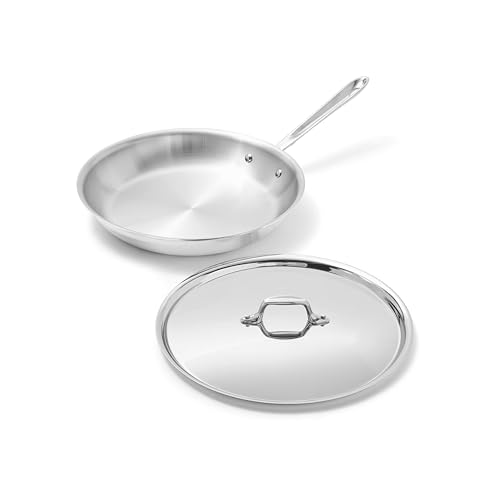
All-Clad D3 12-Inch Fry Pan With Lid
Wide skillets sound convenient until their weight, sticking surface, and long handle start testing patience halfway through dinner. This pan takes a more disciplined approach, pairing a roomy cooking area with fully bonded tri-ply construction that spreads heat across the base and sides. Within the best all clad cookware line, the D3 series is known for balancing responsive heating with a manageable build rather than piling on extra metal. That balance makes the pan useful for searing, sautéing, shallow braising, and oven finishing, though stainless steel technique still matters.
All-Clad D3 12-Inch Fry Pan
The 12-inch cooking surface gives ingredients enough room to brown instead of steaming in their own moisture. Several chicken pieces, a generous batch of vegetables, or a family-size skillet meal can spread out without being stacked on top of one another. That extra space is handy during busy dinners because fewer batches mean less standing at the stove. The tradeoff, naturally, is a larger footprint in the cabinet and more weight once the pan is loaded.
The included lid adds a layer of flexibility that an open fry pan can’t quite match. After searing, the pan can shift into covered cooking for tender vegetables, shallow braises, or thicker cuts that need a gentler finish. Steam stays contained, moisture loss slows down, and the same vessel handles multiple stages of a recipe. Still, covering food too soon can soften a crisp crust, so the lid works best as a deliberate tool rather than a default setting.
The polished stainless steel finish gives the pan a classic look that fits easily beside older cookware. It won’t depend on a colored coating or decorative exterior that may feel dated later. On the other hand, fingerprints, water spots, and fine scratches will show more clearly on the bright surface. Anyone chasing a permanently spotless appearance will spend more time polishing than someone who accepts normal signs of use.
Tri-Ply Heating And Burner Response
The pan uses three bonded layers, with an aluminum core placed between stainless steel. Aluminum conducts heat faster than stainless steel alone, helping the pan warm more evenly and react sooner when the burner changes. Because the construction runs across the entire body rather than sitting only in a disk under the base, heat can travel into the sidewalls as well. That full bonding is one of the defining features of the D3 line.
Fast response can be a blessing while cooking garlic, butter, or pan sauces that change quickly over heat. Lowering the burner produces a more noticeable effect than it might in heavier cookware with additional layers. That gives the cook better control, but it also means the pan won’t hide sloppy temperature management. The responsive aluminum core rewards attention and can punish a moment of distraction.
Even heating supports better browning across the broad surface, especially once the pan has had time to preheat. A poorly matched burner can still leave the outer edge cooler than the center, particularly on compact stovetops. The construction reduces that problem, but it can’t rewrite basic burner geometry. Using a heating element close to the pan’s diameter helps the 12-inch skillet perform more consistently.
The D3 design also avoids some of the heft associated with thicker five-ply cookware. It’s not a featherweight pan, yet the weight-to-control balance feels more practical for lifting, tilting, and moving between stovetop and oven. That difference matters during sautéing, where frequent movement is part of the job. A heavier pan may hold heat longer, but D3 feels less stubborn in the hand.
Searing, Browning, And Food Release
The uncoated stainless steel surface is built for searing and fond development. Meat can form a browned crust, while the caramelized bits left behind become the base for a pan sauce. A splash of broth, wine, or water loosens those bits and turns what looks like stuck residue into concentrated flavor. That process is one reason stainless steel remains popular in kitchens where browning matters more than effortless release.
Food sticking is the most common frustration, and it usually traces back to heat, timing, or insufficient fat. A properly preheated pan behaves differently from one that’s still warming, and proteins often release more naturally after a crust forms. Tugging too early can tear the surface of fish or chicken and leave half the meal behind. The stainless steel learning curve is real, though it becomes less annoying once the basic rhythm clicks.
Eggs and delicate fish require extra care. They can be cooked in this pan, but they generally need more fat and closer temperature control than they would on a coated skillet. Low-fat cooking is possible, yet it’s not the pan’s easiest assignment. For quick breakfasts where release matters more than browning, the uncoated interior may feel unnecessarily demanding.
Overcrowding creates another problem because chilled food can pull heat from the pan faster than the burner replaces it. Moisture then gathers, and the intended sear turns into a simmer. The generous diameter helps, but the pan still needs breathing room around each ingredient. That practical limitation is easy to forget when a wide surface invites just one more piece.
Handle Design And Everyday Control
The long stainless steel handle uses a classic riveted design shaped for a chef-style underhand grip. Its pronounced contour gives the hand leverage and helps reduce twisting when the pan is heavy. Some people appreciate that secure feel immediately, while others prefer a softer, rounder handle. Comfort is subjective here, but the shape clearly prioritizes control over cushioning.
Rivets create a strong connection between the handle and pan body, which matters during oven transfers and loaded pours. They also create small interior edges where grease and food residue can collect. A sponge or soft brush usually handles those spots, though they need more attention than a seamless interior. The durable attachment comes with a modest cleaning tradeoff.
The flared rim supports cleaner pouring for pan sauces, rendered fat, and cooking liquid. A blunt rim often lets liquid crawl down the outside of the pan, leaving a streak on the cooktop or counter. The flare gives the stream a sharper break point and better direction. It’s not a flashy feature, but small details like this make repeated use less irritating.
A loaded 12-inch skillet can still be heavy, lid or no lid. The long handle offers leverage, yet moving meat, sauce, and the pan together may call for two hands. That’s especially true after oven cooking, when the entire piece is hot. The large-capacity advantage and the handling burden are two sides of the same coin.
Lid Use And Cooking Flexibility
The stainless steel lid gives the pan more range than a bare frying pan. Vegetables can steam after sautéing, meat can finish gently, and shallow braises can simmer without losing liquid too quickly. This covered-cooking option also reduces splatter during certain recipes. One pan can move through several stages without sending another pot to the sink.
Unlike glass, the solid lid doesn’t offer a view of the food underneath. Checking progress means lifting it, releasing steam, and interrupting the cooking environment for a moment. The upside is durability and compatibility with higher oven temperatures. The stainless lid favors toughness over visibility.
Condensation returns moisture to the pan, which helps soups, sauces, and braises but can work against crispness. A beautifully seared piece of chicken may lose some texture if covered too early. Timing matters, plain and simple. The lid solves one problem while potentially creating another if it’s used without thinking.
The pan and lid combination is especially useful for recipes that start with browning and finish with slower heat. A chicken thigh can sear on the stovetop, simmer briefly with liquid, and then move into the oven. That workflow keeps flavor in one vessel and cuts down on cleanup. The multi-stage cooking ability is a stronger selling point than the lid by itself.
Oven, Broiler, And Induction Use
The cookware is rated for oven and broiler use up to 600°F. That range supports hard searing, oven finishing, and brief broiler exposure without requiring a pan change. Thick steaks, chops, or chicken pieces can begin over direct heat and finish in the oven. The same pan holds the drippings, fond, and sauce components from start to finish.
Compatibility with induction, gas, electric, and smooth-top ranges makes the pan adaptable to different kitchens. The magnetic stainless exterior allows it to work on induction cooktops, while the flat bonded base supports steady contact on glass or ceramic surfaces. Dragging a heavy skillet across a smooth cooktop is still a bad habit because scratches can happen. Lifting rather than sliding protects both the pan and the stove.
High-temperature versatility comes with a safety reminder: the handle and lid become hot in the oven. Stainless steel holds heat longer than many people expect, and grabbing the handle out of habit can end badly. A dry oven mitt should stay nearby before the pan moves under strong heat. The all-metal construction expands cooking freedom but removes the protection of a cool-touch grip.
Not every recipe benefits from maximum heat. Medium burner settings often provide plenty of energy because the aluminum core conducts heat efficiently. Running the stove at full power can scorch oil, discolor the pan, and make food harder to control. The 600°F rating describes capability, not a daily target.
Cleaning And Long-Term Care
Handwashing is recommended to preserve the finish and reduce harsh dishwasher exposure. Warm water, dish soap, and a nonabrasive sponge handle routine cleanup, while a short soak loosens stubborn residue. Burned oil or heat tint may need a cleaner made for stainless steel. The pan is durable, but appearance maintenance requires more than a quick rinse.
Water spots are common, especially in areas with mineral-heavy tap water. Drying the pan soon after washing helps keep the polished surface brighter. Rainbow discoloration from heat can also appear, though it doesn’t necessarily signal damage. These marks affect looks more than cooking performance.
Thermal shock is worth avoiding. Pouring cold water into a screaming-hot pan stresses the metal and can contribute to warping over time. Letting the pan cool slightly makes washing safer and protects the flat base. That quiet habit supports the long-term durability expected from bonded cookware.
The unrelated supplied path deals with appliance repair rather than frying-pan performance. From a neutral household-maintenance angle, washing machine seal adhesive information belongs to a separate topic and doesn’t affect this cookware’s construction or use. Keeping that distinction clear avoids forcing two unrelated subjects together. The D3 pan remains best judged by heat response, handling, and stainless steel technique.
Pros Of The D3 Fry Pan
The strongest advantage is the combination of responsive heat and even distribution. The aluminum core warms quickly, while the bonded stainless layers create a durable cooking surface and compatible exterior. That balance makes the pan useful for searing, sautéing, reducing, and oven finishing. It’s a practical reason D3 remains part of the best all clad cookware line conversation.
The roomy 12-inch diameter supports larger portions and reduces the need for batch cooking. Ingredients can spread out, moisture can escape, and browning has a better chance to develop. The lid broadens the pan’s role by adding steaming, covered simmering, and shallow braising. Together, the wide surface and fitted lid make this a flexible everyday piece.
Oven and broiler safety up to 600°F removes many common cookware limitations. The pan doesn’t rely on plastic handles or a delicate coating that restricts high-temperature use. Induction compatibility also protects its usefulness if the stove changes later. Those high-heat and stovetop benefits support long-term ownership.
The pan is made in the USA with global components at the Pennsylvania factory and carries a limited lifetime warranty. Warranty coverage depends on the stated terms and proper use, so it shouldn’t be mistaken for protection against every scratch or stain. Even so, the bonded construction, riveted handle, and stainless surface are clearly aimed at extended service. That matters to anyone tired of replacing worn coated skillets.
Cons And Practical Limitations
The biggest weakness is the stainless steel learning curve. Food can cling, delicate ingredients need attention, and quick low-fat cooking is less forgiving than it would be on nonstick cookware. Proper preheating and enough cooking fat aren’t optional details. Rushed cooks may find that routine fussy.
Size and weight create another tradeoff. The broad pan offers useful room, but it becomes cumbersome once filled with food and covered with the lid. Smaller hands or limited wrist strength may struggle during lifting and pouring. The capacity benefit comes with a real handling cost.
The polished exterior asks for regular care if appearance matters. Fine scratches, fingerprints, heat tint, and water spots will appear through normal use. Handwashing and occasional polishing add time to cleanup. The cosmetic upkeep won’t bother everyone, but perfectionists may find it tedious.
Storage can be awkward in a compact kitchen. The wide body, long handle, and separate lid need more room than a smaller skillet, and careless stacking can scratch the surface. Hanging storage or a roomy drawer makes ownership easier. Without that space, the pan’s large footprint may become an everyday annoyance.
Price is the final consideration because the value depends on using the pan’s strengths regularly. Frequent searing, sauce work, oven finishing, and larger portions make the bonded construction easier to justify. Occasional cooks focused on eggs, reheating, or simple low-heat meals may not benefit as much. The best-fit difference is clear: this pan favors control, durability, and browning over effortless release and bargain pricing.
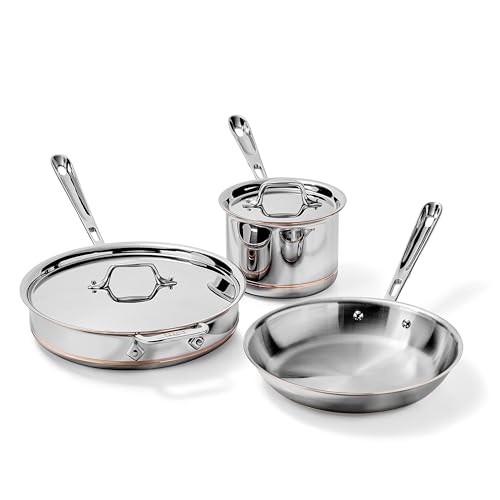
All-Clad D3 Stainless 10-Piece Cookware Set
Replacing mismatched pans sounds simple until cabinet space, cooking habits, and stainless steel technique all collide. The All-Clad D3 Stainless 10-Piece Set approaches that problem with practical sizes, fully bonded construction, and enough range for quick breakfasts, slow sauces, large soups, and oven-finished dinners. Among options for the best all clad cookware line, D3 occupies the sweet spot between responsive heating and manageable weight. It isn’t carefree cookware, but it gives careful cooks plenty of room to sharpen everyday results.
All-Clad D3 10-Piece Set
The set includes 8-inch and 10-inch fry pans, 2-quart and 3-quart saucepans with lids, a 3-quart sauté pan with a lid, and an 8-quart stockpot with a lid. That lineup covers the core jobs most kitchens face without slipping in tiny novelty pieces that rarely earn their shelf space. Small portions can stay in the compact fry pan, while larger meals move naturally into the sauté pan or stockpot. The assortment feels measured, not padded.
The two saucepans create a useful split between light prep and full side dishes. The 2-quart saucepan fits oatmeal, melted butter, reheated soup, and modest batches of rice, while the 3-quart size provides extra breathing room for sauces and grains that tend to foam. Matching lids help control evaporation and retain heat during gentle simmering. That size progression keeps one pan from being pressed into every job.
The 3-quart sauté pan may become the quiet workhorse because its straight sides hold more liquid than a similarly sized fry pan. It can brown meat, build a sauce, and continue into a shallow braise without switching cookware halfway through the recipe. The 8-quart stockpot handles pasta water, broth, chili, and larger batches without feeling like an oversized canning vessel. Together, those pieces give the set enough range for both hurried weeknights and slower weekend cooking.
Fully Bonded Tri-Ply Construction
D3 uses fully bonded tri-ply construction, placing an aluminum core between stainless steel layers. The aluminum carries heat quickly across the base and into the sidewalls, while the stainless interior provides a durable, nonreactive cooking surface. This full-body bonding separates D3 from cookware that relies on a thick disk attached only to the bottom. Heat follows the shape of the pan rather than stopping abruptly near the base.
The biggest practical benefit is fast, even heating. Butter responds quickly, sauces settle when the burner is lowered, and vegetables brown more consistently once the pan is properly preheated. D3 doesn’t feel sluggish, which helps during recipes that shift from hard searing to a gentler simmer. Still, quick response cuts both ways because unattended garlic or oil can move from ready to scorched in a hurry.
The three-layer build also keeps weight more reasonable than heavier five-ply cookware. None of these pieces is featherlight, especially after food and liquid are added, but they remain easier to tilt and move than thicker alternatives. That balance between substance and control makes D3 practical for daily cooking instead of reserving it for occasional projects. A pan that performs well but stays buried because it feels cumbersome isn’t much of a bargain.
Stainless Steel Cooking Results
The polished stainless interior excels at searing, browning, and deglazing. Chicken, steak, chops, and vegetables can develop color without a coating insulating them from direct contact with the metal. The browned residue left behind becomes useful once broth, wine, or water loosens it into a sauce. That sequence is where stainless cookware earns its keep.
Food release depends on technique rather than a synthetic nonstick layer. A cold pan encourages sticking, while excessive heat burns oil before ingredients settle properly. Moderate preheating, enough cooking fat, and patience help proteins release after a crust develops. The stainless steel learning curve is noticeable at first, but it becomes predictable once the timing clicks.
Eggs and delicate fish remain the awkward assignments. They can cook successfully, though they usually need closer heat control and more fat than a coated skillet. Anyone expecting the pan to behave like nonstick cookware may end up scraping breakfast from the surface. D3’s strength lies in durability and browning, not effortless release under every condition.
Acidic recipes suit the stainless interior well. Tomato sauce, citrus, vinegar, and wine can simmer without the reactivity concerns tied to some bare metals. Metal utensils are also less worrisome because there’s no fragile coating to scratch through. That ingredient flexibility helps the set cover a wide menu without requiring separate cookware for each category.
Handles, Balance, And Pouring
The long stainless handles use a classic riveted design shaped around a chef-style underhand grip. Their pronounced contour helps the hand resist twisting when a pan is full or being tilted to pour. Some people like that locked-in feel, while others may prefer a softer, rounded handle. The shape prioritizes control over plush comfort.
Rivets give the handles a firm mechanical connection, which matters during oven transfers and heavier cooking jobs. They also create small interior seams where sauce, grease, or grains can collect. A sponge or soft brush handles those spots, but the area needs more attention than a seamless interior. The durability benefit therefore comes with a modest cleaning nuisance.
Flared rims support precise, drip-resistant pouring. Sauce, stock, melted butter, and rendered fat are less likely to run down the outside wall when transferred to another container. That detail sounds minor until a blunt-edged saucepan leaves a streak across the counter for the third time in a week. The flare won’t overcome a rushed pour from a full stockpot, but it gives liquid a cleaner exit path.
Balance stays reasonable while the pans are empty, yet the larger pieces become substantial once loaded. A full sauté pan or stockpot may call for two hands, especially after oven cooking. The long handles provide leverage but can’t erase the weight of stainless steel, lids, and several quarts of food. That handling tradeoff deserves consideration where wrist strength or mobility is limited.
Stovetop And Oven Versatility
Every piece works on gas, electric, ceramic, and induction cooktops. That compatibility keeps the set useful after a stove replacement or kitchen remodel. Flat bonded bases also sit steadily on smooth surfaces, though dragging them may scratch a glass cooktop. Lifting rather than sliding is the safer habit.
The cookware is oven and broiler safe up to 600°F, allowing recipes to move from burner to oven without changing vessels. A steak can sear in a fry pan and finish under enclosed heat, while the sauté pan can begin a braise on the stovetop and continue in the oven. Fewer transfers mean less cleanup and fewer lost drippings. That broad temperature range is a meaningful advantage within the best all clad cookware line.
Maximum heat isn’t necessary for ordinary cooking. The aluminum core transfers energy efficiently, so medium settings often provide plenty of power for browning and simmering. Cranking the burner can scorch oil, stain the metal, and make temperature control harder. The 600°F capability offers headroom, not an invitation to blast every meal.
Handles and lids become extremely hot in the oven. Stainless steel doesn’t provide a cool-touch buffer, and the handle can stay hot after the pan returns to the counter. Dry oven mitts need to remain close by, full stop. The all-metal construction removes temperature restrictions while demanding more deliberate handling.
Cleaning And Appearance
Handwashing is recommended to protect the highly polished finish. Warm water, dish soap, and a nonabrasive sponge take care of ordinary residue, while a short soak loosens more stubborn food. Burned oil or heat discoloration may require a cleaner made for stainless steel. The pans can recover from messy cooking, but they won’t clean themselves.
Water spots, light scratches, and rainbow heat marks may appear over time. Drying each piece after washing helps limit mineral residue, though a mirror finish will still record normal kitchen use. Those marks rarely change how the cookware performs. The cosmetic upkeep matters mainly to anyone who expects every pan to remain display-case bright.
Thermal shock is another avoidable problem. Cold water poured into a blazing-hot pan stresses the bonded metal and may contribute to warping. Letting the cookware cool for a few minutes makes washing safer and protects the flat base. That small routine supports the long-term durability that gives D3 much of its appeal.
The provided internal path concerns laundry care rather than cooking equipment. From a neutral household-maintenance angle, information about detergent for a Beko washing machine belongs to a separate appliance topic and doesn’t affect the performance of this cookware. Keeping the distinction clear avoids forcing an artificial relationship between unrelated products. The D3 set is better assessed through heat response, handling, maintenance, and cooking range.
Manufacturing And Warranty
The set is made in the USA with global components at the company’s Pennsylvania factory. That background may carry weight where established production experience and domestic manufacturing influence a purchase. All-Clad’s history with bonded cookware also provides useful context for the D3 construction. Still, manufacturing heritage matters most when the cookware itself fits the kitchen’s actual habits.
The provided details state that each piece is precision engineered and third-party tested for safety. Those points support confidence in the production process, though they don’t make the pans immune to misuse or accidental damage. Overheating, thermal shock, and careless storage can still leave their mark. The limited lifetime warranty offers additional backing under the company’s stated terms.
Price remains the toughest hurdle. The value becomes easier to defend when searing, deglazing, oven finishing, and batch cooking appear regularly on the menu. A kitchen centered on reheating, basic breakfasts, and occasional meals may never use the full capability. The cost-to-use balance depends less on the brand name and more on how often the construction earns its keep.
Everyday Strengths And Tradeoffs
D3’s clearest strengths are responsive heating, broad compatibility, and durable stainless surfaces. The set includes practical sizes rather than decorative extras, and the bonded construction supports consistent cooking across different techniques. Oven and broiler safety expand the possibilities further. Those qualities make a persuasive case for D3 as the best all clad cookware line for balanced everyday use.
The collection also avoids the short service life associated with many coated sets. There’s no nonstick layer gradually wearing away under utensils, heat, and repeated washing. Riveted handles and bonded bodies are designed around extended use. That long-term durability becomes especially valuable for cooks tired of replacing scratched pans.
The weaknesses are equally real. Food can stick, polished surfaces show wear, and larger pieces become heavy once filled. The handle profile may not suit every hand, while handwashing adds another task after dinner. These practical limitations don’t erase the benefits, but they shape the ownership experience day after day.
D3 fits kitchens where control, browning, and recipe flexibility matter more than effortless release. It’s less comfortable for anyone who wants featherlight pans, low-fat egg cooking, or almost no maintenance. The set provides a reliable platform, but technique still drives the result. Its key difference is the way it combines professional-style bonded construction with sizes that make sense for regular home cooking.
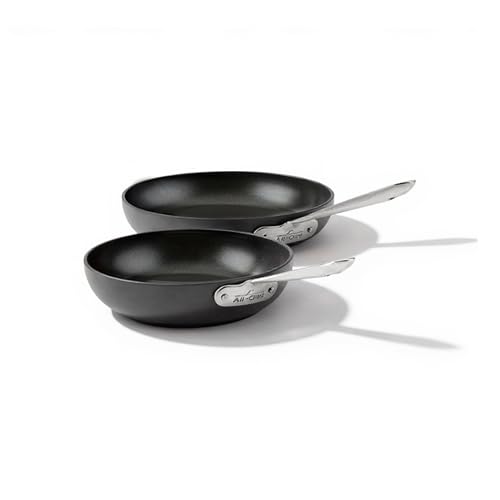
All-Clad HA1 Nonstick Fry Pan Set
Sticky eggs, torn fish, and burned cheese can make a five-minute meal feel like a chore. The All-Clad HA1 Nonstick Fry Pan Set tackles those everyday headaches with two useful sizes, a smooth PTFE cooking surface, and heavy-gauge aluminum built to spread heat consistently. Within the best all clad cookware line, HA1 sits on the convenience-first side of the family, favoring easier release and quicker cleanup over the aggressive browning of uncoated stainless steel. That tradeoff makes sense for some routines, but the coating needs gentler treatment than All-Clad’s stainless collections.
All-Clad HA1 Two-Piece Fry Pan Set
The package includes an 8-inch skillet and a 10-inch skillet, covering small breakfasts, side dishes, and modest dinner portions without filling the cabinet with extra pieces. The smaller pan suits a couple of eggs, a grilled sandwich, or a single serving of vegetables. Its larger partner provides more room for chicken cutlets, fish fillets, burgers, or a wider omelet. That simple pairing handles a surprising amount of everyday cooking.
Both pans have a flat cooking area and flared sidewalls. The flatter center supports steady contact with meat, eggs, and vegetables, while the sloped edges make it easier to slide a spatula underneath delicate food. Those walls also help during one-handed sautéing because ingredients can roll back toward the center instead of getting trapped in a sharp corner. It’s a practical shape, not just a styling decision.
No lids are included, and that limits covered simmering, steaming, and gentle finishing. A compatible lid already in the kitchen may fill the gap, though that isn’t guaranteed. Open-pan cooking remains the main assignment here. The two-piece simplicity keeps the set focused, but it doesn’t replace a sauté pan or covered skillet.
Heavy-Gauge Aluminum Heat Performance
The body of each pan uses heavy-gauge aluminum, which spreads heat faster than stainless steel alone. That helps the cooking surface warm with fewer sharp hot spots, giving eggs, pancakes, and vegetables a more even start. The material also responds fairly quickly after the burner is adjusted. A slight reduction in heat can matter when butter, cheese, or thin fish is close to overcooking.
The attached stainless steel base adds induction compatibility and gives the pans a flatter, more stable foundation. They work on gas, electric, ceramic, and induction stovetops, so a future range change won’t make them useless. Burner size still matters, of course. A small heating element under the 10-inch pan may leave the edges slower to warm.
Medium and medium-low settings suit these pans better than full burner power. Aluminum transfers heat efficiently, and the nonstick surface doesn’t need extreme temperatures to cook eggs or vegetables properly. Excessive heat can scorch oil, dry out food, and shorten the coating’s useful life. The best heat setting is controlled rather than blazing.
Heat retention is respectable for daily cooking, though the pans won’t behave like thick cast iron. A large amount of refrigerated food can pull the temperature down, especially if the surface is crowded. Giving ingredients room helps preserve browning and prevents excess moisture from collecting. The even-heating advantage works best with sensible portion sizes.
PTFE Nonstick Surface In Daily Cooking
The PTFE nonstick coating is the main reason to choose HA1 over an uncoated All-Clad line. Eggs release with less resistance, delicate fish is easier to turn, and melted cheese is less likely to become part of the pan. Less sticking also means less scraping after dinner. For rushed breakfasts, that convenience can matter more than producing a restaurant-style crust.
The coating allows cooking with less oil or butter than stainless steel often requires. A small amount can still improve flavor and browning, but the food doesn’t depend on a heavy layer of fat to release. That makes the pans comfortable for omelets, pancakes, vegetables, and lighter skillet meals. The easy-release benefit is practical, though it shouldn’t be mistaken for permission to cook dry at any temperature.
Nonstick cookware produces less fond than bare stainless steel. Meat may brown, but the caramelized residue used for deep pan sauces usually won’t develop as strongly. That’s a real performance difference between HA1 and D3 or D5 cookware. HA1 values clean release and straightforward cleanup, while stainless steel offers more aggressive searing.
The surface also needs protection from metal tools and rough cleaning. Silicone, nylon, and wooden utensils are the safer choices because sharp edges can scratch the coating. Once meaningful damage develops, the interior can’t be restored by polishing or seasoning. The coating vulnerability is the price paid for easier cooking.
Cooking Eggs, Vegetables, Fish, And Meat
Eggs are an obvious match for this set. The 8-inch pan handles a small omelet or a couple of fried eggs without leaving a wide ring of unused metal around the food. The 10-inch size works better for scrambled eggs, larger omelets, or breakfast shared between two people. The size flexibility keeps small portions controlled and larger portions from feeling cramped.
Vegetables also suit the flared shape. Onions, mushrooms, peppers, and zucchini can be stirred or tossed without catching in a steep corner. A little space between pieces helps moisture evaporate, which improves browning. Crowding the pan still causes steaming, so the 10-inch surface earns its keep with bigger batches.
Delicate fish benefits from the smoother interior because fillets have a better chance of lifting without tearing. Moderate heat protects both the coating and the food, particularly with thin portions that cook quickly. A wide spatula still helps maintain the fillet’s shape. The gentle-release surface reduces frustration, but careful timing remains necessary.
Meat can be pan-fried or browned, although the crust may not be as deep as it would be in stainless steel. Chicken cutlets, burgers, sausage, and thinner steaks fit the pans well. Hard searing at extreme heat isn’t their strongest assignment. The best use case is dependable everyday frying rather than chasing the darkest possible exterior.
Handles And Everyday Control
The stainless steel handles are double riveted to the pan bodies. That firm attachment helps the cookware feel secure while lifting, tilting, or transferring food to a plate. The contoured profile gives the hand a defined grip and limits unwanted twisting. Comfort will still vary because some hands prefer a rounder, softer handle.
The 8-inch pan feels easier to maneuver, while the 10-inch model becomes noticeably heavier after food is added. Heavy-gauge aluminum gives the set a more planted feel than thin bargain skillets. That stability helps on the burner but makes quick tossing more demanding. The weight tradeoff favors steadiness over featherlight movement.
Stainless handles can heat up in the oven and may become warm near the pan during long stovetop sessions. A dry oven mitt or pot holder is sensible before lifting cookware exposed to strong heat. The metal construction removes the temperature restrictions associated with plastic grips. The oven-ready handle expands use, though it won’t protect bare hands.
Rivets create small interior seams where oil and food residue can settle. A soft sponge can usually clean around them, but dried debris may need soaking. A seamless interior would be easier to wipe, yet it wouldn’t offer the same traditional mechanical attachment. The secure handle design comes with a minor cleanup annoyance.
Oven And Stovetop Compatibility
The pans are oven and broiler safe up to 500°F. A frittata can start on the stovetop and finish in the oven, while meat can receive a short oven finish after pan-frying. That flexibility reduces the need to move food into a separate baking dish. Still, there’s little reason to expose the coating to maximum heat during routine cooking.
Induction support gives HA1 broader usefulness than basic aluminum nonstick cookware. The stainless base allows the set to work on every common stovetop type. It also helps each pan sit flat and stable during cooking. That construction is especially helpful on smooth glass or ceramic surfaces where rocking cookware can be irritating.
Broiler use requires restraint because direct overhead heat can be intense. The stated 500°F limit should be respected, and the pans shouldn’t sit under uncontrolled heat longer than necessary. Handles will become hot, and the coating isn’t meant for repeated abuse. The temperature range adds flexibility without making HA1 unrestricted high-heat cookware.
Gas flames should remain underneath the base rather than climbing the sidewalls. Oversized flames waste energy, heat the handle area, and expose the exterior to avoidable stress. Electric and induction elements should also fit the pan as closely as possible. Proper burner matching supports consistent heating and coating longevity.
Cleaning And Nonstick Care
The pans are listed as dishwasher safe, offering a convenient fallback after a busy meal. The care guidance still recommends soap, a sponge, and handwashing to preserve the nonstick surface. Gentle washing limits contact with harsh detergents and other utensils. Since food releases easily, routine cleanup usually doesn’t require much elbow grease.
Abrasive scrubbers should stay away from the coating. Steel wool, rough pads, and gritty cleaning powders can scratch the interior and reduce its smooth release. Soaking cooked-on residue is safer than attacking it with force. The cleaning routine is easy as long as gentle tools remain the norm.
Stacking can cause wear if the bottom of one pan rubs against the coated interior of the other. A soft separator, paper towel, or felt protector can reduce direct contact. Hanging storage avoids that issue if the kitchen has enough space. The storage habit can influence coating life just as much as cooking technique.
Thermal shock is another avoidable problem. Plunging a hot pan into cold water stresses the metal and may affect the base or coating over time. Letting it cool briefly makes cleaning safer and kinder to the construction. That small pause supports longer-lasting nonstick performance.
Design And Manufacturing Details
The black contoured exterior gives the pans a clean, understated appearance. It hides fingerprints and minor exterior marks better than highly polished stainless steel. The shape looks modern without adding unnecessary decorative features. The sleek profile fits a working kitchen rather than demanding display treatment.
The cookware is designed in Canonsburg, Pennsylvania, and made in China. That distinction matters because other All-Clad lines are associated with manufacturing in the United States. Country of manufacture doesn’t determine performance on its own, but it may affect how some shoppers view the collection. HA1 occupies a different position from the brand’s Pennsylvania-made bonded stainless lines.
Within the best all clad cookware line, HA1 focuses on low-friction cooking rather than uncoated durability. D3 and D5 can tolerate metal utensils and stronger searing, while HA1 makes eggs, fish, and sticky foods easier to manage. Neither approach covers every cooking need. The key difference is convenience versus unrestricted stainless steel use.
The provided internal path concerns a power tool, so it doesn’t naturally connect with cookware performance. From a neutral home-improvement angle, information about a Ryobi nail gun belongs to a separate household project rather than skillet selection. Keeping those subjects apart prevents an artificial product relationship. The HA1 set is more fairly evaluated through release, heating, handling, and maintenance.
Everyday Strengths And Real Limitations
The strongest feature is easy food release. Eggs, pancakes, fish, and sticky ingredients are less likely to tear or remain attached to the pan. That also shortens cleanup and reduces the need for heavy cooking fat. For quick meals, HA1 removes several small frustrations that stainless steel can create.
The pairing of heavy-gauge aluminum and a stainless base supports even heating while keeping the pans compatible with induction. Both sizes respond quickly enough for routine temperature adjustments. The flat interiors and flared sides also make spatula work and sautéing easier. These details create a practical set rather than a decorative one.
The weaknesses center on the coating. Metal utensils, abrasive pads, overheating, and rough stacking can all shorten its useful life. The pans also won’t build fond or tolerate hard searing like uncoated stainless steel. That durability limitation should be weighed against the easier cooking experience.
No lids are included, and the largest pan measures only 10 inches. Larger portions may feel crowded, while covered recipes require another piece of cookware. Handwashing is also the wiser long-term choice despite dishwasher compatibility. These practical tradeoffs keep the set from replacing every skillet in a busy kitchen.
HA1 suits routines built around eggs, vegetables, fish, pancakes, and moderate-heat skillet meals. It’s a weaker fit for cooks who prioritize hard searing, metal utensils, and cookware that can be scrubbed aggressively. Within the best all clad cookware line, its identity is clear: easy release, induction support, manageable sizes, and gentler care requirements.

Top Rated Best Quality Range Hoods: 2026 Expert Picks
The 12 Best Small Solar Generators 2026

10 Best Quality Semi Automatic Washing Machine of 2026 For Leak-Free Laundry

11 Best Small Washer Machine of 2026 For Everyday Laundry

12 Best Vibration Pads For Washing Machine of 2026 To Stop Walking and Shaking

11 Best Selling Front Load Washing Machine of 2026 For Quiet Odor-Free Laundry

11 Best Washing Machine For King Size Bedding of 2026 To Prevent Cycle Errors

10 Best Small Front Loader Washing Machine of 2026 For Tight Closets






